
Last updated: October 2026 · Written by the LawnVibe editorial team.
Bare spots appear in almost every lawn eventually, from dog urine, foot traffic, grubs, drought, a spilled bag of fertilizer or a summer pool. Left alone, they fill with weeds. The fastest fix for small areas is a patching product that combines seed, mulch and fertilizer in one bag. Choosing the best lawn patching product depends on what caused the bare spot, how much sun it gets and what kind of grass you have. This guide compares patch mixes and repair products and explains how to make patches blend in.
Our picks are based on published product information and lawn repair practices, not on hands-on testing. If a large part of the lawn is thin rather than a few spots, overseeding with a quality seed from our best grass seed guide is more economical.
Our Top Picks
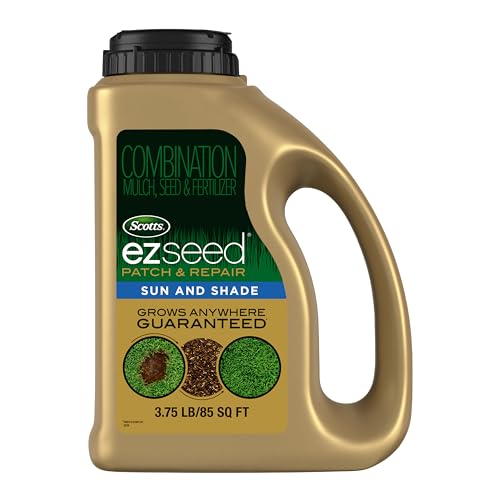
Scotts EZ Seed Patch & Repair (Sun and Shade)
Best for: Most bare spots in cool-season lawns
A patch product combining a Kentucky bluegrass, perennial ryegrass and fine fescue seed mix with mulch and fertilizer. The mulch expands as it absorbs water, helping keep seed moist in small repair areas.
- Seed, mulch and feed together
- Mulch helps hold moisture
- Easy for small spots
- Costly for large areas
- Cool-season mix only
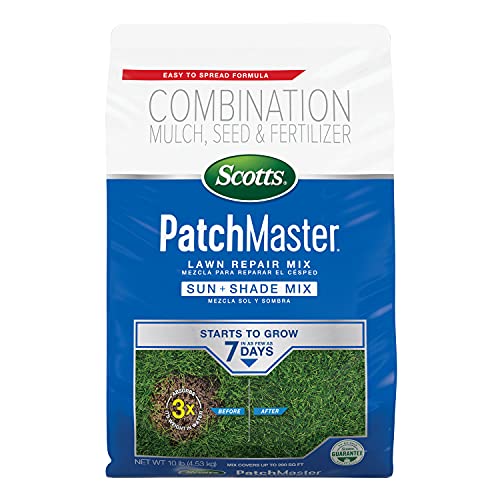
Scotts PatchMaster Lawn Repair Mix
Best for: Multiple bare patches
An all-in-one mix of mulch, seed and fertilizer for fixing bare patches. It is a popular choice when you have several spots to repair across the lawn.
- All-in-one
- Good coverage for patching
- Widely available
- Match variant to your grass
- Not for full overseeding
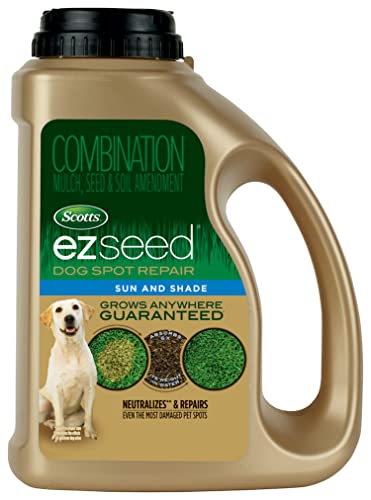
Scotts EZ Seed Dog Spot Repair
Best for: Urine-burned patches
A patch product marketed for repairing spots damaged by dog urine, with a formula intended to help neutralize the area so new grass can establish.
- Made for pet-damaged spots
- Seed and mulch included
- Simple application
- Spots can recur
- Flush area with water first

Pennington Smart Patch Dense Shade
Best for: Bare patches under trees
A seed, fertilizer and mulch patch product for shady areas, with a tackifier to help protect seed from wind and runoff.
- Shade-tolerant seed
- Tackifier holds seed in place
- All-in-one
- Shade spots still need some light
- Small coverage per bag

Pennington Bare Spot Repair
Best for: Bare spots in full sun
A patch mix designed to fill bare spots with seed, fertilizer and mulch, suitable for sunnier areas of the lawn.
- Seed, feed and mulch
- Simple spot repair
- Good for sunny areas
- Choose the right grass variant
- Keep moist daily

Scotts EZ Patch for St. Augustine
Best for: Warm-season St. Augustine lawns
Since St. Augustine does not grow from seed, this patch product is formulated to help runners fill bare areas in St. Augustine lawns.
- Formulated for St. Augustine
- Includes mulch and feed
- Simple to use
- Southern lawns only
- Results depend on warmth and watering

Growtrax Biodegradable Grass Seed Mat
Best for: Patches on banks and slopes
A biodegradable mat with seed, fertilizer and mulch built in. Laid over bare soil, it holds seed in place on slopes where loose seed washes away.
- Seed stays in place on slopes
- Biodegradable
- No raking needed
- Must stay in contact with soil
- Cut to fit odd shapes
Comparison Table
| # | Product | Best for | Link |
|---|---|---|---|
| 1 | Scotts EZ Seed Patch & Repair (Sun and Shade) | Most bare spots in cool-season lawns | Check price |
| 2 | Scotts PatchMaster Lawn Repair Mix | Multiple bare patches | Check price |
| 3 | Scotts EZ Seed Dog Spot Repair | Urine-burned patches | Check price |
| 4 | Pennington Smart Patch Dense Shade | Bare patches under trees | Check price |
| 5 | Pennington Bare Spot Repair | Bare spots in full sun | Check price |
| 6 | Scotts EZ Patch for St. Augustine | Warm-season St. Augustine lawns | Check price |
| 7 | Growtrax Biodegradable Grass Seed Mat | Patches on banks and slopes | Check price |
A Closer Look at Each Pick
Scotts EZ Seed Patch & Repair, best overall. Seed, mulch and fertilizer in one, with a mulch that swells as it absorbs water to keep seed moist. It suits small and medium bare spots in cool-season lawns.
Scotts PatchMaster. A similar all-in-one approach, popular when you have several patches to fix around the yard.
Scotts EZ Seed Dog Spot Repair. Dog spots are among the most common bare patches. This product is formulated specifically for areas damaged by urine.
Pennington Smart Patch Dense Shade. Shade-tolerant seed with mulch and a tackifier for bare spots under trees.
Pennington Bare Spot Repair. A seed, fertilizer and mulch patch mix for sunnier spots.
Scotts EZ Patch for St. Augustine. Because St. Augustine does not grow from seed, patching it requires a product designed to help runners fill in.
Growtrax seed mat. On slopes, loose seed and patch mix can wash away in the first heavy rain. A seed mat holds everything in place.
What Causes Bare Spots?
Fixing a bare spot without addressing its cause means it often returns. Common causes include dog urine, heavy foot traffic and compaction, grubs feeding on roots, disease, drought, fertilizer or chemical spills, shade, and objects left on the grass such as pools, toys or tarps. Look for clues: grubs leave turf that peels back like carpet, dog spots often have a ring of darker green grass around a dead center, and compacted paths are hard when you push a screwdriver into the soil.
How to Patch a Lawn Step by Step
1. Remove dead grass. Rake out dead material down to bare soil.
2. Loosen the soil. Scratch up the top half inch to inch with a rake or hand cultivator so seed can contact soil. On compacted spots, loosen deeper.
3. Level if needed. If the patch sits low, add a little soil or leveling mix first; our guide to the best lawn leveling mix covers options.
4. Apply the patch product. Spread it evenly at the rate on the label, extending slightly into the surrounding grass so the edges blend.
5. Press it in. Pat the area lightly with the back of a rake or your foot so the mix contacts the soil.
6. Water thoroughly. Soak the patch, then keep it consistently moist, usually with light watering once or twice a day, until the new grass is established.
7. Wait to mow. Mow once the new grass reaches your normal mowing height plus about a third.
Patch Products vs Seed and Starter Fertilizer
Patch mixes are convenient and include mulch that helps beginners keep seed moist. For larger areas, or if you have many patches, buying seed and a starter fertilizer separately is usually more economical; see our guide to the best lawn starter fertilizer. Whatever you use, match the seed to your existing grass so patches blend in color and texture.
Timing Your Repairs
For cool-season lawns, early fall is the best time to patch, with spring as a second option. For warm-season lawns, patch in late spring and summer during active growth. Avoid patching cool-season grass in midsummer heat, when seedlings struggle.
Repairing Drought Damage
If drought killed areas of your lawn, check whether grass is dormant or dead before patching. Our guide on how to revive a lawn after drought explains how to tell and when to reseed, and Iowa State University Extension has a useful FAQ on lawns that stay dormant all summer.
How to Choose the Best Lawn Patching Product
Match the grass type
Patch mixes come in different blends. For Kentucky bluegrass lawns, choose a mix with bluegrass. For tall fescue lawns, choose a fescue-based mix so patches do not stand out as finer or lighter-colored grass. In warm-season lawns, use products designed for that grass, such as St. Augustine-specific repair products.
Match the light
Sun mixes favor bluegrass and ryegrass; shade mixes rely on fine fescues. Using a sun mix in deep shade usually leads to thin, struggling patches.
Consider the cause
Dog-damaged spots benefit from products formulated for urine damage, combined with flushing the area with water. Grub-damaged areas need the grubs addressed first. Compacted paths need loosening or aeration.
Check coverage
Patch products list how many square feet a bag covers. Measure your bare spots and buy accordingly. If total bare area is large, seed and starter fertilizer may be more economical.
Look for mulch or tackifier
Mulch helps hold moisture, which is the most common failure point in patch repairs. A tackifier helps seed stay put on slopes and in wind.
Common Patching Mistakes
Spreading patch mix on top of dead grass without exposing soil. Letting the patch dry out, even for a day, during germination. Using a seed type that does not match the surrounding lawn. Patching cool-season grass in midsummer heat. Applying weed preventer that stops seed from germinating. Ignoring the cause, such as grubs or dog urine.
Making Patches Blend In
Feather the patch mix a few inches into the surrounding grass so the edge is gradual rather than a sharp line. Use the same species as your lawn. Mow at the same height as the rest of the lawn once the patch is established, and fertilize the whole lawn evenly in the next feeding cycle. Within a season, well-matched patches become hard to spot.
Patching Around Trees and Roots
Shade and root competition make spots under trees difficult. Use a shade mix, water more often because roots take moisture, and avoid piling soil over roots. If grass repeatedly fails, consider a mulched bed around the tree instead.
Watering New Patches
Moisture is the single most important factor in a successful patch. Water lightly once or twice a day, more often in hot, windy weather, so the top layer never dries out. A small sprinkler or a hose with a gentle shower setting works well. Avoid strong sprays that wash seed away. Once the grass is about an inch tall, water less often but more deeply to encourage roots. Many patch products change color when dry, which helps you know when to water.
Dealing With Grub Damage
If turf in the dead area lifts easily like a loose carpet, dig a small section and look for white, C-shaped grubs in the soil. Several grubs per square foot can kill grass. Treat according to product labels and the right timing for grub control in your area, then patch once the grubs are gone. Patching without addressing grubs usually leads to new dead areas.
Fixing Spots Caused by Fertilizer or Chemical Spills
Spilled fertilizer, gasoline, herbicides or ice melt can kill grass in sharp-edged patches. Flush the area with plenty of water to dilute what remains in the soil. For severe spills, remove the top couple of inches of contaminated soil and replace it with fresh topsoil before patching. Spill products over a tarp or hard surface in future to avoid repeats.
Patching High-Traffic Areas
Paths worn by kids, pets or regular shortcuts compact the soil, so seed struggles even after patching. Loosen the soil deeply with a garden fork or core aerator before patching, use a wear-tolerant mix with perennial ryegrass or tall fescue, and rope off or redirect traffic while the patch establishes. If the path is a permanent route, stepping stones or a mulched path may be a better long-term solution than repeated patching.
Patching Warm-Season Lawns
Bermuda, zoysia and St. Augustine spread by runners, so small bare spots in healthy warm-season lawns often fill in on their own during summer if you water and feed the surrounding grass. For larger gaps, plugs or small pieces of sod work faster than seed for St. Augustine and zoysia, while Bermuda can be patched with seed in late spring and summer.
How Long Before You Can Walk on a Patch?
Keep foot traffic and pets off new patches until the grass has been mowed two or three times, usually several weeks after germination. A few stakes and string, or a small temporary fence, help remind family members to step around it.
Storing Leftover Patch Mix
Seal leftover patch mix tightly and store it somewhere cool and dry so the mulch does not absorb moisture before you use it.
Is a Patch Product Worth It?
For small repairs, yes. Patch products save time, include everything needed in one bag, and their mulch makes success much more likely for beginners than seed alone.
Preventing Future Bare Spots
Water dog spots soon after urination, or train dogs to use a gravel or mulch area. Add stepping stones on worn paths. Core aerate compacted soil. Mow high and water deeply to keep grass healthy. Move pools, toys and furniture regularly.
The Bottom Line on the Best Lawn Patching Product
The best lawn patching product for most bare spots is an all-in-one seed, mulch and fertilizer mix matched to your grass and sun. Use a dog spot product for urine damage, a shade mix under trees, a seed mat on slopes and a St. Augustine-specific product in southern lawns. Prepare the soil, keep the patch moist, and fix the underlying cause, and bare spots will disappear for good.
Frequently Asked Questions
What is the best product to fix bare spots in a lawn?
An all-in-one patch mix that combines grass seed, mulch and fertilizer is the easiest option for small bare spots. Choose one that matches your grass type and sun exposure.
How do I fix bare spots in my lawn?
Rake out dead grass, loosen the top of the soil, spread a patch mix or seed over the spot, press it in lightly, and keep it consistently moist until new grass is established.
How long does a lawn patch take to grow?
Many cool-season patch mixes start sprouting within one to two weeks in good conditions, with bluegrass taking longer. The patch usually blends in over several weeks.
Why do dog spots keep coming back?
Concentrated urine contains nitrogen and salts that burn grass. Watering the area soon after a dog urinates and training dogs to use a specific area reduces repeat damage.
Can I patch my lawn in summer?
Cool-season lawns are best patched in early fall or spring. Warm-season lawns patch best in late spring and summer, when the grass actively spreads.