
A battery lawn mower is a great tool for keeping your yard tidy without the noise, fumes, and hassle of gas engines. But many people still struggle with one thing: charging the battery correctly. Doing this wrong can shorten battery life, reduce mowing time, or even cause safety problems. Whether you are new to battery mowers or want to make your battery last longer, learning proper charging is key.
This guide will show you every important step for charging a battery lawn mower the right way. You’ll get clear instructions, helpful tips, and answers to common questions. By the end, you’ll know how to avoid mistakes and get the most from your mower.
Why Charging Correctly Matters
Many people think charging is simple: plug in, wait, and mow. But charging a battery lawn mower is not as basic as charging your phone. These batteries are expensive and sensitive. Overcharging, undercharging, or using the wrong charger can cause real problems. Here are a few reasons to care:
- Battery cost: Replacements can cost $100–$300 or more.
- Mowing performance: A poorly charged battery can lose power quickly.
- Battery life: Proper care can double the years you get from a battery.
- Safety: Faulty charging can cause overheating or even fires.
Most manuals give only brief instructions. But real-life use brings new questions. For example, is it okay to leave the battery in the charger? Should you charge after every mow? Let’s break down everything you need to know.
Understanding Your Battery Lawn Mower
Before charging, it helps to know what battery your mower uses. Battery mowers usually use either lithium-ion (Li-ion) or lead-acid batteries. Each works a bit differently.
Types Of Batteries
- Lithium-ion (Li-ion) batteries
- Most common in modern mowers.
- Lighter, charge faster, and last longer.
- Sensitive to extreme heat and overcharging.
- Lead-acid batteries
- Heavier, found in older or budget models.
- Cheaper but fewer charge cycles.
- Must not be left discharged for long.
Check your manual or the battery label to know which type you have.
Battery Capacity And Voltage
Your mower’s battery will have a voltage (V) and amp-hour (Ah) rating. For example, “40V 5Ah.” Higher voltage usually means more power. Higher amp-hours mean longer run time before recharging.
If you have a large yard, a high Ah battery is better. But high capacity batteries also take longer to charge.
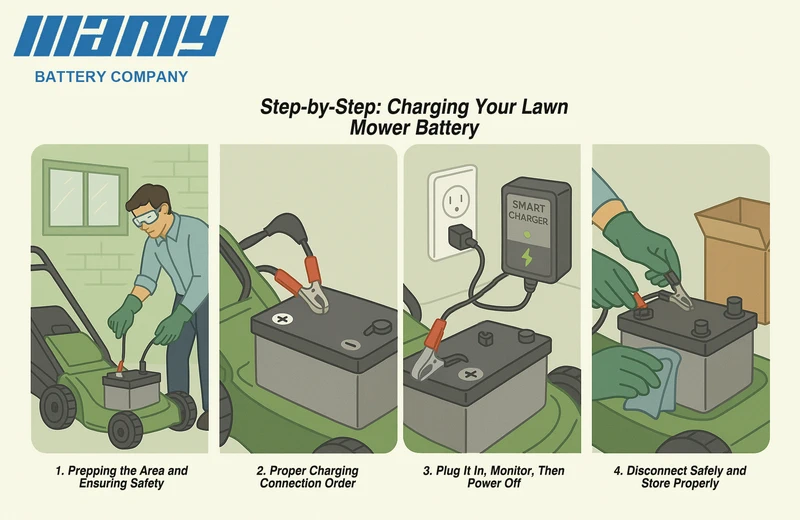
Credit: manlybattery.com
Preparing To Charge: What To Check
Don’t rush to plug in your battery. A few quick checks will prevent problems and keep you safe.
- Inspect the battery
- Look for cracks, swelling, or corrosion.
- Check the terminals for dirt or debris.
- Never charge a damaged battery.
- Check the charger and cables
- Use only the charger that came with your mower.
- Damaged or off-brand chargers can overheat or harm the battery.
- Cool down after mowing
- Let the battery rest 15–30 minutes after mowing.
- Charging a hot battery can shorten its life.
- Choose a safe charging spot
- Charge indoors, away from rain or direct sun.
- Place the charger on a solid, fire-resistant surface.
A little care here can save you from costly mistakes later.
How To Charge A Battery Lawn Mower Step-by-step
Now, let’s break down the actual charging process.
1. Remove The Battery (if Removable)
Most mowers have a removable battery. Turn off the mower and follow these steps:
- Press the battery release button.
- Pull the battery straight out.
- Avoid touching the terminals with your hands.
Some models have built-in batteries. If so, you must park the mower near a power outlet.
2. Connect To The Charger
- Align the battery terminals with the charger.
- Slide or click the battery into place.
- The charger should show a red or blinking light, meaning charging has started.
For built-in batteries, connect the mower’s charging cable to the power outlet.
3. Monitor The Charging
Most chargers have a status light:
- Red/blinking: Charging
- Green/solid: Fully charged
- Yellow/flashing: Error or bad connection
Charging time varies by battery size and charger speed. Here’s a comparison:
| Battery Size | Charger Type | Typical Charging Time |
|---|---|---|
| 40V 2Ah | Standard (2A) | 60–90 minutes |
| 40V 5Ah | Fast (4A) | 60–80 minutes |
| 60V 7.5Ah | Standard (2A) | 3–4 hours |
Don’t unplug the charger too soon, as it can affect battery performance.
4. Unplug And Store Safely
- Once fully charged, unplug the charger.
- Remove the battery carefully.
- Store the battery in a cool, dry place if not using right away.
- If possible, avoid leaving a battery on the charger overnight.
Tips For Extending Battery Life
Battery replacement is expensive. With a few habits, you can make your mower battery last much longer.
- Avoid full discharge
- Try not to let the battery go completely dead.
- Recharge when it drops below 20–30%.
- Don’t overcharge
- Remove the battery when the charger says “full.”
- Modern chargers often have auto shut-off, but not all.
- Charge before long storage
- For winter, store at 50–70% charge.
- Check every 2–3 months and top up if needed.
- Keep batteries cool
- Heat is a battery killer. Store away from sunlight or heaters.
- Never leave batteries in a hot car or shed.
- Clean terminals regularly
- Wipe with a dry cloth to remove dust or corrosion.
- Use the right charger
- Cheap, off-brand chargers can damage batteries over time.
Here’s a quick comparison between good and bad charging habits:
| Good Habit | Benefit | Bad Habit | Risk |
|---|---|---|---|
| Charging in cool areas | Longer battery life | Charging in hot garage | Faster wear, possible fire |
| Using original charger | Safe, reliable charging | Cheap universal charger | Battery damage, safety risk |
| Partial discharge before charging | More charge cycles | Full discharge every time | Shorter battery life |
Common Mistakes To Avoid
Even experienced users make charging mistakes. Here are a few to watch for:
- Leaving batteries in the charger for days
- This can overheat and weaken the battery over time, especially with old chargers.
- Using a wet or dirty charger
- Moisture or dirt can cause shorts or corrosion.
- Mixing old and new batteries
- If your mower uses two batteries, always use the same type and age.
- Ignoring warning lights
- A flashing yellow or red light means something is wrong. Don’t ignore it.
- Charging right after mowing
- Hot batteries should cool down before charging.
Troubleshooting Charging Problems
Sometimes, batteries do not charge as they should. Here’s how to handle common issues.
Battery Does Not Charge
- Check if the battery is fully seated in the charger.
- Make sure the charger is plugged in and the outlet works.
- Try a different charger if possible to rule out charger failure.
Charger Light Blinks Or Shows Error
- Remove the battery and let it cool for 30 minutes.
- Clean the contacts with a dry cloth.
- If the error continues, your battery may be faulty or too old.
Battery Charges Too Slowly
- Some chargers are “fast” and others are standard. Check your model.
- Charging in cold or hot temperatures can slow things down.
- Very old batteries can lose capacity and charge slower.
Seasonal Charging And Storage
If you live in a place with cold winters, you may store your mower for months. Proper storage makes a big difference.
- Charge the battery to about 50–70% before storing.
- Store indoors, away from freezing or hot temperatures.
- Remove the battery from the mower if possible.
- Don’t store the battery fully discharged or fully charged for months.
Every 2–3 months, check the battery and add a small charge if needed. This keeps it healthy.

Credit: uk.jackery.com
Battery Lawn Mower Charging: Myths And Real Facts
Many people believe things about battery charging that are not true. Let’s clear up a few myths.
- Myth: You must fully discharge before charging.
Fact: For lithium-ion batteries, this actually reduces life. Charge whenever you like.
- Myth: All chargers are the same.
Fact: Use only the charger made for your battery.
- Myth: Storing batteries in a fridge increases life.
Fact: Cold can help, but moisture ruins batteries. Room temperature is best.
- Myth: It’s okay to store dead batteries for months.
Fact: Always store with some charge or the battery can become unusable.
When To Replace Your Battery
Even with perfect charging, all batteries wear out. Here’s how to know when it’s time for a new one:
- The battery runs out much faster than before.
- The charger shows “full” very quickly (minutes, not hours).
- The battery feels hot or swollen after charging.
- The battery will not charge at all.
Most batteries last 3–5 years with good care. If you mow often, it may be less.
Safety Tips For Charging
Safety should always come first with any electrical device. Here are a few key points:
- Never cover the charger or battery while charging.
- Keep out of reach of children and pets.
- Don’t use extension cords unless they are rated for the charger’s power.
- Avoid charging in wet or damp conditions.
If you notice a burning smell, smoke, or see the battery leaking fluid, unplug immediately and contact the manufacturer.
Comparing Battery Lawn Mower Charging To Gas Mowers
You may wonder if battery mowers are really easier than gas. Here’s a quick look:
| Feature | Battery Mower | Gas Mower |
|---|---|---|
| Refueling | Plug in charger | Buy/store gas |
| Maintenance | Minimal (charge battery) | Oil changes, spark plugs |
| Startup | Push button | Pull cord |
| Noise/Emissions | Low/zero | Loud/polluting |
Battery mowers are simpler, but the battery must be cared for properly.

Credit: www.autozone.com
Frequently Asked Questions
How Often Should I Charge My Battery Lawn Mower?
For most models, charge the battery after each mowing session or whenever the charge drops below 20–30%. Avoid letting the battery go completely dead, as this shortens its life.
Can I Leave The Battery In The Charger Overnight?
It’s best not to leave batteries charging overnight, unless your charger has an automatic shut-off feature. Check your charger’s manual. Overcharging can reduce battery life in some cases.
What If I Lose My Original Charger?
Always replace with the same brand and model charger. Using a wrong charger can cause damage or safety risks. Check with the mower manufacturer or visit their official website for replacements.
How Do I Know When My Battery Needs Replacing?
If the mower runs for much less time than before, or the battery won’t charge fully, it may be time for a new battery. Other signs include swelling, heat, or error lights on the charger.
Is It Safe To Charge My Battery Lawn Mower Outdoors?
Charging outdoors is only safe if the area is dry and protected from rain and direct sun. However, indoor charging is best to avoid moisture and temperature extremes. Always use a fire-resistant surface.
For more in-depth battery care tips, you can visit the EPA’s battery recycling and care guide.
Charging your battery lawn mower correctly is simple, but only if you follow the right steps. With the advice above, you’ll enjoy reliable mowing, save money on replacements, and keep your yard looking great season after season.