
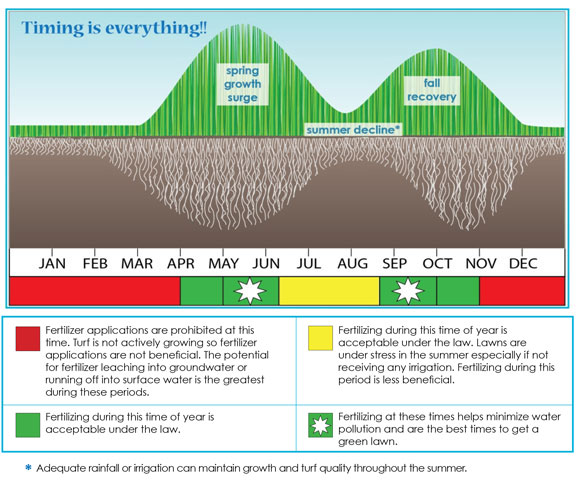
Spring is the perfect season for lawn care. Fertilizing your lawn at the right time ensures it stays green and healthy. In this article, we will discuss the best time to fertilize your lawn in spring. Follow these expert tips to achieve a lush lawn.
Credit: healthylawns.suffolkcountyny.gov
Why Fertilize Your Lawn in Spring?
Fertilizing your lawn in spring helps it grow strong and healthy. Spring fertilization provides essential nutrients to the soil. These nutrients help the grass grow thick and green.
Benefits Of Spring Fertilization
- Promotes healthy root growth
- Improves grass color and density
- Helps the lawn recover from winter stress
- Prepares the lawn for summer heat
When is the Best Time to Fertilize Your Lawn?
The best time to fertilize your lawn in spring is when the soil temperature reaches 55 degrees Fahrenheit. At this temperature, the grass starts to grow actively. This usually happens in early to mid-April, depending on your location.
How To Check Soil Temperature
You can use a soil thermometer to check the temperature. Insert the thermometer into the soil about 4 inches deep. Wait for a few minutes to get an accurate reading.
Choosing the Right Fertilizer
Choosing the right fertilizer is crucial for your lawn’s health. There are two main types of fertilizers: organic and synthetic. Each type has its benefits and drawbacks.
Organic Fertilizers
- Made from natural materials
- Improves soil structure
- Slow-release nutrients
- Environmentally friendly
Synthetic Fertilizers
- Made from chemical compounds
- Quick-release nutrients
- Provides immediate results
- Can be less expensive
Choose a fertilizer with a balanced ratio of nitrogen, phosphorus, and potassium. Look for a ratio like 20-10-10 or 16-4-8. The first number represents nitrogen, the second phosphorus, and the third potassium.
Credit: www.groundsguys.com
How to Apply Fertilizer
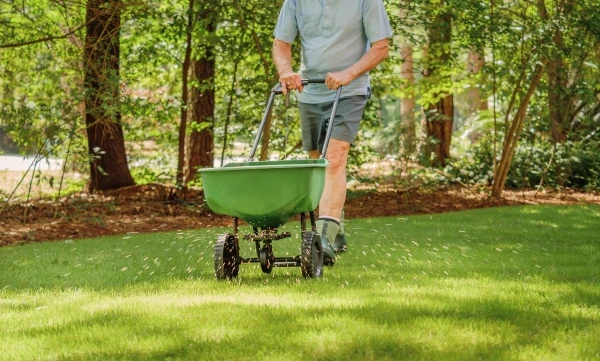
Applying fertilizer correctly is essential for a healthy lawn. Follow these steps to ensure even coverage and avoid damaging your grass.
Steps To Apply Fertilizer
- Mow your lawn to a height of 2-3 inches.
- Water the lawn lightly to moisten the soil.
- Fill your spreader with the recommended amount of fertilizer.
- Walk at a steady pace to ensure even coverage.
- Overlap each pass slightly to avoid missed spots.
- Water the lawn thoroughly after applying the fertilizer.
Common Fertilization Mistakes to Avoid
Avoid these common mistakes to ensure your lawn stays healthy and green.
Over-fertilizing
Applying too much fertilizer can burn your grass. Follow the recommended application rates on the fertilizer package.
Fertilizing Wet Grass
Applying fertilizer to wet grass can cause uneven distribution. Make sure the grass is dry before fertilizing.
Ignoring Soil Ph
Soil pH affects nutrient availability. Test your soil’s pH and adjust it if necessary before fertilizing.
FAQs About Spring Lawn Fertilization
Can I Fertilize My Lawn In Early Spring?
Yes, you can fertilize your lawn in early spring. However, wait until the soil temperature reaches 55 degrees Fahrenheit.
How Often Should I Fertilize My Lawn In Spring?
Fertilize your lawn once in early spring and again in late spring. This provides consistent nutrients for healthy growth.
What If I Miss The Optimal Fertilization Window?
If you miss the optimal window, fertilize as soon as possible. Your lawn will still benefit from the added nutrients.
Can I Use The Same Fertilizer For Spring And Summer?
Yes, you can use the same fertilizer for both seasons. Ensure it has a balanced ratio of nitrogen, phosphorus, and potassium.
Frequently Asked Questions
When Is The Best Time To Fertilize Lawn?
Early spring is ideal for fertilizing your lawn.
How Often Should I Fertilize My Lawn?
Fertilize your lawn every 6-8 weeks in spring.
Can I Fertilize My Lawn In March?
Yes, March is a great time to fertilize.
What Type Of Fertilizer Is Best For Spring?
Use a slow-release, nitrogen-rich fertilizer.
Conclusion
Fertilizing your lawn in spring is crucial for its health and appearance. By following these tips, you can ensure your lawn stays green and lush throughout the season. Remember to choose the right fertilizer, apply it correctly, and avoid common mistakes. Happy gardening!