
Last updated: September 2026 · Prices and availability on Amazon can change — always verify on the product page.
The best riding lawn mower for hills in 2026 is the Husqvarna Z254F 54 in. 23 HP Kawasaki zero-turn: its high-torque engine, hydrostatic transmission, and wide stance give it the stability and control that sloped yards demand. For battery power, the EGO Power+ Z6 42” zero-turn is the standout, while remote-control crawler mowers now handle slopes no rider should ever attempt.
Mowing a hilly yard is genuinely harder — and riskier — than mowing flat ground. Traction, braking, and center of gravity all matter more, and the wrong machine can slide, scalp the lawn, or tip. This guide compares five machines that handle slopes well, from budget-friendly lawn tractors to zero-turn riding mowers and remote-control slope specialists, so you can pick the right one for your terrain and budget.
Quick Picks: Best Riding Mowers for Hills
| Category | Our Pick | |
|---|---|---|
| Best Overall | Husqvarna Z254F 54” 23 HP Kawasaki Zero-Turn | Check price |
| Best Electric | EGO Power+ Z6 42” Zero-Turn (ZT4204L) | Check price |
| Best Value Gas | CRAFTSMAN 36” Gas Riding Mower (11.5 HP) | Check price |
| Best for Steep Slopes | Mowrator S1 4WD Remote-Control Mower | Check price |
| Best for Extreme Terrain | 459cc Remote-Control Flail Mower (55° slopes) | Check price |
Why Trust This Guide
LawnVibe compares lawn and garden equipment using manufacturer specifications, slope and stability ratings, and patterns in verified owner feedback — we focus on the numbers that actually matter on hills: engine torque, transmission type, wheelbase, deck width, and rated slope limits. We link only to real, currently listed Amazon products, and we flag the weaknesses of every pick, not just the strengths.
Which Riding Lawn Mower Is Best for Hills in 2026?
For most homeowners with a sloped yard of half an acre or more, a zero-turn mower with a strong engine and hydrostatic drive is the best choice — it holds its line on inclines and cuts mowing time dramatically. Below are the five machines that stood out, each best for a different kind of hill, lawn size, and budget.
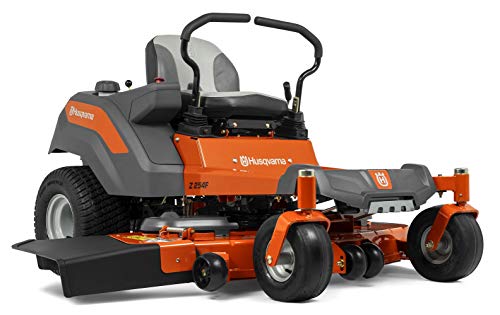
Husqvarna Z254F 54 in. 23 HP Kawasaki Zero-Turn Mower
The Z254F pairs a 23 HP Kawasaki engine with hydrostatic transmission and a wide 54-inch fabricated deck — the combination that matters most on moderate hills: steady torque, smooth speed control, and a broad, planted stance. On large sloped lawns it cuts uniform passes where lawn tractors bog down or scalp.
- High-torque 23 HP Kawasaki engine
- Zero-turn precision cuts mowing time on big yards
- Hydrostatic transmission gives fine speed control on inclines
- Durable fabricated steel deck
- Premium price
- Zero-turns need care on steeper slopes — not for grades beyond the rated limit
Best for: large lawns (1+ acre) with gentle to moderate hills where speed and cut quality both matter.

EGO Power+ Z6 42” Zero-Turn Electric Riding Mower (ZT4204L)
EGO’s Z6 delivers the equivalent of 22 horsepower and up to 8 MPH from four 56V 10Ah batteries — with instant electric torque that holds speed on climbs instead of straining like a small gas engine. It is far quieter than gas, needs no oil or belts serviced, and its zero-turn agility suits yards with trees and beds on slopes. See our full roundup of electric riding mowers for more battery options.
- Instant electric torque helps on climbs
- Much quieter than gas — neighborhood-friendly
- No gas, oil changes, or belt maintenance
- Zero-turn maneuverability around obstacles
- High upfront cost
- Runtime depends on terrain — steep, thick lawns drain batteries faster
Best for: eco-conscious owners of mid-to-large sloped yards who want low noise and low maintenance.

CRAFTSMAN 36” Gas Riding Lawn Mower (11.5 HP Briggs & Stratton)
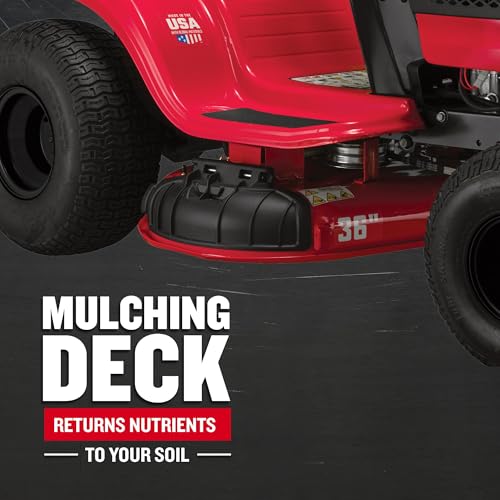
This compact lawn tractor is the affordable way onto a riding mower for smaller hilly yards. Its 7-speed transmission lets you drop to a low gear for controlled climbs and descents, and the narrow 36-inch deck fits through most gates — something wider zero-turns cannot do. If budget is the priority, compare it with our budget riding mower picks.
- Accessible price for a gas rider
- 7 speeds give real control on slopes
- Compact — fits narrow gates and small storage
- Simple, durable construction
- Noisy compared with electric
- Modest power — best kept to gentle hills and smaller lawns
Best for: small to mid-sized lawns with gentle slopes, tight gates, and tighter budgets.

Mowrator S1 4WD Remote-Control Lawn Mower (56V 18Ah)
On slopes too steep to ride safely, the answer is not to ride at all. The Mowrator S1 is a 4WD electric mower you drive by remote from flat ground: it is rated for 75% grades (37°), covers up to 1.12 acres per charge, and adjusts cutting height from 1.5 to 4.3 inches. You get a clean cut on banks and berms with zero rollover risk to you.
- Operator stays off the slope entirely
- 4WD grips grades up to 37°
- Quiet battery power, no emissions
- Adjustable cutting height for banks and rough patches
- Premium price for a single-purpose machine
- Remote driving takes a little practice
Best for: steep banks, retention ponds, and ditches where a riding mower would be dangerous.

Remote-Control Flail Mower, 459cc Hybrid Crawler (39.4”)
This is commercial-grade slope equipment: a tracked, remote-controlled crawler with a 459cc engine and a 39.4-inch flail head that shreds dense grass, weeds, brush, and light saplings on grades up to 55°. It is overkill for a lawn — and exactly right for overgrown hillsides, orchards, and rough terrain that would destroy a normal mower.
- Handles up to 55° slopes and heavy brush
- Remote operation keeps you clear of danger
- Hybrid gas-electric drivetrain
- Commercial-grade tracked chassis
- Expensive — priced like the commercial tool it is
- Setup and learning curve are more involved
Best for: landscapers and rural properties with severe slopes and heavy overgrowth.
Comparison Table: Riding Mowers for Hills at a Glance
Here is how all five machines compare on the specs that matter most for sloped yards — power, cutting width, slope capability, and who each one suits best.
| Mower | Power | Cut width | Slope strength | Best for | |
|---|---|---|---|---|---|
| Husqvarna Z254F | 23 HP Kawasaki (gas) | 54” | Gentle–moderate hills | Large lawns, best all-rounder | Check price |
| EGO Power+ Z6 | 22 HP equiv. (battery) | 42” | Gentle–moderate hills | Quiet, low-maintenance mowing | Check price |
| CRAFTSMAN 36” | 11.5 HP Briggs & Stratton | 36” | Gentle hills | Small yards, tight budgets | Check price |
| Mowrator S1 | 56V 18Ah (battery, 4WD) | 21” | Up to 37° (75%) | Steep banks, operator safety | Check price |
| 459cc RC Flail Mower | 459cc hybrid | 39.4” | Up to 55° | Extreme slopes, heavy brush | Check price |
Specs from manufacturer listings, September 2026 — confirm current details on Amazon before buying.
How Do You Choose a Riding Mower for a Hilly Yard?
Match the machine to your steepest slope, not your average one: check the mower’s rated slope limit, favor hydrostatic or low-gear transmissions for speed control, choose a wider wheelbase for stability, and never buy a rider for grades beyond about 15° — use a remote-control machine there instead.
Slope rating comes first
Every manufacturer publishes a maximum safe slope. Most riding mowers are rated for roughly 10–15°; push past that and you risk sliding or rollover no matter how skilled you are. Measure your steepest section (a phone inclinometer app works) before you shop, and if parts of your yard exceed the rating, plan on a remote-control mower for those zones.
Transmission and engine power
Hydrostatic transmissions (like the Husqvarna’s) let you feather speed continuously on descents, while multi-speed gearboxes (like the CRAFTSMAN’s 7-speed) give you a low gear for climbs. Underpowered engines lug and tear grass uphill — if your lawn is large and hilly, our guide to gas-powered riding mowers covers stronger options too.
Stability: wheelbase, tires, and deck width
A wider stance and grippy rear tires keep a mower planted across gentle grades. Wide decks also mean fewer passes — fewer chances to lose traction turning on a slope. On large hilly yards, a 50–54” zero-turn deck is the sweet spot between coverage and control.
Gas vs. electric on hills
Gas still wins for very long sessions on big properties, but modern battery riders like the EGO Z6 deliver instant torque that feels stronger on climbs than equivalent gas horsepower. Just expect steep, thick grass to shorten battery runtime — buy more capacity than a flat-lawn calculator suggests.
Common mistakes to avoid
The three we see most: buying on deck size alone and ignoring the slope rating; riding across a steep face instead of up and down (riders should mow up and down slopes, walk-behinds across); and skipping tire checks — worn or underinflated tires cost you the traction that keeps a mower on line.
FAQs: Best Riding Lawn Mower for Hills
What features should I look for in a riding mower for hills?
Prioritize a published slope rating that covers your steepest ground, a hydrostatic or low-gear transmission for speed control, a strong engine (roughly 20+ HP for large sloped lawns), a wide wheelbase with aggressive rear tires, and rollover protection where offered. Deck width matters for time, but stability features are what keep you safe.
Are electric riding mowers good on hilly lawns?
Yes — within their slope ratings. Battery mowers like the EGO Power+ Z6 produce instant torque, so they climb confidently and hold speed without the lugging you feel from small gas engines. The trade-off is runtime: steep, dense grass drains batteries faster, so size up on capacity for a hilly yard.
How do zero-turn mowers perform on hills?
Zero-turns excel on gentle to moderate slopes: their speed and agility shorten mowing time dramatically, and hydrostatic drives give fine control. But their front casters can lose steering grip on steep descents, so stay inside the manufacturer’s slope limit and avoid sharp downhill turns on wet grass.
Is a remote-control mower safe for steep slopes?
It is the safest option there is, because you operate from flat ground and are never on the slope. Machines like the Mowrator S1 (37°) and tracked flail crawlers (55°) are built specifically for grades where any ride-on mower would risk rollover.
Can I use any riding mower on a hill?
No. Every mower has a maximum safe slope, typically 10–15° for riders. Beyond that, traction and braking fail unpredictably — the leading cause of serious mower accidents is slope rollover. Measure your grade first, and match the machine to the steepest area you will actually mow.
Should I mow up and down a hill or across it on a riding mower?
On a riding mower, mow up and down the slope, not across it — riding across a grade shifts the machine’s center of gravity sideways and raises rollover risk. (The advice reverses for walk-behind mowers, which are safer across the slope.) Slow down before every downhill turn.
What size mower do I need for a hilly one-acre yard?
For about an acre of rolling ground, a 42–54” zero-turn or lawn tractor hits the balance of speed and control — the Husqvarna Z254F’s 54” deck finishes fastest, while the EGO Z6’s 42” deck trades a little width for quiet battery power. See our zero-turn picks for 1 acre for more.
Final Verdict: Which Riding Mower for Hills Should You Buy?
For most hilly yards, the Husqvarna Z254F is the buy: its 23 HP Kawasaki engine, hydrostatic control, and 54” deck handle moderate slopes and big acreage better than anything else here. Choose the EGO Power+ Z6 if you want that capability with battery quiet, the CRAFTSMAN 36” if you need a capable rider on a budget, and the Mowrator S1 or 459cc flail crawler the moment your slopes pass the point where riding is safe.