

Last updated: October 2026 · Written by the LawnVibe editorial team.
A spike aerator is the simplest, cheapest way to open up a lawn. Instead of pulling plugs out of the ground like a core aerator, it pushes solid spikes into the soil to create small channels for air, water and fertilizer. That makes the best spike aerator a great fit for sandy or loamy soil, light compaction and quick maintenance passes, especially before overseeding or feeding.
This guide compares ten spike aerators across every style: push spikers with weight trays, rolling drum aerators, tow-behind models for riding mowers, handheld step-on tools and spike shoes. You will also learn where spiking works well, where it does not, and how to get real depth out of a spike aerator instead of just poking the surface.
| # | Product | Best for | Link |
|---|---|---|---|
| 1 | Brinly 20″ Premium Push Spike Aerator | Medium lawns | Check price |
| 2 | Brinly 18″ Premium Push Spike Aerator | Small to medium lawns | Check price |
| 3 | Agri-Fab 45-0365 16″ Push Spike Aerator | Small lawns | Check price |
| 4 | CRAFTSMAN 36″ Tow Spike Aerator | Large lawns | Check price |
| 5 | Brinly SAT2-40BH-P 40″ Tow Spike Aerator | Large lawns and acreage | Check price |
| 6 | VEVOR 32″ Tow Behind Spike Aerator | Medium to large lawns | Check price |
| 7 | CRAFTSMAN 40″ Tow Dethatcher + 36″ Tow Spike Aerator | Lawn renovation | Check price |
| 8 | Agri-Fab Tow Behind Spiker Seeder | Overseeding | Check price |
| 9 | VEVOR 21″ Rolling Lawn Aerator | Small yards | Check price |
| 10 | Walensee 15-Spike Manual Lawn Aerator Tool | Corners and paths | Check price |
How We Chose the Best Spike Aerator
We did not run hands-on field tests. We compared these spike aerators on published specifications and design details that matter in real use: working width, spike length and design, weight tray capacity, frame material, rust protection, handle comfort, transport wheels and hitch compatibility for tow-behind units. We also weighed common owner feedback themes, such as spikes bending, trays that are hard to load, and how well each model penetrates dry ground.
Specifications and kit contents change between model years, so confirm the current listing details before you buy.

Brinly 20" Premium Push Spike Aerator
Best for: Medium lawns
A 20 inch push spiker with five 8 inch tine stars, patent-pending 3D galvanized steel tines, reinforced side panels and a weight tray. Transport wheels lift the tines for crossing pavement.
- Wider 20 inch working width
- 3D galvanized tines resist bending and rust
- Transport wheels protect driveways
- Needs added weight for firm soil
- Spiking is not ideal for heavy clay

Brinly 18" Premium Push Spike Aerator
Best for: Small to medium lawns
The smaller sibling, with five 8 inch tine stars of 12 spike tips each, 3D galvanized tines, a rigid weight tray and an adjustable handle with ergonomic grips.
- Compact and easy to store
- Adjustable handle height
- Rigid weight tray
- Narrower width means more passes
- Shallow on dry ground without weight

Agri-Fab 45-0365 16" Push Spike Aerator
Best for: Small lawns
A simple 16 inch walk-behind spiker with five aerating wheels of 7 inch spikes and a steel weight tray that holds a concrete block for up to about 2-1/2 inches of aeration depth.
- Simple, proven design
- Steel weight tray
- Affordable entry point
- 16 inch width is slow on big lawns
- Basic handle

CRAFTSMAN 36" Tow Spike Aerator
Best for: Large lawns
A 36 inch tow-behind spiker with nine galvanized steel disks, a 10-gauge steel frame and an enclosed weight tray, with a universal design for most riding mowers and tractors.
- 36 inch working width
- Durable 10-gauge steel frame
- Universal hitch
- Needs a riding mower or tractor
- Heavy to store

Brinly SAT2-40BH-P 40" Tow Spike Aerator
Best for: Large lawns and acreage
A 40 inch tow-behind spike aerator with transport wheels, built for covering big lawns quickly behind a lawn tractor.
- Very wide 40 inch coverage
- Transport wheels for moving between areas
- Good match for big properties
- Overkill for small yards
- Requires assembly

VEVOR 32" Tow Behind Spike Aerator
Best for: Medium to large lawns
A 32 inch pull-behind spiker with a universal hitch, a weight tray rated for up to about 100 lbs of added weight, folded tray edges to hold weights and a welded steel frame.
- Good width for the price
- Folded tray edges hold weights
- Universal hitch
- Penetration depth around 2 inches
- Newer brand in aerators

CRAFTSMAN 40" Tow Dethatcher + 36" Tow Spike Aerator
Best for: Lawn renovation
A bundle pairing a 40 inch tow dethatcher with the 36 inch tow spike aerator, so you can remove thatch and spike in one session behind a riding mower.
- Dethatch and aerate with one purchase
- Large working widths
- Weight tray for penetration
- Two tools to store
- Only for tow setups

Agri-Fab Tow Behind Spiker Seeder
Best for: Overseeding
A 32 inch tow-behind spiker with a 100 lb capacity drop spreader, letting you spike and drop seed or fertilizer in one pass. Also handles salt and ice melt.
- Spikes and spreads in one pass
- 100 lb hopper
- Year-round use
- Drop spread pattern needs careful overlap
- Tow setup required
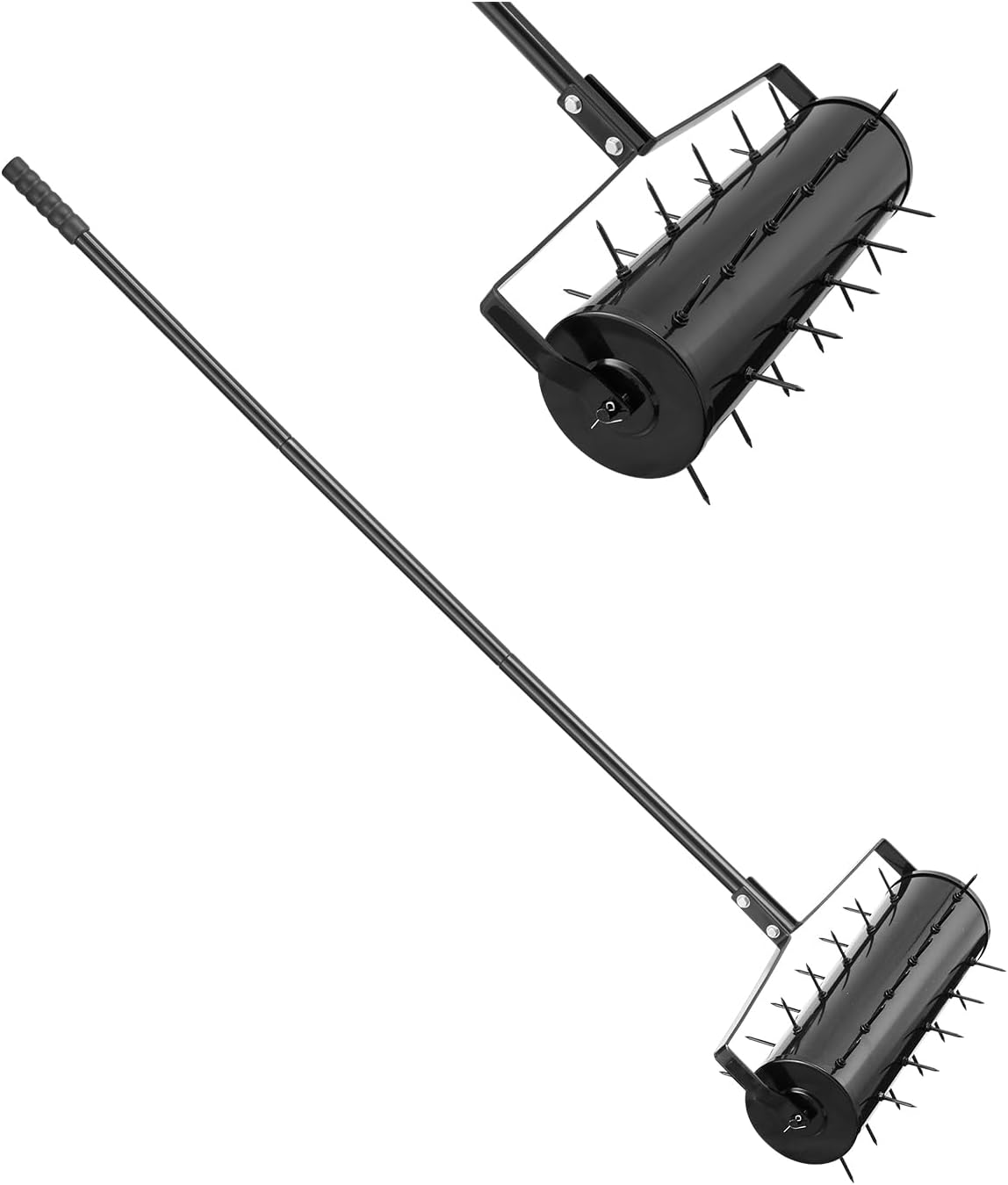
VEVOR 21" Rolling Lawn Aerator
Best for: Small yards
A lightweight rolling aerator with 33 iron spikes about 2 inches long, a 51.6 inch detachable handle and pre-installed spikes for quick setup.
- Light and easy to push
- No bending with long handle
- Quick setup
- Relies on your pushing force
- Best on softer soil

Walensee 15-Spike Manual Lawn Aerator Tool
Best for: Corners and paths
A step-on manual aerator with 15 iron spikes of about 2.8 inches, made for spot aeration, narrow spaces and small patches without the fuss of spike shoes.
- Great for tight areas
- No shoe sizing or straps
- Powder-coated finish
- Slow for a whole lawn
- Physical effort required
Spike Aerator vs Core (Plug) Aerator
This is the most important decision before you buy. Both tools make holes in the lawn, but they work very differently.
| Factor | Spike aerator | Core (plug) aerator |
|---|---|---|
| How it works | Pushes solid spikes into soil | Pulls plugs of soil out |
| Best soil | Sandy, loamy, lightly compacted | Clay, heavily compacted |
| Effect on compaction | Can press soil sideways | Relieves compaction |
| Mess | None, no cores left | Soil plugs on the surface |
| Price | Lower | Higher |
| Best use | Maintenance, before feeding or seeding | Annual deep aeration |
Many university extension services prefer core aeration for compacted turf; Kansas State University Research and Extension explains the process in its guide to aerating your lawn. A spike aerator is still useful, but it is a lighter-duty tool. If your soil is hard clay or the lawn sees heavy foot traffic, compare our picks for the best core aerator or the best lawn aerator for clay soil before choosing spikes.
When a spike aerator makes sense
A spike aerator is a smart choice when the soil is sandy or loamy and only lightly compacted, when you want a quick pass before spreading fertilizer, lime or seed, and when you do not want soil cores left all over the lawn. It is also good for small yards where renting a core machine is not worth the effort, and for regular maintenance between yearly core aerations.
When to choose a core aerator instead
Skip spiking and go straight to coring if your soil is heavy clay, if water pools after rain, if grass is thin in high-traffic areas, or if a screwdriver will not push into moist soil. In those conditions, removing soil is what actually creates space for roots.
Types of Spike Aerators
Push spike aerators
Push spikers use rotating star-shaped tines on an axle, with a tray on top where you add weight. The Brinly and Agri-Fab models in this guide are good examples. They suit small to medium lawns and are easy to store. The weight tray is the key feature: without extra weight, most push spikers only scratch the surface.
Rolling drum aerators
Rolling aerators have spikes fixed around a drum or wheel on a long handle. They are light and inexpensive, and they work well on soft soil and small lawns. Because they rely on your pushing force rather than a weighted tray, they penetrate less on firm ground.
Tow-behind spike aerators
Tow-behind spikers hitch to a riding mower, lawn tractor or ATV. They cover 32 to 40 inches or more per pass and carry heavy weight trays. For lawns of half an acre and up, this is by far the fastest way to spike. Our guide to the best tow-behind aerator compares both spike and plug tow models.
Handheld step-on tools and spike shoes
Step-on fork tools and spike shoes are the most basic option. They are best for spot treatment, tight corners, compacted paths and very small patches. For a full lawn, they are slow and tiring. If you are curious, we cover these in our review of the best lawn aerator shoes.
Spike Aerator Buying Guide
Working width
Wider aerators cover more lawn per pass. Push models usually run 16 to 21 inches, rolling tools 14 to 21 inches, and tow-behind spikers 32 to 48 inches. Match the width to your lawn size and your gate or storage space.
Spike length and design
Longer spikes reach deeper, but they need more weight to penetrate. Star-shaped or 3D tines spread the load and resist bending. Galvanized or powder-coated steel helps the spikes resist rust, which matters because aerators are often stored outdoors or in damp sheds.
Weight tray capacity
Weight is what drives the spikes into the ground. A good weight tray holds concrete blocks, sandbags or pavers securely. Tow-behind models often accept 70 to 100 pounds or more. Check that the tray has raised edges so the weight does not slide off on slopes.
Transport wheels
Some push and tow models have transport wheels or a transport mode that lifts the spikes off the ground. This protects driveways and sidewalks and makes moving the aerator much easier.
Handle and hitch
For push tools, look for an adjustable or long handle so you are not bending. For tow-behind models, a universal pin hitch should fit most riding mowers and garden tractors, but confirm the hitch height and your mower's towing capacity.
How to Use a Spike Aerator for Real Results
- Mow first. Cut the grass a little shorter than usual so the spikes reach soil rather than leaves.
- Water a day or two before. Moist soil lets spikes penetrate deeply. Dry, hard soil makes spikes bounce, and soggy soil smears and sticks.
- Mark obstacles. Flag sprinkler heads, shallow cables and invisible pet fence wires so you do not damage them.
- Add weight. Load the tray gradually until the spikes sink consistently without the aerator becoming hard to move.
- Make two passes. Go across the lawn in one direction, then cross at an angle to increase the number of holes.
- Follow up. Spread seed, fertilizer or topdressing right after aerating so it falls into the fresh holes.
For step-by-step technique, read our guide on how to use a lawn spiker, and if your yard is bumpy, see how to use a spike aerator on uneven lawns.
When and How Often to Spike Aerate
Timing matters more than many people realize. Aerate when the grass is actively growing so it can recover quickly. For cool-season grasses such as Kentucky bluegrass and tall fescue, early fall and spring are good windows. For warm-season grasses such as Bermuda and zoysia, late spring to early summer works best. Avoid aerating during drought, heat stress or dormancy.
Because spiking is lighter than coring, you can do it more often. Many homeowners spike once or twice a year in lighter soils, or between annual core aerations. Our article on how often you should aerate your lawn explains how soil type and traffic change that schedule.
Spike Aerator by Lawn Size
Small yards
A rolling aerator or an 18 inch push spiker is plenty. It is light, easy to store and quick to use. A handheld step-on tool is useful for corners and compacted paths. See our guide to the best lawn aerator for small yards for more compact options.
Medium lawns
A 20 inch push spike aerator with a weight tray offers the best balance of coverage and control. Expect to make two passes for good hole density.
Large lawns and acreage
A tow-behind spike aerator with a 32 to 40 inch working width saves hours of walking. Pair it with a spreader to overseed or fertilize in the same session.
Spike Aeration in Sandy Soil
Sandy soil rarely compacts as badly as clay, but surface crusting and dry spots are common. A quick spike pass helps water soak in instead of running off, and it gives fertilizer and seed a better place to land. If you have sandy soil, compare our picks for aerators for sandy soil and read how to grow grass in sandy soil.
What to Do After Spike Aeration
The holes from a spike aerator close faster than core holes, so follow up promptly. Overseed thin areas, apply fertilizer at the label rate, and water lightly to settle seed into the openings. Our guide on how to fertilize a lawn after aeration explains timing and product choice. If thatch is thick, dethatch before aerating; see how to dethatch a lawn.
Spike Aerator Maintenance
Clean soil and grass off the spikes after every use and let the aerator dry before storing it. Check bolts and the axle for looseness, and straighten or replace any bent spikes. A light coat of oil on bare steel reduces rust over winter. Store the aerator off the ground in a dry place, and remove weights from the tray so the frame is not stressed while stored.
Spike Aerator Safety Tips
- Locate buried lines first. Spikes can damage shallow irrigation lines and low-voltage cables.
- Wear sturdy shoes and gloves when handling spikes and loading weights.
- Lift weights carefully. Concrete blocks are heavy; bend at the knees and load the tray where it sits.
- Tow at a slow, steady speed with tow-behind models, and never carry passengers on the aerator.
- Avoid steep slopes with tow-behind units and follow your mower maker's guidance on towing.
Common Spike Aerator Mistakes
The most common mistake is spiking dry soil without enough weight, which leaves shallow dents instead of real holes. Another is spiking heavy clay and expecting the results of core aeration. People also often skip the cross pass, which leaves too few holes to make a difference, or aerate dormant grass that cannot recover. Finally, many owners forget to follow up with seed or fertilizer, missing the best moment to feed the lawn.
Final Verdict: Which Spike Aerator Should You Buy?
The best spike aerator depends on your lawn size and soil.
- Best overall push spiker: the Brinly 20 inch Premium Push Spike Aerator, for its wider width, 3D galvanized tines and transport wheels.
- Best compact push spiker: the Brinly 18 inch model for small to medium lawns.
- Best budget push spiker: the Agri-Fab 16 inch 45-0365 with a steel weight tray.
- Best tow-behind spiker: the CRAFTSMAN 36 inch tow spike aerator or the Brinly 40 inch SAT2-40 for large lawns.
- Best value tow-behind: the VEVOR 32 inch tow-behind spike aerator.
- Best rolling tool: the VEVOR 21 inch rolling lawn aerator for small yards.
- Best for spot work: the Walensee 15-spike step-on tool or spike shoes.
If your soil is heavy clay or badly compacted, choose a core aerator instead. For lighter soil and regular maintenance, a weighted spike aerator is an affordable, effective way to help water, air and nutrients reach the roots.
Frequently Asked Questions
What is the best spike aerator for most lawns?
For a small to medium lawn, a push spike aerator with a weight tray, such as the Brinly 18 or 20 inch models, is a practical choice. For larger properties with a riding mower, a 32 to 40 inch tow-behind spike aerator covers ground much faster.
Is a spike aerator as good as a core aerator?
Not for heavily compacted or clay soil. A core aerator removes plugs of soil, while a spike aerator only pushes holes into it. Spike aerators work best for light compaction, sandy or loamy soil, and quick seasonal maintenance between core aerations.
Can a spike aerator make compaction worse?
Spikes push soil sideways rather than removing it, so in dense clay they can add some compaction around each hole. In lighter soils this effect is usually minor. If your soil is hard clay, a core aerator is the better tool.
How deep should a spike aerator go?
Most homeowner spike aerators penetrate roughly 2 to 3 inches when the soil is moist and the tray is weighted. Depth depends on soil moisture, spike length and how much weight you add.
When should I use a spike aerator?
Use it when the lawn is actively growing and the soil is moist but not soggy, usually in early fall or spring for cool-season grass and late spring to early summer for warm-season grass.
How do I get a spike aerator to penetrate hard ground?
Water the lawn a day or two before, add weight to the tray (concrete blocks or sandbags), and make two passes in different directions. If the spikes still bounce, the soil may be too dry or too compacted for spiking.