
Last updated: October 2026 · Written by the LawnVibe editorial team.
Most aeration advice is written for clay, where compacted soil chokes grass roots. Sandy soil is different. It drains quickly, rarely packs down hard, and lets roots spread easily. But sandy lawns still have problems: surface crusting, thatch buildup, dry spots where water beads and runs off, and worn paths where foot traffic does compress the top layer. The best aerators for sandy soil are light, simple tools that open the surface without overdoing it.
This guide compares ten aerators that suit sandy lawns, from weighted push spikers and rolling aerators to tow-behind spike models and a hand core tool for topdressing. You will also learn whether your sandy lawn needs aeration at all, how to time it, and how to pair it with compost so the soil holds water and nutrients better over time.
| # | Product | Best for | Link |
|---|---|---|---|
| 1 | Brinly 20″ Premium Push Spike Aerator | Medium sandy lawns | Check price |
| 2 | Brinly 18″ Premium Push Spike Aerator | Small sandy lawns | Check price |
| 3 | Agri-Fab 45-0365 16″ Push Spike Aerator | Budget lawn care | Check price |
| 4 | VEVOR 21″ Rolling Lawn Aerator | Quick passes | Check price |
| 5 | VEVOR Rolling Lawn Core Aerator | Compost topdressing | Check price |
| 6 | Yard Butler ID-6C Manual Lawn Coring Aerator | Paths and worn spots | Check price |
| 7 | Brinly SAT2-40BH-P 40″ Tow Spike Aerator | Large sandy properties | Check price |
| 8 | VEVOR 32″ Tow Behind Spike Aerator | Medium to large lawns | Check price |
| 9 | Agri-Fab Tow Behind Spiker Seeder | Overseeding sandy lawns | Check price |
| 10 | Walensee 15-Spike Manual Lawn Aerator Tool | Dry spots and paths | Check price |
How We Chose the Best Aerators for Sandy Soil
We did not run hands-on field tests. We compared these aerators on published specifications and features that matter on sandy lawns: spike or core design, working width, weight options, frame material, rust protection and ease of use. Because sandy soil is easy to penetrate, we favored lighter, faster tools over heavy-duty coring machines, while including a core option for topdressing. We also weighed common owner feedback themes such as spikes bending, handle comfort and assembly.
Specifications change, so confirm the current listing before you buy.

Brinly 20" Premium Push Spike Aerator
Best for: Medium sandy lawns
A 20 inch push spiker with five 8 inch tine stars of 12 spike tips, 3D galvanized steel tines, a weight tray and transport wheels for crossing pavement.
- Galvanized tines resist rust
- Transport wheels
- Little weight needed in sand
- Spikes, not cores
- Larger to store than hand tools

Brinly 18" Premium Push Spike Aerator
Best for: Small sandy lawns
A compact push spiker with 3D galvanized steel tines, a rigid weight tray and an adjustable handle.
- Compact and light
- Adjustable handle
- Rust-resistant tines
- Narrower path
- Spike-only aeration

Agri-Fab 45-0365 16" Push Spike Aerator
Best for: Budget lawn care
A 16 inch walk-behind spiker with five aerating wheels of 7 inch spikes and a steel weight tray for up to about 2-1/2 inches of aeration depth.
- Low cost
- Simple and durable
- Easy to use
- Basic handle
- Narrow width

VEVOR 21" Rolling Lawn Aerator
Best for: Quick passes
A 21 inch rolling spike aerator with 33 iron spikes about 2 inches long and a 51.6 inch detachable handle, ideal for loose, easy-to-penetrate soil.
- Very light
- Fast coverage
- Pre-installed spikes
- Shallow on firm patches
- Spikes only

VEVOR Rolling Lawn Core Aerator
Best for: Compost topdressing
A 16.6 inch coring roller with anti-clog tines, a drum that can be filled with sand or water, and a 58 inch handle. Core holes help compost settle into the root zone.
- Pulls cores while rolling
- Adjustable drum weight
- No bending
- More than most sandy lawns need
- Heavy when filled

Yard Butler ID-6C Manual Lawn Coring Aerator
Best for: Paths and worn spots
A long-handled, powder-coated steel hollow tine tool for coring worn paths and high-traffic areas where sandy soil has been pressed down.
- True cores for problem spots
- Durable steel
- Easy storage
- Slow for whole lawns
- Manual effort
Brinly SAT2-40BH-P 40" Tow Spike Aerator
Best for: Large sandy properties
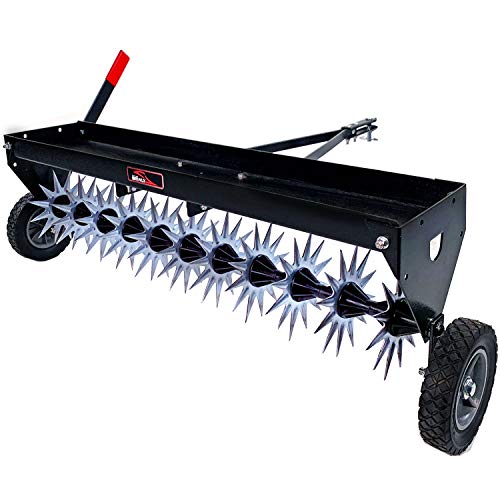
A 40 inch tow spike aerator with 11 tine stars, 3D galvanized tines, a 150 lb weight tray and transport wheels.
- Wide coverage
- Rust-resistant tines
- Transport mode
- Needs a riding mower
- Weight rarely needed in sand

VEVOR 32" Tow Behind Spike Aerator
Best for: Medium to large lawns
A 32 inch spike aerator with a universal hitch, a weight tray rated for about 100 lbs and a welded steel frame.
- Affordable tow option
- Universal hitch
- Welded frame
- Narrower than 40 inch models
- Newer brand

Agri-Fab Tow Behind Spiker Seeder
Best for: Overseeding sandy lawns
A 32 inch spiker with a 100 lb drop hopper that spikes and drops seed or fertilizer in one pass.
- Aerate and seed together
- Year-round use
- Simple design
- Drop pattern needs careful overlap
- Tow only

Walensee 15-Spike Manual Lawn Aerator Tool
Best for: Dry spots and paths
A step-on tool with 15 iron spikes about 2.8 inches long, handy for opening dry spots where water runs off.
- Targets problem areas
- No straps or sizing
- Easy to store
- Slow over a full lawn
- Spike-only
Does Sandy Soil Need Aeration?
Sandy soil has large particles with big pore spaces, so air and water move through it quickly. That is why it resists compaction. Many sandy lawns need aeration only occasionally, if at all. Aeration still helps in specific situations:
- High-traffic areas such as paths, play areas and dog runs where the surface has been pressed down.
- Surface crusting, where fine particles or organic residue form a crust that sheds water.
- Thatch buildup, which can make water bead up on top of sandy lawns.
- Dry spots where water runs off instead of soaking in.
- Before topdressing or overseeding, to help compost and seed reach the root zone.
University extension services explain that core aeration is mainly a fix for compacted soil; Kansas State University Research and Extension covers this in its guide to aerating your lawn. For a deeper look at whether your sandy lawn needs aeration, read should you aerate sandy soil.
Spike vs Core Aeration on Sandy Soil
| Factor | Spike aerator | Core aerator |
|---|---|---|
| Penetration in sand | Easy | Easy |
| Compaction risk | Low in sand | None |
| Mess | None | Cores on surface |
| Best use | Routine surface opening | Topdressing with compost |
| Cost | Lower | Higher |
In clay, spikes can press soil sideways and add compaction around each hole. In sand, that effect is minimal, which makes spike aerators a practical, low-cost choice. A core tool is still useful if you plan to topdress, because open holes help compost settle into the root zone. For a full comparison, see our guides to the best spike aerator and the best core aerator.
Buying Guide: Aerators for Sandy Lawns
Width and lawn size
Push spikers around 16 to 20 inches suit small and medium lawns. Rolling aerators are light and quick. Tow-behind spikers from 32 to 40 inches are best for large sandy properties.
Weight
Sandy soil is easy to penetrate, so heavy weight is rarely needed. A light load in the weight tray is usually enough. Too much weight on very loose sand can leave ruts.
Rust resistance
Galvanized or powder-coated steel lasts longer, especially in coastal areas with salty air.
Ease of storage
Lighter tools are easier to move and store, which matters if you only aerate occasionally.
How to Aerate Sandy Soil
- Water lightly the day before. Slightly moist sand holds the shape of holes better than bone-dry sand, which can collapse back in.
- Mow and clear debris so spikes reach the soil.
- Make one or two passes, focusing extra passes on paths and dry spots.
- Topdress with compost, spreading a thin layer and working it into the holes with a rake.
- Overseed thin areas with a grass suited to your climate.
- Water deeply but less often afterward to encourage deep roots.
Our guide on how to grow grass in sandy soil covers seed choice, fertilizing and watering in more detail.
Improving Sandy Soil Over Time
Aeration alone does not change sandy soil's texture. The most effective long-term improvement is adding organic matter. Topdressing with screened compost after aeration, leaving mulched grass clippings on the lawn, and using slow-release fertilizers all help sandy soil hold more water and nutrients. Over several seasons, the top few inches become darker, more crumbly and better at supporting a thick lawn.
Topdressing Sandy Soil Step by Step
Topdressing is where aeration really pays off on sand. After aerating, spread a thin layer of screened compost over the lawn, roughly a quarter inch or less so the grass blades still show through. Use a shovel and a flick of the wrist for small areas, or a topdressing spreader or drag mat for bigger lawns. Work the compost into the aeration holes with the back of a leaf rake or a drag mat, then water lightly to settle it. Repeat once or twice a year. Over time, the compost builds organic matter in the root zone, which helps sandy soil hold water and nutrients much better than sand alone.
Dealing With Water-Repellent Sand
Some sandy lawns develop dry patches where water beads on the surface and runs off, even after a long watering. This can happen when organic coatings on sand grains make them repel water, often in hot, dry periods. Aerating these spots with a spike tool or core tool helps water get past the surface. Many homeowners also use a soil wetting agent, following the label directions. Watering in shorter cycles, letting each soak in before the next, helps too.
Grass Types That Do Well in Sandy Soil
Grass choice makes a big difference on sand. In warm climates, Bermuda grass, zoysia and some types of St. Augustine are often used on sandy soils because they tolerate heat and spread to fill gaps. In cooler regions, tall fescue's deep roots help it cope with fast-draining soil better than many other cool-season grasses. Fine fescues can also perform well on sandy, low-fertility sites. Check with your local extension service for varieties suited to your area.
Sandy Soil in Coastal and Hot Climates
Coastal lawns face salt spray, wind and very fast drainage. Galvanized or powder-coated aerators last longer near the ocean, and rinsing tools after use helps prevent corrosion. In hot inland climates, aerate in the cooler part of the growing season and water well afterward so grass recovers before summer stress.
Watering Sandy Lawns
Sandy soil drains fast, so water can move below the root zone before grass uses it. Water deeply but less frequently, and consider splitting watering into two shorter cycles so water soaks in rather than running past roots. Early morning watering reduces evaporation. Aeration and compost topdressing both help water stay where roots can reach it. For more water-saving ideas, see how to save water on a lawn in drought.
Signs Your Sandy Lawn Needs Aeration
Watch for water running off instead of soaking in, worn paths that stay thin, a spongy thatch layer, or a hard crust on the surface. Any of these signs is a good reason for a light aeration pass.
Fertilizing Sandy Soil
Nutrients leach out of sandy soil quickly, especially nitrogen. Slow-release fertilizers feed grass gradually and reduce losses. Apply fertilizer right after aeration so it reaches the root zone, but follow label rates closely, because excess nutrients are easily washed away. Our guide on how to fertilize a lawn after aeration explains timing.
When to Aerate Sandy Lawns
Aerate when grass is actively growing. Cool-season lawns are best aerated in early fall or spring; warm-season lawns, which are common on sandy soil in warm climates, do best in late spring to early summer. Avoid aerating during drought, when sandy soil is at its driest and grass is stressed. Our article on how often you should aerate your lawn helps set a schedule.
Mowing Tips for Sandy Lawns
Mow high on sandy soil. Taller grass shades the surface, slowing evaporation, and supports deeper roots that reach moisture lower in the soil. Leave clippings on the lawn as mulch so they return organic matter and nutrients. Keep the mower blade sharp, because torn grass loses more water than cleanly cut grass. In hot, dry weather, mow less often and avoid mowing stressed grass.
Common Mistakes on Sandy Soil
The most common mistake is aerating more than sandy soil needs, which wastes time and can disturb the surface. Others include aerating bone-dry sand, using heavy coring machines where a light spike pass would do, and skipping compost topdressing, which is what actually improves sandy soil. Watering shallowly and often is another frequent problem, encouraging shallow roots that struggle in heat.
Final Verdict: Which Aerator Is Best for Sandy Soil?
The best aerators for sandy soil are light, simple and paired with good soil care.
- Best overall: the Brinly 20 inch Premium Push Spike Aerator with 3D galvanized tines.
- Best compact: the Brinly 18 inch push spike aerator.
- Best budget push spiker: the Agri-Fab 16 inch 45-0365.
- Best rolling aerator: the VEVOR 21 inch rolling spike aerator.
- Best for topdressing: the VEVOR rolling core aerator or the Yard Butler ID-6C core tool.
- Best tow-behind: the Brinly SAT2-40 or the VEVOR 32 inch tow spike aerator.
- Best spike and seed: the Agri-Fab tow-behind spiker seeder.
- Best for spots: the Walensee 15-spike step-on tool.
Aerate only where your sandy lawn needs it, topdress with compost and water deeply, and the soil will gradually support a thicker, more resilient lawn.
Frequently Asked Questions
Do I need to aerate sandy soil?
Less often than clay. Sandy soil drains fast and resists compaction, so many sandy lawns only need aeration in high-traffic areas or where a surface crust or thatch layer forms.
What is the best aerator for sandy soil?
A push spike aerator with a weight tray, such as the Brinly 20 inch, or a rolling spike aerator is usually enough. Spikes penetrate sand easily and do not leave soil cores on the surface.
Is a spike aerator good for sandy soil?
Yes. The concern that spikes compress soil applies mostly to clay. In sandy soil, spikes open channels with little compaction, making them an efficient and inexpensive choice.
When should I aerate a sandy lawn?
Aerate when grass is actively growing and the soil is slightly moist. Dry sand can collapse back into holes, so water lightly a day before.
Can aeration help sandy soil hold water?
Aeration helps water soak in rather than run off a crusted surface. To improve water holding, pair aeration with compost topdressing, which adds organic matter over time.
Should I use a core aerator on sandy soil?
It works, but it is often more than sandy soil needs. Core aeration is useful when topdressing with compost, because the holes help organic matter move into the root zone.