
Last updated: October 2026 · Written by the LawnVibe editorial team.
Not every garden has a faucet nearby. Allotments, balconies, rooftop terraces, raised beds at the back of the yard and community plots often depend on watering cans and good intentions. A solar watering system changes that: a small panel charges a battery that runs a pump on a timer, drawing from a tank or rain barrel. The best solar powered watering systems for gardens range from compact kits for a few pots to larger systems with dozens of drippers, two-zone and Wi-Fi models, and solar-charged hose timers for faucet-fed gardens. Our top pick is a 10W Lewisia solar drip kit. Below we compare nine options and explain how to size and set one up.
Listings change often, so check current details on Amazon before you buy. As an Amazon Associate we earn from qualifying purchases.
Our top picks at a glance
| # | Product | Best for | Link |
|---|---|---|---|
| 1 | Lewisia 10W Solar Automatic Drip Irrigation Kit | Raised beds and patio gardens without a faucet | Check price |
| 2 | AEO Solar Drip Irrigation System (50 Drippers, 155 ft) | Long beds and many containers | Check price |
| 3 | Solar Dual Pump 2-Zone Drip Irrigation Kit | Plants with different water needs | Check price |
| 4 | HEKIWAY 49 ft Solar Drip Irrigation Kit (15 Pots) | Balconies and patios with up to 15 pots | Check price |
| 5 | Fotgear 49 ft Solar Drip Irrigation Kit | Reservoirs placed above the pots | Check price |
| 6 | RAINPOINT Smart Wi-Fi Solar Plant Watering System | Remote control over Wi-Fi | Check price |
| 7 | Lewisia 2W Solar Drip Irrigation Kit with Timer | A few pots on a sunny balcony | Check price |
| 8 | TRJZWA Solar and USB Sprinkler Timer | Faucet-fed gardens without battery changes | Check price |
| 9 | OtO Lawn Smart Solar Sprinkler | Lawns and large beds | Check price |
Best solar powered watering systems: reviews

Lewisia 10W Solar Automatic Drip Irrigation Kit
Best for: Raised beds and patio gardens without a faucet
A 10W solar drip kit with a pump and timer that draws from a water container and waters beds and pots on a schedule.
- Higher-wattage panel than many kits
- Built-in timer
- No faucet or outlet needed
- Reservoir must be refilled
- Output drops on cloudy days

AEO Solar Drip Irrigation System (50 Drippers, 155 ft)
Best for: Long beds and many containers
A solar-powered drip system with 155 ft of tubing and 50 drippers for watering a large number of plants from a tank.
- Lots of tubing and drippers
- Solar powered
- Covers many plants
- Needs a large water container
- More setup time

Solar Dual Pump 2-Zone Drip Irrigation Kit
Best for: Plants with different water needs
A solar kit with two pumps and two zones, plus USB charging, so thirsty and drought-tolerant plants can run on different schedules.
- Two independent zones
- Solar and USB charging
- Indoor or outdoor use
- Unbranded listing
- More tubing to manage

HEKIWAY 49 ft Solar Drip Irrigation Kit (15 Pots)
Best for: Balconies and patios with up to 15 pots
A solar drip kit sized for about 15 pots with 49 ft of tubing, aimed at balconies, patios and small gardens.
- Sized for container gardens
- Solar powered
- Compact setup
- Limited to smaller plantings
- Reservoir sold separately

Fotgear 49 ft Solar Drip Irrigation Kit
Best for: Reservoirs placed above the pots
A solar plant watering kit for about 15 pots that includes an anti-siphoning device to stop the reservoir draining after each cycle.
- Anti-siphon device included
- Solar powered
- Good flow for its size
- Small to medium plantings
- Lesser-known brand

RAINPOINT Smart Wi-Fi Solar Plant Watering System
Best for: Remote control over Wi-Fi
A Wi-Fi solar watering system from RAINPOINT that lets you schedule and monitor watering of potted plants from an app.
- App control
- Solar powered
- From a known irrigation-timer brand
- Needs Wi-Fi coverage
- App setup required

Lewisia 2W Solar Drip Irrigation Kit with Timer
Best for: A few pots on a sunny balcony
A small 2W solar drip kit with a timer for watering a handful of pots or a small planter.
- Compact
- Low cost of entry
- Simple timer
- Low output
- Few pots only

TRJZWA Solar and USB Sprinkler Timer
Best for: Faucet-fed gardens without battery changes
A hose timer powered by solar and USB charging, so drip, soaker or sprinkler lines can run on schedule without replacing batteries.
- Solar charging
- Works with any hose-fed system
- Reduces battery waste
- Needs a faucet
- Single outlet
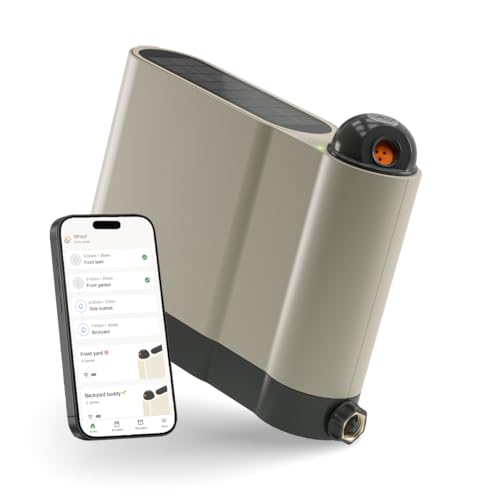
OtO Lawn Smart Solar Sprinkler
Best for: Lawns and large beds
An app-controlled, solar-powered smart sprinkler that adjusts spray to the shape of the area and can use weather data.
- Shapes watering to the yard
- Solar powered
- App and weather features
- Needs a hose and faucet
- Higher-end product
How we chose these systems
We looked at solar pump kits of different sizes, including two-zone and app-controlled models, plus a solar hose timer and a solar smart sprinkler for gardens that do have a faucet. We compared panel wattage, number of drippers and tubing length, programming options and features like anti-siphon protection. We do not list prices because they change often. Most of these products come from smaller brands, so check recent reviews on each listing.
How solar watering systems work
A solar panel charges a built-in battery during the day. A small pump sits in or connects to a water container, such as a bucket, tank or rain barrel. At programmed times, the pump pushes water through thin tubing to drippers staked into pots or beds. Because the battery stores energy, most systems can water early in the morning or in the evening, not only when the sun is out. Some models add a light sensor, multiple zones, or Wi-Fi control.
Types of solar watering systems
Solar drip kits
The most common type, with a panel, pump, timer, tubing and drippers in one box. Sized from a few pots to dozens of plants.
Two-zone solar systems
Two pumps or outputs let you run different schedules for thirsty and drought-tolerant plants.
Smart solar systems
App-controlled models add remote scheduling and notifications.
Solar hose timers
For gardens with a faucet, a solar-charged timer replaces battery-powered timers and runs drip, soaker or sprinkler lines.
Solar sprinklers
Smart sprinklers with solar panels shape spray to the lawn or bed and use a faucet for water.
How to choose a solar watering system
- Number of plants: small kits suit about 10 to 15 pots; larger kits handle more drippers and longer tubing.
- Water source: a bucket works for a balcony; a rain barrel or large tank suits beds and allotments.
- Panel size: higher wattage panels charge faster and handle cloudy weather better.
- Pump lift: check how high and far the pump can push water if the tank sits low.
- Zones: two zones help when plant needs differ.
- Anti-siphon: important when the reservoir sits above the pots.
- Control: buttons are simple; Wi-Fi adds remote control.
Where solar watering systems work best
Balconies and rooftop terraces: rarely have an outdoor tap, and containers dry out fast in sun and wind. A compact solar kit with a bucket reservoir keeps pots watered.
Allotments and community gardens: often have shared water points far from your plot. A solar kit fed from a water butt keeps beds watered between visits.
Back-of-yard raised beds: running a hose to the far corner every day is tedious. A rain barrel and solar pump next to the beds solves it.
Greenhouses and polytunnels without power: a solar kit and a tank inside or beside the greenhouse provides automatic watering. Our guide to the best watering systems for greenhouses covers more options.
Vacation homes and cabins: off-grid properties benefit from systems that need neither mains water pressure nor electricity.
Solar vs battery vs mains-powered systems
Solar kits need no outlet and no battery changes, but output depends on sunlight and the reservoir must be refilled. Battery-powered pump kits work anywhere, indoors or out, but batteries need charging or replacing. Faucet-fed systems with a hose timer offer the most water and pressure, with no reservoir to refill, but need a tap nearby. If you have a faucet close to your plants, a faucet-fed drip system is usually simpler; if not, solar is the most hands-off choice.
Watering schedules for solar systems
Start with a short run once or twice a day in summer for pots and less often for beds, then adjust after checking soil moisture. Small pots in hot sun may need two cycles a day, while larger containers and beds often do better with a longer run every day or two. Water early in the morning where possible so plants have moisture for the heat of the day. Reduce frequency in cooler weather.
Setting up a solar drip system
- Choose a sunny spot for the panel, ideally facing the sun for most of the day and free of shade from walls or plants.
- Place the water container close to the plants. Covered containers reduce algae and mosquitoes.
- Put the pump or intake in the container and fit a filter if the water comes from a rain barrel.
- Run the main tubing toward the plants and branch to each pot or plant with connectors.
- Stake drippers into the soil near each plant's roots.
- Program the timer for a short test, then watch every dripper.
- Run a trial week and adjust watering time and frequency before relying on it.
Our general guide on how to set up drip irrigation covers layout basics that apply to solar systems too.
Pairing solar irrigation with a rain barrel
Solar pumps and rain barrels are a natural match: free power and free water. A barrel connected to a downspout fills with each storm, and the solar pump moves that water to your beds on schedule. Keep a screen or filter on the barrel inlet to keep debris and mosquitoes out, and fit a filter on the pump intake to protect small drippers. Raise the barrel on blocks if the pump struggles to lift water. Our guide on how to install a rain barrel walks through the setup, and if you want to collect more water, see how to set up a rainwater harvesting system. For barrel accessories, compare our guide to the best rain barrel diverter.
Sizing your reservoir
A solar kit is only as reliable as its water supply. Estimate how much water each plant uses per watering, multiply by the number of plants and the number of waterings between refills, then add a margin. For a balcony with a dozen pots, a large bucket may last several days in summer; a few raised beds can empty a rain barrel during a dry spell. If you are going away, choose the biggest container practical and test how quickly it empties.
Performance on cloudy days and in shade
Most systems store energy in a battery, so they keep watering through some dull days. Long cloudy spells or a panel in partial shade can reduce output, so the pump may run for shorter times or skip cycles. Higher-wattage panels and larger batteries handle this better. If your garden is shady, mount the panel on a sunny wall or fence and run the cable to the pump. Many kits also allow USB charging as a backup.
Avoiding siphoning and overwatering
If the reservoir sits higher than the plants, water can keep flowing through the tubing by gravity after the pump stops, slowly draining the container and flooding pots. Keep the water level below the drippers or use a system with an anti-siphon valve. Give thirsty plants extra drippers and drought-tolerant plants fewer, or use a two-zone kit.
Solar hose timers and sprinklers
If your garden has a faucet, a solar-charged hose timer gives you automatic watering without battery changes. It works with drip, soaker hoses or sprinklers. For lawns, a solar smart sprinkler can shape its spray to the area. For more faucet-based options, compare our guide to the best hose bib timer choices and our roundup of the best smart watering systems for gardens.
Maintenance
- Wipe the solar panel regularly so dust and pollen do not reduce charging.
- Clean the filter and reservoir every few weeks to stop algae.
- Flush tubing and check drippers for clogs; see how to troubleshoot a clogged drip irrigation line.
- Store the pump and controller indoors in freezing weather.
- Check the battery at the start of each season.
Saving water with solar irrigation
Solar drip systems are already efficient: water goes straight to the roots in measured amounts. Using harvested rainwater, mulching pots and beds and watering early in the morning stretch each refill further. The EPA WaterSense program has more ideas for efficient outdoor watering.
Common mistakes
- Panel in the shade.
- Reservoir too small for the number of plants.
- No filter on rain barrel water.
- Reservoir above the pots without anti-siphon protection.
- Skipping the trial run before a trip.
- Leaving the pump outside through freezing weather.
Is a solar watering system worth it?
If your plants are far from a faucet, yes. A solar kit removes daily trips with a watering can, keeps plants watered while you are away and makes good use of harvested rainwater. It will not replace a full in-ground irrigation system for a large lawn, but for containers, raised beds, greenhouses and allotments it is one of the most practical ways to automate watering. Start with a kit sized slightly larger than you need, test it for a week and expand once you know how your plants respond. Keep the panel clean and the reservoir topped up, and the system should run for many seasons.
The bottom line
For most gardens without a convenient faucet, a solar drip kit like the 10W Lewisia system is the best all-round choice. Choose a larger kit for long beds, a two-zone model for mixed plants, a Wi-Fi model for remote control and a compact 2W kit for a few balcony pots. If you have a faucet, a solar hose timer or solar smart sprinkler adds automation without battery changes.
Frequently Asked Questions
Do solar watering systems work?
Yes, for small to medium plantings. A solar panel charges a battery that runs a small pump on a timer, drawing water from a container to drip lines and pots.
Do solar watering systems work on cloudy days?
Most store energy in a built-in battery, so they keep running through some cloudy days, though output and charge may drop during long dull spells.
Can a solar watering system pump from a rain barrel?
Many can, since they draw from any container with a submersible or intake hose. Check the pump's lift height and fit a filter.
How many plants can a solar drip kit water?
Small kits often handle around 10 to 15 pots, while larger kits with more drippers and tubing can water dozens of plants or a few raised beds.
Do solar systems need a faucet?
Solar pump kits do not; they use a reservoir. Solar hose timers and sprinklers still need a faucet but avoid battery changes.