
Last updated: October 2026 · Written by the LawnVibe editorial team.
A greenhouse is a warm, sheltered place to grow, but it never rains inside. Every drop your plants get comes from you, and in summer pots and benches can dry out in a single afternoon. A greenhouse watering system delivers water on schedule, so plants stay healthy even when you cannot check on them several times a day. The best watering systems for greenhouses combine micro drip for roots with misting for seedlings and humidity, plus a timer or controller. Our top pick is a 226 ft micro drip kit with both drippers and misting nozzles. Below we compare nine systems, including reservoir and solar options for greenhouses without a tap.
Listings change often, so check current details on Amazon before you buy. As an Amazon Associate we earn from qualifying purchases.
Our top picks at a glance
| # | Product | Best for | Link |
|---|---|---|---|
| 1 | MIXC 226 ft Greenhouse Micro Drip Irrigation Kit | Benches, beds and pots in one greenhouse | Check price |
| 2 | HIRALIY 118 ft Greenhouse Misting Drip Kit | Seedlings, cuttings and humidity-loving plants | Check price |
| 3 | MIXC 65 ft Hanging Plant Watering System | Small greenhouses with baskets | Check price |
| 4 | 200 ft Professional Greenhouse Drip Kit | Long benches and big hobby greenhouses | Check price |
| 5 | Spider Farmer Auto Drip Kit with 13-Gallon Bucket | Greenhouses without a tap | Check price |
| 6 | RISINGUP 6W Solar Irrigation System | Off-grid greenhouses and potting benches | Check price |
| 7 | Greenhouse Misting Cooling System | Hot greenhouses in summer | Check price |
| 8 | CARPATHEN Premium Drip Irrigation Kit | In-ground greenhouse beds and raised beds | Check price |
| 9 | Electric Digital Garden Irrigation Timer | Automating a hose-fed greenhouse system | Check price |
Best watering systems for greenhouses: reviews

MIXC 226 ft Greenhouse Micro Drip Irrigation Kit
Best for: Benches, beds and pots in one greenhouse
A large micro drip kit with 1/4 inch tubing, drippers and misting nozzles, aimed at greenhouses, patios and mixed plantings.
- Mix of drippers and misters
- Plenty of tubing
- Works for benches and ground beds
- Many small parts to plan
- Lesser-known brand

HIRALIY 118 ft Greenhouse Misting Drip Kit
Best for: Seedlings, cuttings and humidity-loving plants
A greenhouse kit combining misting nozzles and drip parts for hanging plants and benches, with 1/4 inch tubing.
- Raises humidity
- Suits hanging baskets
- Combines mist and drip
- Misting needs clean water to avoid clogs
- Can over-wet leaves if run too long

MIXC 65 ft Hanging Plant Watering System
Best for: Small greenhouses with baskets
A compact quick-connect kit for hanging baskets and small greenhouses, delivering mist or drip to overhead plants.
- Quick connectors
- Compact size
- Good for baskets
- Small coverage
- Light-duty fittings

200 ft Professional Greenhouse Drip Kit
Best for: Long benches and big hobby greenhouses
A 200 ft drip kit marketed for greenhouse and patio use, with enough tubing for multiple benches or beds.
- Long tubing length
- Suited to bigger layouts
- Expandable
- Unbranded listing
- Needs planning for zones

Spider Farmer Auto Drip Kit with 13-Gallon Bucket
Best for: Greenhouses without a tap
A drip kit with a 13-gallon foldable bucket and pump, so plants can be watered automatically from a reservoir instead of a faucet.
- No faucet needed
- Large reservoir
- Pump and drippers included
- Needs a power source
- Reservoir must be refilled
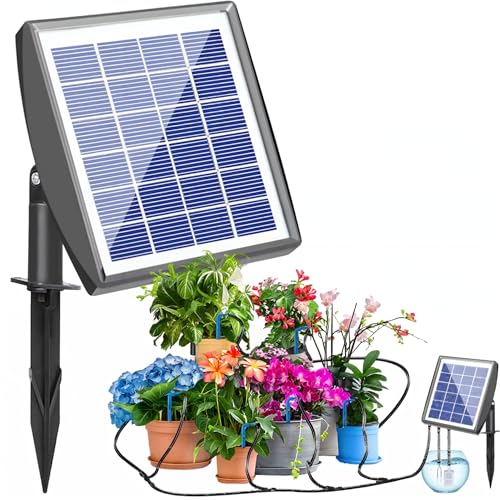
RISINGUP 6W Solar Irrigation System
Best for: Off-grid greenhouses and potting benches
A solar-powered irrigation pump with programmable watering for pots and small beds, drawing from a water container.
- Solar powered
- Programmable timing
- Good for off-grid spots
- Limited to small plantings
- Lower output on cloudy days

Greenhouse Misting Cooling System
Best for: Hot greenhouses in summer
A misting line with nozzles for cooling and humidifying a greenhouse or patio, connected to a hose.
- Helps lower temperature
- Raises humidity
- Simple hose connection
- Not a substitute for ventilation
- Hard water can clog nozzles

CARPATHEN Premium Drip Irrigation Kit
Best for: In-ground greenhouse beds and raised beds
An adjustable drip kit with quick-connect fittings that suits greenhouse ground beds and raised beds.
- Adjustable emitters
- Complete kit
- Beginner friendly
- Not designed for misting
- Covers moderate area
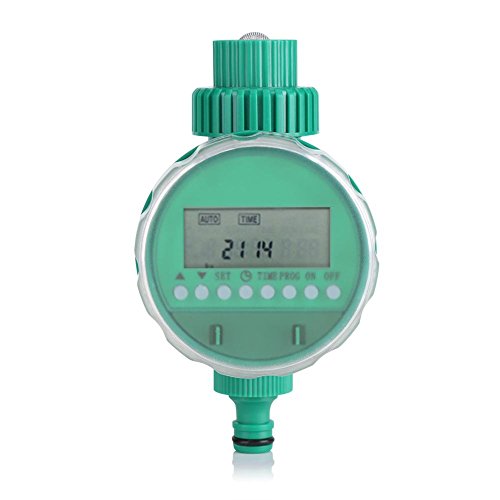
Electric Digital Garden Irrigation Timer
Best for: Automating a hose-fed greenhouse system
A battery-operated digital irrigation timer for scheduling drip or mist lines from an outdoor faucet.
- Simple scheduling
- Battery powered
- Fits common faucets
- Single outlet
- Basic display
How we chose these systems
We looked for systems that suit how greenhouses are actually used: pots on benches, hanging baskets, ground beds and seed trays. We included micro drip kits, misting kits, a cooling mist line, a reservoir pump kit and a solar system for greenhouses without a faucet, plus a timer. We compared what comes in the box, how flexible the layout is and how well each handles small pots versus beds. We do not list prices because they change often. Many of these kits come from smaller brands, so check recent reviews on each listing.
Types of greenhouse watering systems
Micro drip irrigation
Micro drip uses 1/4 inch tubing with emitters at each pot or plant. It is the most efficient and flexible way to water roots on benches and in beds. Choosing the right emitter flow matters; see our guide on what size drip emitter to use for plants.
Misting systems
Fine mist nozzles raise humidity and gently water seedlings and cuttings. They are not ideal for established plants because they wet foliage and do not soak deep roots. For dedicated misting setups, see our guide to the best greenhouse misting systems.
Capillary mats and trays
Mats on benches wick water up into pots from below. They are simple and gentle but need a level bench and a water supply.
Reservoir and pump kits
A tank with a small pump and timer feeds drip lines, ideal when there is no faucet nearby.
Solar irrigation
Solar kits run a pump from a panel and battery, useful in off-grid greenhouses and allotments.
Overhead sprinklers
Some larger greenhouses use overhead booms or sprinklers, but for hobby greenhouses they waste water and wet leaves, so drip is usually better.
How to choose a greenhouse watering system
- What you grow: seedlings and cuttings like mist; established vegetables and pot plants like drip.
- Layout: benches of pots need individual emitters; ground beds suit drip line; baskets need overhead drippers.
- Water source: a faucet makes drip easy; no faucet means a reservoir, rain barrel or solar kit.
- Water quality: hard or rain water can clog fine nozzles, so fit a filter.
- Power: pump kits need electricity or solar; faucet-fed systems need only a battery timer.
- Size: small lean-to greenhouses need a compact kit; larger hobby greenhouses need longer tubing and zones.
Drip vs misting in a greenhouse
Drip and misting do different jobs. Drip puts water at the roots, wastes very little and keeps leaves dry, which helps prevent mildew and botrytis in the still, humid air of a greenhouse. Misting raises humidity, cools the air on hot days and keeps seedlings and cuttings from drying out. The best setup for many growers is two separate lines on a timer: a drip line that runs a few times a week for established plants and a misting line that runs briefly on hot afternoons or over propagation benches.
How often to water in a greenhouse
Greenhouses change fast. On a sunny summer day the inside can become far hotter than outdoors, and small pots can dry out within hours. In winter, plants grow slowly and need much less water, and overwatering cold, wet compost invites root rot. Rather than a fixed rule, check pots and beds daily by feel or by lifting pots to judge their weight. Water when the top of the compost is dry and the pot feels light. A timer makes daily or twice-daily summer watering practical, but adjust the program as the seasons change.
Setting up micro drip in a greenhouse
- Plan the layout: sketch benches, beds and hanging baskets and decide how many emitters each needs.
- Fit a filter and pressure regulator at the faucet or after the pump.
- Run a 1/2 inch or 1/4 inch supply line along the back of each bench.
- Branch 1/4 inch tubing to each pot using barbed connectors and stake emitters into the compost.
- Hang drippers for baskets from the frame, with tubing running along the roof bars.
- Flush the lines, then fit end plugs.
- Connect a timer and test each emitter.
Our guide on how to set up drip irrigation covers the basics, and you can learn how to connect drip irrigation to a hose bib if you are feeding the greenhouse from an outdoor tap.
Watering without a faucet
Many greenhouses sit at the far end of a garden or allotment with no tap nearby. A water butt or rain barrel connected to the greenhouse gutter is the classic solution. Raise it on blocks for a little gravity pressure to feed low-pressure drip line, or add a small submersible pump with a timer. Solar irrigation kits combine a panel, battery, pump and programmer in one unit and work well for a modest number of pots. Our guide to the best rain barrel diverter for greenhouses covers collecting rainwater from the greenhouse roof.
Humidity, ventilation and watering
Watering and ventilation work together. Damp compost and still, warm air create ideal conditions for fungal disease. Water in the morning so leaves and surfaces dry during the day, and open vents or run a fan to keep air moving. Misting is helpful on hot days but should be brief; constantly wet leaves cause more problems than they solve. Damping down the floor on hot days, an old greenhouse technique, raises humidity and cools the air without wetting plants.
Watering by plant type
Tomatoes, cucumbers and peppers in grow bags or borders: these are the thirstiest greenhouse crops in summer. Give each plant one or two drippers and water deeply so the whole root ball is moist. Steady moisture helps reduce problems like blossom end rot and split fruit.
Pot plants on benches: small pots dry fastest. Use one emitter per pot, and group pots of similar size on the same line so they dry at a similar rate.
Hanging baskets: they sit in the warmest, driest air near the roof. Run a dripper to each basket or use a basket-specific kit.
Succulents and cacti: they need very little water and should not share a line with thirsty crops. Water them by hand or on a separate, rarely used line.
Seed trays and propagation benches: use misting or bottom watering, not drippers.
Zones and timers
Splitting a greenhouse into two or three zones makes watering much more precise. A typical layout might be one zone for crops in borders and grow bags, one for pots on benches and one for misting over propagation. A multi-outlet hose timer or a controller with several stations can run each zone on its own schedule. For faucet-fed systems, a dual outlet hose timer is an easy way to split drip and mist. For mixed-size pots, our roundup of the best drip irrigation for pots has more options.
Watering seedlings and cuttings
Seed trays and cuttings need moist but not soggy compost. Bottom watering, by standing trays in water or using capillary matting, keeps the surface from crusting and avoids washing seeds away. A fine mist on a timer keeps cuttings from wilting while they root. Once seedlings have a few true leaves, move them onto drip or regular watering.
Water quality and clogs
Fine greenhouse emitters and misters clog easily. Rainwater can carry debris and algae, and hard tap water leaves mineral deposits. Fit a filter at the source, flush lines regularly and keep reservoirs covered to block light and algae. If an emitter stops working, our guide on how to troubleshoot a clogged drip irrigation line walks through the fixes.
Saving water in the greenhouse
A greenhouse can be very water-efficient with drip: water goes straight to the compost with almost no runoff. Group plants with similar needs on the same line, mulch beds, and collect rainwater from the roof. Our guide on how to reduce water waste with a drip irrigation system has more ideas, and the EPA WaterSense program offers broader tips on efficient outdoor watering.
Seasonal care
- Spring: flush lines, clean filters and check every emitter before seedlings go in.
- Summer: increase watering frequency, add brief misting on hot days and check reservoirs daily.
- Autumn: cut back watering as growth slows.
- Winter: water sparingly in the morning; drain lines and protect timers and pumps from frost in unheated greenhouses.
Common mistakes
- Overwatering in cool weather, which rots roots.
- Misting established plants constantly, which encourages mildew.
- No filter on fine emitters.
- Watering in the evening, leaving plants wet overnight.
- One schedule for seedlings and mature plants.
- Forgetting reservoirs in hot weather.
Is an automatic greenhouse system worth it?
If you grow in a greenhouse through summer, yes. Even a short weekend away in a heat wave can undo months of work, and an automatic system removes that worry. It also tends to water more consistently than hand watering, which most greenhouse crops appreciate. Start with a simple drip kit and timer, then add misting or a reservoir as you learn what your greenhouse needs.
The bottom line
For most hobby greenhouses, a micro drip kit with both drippers and misting nozzles, like our top pick, covers benches, beds and baskets. Add a dedicated misting kit for seedlings or cooling, a reservoir or solar kit where there is no faucet, and a timer to keep everything consistent. Water in the morning, keep air moving and adjust through the seasons.
Frequently Asked Questions
What is the best watering system for a greenhouse?
For most hobby greenhouses, a micro drip kit with 1/4 inch tubing and emitters is the most flexible, because it can water pots, benches and beds. Add misting for seedlings and humidity.
How do I water a greenhouse without a faucet?
Use a reservoir with a pump, a solar irrigation kit or a gravity-fed system from a raised water barrel.
How often should greenhouse plants be watered?
Greenhouses heat up and dry out quickly, so plants often need water more often than outdoors, especially in summer. Check pots and soil daily and adjust.
Is misting or drip better in a greenhouse?
Drip is better for watering roots of established plants. Misting suits seedlings, cuttings and raising humidity. Many greenhouses use both on separate lines.
Do greenhouse watering systems need a filter?
Yes. Small emitters and misting nozzles clog easily, so a filter at the water source is strongly recommended.