
Last updated: October 2026 · Written by the LawnVibe editorial team.
In the round point vs square shovel comparison, the round point shovel is the digging tool: its pointed, curved blade cuts into soil, clay and roots and handles most yard projects. The square shovel, also called a square point or flat shovel, is the scooping tool: its straight front edge picks up loose material such as gravel, sand, mulch and soil from flat surfaces and levels areas cleanly. Most homeowners should buy a round point shovel first and add a square shovel when they start moving loose materials.
This guide is based on manufacturer descriptions and common landscaping practice; the shovel article on Wikipedia covers the history of these tools. For top digging shovels, see our guide to the best digging shovel.
Quick Answer
In the round point vs square shovel comparison, the round point shovel is the digging tool: its pointed, curved blade cuts into soil, clay and roots and handles most yard projects. The square shovel, also called a square point or flat shovel, is the scooping tool: its straight front edge picks up loose material such as gravel, sand, mulch and soil from flat surfaces and levels areas cleanly. Most homeowners should buy a round point shovel first and add a square shovel when they start moving loose materials.
Key takeaways:
- Dig with a round point shovel and scoop with a square shovel.
- Round point shovels pierce compacted soil and roots more easily.
- Square shovels move loose material like gravel, mulch and soil efficiently.
Round Point vs Square Shovel at a Glance
| Feature | Round Point Shovel | Square Shovel |
|---|---|---|
| Blade shape | Curved with pointed tip | Flat front edge, squared corners |
| Main job | Digging and breaking ground | Scooping and leveling |
| Soil penetration | Excellent | Poor in compacted soil |
| Loose materials | Good | Excellent on hard surfaces |
| Best surfaces | Ground, beds, lawns | Driveways, patios, truck beds |
| Typical uses | Planting, trenches, holes | Gravel, sand, mulch, concrete mixing |
What Is a Round Point Shovel?
A round point shovel has a dished blade that narrows to a point. The point concentrates force so the blade slices into soil, clay and roots, and the curved shape holds soil as you lift. Most have a foot step on top of the blade so you can push with your boot. It is the general-purpose digging shovel for gardens, landscaping and construction.
What Is a Square Shovel?
A square shovel has a flat, straight front edge with squared corners and a slightly dished blade. The straight edge slides along hard surfaces to scoop up gravel, sand, mulch and debris, and it can cut clean, flat bottoms in trenches and level soil or gravel. It is not designed to penetrate hard ground.
When to Use a Round Point Shovel
Use a round point shovel for digging planting holes, breaking new ground, digging trenches, removing sod, working in clay and cutting through roots. It is also good for moving soil from a pile when the pile is on the ground rather than a hard surface.
When to Use a Square Shovel
Use a square shovel to scoop gravel, sand, soil or mulch from a driveway, patio or truck bed; to level and spread gravel or sand for patios and paths; to square off trench bottoms and edges; to clean up debris; and to mix small amounts of concrete or mortar in a wheelbarrow.
Handle Options
Both types come with long straight handles or shorter D-grip handles. Long handles give leverage and reduce bending; D-grips give control for lifting and placing material. Square shovels with D-grips are popular for loading wheelbarrows, while long-handled round point shovels suit deep digging.
Materials and Gauge
Thicker steel, often 12 or 14-gauge, resists bending. Forged blades are stronger than stamped ones. Fiberglass handles resist weather; hardwood handles absorb shock. For heavy use, choose reinforced sockets where the blade meets the handle.
Related Shovel Types
Transfer or scoop shovels have large, deep blades for moving high volumes of light material like grain, mulch or snow. Trenching shovels are narrow for utility lines. Spades have flat blades for slicing and edging; see spade vs shovel. Drain spades are long and narrow for deep holes. For an overview, read how to choose the right shovel.
Which Should You Buy First?
Buy a round point shovel first if you garden, plant trees or shrubs, or dig in your yard. Buy a square shovel first only if your main work is moving gravel, sand or material from hard surfaces. Most homeowners eventually own both because they complement each other perfectly.
Project Guide: Which Shovel for Which Job?
| Project | Best Shovel | Why |
|---|---|---|
| Planting a tree | Round point | Breaks ground and shapes the hole |
| Digging a vegetable bed | Round point (plus spade) | Turns soil efficiently |
| Spreading gravel for a path | Square | Scoops and levels evenly |
| Loading a wheelbarrow from a pile on concrete | Square | Edge slides along the surface |
| Digging an irrigation trench | Round point, then square or trenching | Cut, then clean the bottom |
| Mixing concrete in a wheelbarrow | Square | Flat edge mixes thoroughly |
| Removing sod | Round point or spade | Cuts under turf |
| Cleaning up a garage floor | Square | Scrapes and scoops debris |
| Spreading topsoil on a lawn | Square | Even spreading |
| Digging in clay | Round point | Point penetrates dense soil |
Using Both Shovels Together
Many projects go faster with both. When installing a paver patio, dig out the area with a round point shovel, then use a square shovel to level the base, spread gravel and screed sand. When digging a trench, start with a round point shovel to break the soil and switch to a square shovel to flatten the bottom so pipes lie evenly.
Technique Tips for Round Point Shovels
Position the tip, put your foot on the step and push straight down using body weight. Rock the handle back slightly to loosen the soil, then bend your knees and lift a moderate load. Avoid prying against rocks and roots with the handle; instead, reposition the blade or cut roots first.
Technique Tips for Square Shovels
Keep the blade low and push it along the surface into the base of the pile so the edge slides under the material. Lift with your legs and avoid overloading, since gravel and sand are heavy. When leveling, drag the flat edge across the surface in long, even strokes.
Snow and Square Shovels
Square shovels can move small amounts of snow, especially packed snow on hard surfaces, but dedicated snow shovels are lighter and wider. For heavy snow, use a snow shovel and good technique to protect your back.
Weight and Fatigue
Square shovels often carry heavier loads because they scoop dense materials like gravel and sand. Choose a lighter shovel with a comfortable grip for long sessions, and take regular breaks. Round point shovels for digging should be strong enough not to flex but not so heavy that they tire you quickly.
Durability Considerations
Square shovels are often used against concrete and stone, which wears the front edge. Thicker blades and hardened steel last longer. Round point shovels see more stress at the socket when levering soil, so reinforced joints matter.
Cost and Value
Both shovel types are widely available at similar prices for similar quality. Buying two mid-range shovels is often a better investment than one premium shovel used for the wrong jobs.
Storage and Care
Clean both shovels after use, dry the blades and hang them to keep them off damp floors. Sharpen the round point edge occasionally; keep the square shovel edge straight and smooth for clean scooping. Oil wooden handles annually.
Left-Handed and Right-Handed Use
Both shovel types are symmetrical, so they work equally well for left- and right-handed users. Switching your lead hand occasionally can reduce fatigue on long jobs.
Blade Size and Capacity
Round point blades are typically narrower at the tip, which reduces the amount of material per scoop but improves penetration. Square shovel blades are wider across the front, holding more loose material per load. If you move a lot of material, a wider square or transfer shovel saves trips, but avoid overloading, as wet sand and gravel become very heavy.
Closed-Back vs Open-Back Blades
Open-back blades have a visible recess where the blade folds around the socket, which can collect soil and debris. Closed-back blades have a smooth back surface that sheds material and adds rigidity. Many heavy-duty round point and square shovels use closed-back designs, which are easier to clean and resist bending.
Professional Use
Landscapers and construction workers usually carry both round point and square shovels, often with fiberglass handles for durability. They also carry trenching shovels and spades for specialized tasks. Homeowners can follow a similar approach on a smaller scale: one good round point shovel, one square shovel and a spade cover almost every job.
Choosing Shovels for Small Yards
In small yards and urban gardens, storage space is limited. A sturdy round point shovel with a D-grip and a compact square shovel fit easily in a small shed or on wall hooks. For container and raised-bed gardening, add a compact floral shovel or trowel for tight spaces.
Safety Reminders
Wear gloves and sturdy footwear. Keep shovels stored with blades down or hung to avoid tripping hazards. Before digging deep, have underground utilities marked. Lift with your legs, avoid twisting while carrying loads and take breaks during long projects.
Quick Decision Guide
Digging into ground, planting, roots, clay: round point. Scooping gravel, sand, mulch from hard surfaces, leveling, mixing: square. Not sure: start with a round point shovel.
Real-World Examples
Building a Gravel Path
Mark the path, dig out the soil with a round point shovel to the needed depth, then use a square shovel to flatten the base. Spread landscape fabric, then use the square shovel to shovel and level gravel in layers, compacting between layers.
Planting Shrubs Along a Fence
Use a round point shovel to break through turf and dig holes twice as wide as the root balls. Use a square shovel to scoop amended soil from a wheelbarrow back into the holes and to tidy soil spilled on the lawn or path.
Cleaning Up After Delivery of Topsoil
When topsoil is dumped on a driveway, a square shovel scoops efficiently from the concrete into a wheelbarrow, while a round point shovel helps break into the compacted center of the pile.
Shovel Maintenance Through the Seasons
In spring, inspect handles for cracks and blades for bends and sharpen edges. In summer, clean shovels after each use and keep them out of the sun. In autumn, remove rust, oil blades and handles and store tools indoors for winter. A little maintenance keeps both shovels working for many years.
Myths About Shovels
One myth is that a bigger shovel always moves more material faster; in practice, oversized loads tire you quickly. Another is that one shovel can do everything well. Each blade shape is designed for specific tasks, and using the right one saves time and effort.
Bottom Line in Brief
Dig with a round point shovel and scoop with a square shovel.
Round Point and Square Shovels
These shovels cover both jobs. Details come from Amazon listings; we have not hands-on tested them.

Bully Tools 14-Gauge Round Point Shovel with D-Grip
Best for: Everyday digging, planting and trenching
An all-metal-body round point shovel with fiberglass handle and D-grip, made for heavy digging and landscaping.
- Heavy-duty steel blade
- D-grip control
- Fiberglass handle resists weather
- Heavier than light garden shovels

Bully Tools 12-Gauge Round Point Shovel, 60-Inch Handle, Made in USA
Best for: Tough soil, roots and big projects
A thicker 12-gauge closed-back steel blade with footstep and a long handle for leverage.
- 12-gauge steel
- Long handle leverage
- Made in USA
- Heavy for long sessions
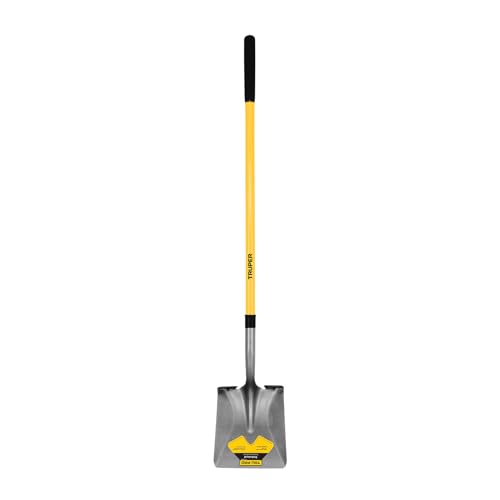
Truper Tru Pro Square-Point Shovel, 48-Inch Fiberglass Handle
Best for: Gravel, sand and flat surfaces
A square point shovel with fiberglass handle for scooping loose material and leveling.
- Flat front edge
- Fiberglass handle
- Not for digging hard ground

True Temper Forged Round Point Digging Shovel
Best for: Rocky and compacted ground
A forged steel round point blade with a comfort step and hardwood handle.
- Forged blade strength
- Comfort step
- Wood handle needs care

Fiskars 57-Inch Garden Digging Shovel
Best for: Gardeners who want reach without bending
A welded 14-gauge steel shovel with a long straight handle designed for digging and turning soil.
- Welded steel construction
- Long handle reduces bending
- Straight handle offers less control than D-grip
See our full digging shovel ranking in the best digging shovel guide.
Common Mistakes
Common mistakes include trying to dig compacted soil with a square shovel, using a round point shovel to scrape gravel off concrete, choosing thin blades for heavy work and using either shovel as a pry bar.
Final Thoughts on Round Point vs Square Shovels
Round point shovels dig, square shovels scoop. Start with a round point shovel for general yard work and add a square shovel for landscaping with loose materials. For durable round point options, see our best digging shovel picks.
More Questions People Ask
Is a square shovel good for digging?
Only in loose soil. For compacted ground or clay, a round point shovel works far better.
What is a flat shovel called?
It is usually called a square shovel, square point shovel or flat shovel.
Can a square shovel cut roots?
Not effectively. Use a sharp round point or serrated shovel, loppers or a pruning saw.
Which shovel is best for moving gravel?
A square shovel, which slides under gravel on hard surfaces and holds a good load.
Frequently Asked Questions
What is the difference between a round point and square shovel?
A round point shovel has a curved, pointed blade for digging into soil, clay and roots. A square shovel has a flat front edge for scooping loose material from flat surfaces and leveling.
Can you dig with a square shovel?
Only in loose material. Its flat edge does not penetrate compacted soil well, so a round point shovel is far better for digging.
What is a square shovel best for?
Scooping gravel, sand, mulch and soil from driveways or truck beds, leveling surfaces, squaring up trench bottoms and mixing small batches of concrete.
Which shovel should I buy first?
For most homeowners, a round point shovel is the most useful first shovel. Add a square shovel when you work with gravel, sand or hard surfaces.
Is a square shovel the same as a spade?
No. A square shovel has a dished blade for scooping, while a garden spade has a flatter blade designed for slicing and edging.