

Last updated: October 2026 · Written by the LawnVibe editorial team.
In the spade vs shovel debate, the difference comes down to blade shape and purpose. A spade has a flat, straight-edged blade and is built for cutting: slicing through turf, edging beds, digging straight-sided planting holes and dividing plants. A shovel has a wider, curved blade, often with a pointed tip, and is built for scooping and moving loose material like soil, mulch, gravel and compost. Most gardeners eventually own both, but the one to buy first depends on the jobs you do most.
This guide draws on established horticultural practice and tool manufacturer descriptions; the spade and shovel entries on Wikipedia give useful historical background. For tool recommendations, see our guide to the best garden spade.
Spade vs Shovel at a Glance
| Feature | Spade | Shovel |
|---|---|---|
| Blade shape | Flat, rectangular, straight edge | Curved, dished, often pointed |
| Blade angle | Nearly in line with the handle | Angled to the handle for scooping |
| Primary use | Cutting, edging, digging neat holes | Scooping, moving loose material |
| Handle | Often shorter with D-grip | Often longer, straight |
| Best soil type | Cultivated beds, turf | Loose material, rough ground |
| Typical jobs | Planting, edging, dividing plants | Mulch, gravel, compost, backfilling |
What Is a Spade?
A garden spade has a flat or slightly curved rectangular blade with a sharp straight edge. The blade sits nearly in line with the handle, so pushing down drives it straight into the soil. Many spades have treads on the top edge for your foot and a D-shaped grip for control. Spades excel at precision tasks where a clean cut matters.
What Is a Shovel?
A shovel has a broader blade that is dished to hold material, and the blade is angled relative to the handle so you can scoop and lift without bending as much. Round point shovels have a pointed tip to penetrate ground, while square shovels have a flat front edge for scooping from hard surfaces. Shovels usually have longer straight handles for leverage.
Types of Spades
Digging spades are full-size general purpose tools. Border spades are smaller for tight beds and raised beds. Transplanting spades are long and narrow for deep holes around root balls. Edging spades have half-moon blades for cutting lawn edges. Drain spades are long and narrow for trenches. Our guide on how to choose the right garden spade explains each in detail.
Types of Shovels
Round point shovels are the all-rounder for digging and moving soil. Square point shovels scoop loose material from flat surfaces. Trenching shovels have narrow blades for irrigation lines and cables. Scoop or transfer shovels have large, deep blades for grain, snow or mulch. Post hole diggers are a separate two-handled tool. See how to choose the right shovel for more.
When to Use a Spade
Use a spade for digging planting holes with straight sides, cutting and lifting turf, edging lawns and beds, dividing perennials, transplanting shrubs, double digging vegetable beds and slicing through roots in cultivated soil. The flat blade gives you control and clean lines.
When to Use a Shovel
Use a shovel for moving soil from a pile, spreading mulch or compost, shifting gravel and sand, backfilling holes, digging in rough or rocky ground and mixing concrete or soil amendments. The curved blade carries more material per scoop.
Spade or Shovel for Digging in Clay?
In heavy clay, a sharp spade with treads slices into the soil more cleanly, while a round point shovel is useful for breaking into very hard or rocky ground. A garden fork is often the best first tool for loosening compacted clay before shaping holes with a spade. Our guide to the best garden fork for heavy soil compares options.
Ergonomics and Body Mechanics
Spades are typically used with a straighter back and foot pressure, while shovels involve more lifting and twisting. With either tool, bend at the knees, keep loads small and avoid twisting your spine while lifting. Long-handled shovels reduce bending for scooping jobs, while D-grip spades give better control for precision work.
Which Should You Buy First?
If your main jobs are planting, bed preparation, edging and dividing plants, buy a spade first. If you mainly move mulch, soil and gravel, or dig in rough, unprepared ground, buy a round point shovel first. For a typical home garden, a good spade and a round point shovel together cover nearly every digging task.
Which Tool for Which Job?
| Job | Best Tool | Why |
|---|---|---|
| Edging a lawn | Spade or half-moon edger | Straight, clean cut |
| Planting perennials | Spade | Neat hole, easy to size |
| Planting a tree | Spade and shovel | Cut sides, then move soil |
| Moving mulch | Shovel or fork | Holds loose material |
| Spreading gravel | Square shovel | Flat edge scoops from hard surfaces |
| Dividing perennials | Spade | Slices through crowns |
| Digging a trench | Trenching shovel or drain spade | Narrow, deep cut |
| Turning compost | Garden fork | Tines lift and aerate |
| Backfilling holes | Shovel | Moves soil quickly |
| Lifting turf | Spade | Cuts under sod evenly |
Regional Naming Differences
The words are used differently around the world. In the United Kingdom, a spade usually means the flat digging tool, and a shovel means a scooping tool used for loose material, much like American usage. In casual American speech, many people call any digging tool a shovel. When shopping, look at the blade shape rather than the name on the label.
Materials and Construction
Both tools come with stamped or forged steel blades, and stainless steel versions are available. Forged blades are thicker and stronger, which matters for heavy clay or rocky soil. Look at the socket where the blade meets the handle; a long, solid socket or riveted strap is more durable than a short collar. Handles may be hardwood, fiberglass, steel or aluminum, each with trade-offs in weight, shock absorption and weather resistance.
Handle Length and Grip
Spades often have D-grip handles of moderate length for control when slicing and lifting. Shovels commonly have long straight handles, which give leverage when digging and reduce bending when scooping. Taller gardeners may want longer handles on both. Some manufacturers offer long-handled spades for those who prefer to stand more upright.
Caring for Spades and Shovels
Knock off soil after each use, rinse and dry the blade, and wipe carbon steel with a little oil to prevent rust. Sharpen the cutting edge with a mill file a few times a season; a sharp spade cuts with far less effort, and even shovels benefit from a sharpened edge. Sand rough wooden handles and treat them with linseed oil once a year. Store tools under cover, hung off the floor.
Tools That Complement a Spade and Shovel
A garden fork loosens compacted soil and lifts root crops. A hoe controls weeds. A hand trowel handles small plants and containers. A mattock or pickaxe breaks very hard or rocky ground. A wheelbarrow moves material efficiently. Building a basic kit of these tools makes most garden jobs faster and easier on your body.
Safety Before You Dig
Before digging deep holes or trenches, have underground utilities marked through your local locating service. Wear sturdy boots and gloves, keep tools sharp so they do not slip, and take breaks. Never leave tools lying blade-up on the ground, where they can cause injuries.
Budget and Value
A quality spade and shovel are long-term investments. Mid-range tools with forged or thick-gauge blades and solid handle joints often outlast several cheaper tools. If you garden occasionally, a budget tool may be enough; if you dig often or in heavy soil, spending more on construction pays off. Compare specific models in our best garden spade guide.
Spade vs Shovel for Specific Gardens
Vegetable Gardens
Vegetable growers use a spade for bed preparation, double digging and lifting potatoes, and a shovel or fork for spreading compost and manure. If you grow in raised beds, a border spade is easier to use than a full-size tool.
Flower Borders
In established borders, a border spade fits between plants and lets you divide perennials without disturbing neighbors. A shovel is rarely needed except for mulching.
New Construction Yards
Yards around new homes often have compacted subsoil, buried debris and rocks. A round point shovel and a mattock handle rough digging, while a forged spade shapes planting holes once the ground is broken.
Lawns and Landscaping
For lawn edging, sod cutting and installing edging strips, a spade is essential. For landscaping projects involving gravel, sand and soil, a square and round point shovel save time.
How to Dig Efficiently With Either Tool
Keep your blade sharp, work in small bites rather than levering huge clumps, and use your body weight on the treads instead of your arms. Pace yourself, alternate your stance between left and right foot and take short breaks. Moist soil digs more easily than bone-dry or waterlogged soil, so plan big digging jobs a day or two after rain.
Signs It Is Time to Replace Your Spade or Shovel
Replace a tool if the blade is bent or cracked, the socket is loose or split, the handle is cracked or splintering or the blade is worn so thin it flexes. A loose blade can fly off under pressure, so do not ignore a wobbly joint. Many quality tools offer replaceable handles, which extends their life.
Choosing Tools for Children and New Gardeners
Smaller, lighter tools help children and new gardeners learn good technique without strain. Look for real steel tools in smaller sizes rather than toy versions, and teach safe handling, including never swinging tools and storing them properly.
Storing Spades and Shovels
Hang spades and shovels on wall hooks or a tool rack in a shed or garage so blades stay dry and handles do not warp. Keeping them off the floor also prevents trips and protects the edges. A bucket of sand mixed with a little oil is a traditional way to clean and protect blades between uses.
Spade and Shovel Myths
One common myth is that a pointed shovel is always better for digging. In cultivated beds, a flat spade often digs faster and neater. Another is that a heavier tool is always stronger; construction quality and blade thickness matter more than weight alone.
A Spade, a Shovel and a Fork to Start With
These tools cover nearly every digging job. Details come from Amazon listings; we have not hands-on tested them.
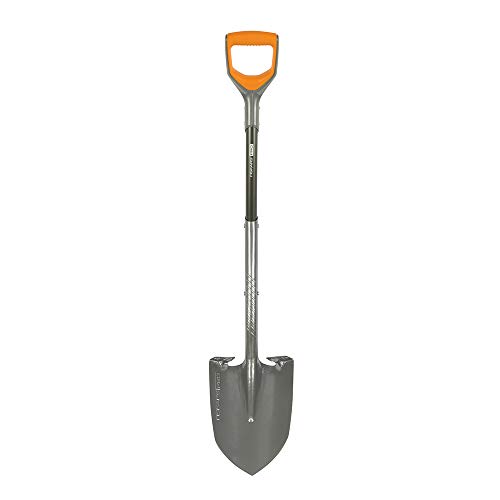
Fiskars 44-Inch Pro Garden Spade
Best for: Everyday digging in most soils
A heavy-gauge steel spade with a sharpened edge and an aluminum D-handle that Fiskars designs for digging and prying without separation.
- Sharpened edge bites into soil
- Strong D-handle
- Widely available
- Heavier than stainless border spades

Fiskars 57-Inch Garden Digging Shovel
Best for: Moving soil and rough digging
A long straight-handled steel digging shovel from Fiskars for moving soil and digging in rough ground.
- Long handle for leverage
- Scoops loose soil
- Less precise than a spade

Truper Tru Pro Square-Point Shovel, 48-Inch Fiberglass Handle
Best for: Gravel, sand and flat surfaces
A square point shovel for scooping loose material from hard surfaces.
- Flat front edge
- Fiberglass handle
- Poor at penetrating hard soil

Truper 4-Tine Spading Fork with D-Handle
Best for: Loosening compacted soil
A 4-tine steel spading fork for loosening soil and turning compost.
- Tines break up clay
- Lifts root crops
- Not for moving loose material

Spear & Jackson Traditional Stainless Border Spade
Best for: Raised beds and tight spaces
A smaller mirror-polished stainless steel spade that resists rust and sheds soil, with a wishbone handle.
- Stainless sheds sticky soil
- Compact for tight beds
- Smaller blade moves less soil
See all our spade picks in the best garden spade guide.
Common Mistakes When Choosing Between a Spade and Shovel
Common mistakes include using a spade to move large piles of mulch, using a shovel for neat edging, buying cheap stamped tools for heavy clay, choosing the wrong handle length, using a spade as a pry bar on rocks and neglecting to clean and sharpen blades.
Final Thoughts on Spade vs Shovel
A spade cuts and a shovel scoops. Choose a spade for planting, edging and precision digging, and a shovel for moving loose material and rough digging. Most gardens benefit from both. When you are ready to buy, start with our guide to the best garden spade.
More Questions People Ask
Why is it called a spade?
The word spade comes from Old English and has long referred to a flat digging tool; the shovel, from a word meaning to push or shove, refers to a scooping tool.
Is a garden spade good for digging post holes?
A drain spade or post hole digger is better for narrow, deep holes. A garden spade works for shallow holes or starting the hole.
What is a spading shovel?
A spading shovel is a hybrid with a flatter, squarer blade than a round point shovel, designed for digging and edging while still moving some soil.
Which is better for transplanting, a spade or a shovel?
A spade, especially a narrow transplanting spade, cuts cleanly around roots and lifts a neater root ball.
Frequently Asked Questions
What is the main difference between a spade and a shovel?
A spade has a flat, straight-edged blade for slicing and digging precise holes and edges. A shovel has a curved, often pointed blade designed for scooping and moving loose materials.
Is a spade or shovel better for digging holes?
A pointed shovel penetrates hard ground well for rough holes, while a spade makes cleaner, straight-sided holes and cuts through turf. Many gardeners use both.
Can a spade be used as a shovel?
Yes, for small amounts, but its flat blade holds less loose material. A shovel moves mulch, gravel and compost more efficiently.
Should I buy a spade or a shovel first?
For planting and bed work, buy a spade first. For moving materials, digging in rough ground or general yard work, a round point shovel is the most versatile first tool.
What is a square shovel used for?
A square or flat shovel is used for scooping loose material from flat surfaces, such as gravel, sand or soil from a driveway, and for leveling.