
Both brands work. Andersons gives pro-level control; Scotts is easiest for most.
You want a lawn that turns heads. You also want a plan that fits your time and budget. That is why many homeowners ask me about Scotts vs The Andersons lawn fertilizer. Both names are big. Both can green up your grass fast. But they do it in different ways. Scotts is simple and easy to pick. The Andersons leans into pro-grade control and finer particles. In this deep review, I break down real differences, show where each wins, and help you choose with confidence.
See the differences between my top picks at a glance.
| Product | Type | Bag Weight | Release Style | Best Season(s) | Ideal For |
|---|---|---|---|---|---|
| Scotts Turf Builder Lawn Food (37.5 lb) | Synthetic fertilizer | 37.5 lb | Primarily slow-release | Spring, summer, fall | Simple, all-season feeding on any grass |
| Scotts Natural Lawn Food OMRI (29.1 lb) | Organic fertilizer (OMRI Listed) | 29.1 lb | Natural slow-release | Any season | Organic lawns and soil health focus |
| Andersons Governor G Growth Regulator (34 lb) | Granular PGR (not a fertilizer) | 34 lb | N/A | Growing season | Reduce mowing, thicken turf, pro-level control |
| Andersons PGF Complete 16-4-8 (5,000 sq ft) | Synthetic fertilizer with humic | 5,000 sq ft bag | Balanced, fine-prill feed | Spring and summer | Even feeding, color, and root growth |
| Andersons Premium Fall 24-0-14 (5,000 sq ft) | Synthetic fertilizer (fall formula) | 5,000 sq ft bag | Cool-season hardening feed | Late summer, fall | Winter prep and stress recovery |
Scotts Turf Builder Lawn Food (37.5 lb)
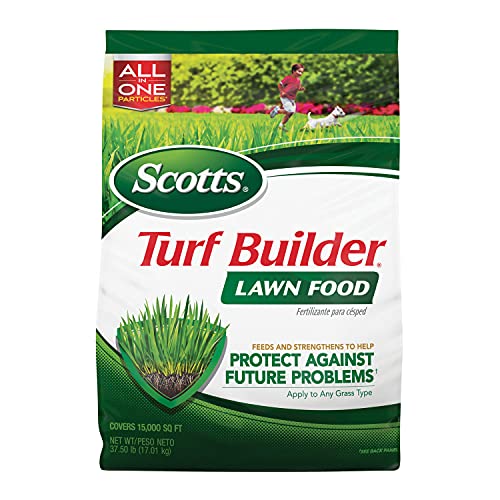
This is the classic all-season pick from Scotts. It feeds the lawn and helps it stay lush. It works on any grass type when you follow the label. It fits most spreaders, and the big bag suits larger yards.
I suggest it if you want quick results with very little fuss. It offers a steady feed that reduces surge growth. That keeps mowing manageable. It also supports thick roots for better stress tolerance.
Pros:
- Easy plan for first-time lawn feeders
- Visible green-up with steady growth
- Works for all common grass types
- Large bag fits big suburban lawns
- Plays well with most broadcast spreaders
Cons:
- Not an organic formula
- Can burn if you over-apply
- Heavy bag can be hard to move
What Amazon Buyers Are Saying
Buyers like the way it greens up within weeks and spreads evenly. Many mention simple use and clear steps on the bag. Some point out clumps if stored in damp places. A few call out confusion about spreader settings. Results slow down in cool weather, which is normal.
My Recommendation
This is my top “set it and forget it” Scotts choice for big yards. It is simple, steady, and proven. If you want clean, even color without overthinking blends, start here. Overall, it is a strong value for busy homeowners.
| Category | Rating |
|---|---|
| Green-Up Speed | 4.5/5 |
| Evenness of Feed | 4.5/5 |
| Ease of Application | 4.5/5 |
| Value for Large Lawns | 4.5/5 |
| Overall Rating | 4.5/5 |
Scotts Natural Lawn Food OMRI (29.1 lb)
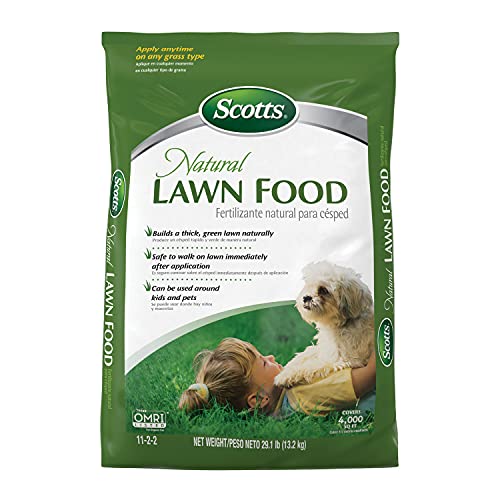
This OMRI Listed option fits organic lawn care. It feeds with natural ingredients. It releases nutrients slowly as soil biology breaks it down. That supports steady growth without spikes.
I like it for families and pets who enjoy the yard right after feeding. It is gentle when used as directed. It helps build soil health over time. It suits small to medium lawns well.
Pros:
- OMRI Listed for organic use
- Gentle, natural slow release
- Supports soil life over time
- Good for all grass types
- Apply any season per label
Cons:
- Coverage is smaller (4,000 sq ft)
- Color change can take longer in cool soil
- Natural scent may attract curious pets
What Amazon Buyers Are Saying
Many buyers like the peace of mind from a natural feed. They see steady color and thicker turf after a few weeks. Some call out a mild odor at first. A few want faster results in spring chill. Users note easy spreading with basic drop or broadcast spreaders.
My Recommendation
Choose this if you want an organic track from Scotts. It works best in warm soil and with regular watering. Expect a more natural pace. For soil-first lawn care, this is a smart pick.
| Category | Rating |
|---|---|
| Soil Health Support | 4.5/5 |
| Color Response (Speed) | 3.5/5 |
| Ease of Use | 4.5/5 |
| Family-Friendly Appeal | 4.5/5 |
| Overall Rating | 4.2/5 |
Andersons Governor G Growth Regulator (34 lb)
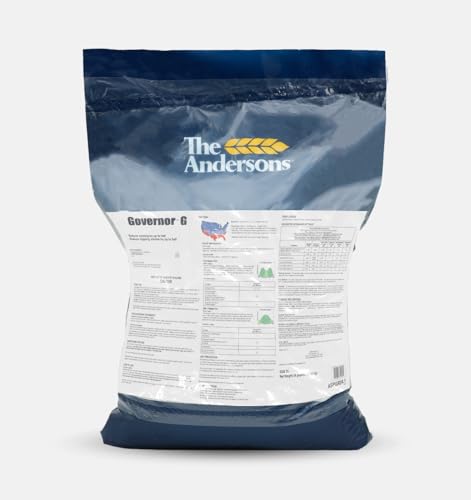
This product is not a fertilizer. It is a granular plant growth regulator (PGR). It slows vertical growth and boosts density. You mow less and the lawn looks tighter and more uniform.
I use PGRs when I want pro-level control. This granular format is simple compared to liquids. It covers up to 20,000 sq ft, which is great for large sites. Use it during active growth and follow timing on the label.
Pros:
- Reduces mowing frequency during peak growth
- Encourages thicker turf and better color
- Granular format is easier than spray for many users
- Big coverage for large lawns
- Helps manage seedheads and edging
Cons:
- Not a fertilizer; still need a feeding plan
- Timing matters; poor timing weakens results
- Not ideal for brand-new seed until established
What Amazon Buyers Are Saying
Users often note fewer cuts and a tighter look in summer. Many appreciate the granular ease versus mixing liquids. Some mention the learning curve with timing. A few saw uneven results when weather shifted right after application. Most stress that it is a control tool, not food.
My Recommendation
If you want the Andersons edge, start here for growth control. Pair it with a good fertilizer like PGF Complete. You get a sharp, low-cut look with less mowing. Read the label and stay on schedule.
| Category | Rating |
|---|---|
| Growth Control | 4.5/5 |
| Ease vs. Liquid PGRs | 4.5/5 |
| Turf Density Improvement | 4.5/5 |
| Value for Coverage | 4/5 |
| Overall Rating | 4.4/5 |
Andersons PGF Complete 16-4-8 (5,000 sq ft)

This is a standout fertilizer from The Andersons. It has a balanced 16-4-8 analysis and 7% Humic DG. The prill size is very fine. That helps you get more contact points per square foot.
I reach for PGF Complete when I want a clean, even feed. It supports roots, color, and steady growth. The humic content is a nice soil aid. I suggest it for spring and summer feeding cycles.
Pros:
- Balanced 16-4-8 formula
- Includes 7% Humic DG for soil support
- Fine particles spread very evenly
- Strong color without harsh surge
- Great with cool or warm-season lawns
Cons:
- Bag covers 5,000 sq ft, so larger lawns need more
- Costs more per square foot than basics
- Requires careful spreader calibration
What Amazon Buyers Are Saying
Many reviewers praise the even spread and rich color. The fine prills get a lot of love for pro-level results. Some note the premium price. Others say they needed a test run to dial in their spreader. A few mention better results with watering in right away.
My Recommendation
This is my favorite Andersons fertilizer for most growing seasons. It looks and feels like a pro-grade feed. If you want a neat, uniform lawn, put this high on your list. Use it with good watering and mowing habits.
| Category | Rating |
|---|---|
| Even Distribution | 5/5 |
| Color and Growth Balance | 4.5/5 |
| Soil Support (Humic) | 4.5/5 |
| Value | 4/5 |
| Overall Rating | 4.6/5 |
Andersons Premium Fall 24-0-14 (5,000 sq ft)

This is a fall-focused fertilizer. The 24-0-14 analysis points to recovery and hardiness. It helps cool-season lawns store energy. That sets them up to handle winter stress.
I like it after summer heat or heavy use. The potassium supports stress tolerance. The fine prill pattern helps get uniform results. Time it in late summer or fall per your region.
Pros:
- 24-0-14 suits fall and stress recovery
- Supports root strength and winter prep
- Fine particles help even coverage
- Pairs well with a fall overseed plan when timed right
- Good pick for cool-season grasses
Cons:
- Seasonal window; not a year-round blend
- No phosphorus; test soil if you suspect low P
- 5,000 sq ft bag means multiple bags for large lawns
What Amazon Buyers Are Saying
Customers like the way it strengthens turf before winter. Many say color holds longer into fall. Some want bigger bags for large properties. A few note that timing matters most for best results. Several mention even spreading and fewer stripes.
My Recommendation
Choose this for fall feed if you want a strong spring start. It helps lawns bounce back from heat and traffic. Use it with sound mowing and watering. It is a smart seasonal tool.
| Category | Rating |
|---|---|
| Fall Performance | 4.5/5 |
| Winter Prep Support | 4.5/5 |
| Ease of Application | 4.5/5 |
| Value | 4/5 |
| Overall Rating | 4.4/5 |
How to Choose Scotts vs The Andersons lawn fertilizer
Both brands can grow a lush lawn. The right pick depends on your goals, your grass, and your time. Use these steps to choose the best match for your yard and your routine.
1. Match the formula to your season and grass
Start with your grass type and climate. Cool-season lawns thrive with strong fall feeding and balanced spring feed. Warm-season lawns love steady summer feeding. For a simple plan, Scotts Turf Builder Lawn Food fits most months. For a seasonal punch, The Andersons Premium Fall 24-0-14 shines in late summer and fall.
If you want tighter control and a pro look, The Andersons PGF Complete 16-4-8 offers very fine particles. That helps even out color and growth. If you need to cut mowing and boost density, the Governor G Growth Regulator changes the game. It is not food, but it makes lawns look sharper with fewer cuts.
Organic fans should look at Scotts Natural Lawn Food OMRI. It works in any season. It releases with soil biology, so warm soil helps results. Expect a steady climb in color and health, not a quick pop.
2. Decide on simplicity vs. precision
Scotts vs The Andersons lawn fertilizer often comes down to workflow. Scotts favors simplicity. The instructions are clear and forgiving. It works well when you want easy feeding and a nice result.
The Andersons leans into precision. PGF Complete uses fine prills for uniform coverage. The Governor G PGR helps you manage growth like a pro. If you enjoy dialing in spreader settings and timing, you may prefer The Andersons. If you want quick, solid wins with less setup, Scotts is a great fit.
3. Balance cost, coverage, and long-term goals
Look at the bag size and your square footage. Large lawns may favor the big Scotts Turf Builder bag for value. Smaller or high-expectation lawns may benefit from The Andersons PGF Complete’s finer spread, even if cost per square foot is higher.
Think about your long game. If you want to build soil health, an organic like Scotts Natural Lawn Food is smart. If your goal is a show lawn with low cut heights, pairing PGF Complete with Governor G can deliver a dense, clean surface. Either way, a soil test is a good start. It prevents over or under-feeding and saves money.
Final Verdict: Which Should You Buy?
For most homeowners, Scotts Turf Builder Lawn Food is the easiest win. For pro-level control and the cleanest finish, The Andersons PGF Complete plus Governor G is hard to beat.
In the Scotts vs The Andersons lawn fertilizer debate, choose based on your goals, not the logo. Simple plan? Pick Scotts. Precision and polish? Pick The Andersons.
FAQs Of Scotts vs The Andersons lawn fertilizer
Is Scotts or The Andersons better for beginners?
Scotts is easier for beginners. The bags are simple, and the feeding plan is clear.
Which fertilizer greens up the lawn fastest?
Scotts Turf Builder and Andersons PGF Complete both green up fast in warm soil.
Is The Andersons Governor G a fertilizer?
No. It is a granular plant growth regulator. Pair it with a fertilizer for best results.
Can I use Scotts Natural Lawn Food year-round?
Yes, you can apply it in any season as the label allows. Warm soil speeds results.
What is the best fall fertilizer in this comparison?
The Andersons Premium Fall 24-0-14 is built for fall recovery and winter prep.
Which is better for soil health over time?
Scotts Natural Lawn Food supports soil biology. Andersons PGF adds humic aid.
Do I need to water in these products?
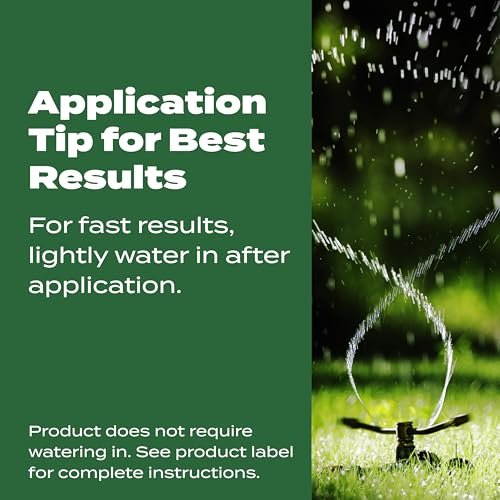
Watering in helps. Always follow each label for best watering guidance.
Can I mix a PGR with fertilizer on the same day?
You can apply them close together if the labels allow. Many apply fertilizer first, then the PGR.