

Choose The Andersons for fast deep color; pick Jonathan Green for seeding success.
You want a thick, dark lawn without guesswork. Yet the shelf shows dozens of bags. Labels shout numbers like 29-0-3 or 25-0-0. Which one helps right now? If you face thin patches, slow growth, or dull color, the right bag can change your yard fast. In this hands-on comparison of Jonathan Green vs The Andersons lawn fertilizer, I break down real use cases. I also explain when to pick a high-nitrogen boost and when a starter blend is smarter. You will see clear picks for quick green-up, new seed, and long-term color.
See the differences between my top picks at a glance.
| Product | N-P-K | Best For | Contains Phosphorus | Covers Up To | Green-Up Speed |
|---|---|---|---|---|---|
| The Andersons Deep Green 24-0-11 (40 lb) | 24-0-11 | Fast color and strength | No | 10,000 sq ft | Very fast |
| The Andersons DGL Dark Green 25-0-0 (18 lb) | 25-0-0 | Quick spring/fall green-up | No | 5,000 sq ft | Very fast |
| Jonathan Green Green-Up 29-0-3 (15,000 sq ft) | 29-0-3 | High nitrogen boost + K | No | 15,000 sq ft | Fast |
| Jonathan Green Seeding & Sodding 12-18-8 (5,000) | 12-18-8 | New seed and sod rooting | Yes | 5,000 sq ft | Moderate (starter) |
| Jonathan Green Veri-Green for Seeding & Sodding (5,000) | Starter blend | New lawns and overseeding | Yes (starter) | 5,000 sq ft | Moderate (starter) |
The Andersons Deep Green 24-0-11, 40 lb

This bag is built for speed. The 24-0-11 ratio feeds leaves hard, so color pops fast. It also supports stress tolerance with potassium. Use it when the lawn looks dull, but soil temps are right and grass is active.
I like this formula for cool-season bursts in spring and fall. It also helps warm-season lawns when they wake up. It does not add phosphorus, so it fits areas with P restrictions. Apply with a spreader on a dry lawn. Water in after.
Pros:
- High nitrogen for instant color response
- Potassium supports stress and wear
- No phosphorus for P-restricted zones
- Good coverage for mid to large yards
- Works across many grass types
Cons:
- Not for new seed (no starter P)
- Can scorch if overapplied or in heat
- Heavy bag for some users
What Amazon Buyers Are Saying
Buyers often mention fast green-up and an easy spread. Many note strong color within one to two weeks. Some users report dust in the bag or a need to water in well to avoid tip burn. A few mention price swings during peak season. Most say the lawn looks darker and more even after use.
My Recommendation
If you want fast color with a pro look, this one delivers. It is a top pick for active lawns that need a push. Skip it on new seed. Time your application with mild weather, and water in. Overall, it is a strong value for quick results.
| Category | Rating |
|---|---|
| Nutrient Profile | 4.6/5 |
| Green-Up Speed | 4.8/5 |
| Longevity of Color | 4.3/5 |
| Granule Spreadability | 4.5/5 |
| Safety on New Seed | 2.0/5 |
| Value for Money | 4.5/5 |
| Overall Rating | 4.5/5 |
The Andersons DGL Dark Green 25-0-0, 18 lb
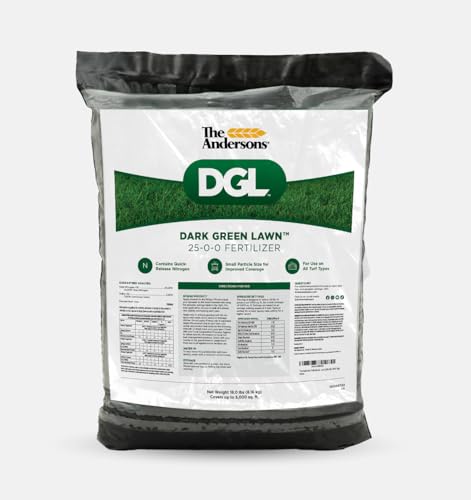
This 25-0-0 bag is a true green-up hammer. It feeds a strong flush of color and top growth. It has no phosphorus, so it fits mature lawns with enough P in soil. It is ideal when you want a quick, dark look.
I reach for this before a party or a listing photo. It perks up cool-season lawns in spring and fall. It also wakes Bermuda and Zoysia in early summer. Apply with care, follow the label rate, and water in to protect the blades.
Pros:
- Very high nitrogen for fast results
- Simple ratio, easy to plan in a program
- Great for color before events
- No phosphorus for regulation compliance
- Compact bag covers 5,000 sq ft
Cons:
- Not suited for new seed or sod
- Shorter feeding window than balanced blends
- Needs careful watering to avoid tip burn
What Amazon Buyers Are Saying
Customers praise the quick dark green color and even feeding. Many note clean spreading and less streaking with a good spreader. Some buyers warn about using it in summer heat. Others mention that results fade faster if you mow very low or water less. Overall, users like the fast visual pop.
My Recommendation
Choose this bag for fast curb appeal. It is a smart choice when you want a deep green kick. Use it on established turf. Pair with a soil test and a balanced plan for best results.
| Category | Rating |
|---|---|
| Nutrient Profile | 4.4/5 |
| Green-Up Speed | 4.9/5 |
| Longevity of Color | 4.0/5 |
| Granule Spreadability | 4.6/5 |
| Safety on New Seed | 1.8/5 |
| Value for Money | 4.4/5 |
| Overall Rating | 4.4/5 |
Jonathan Green Green-Up 29-0-3, 15,000 sq ft

Green-Up 29-0-3 is a heavy hitter. It pushes fast color with a high nitrogen load. The added potassium supports stress and wear. The big 15,000 sq ft coverage makes sense for larger lawns.
I suggest this for cool-season lawns that need a strong push. Apply during active growth. It does not include phosphorus, so it is not a starter for new seed. Use it as part of a seasonal program for dense, dark turf.
Pros:
- High nitrogen for quick results
- Potassium supports resilience
- Large bag covers up to 15,000 sq ft
- Works well in spring and fall
- Easy choice for established lawns
Cons:
- Not designed for seeding and sodding
- Risk of burn if misapplied
- Heavy bag to move and store
What Amazon Buyers Are Saying
Reviewers often note a strong green-up and thick look. Many like the coverage value per bag. Some mention dust, clumping in humidity, or spreader calibration needs. Others point out the lawn can grow fast after application, so be ready to mow more. Overall, buyers report a deeper color in one to two weeks.
My Recommendation
Pick this if you want big coverage and bold results. It is a reliable brand and a proven formula. Time it well. Water in. Avoid summer heat. It can anchor your feeding plan for cool-season turf.
| Category | Rating |
|---|---|
| Nutrient Profile | 4.7/5 |
| Green-Up Speed | 4.7/5 |
| Longevity of Color | 4.2/5 |
| Granule Spreadability | 4.3/5 |
| Safety on New Seed | 2.0/5 |
| Value for Money | 4.6/5 |
| Overall Rating | 4.5/5 |
Jonathan Green Green-Up for Seeding 12-18-8 (5,000)

This starter fertilizer supports new roots. The 12-18-8 ratio balances mild nitrogen with higher phosphorus. That helps seedlings and new sod establish. It is a sound pick for overseeding or a new lawn build.
I like it during fall overseeding on cool-season turf. It can also help spring projects if the weather is mild. The feeding is gentle yet effective. Expect steady color, not a harsh surge.
Pros:
- Starter ratio supports roots
- Gentle on tender seedlings
- Good for overseeding and new sod
- Better early vigor and coverage fill-in
- Clear bag labeling for seeding use
Cons:
- Less dramatic color pop
- Phosphorus may be regulated in some areas
- Smaller coverage per bag
What Amazon Buyers Are Saying
Customers report better germination and early rooting with this bag. Many say thin spots fill in more evenly. Some warn to check local phosphorus rules. Others say to use the right spreader setting to avoid waste. Feedback often notes healthy, steady growth without burn.
My Recommendation
If you are seeding or laying sod, this is a strong choice. It feeds roots first. That sets up thicker turf for the long run. It is not for instant color, but it helps the lawn build a base.
| Category | Rating |
|---|---|
| Starter Support | 4.8/5 |
| Seedling Safety | 4.7/5 |
| Green-Up Speed | 3.9/5 |
| Ease of Application | 4.4/5 |
| Value for New Lawns | 4.6/5 |
| Overall Rating | 4.5/5 |
Jonathan Green Veri-Green for Seeding & Sodding (5,000)

This Veri-Green starter is tailored for new lawns. It is designed to support germination and early growth. Expect a gentle feeding curve. It aims at rooting and early vigor more than a flashy green-up.
I use it for fall overseeding. It helps seedlings set roots before winter. It also supports sod take when you lay new rolls. Pair it with correct watering and mowing for best results.
Pros:
- Starter-focused for new seed and sod
- Gentle feeding reduces burn risk
- Good choice for patch repairs
- Clear directions for timing and rate
- Helps even growth across new areas
Cons:
- Less punchy color compared to high-N bags
- Coverage is limited to 5,000 sq ft
- May not be allowed in P-restricted zones
What Amazon Buyers Are Saying
Reviewers often mention better early rooting and steady growth. Many like how it pairs with overseeding kits. Some note the color is softer at first, which is expected with starter blends. A few warn to check local rules on phosphorus before buying. Overall, buyers feel it helps new lawns start right.
My Recommendation
Pick this for any seeding or sod job where you want safe, steady feeding. It is a simple way to support young grass. After establishment, switch to a higher nitrogen bag for deeper color.
| Category | Rating |
|---|---|
| Starter Support | 4.7/5 |
| Seedling Safety | 4.8/5 |
| Ease of Use | 4.4/5 |
| Early Color | 3.8/5 |
| Value for Seeding | 4.5/5 |
| Overall Rating | 4.4/5 |
How to Choose Jonathan Green vs The Andersons lawn fertilizer
Start with your lawn’s goal. Do you want fast color? Or do you need to grow roots on new seed? The right bag depends on that answer. Here is how I match a product to a problem when I compare Jonathan Green vs The Andersons lawn fertilizer.
1. Match N-P-K to your task
High N, no P formulas are best for quick green-up on established lawns. Examples include 24-0-11, 25-0-0, and 29-0-3. They feed leaves fast. They darken color. They do not help new roots much.
Starter blends include phosphorus. They help new roots and shoots. Use them for overseeding or new sod. Examples include 12-18-8 or Veri-Green starter labels. They do not give a huge color pop. But they set the base for a thick lawn.
2. Time your season and grass type
Cool-season grass likes major feed in spring and fall. That is when 24-0-11, 25-0-0, or 29-0-3 shine. Avoid heavy nitrogen in summer heat. It can stress the lawn.
Warm-season grass needs a push as it greens up. Use a high N bag after last frost and once the turf is active. For seeding or sod on any grass, choose a starter. Feed lightly but often while roots grow.
3. Balance quick results and long-term health
Fast color is great. But roots win the long game. If you just seeded, use a starter first. After establishment, switch to a higher N bag. Alternate as needed based on your plan.
Also, check local rules on phosphorus. Many areas limit P on established lawns. In those places, no-P formulas like 24-0-11, 25-0-0, or 29-0-3 are safer choices. Always read the label and follow the rate.
Final Verdict: Which Should You Buy?
For fast, deep color on established lawns, The Andersons Deep Green 24-0-11 edges out the rest. For seeding and sod, Jonathan Green Green-Up 12-18-8 is my starter pick.
Use Jonathan Green vs The Andersons lawn fertilizer as a system. Reach for The Andersons to darken fast. Use Jonathan Green starter to root new grass. That combo builds a lawn that looks great and lasts.
FAQs Of Jonathan Green vs The Andersons lawn fertilizer
Which is better for quick green-up?
The Andersons 24-0-11 or 25-0-0. Both push fast color on established turf.
Which should I use for new seed or sod?
Use a starter. Jonathan Green 12-18-8 or Veri-Green for Seeding & Sodding are ideal.
Can I use high-nitrogen fertilizer on new seedlings?
Do not. It can stress young grass. Use a starter with phosphorus for roots.
How often should I fertilize during the season?
Most lawns need 2–4 feedings per year. Follow the label and adjust to growth.
Can I mix brands in one lawn program?
Yes. Match the product to the task. Starter for seeding, high N for color later.
Will these work on both cool and warm-season grasses?
Yes. Time applications to active growth. Avoid heavy N during peak heat stress.
Do I need to water after applying?
Yes. Water in to move nutrients to roots and reduce burn risk.
What if my area restricts phosphorus?
Choose no-P options like 24-0-11, 25-0-0, or 29-0-3 for established lawns.