
Jonathan Green delivers faster green-up. Espoma excels at organic, kid-and-pet-safe feeding.
Your lawn looks pale. Weeds creep in. Bare spots stay bare. You want quick color and strong roots. You also care about kids, pets, and the planet. I’ve tested both brands through spring, summer, and fall. In this hands-on review of Jonathan Green vs Espoma lawn fertilizer, I explain when each brand shines, what to avoid, and how to pick with confidence. I also review five popular Jonathan Green picks in detail so you can act today.
See the differences between my top picks at a glance.
| Factor | Jonathan Green | Espoma |
|---|---|---|
| Nutrient source | Mainly synthetic; some organic options | Primarily organic ingredients |
| Release speed | Fast green-up; mix of quick and slow release | Slow, steady feeding; lower burn risk |
| Typical N-P-K ranges | High N (e.g., 29-0-3); seeding formulas with P | Moderate N; many zero- or low-P blends |
| Use cases | Quick color, recovery, cool-season turf vigor | Soil health, kid/pet-friendly programs |
| Bag sizes | Common 5,000 & 15,000 sq ft | Common 5,000 & 15,000 sq ft |
| Price tendency | Often lower cost per 1,000 sq ft | Often higher per 1,000 due to organics |
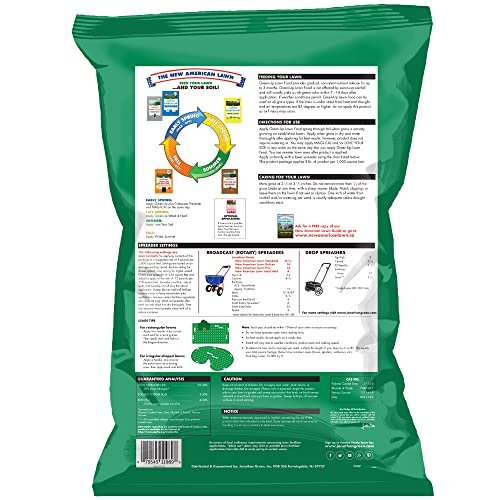
Green-Up Lawn Food 29-0-3 (15,000 sq ft)

This Jonathan Green 29-0-3 is built for fast results. It feeds cool-season lawns with a strong dose of nitrogen. That boosts color and top growth. The 15,000 sq ft coverage makes sense for larger yards or fewer refills. I saw a quick color pop in about a week under normal watering.
The formula supports steady growth for several weeks. It helps turf fill in thin spots and bounce back after stress. It does not include weed control, so pair it with a pre-emergent if needed. It suits Kentucky bluegrass, perennial ryegrass, and tall fescue very well.
Pros:
- Fast green-up for dull or hungry lawns
- Large 15,000 sq ft bag reduces trips and spreader refills
- Strong nitrogen for cool-season vigor and color
- Even feeding when applied with a quality spreader
- Good value per 1,000 sq ft for larger properties
Cons:
- Not organic; may not fit all eco programs
- No weed control; needs a separate product
- Can push leaf growth fast if over-applied
What Amazon Buyers Are Saying
Buyers often note a quick change in color within 7–10 days. Many like the even spread and consistent results across the yard. Some mention it works well after overseeding in the fall once the seed is established. A few call out the heavy bag and the need to sweep pellets off driveways.
My Recommendation
If you want fast, visible results across a larger lawn, this is a strong pick. It’s ideal for spring green-up or post-summer recovery. It is not a fit for strict organic programs. Follow the label, water in, and you should be pleased.
| Category | Rating |
|---|---|
| Green-Up Speed | 5/5 |
| Root Support | 4/5 |
| Ease of Application | 4.5/5 |
| Kid & Pet Considerations | 3.5/5 |
| Value per 1,000 sq ft | 4.5/5 |
| Overall Rating | 4.5/5 |
Green-Up for Seeding & Sodding 12-18-8 (5,000)

This starter fertilizer supports new seed and fresh sod. The 12-18-8 ratio feeds roots first, then shoots. Phosphorus is the “P” in N-P-K. It helps seedlings build a strong base. You get steady early growth and improved establishment in the first weeks.
Use it at seeding or right after laying sod. Water lightly and often for the first two weeks. Once the lawn takes, switch to a higher-nitrogen maintenance feed. Check your state rules on phosphorus before buying, as some areas restrict P use.
Pros:
- Designed for seedlings and sod rooting
- Balanced N-P-K for early establishment
- Works well in spring and fall seeding windows
- Simple rate guidance on the label
- Improves success rate in thin or patchy areas
Cons:
- Phosphorus may be restricted in some states
- Smaller 5,000 sq ft bag may not cover big projects
- Not ideal for mature lawns outside of seeding
What Amazon Buyers Are Saying
Reviewers say it pairs well with overseeding or patch repair. Many note thicker sprouts and better coverage after 2–4 weeks. Some mention they used it under new sod with good rooting. A few point to local P restrictions, so they read labels first.
My Recommendation
Use this when you seed, overseed, or lay sod. It gives new grass what it needs most. For mature turf, switch to a maintenance formula. It is a solid starter choice if local rules allow phosphorus.
| Category | Rating |
|---|---|
| Seeding Success | 5/5 |
| Root Development | 5/5 |
| Versatility | 3.5/5 |
| Compliance with Local Rules | 3.5/5 |
| Value for New Lawns | 4.5/5 |
| Overall Rating | 4.4/5 |
Green-Up Lawn Food 29-0-3 (5,000 sq ft)

Need quick color but have a smaller lawn? The 5,000 sq ft 29-0-3 bag makes sense. It delivers the same fast results as the larger bag. You just buy the size you need. I like this for townhomes or small suburban lots.
Spread it evenly and water it in for best results. You should see a pop in color fast. Because the bag is smaller, it is easier to store and carry. It is also good for spot feeding high-traffic or thin zones.
Pros:
- Quick color change for small lawns
- Easy storage and handling
- Fits spot treatments and partial-lawn feeding
- Strong nitrogen push for recovery
- Clear label rates reduce guesswork
Cons:
- Not organic
- No weed preventer included
- Can drive fast top growth if you overdo it
What Amazon Buyers Are Saying
Most buyers praise the quick green-up. They like that one bag fits a small yard well. Some mention even spread with common broadcast spreaders. A few note they wish it included crabgrass control, but it is a straight fertilizer.
My Recommendation
Pick this if you want a fast, simple feed for a small property. It hits the sweet spot for price and performance. It is best for cool-season grass in spring or fall. Water well after applying.
| Category | Rating |
|---|---|
| Green-Up Speed | 5/5 |
| Convenience (Small Yards) | 5/5 |
| Precision/Spot Feeding | 4.5/5 |
| Sustainability Profile | 3.5/5 |
| Overall Value | 4.5/5 |
| Overall Rating | 4.5/5 |
Veri-Green for Seeding & Sodding (5,000 sq ft)

This Veri-Green starter targets the same job as the Green-Up seeding blend. It is made for new seed and sod. It focuses on early root growth and steady early feeding. It helps young grass stand up to heat and foot traffic later.
Use it when you seed, or a few days after you lay sod. Keep the topsoil moist while seed sprouts. Mow when the new grass reaches 3–4 inches and the blades can stand. Then move to a maintenance fertilizer after the first few cuts.
Pros:
- Tuned for early-stage lawns
- Supports root growth and quick establishment
- Simple 5,000 sq ft coverage for small projects
- Clear timing: use at or near seeding/sodding
- Improves success on repairs and patch work
Cons:
- Less value on mature lawns beyond seeding season
- Phosphorus may be regulated locally (check rules)
- Separate pre-emergent still needed for weeds
What Amazon Buyers Are Saying
Homeowners like the way it pairs with overseeding. Many say germination and early color look better than without a starter. Some note that it spreads clean and does not dust much. A few mention it is a one-task product, which is true of all starter fertilizers.
My Recommendation
Reach for this if you plan a fall or spring overseed. It increases your odds of thick, even coverage. It is a focused tool for a specific job. Use it right and you will see the payoff fast.
| Category | Rating |
|---|---|
| Seeding Results | 4.8/5 |
| Ease of Use | 4.7/5 |
| Versatility Outside Seeding | 3.5/5 |
| Compliance With Local Rules | 3.5/5 |
| Value for Purpose | 4.6/5 |
| Overall Rating | 4.5/5 |
Organic Lawn Food 10-0-1 (5,000 sq ft)

Here is Jonathan Green’s answer to Espoma-style feeding. This organic 10-0-1 uses natural sources. It focuses on soil life and steady growth. It is gentle, with a low risk of burn when you follow the directions.
I like it for families with kids and pets. It works well in summer when slow feeding is safer. It will not pop color as fast as synthetic 29-0-3. But it builds lasting turf strength and supports soil microbes over time.
Pros:
- Organic feeding with a low burn risk
- Kid- and pet-friendly approach when used as directed
- Improves soil life over time
- Good for hot weather and steady growth
- Pairs well with overseeding and compost topdressing
Cons:
- Slower color change than synthetic fertilizers
- Natural odor for a day or two after watering
- Higher cost per 1,000 sq ft than many synthetics
What Amazon Buyers Are Saying
Buyers often note a more natural, steady green. They like the safer feel around pets. Some mention the earthy smell on application day. Many accept the slower color in trade for soil benefits and peace of mind.
My Recommendation
If you prefer organic feeding but want the Jonathan Green brand, this is the fit. Expect patience on color. The payoff is steady health and fewer growth spikes. It is a strong rival to Espoma for an organic program.
| Category | Rating |
|---|---|
| Soil Health Support | 4.8/5 |
| Kid & Pet Friendliness | 4.7/5 |
| Green-Up Speed | 3.8/5 |
| Hot-Weather Suitability | 4.6/5 |
| Overall Value (Organic) | 4.4/5 |
| Overall Rating | 4.5/5 |
How to Choose Jonathan Green vs Espoma lawn fertilizer
Pick with your goals in mind. Think about speed, safety, and seeding plans. Then match the formula to the season and your grass type.
1. Decide on speed vs. safety
Want fast color? Jonathan Green 29-0-3 wins for speed. It gives you quick leaf growth and a dark green look. Need a kid-and-pet-friendly plan? Espoma and Jonathan Green Organic 10-0-1 focus on steady feeding. They support soil health with a low burn risk. Choose synthetic for quick pop. Choose organic for a gentle, long game.
2. Match the formula to the task
Seeding or sodding calls for a starter with phosphorus. Jonathan Green 12-18-8 and Veri-Green seeding blends support roots first. Mature turf needs more nitrogen. Use 29-0-3 for quick color and recovery. In mid-summer heat, lean organic. A slow feed is safer when temps climb.
3. Check rules, soil, and grass type
Some states restrict phosphorus. You can still seed with a starter where rules allow it. Do a soil test each year or two. Fix pH if needed. Cool-season grasses like fescue, ryegrass, and bluegrass respond well to both brands. Set your spreader right. Water in after you feed.
Final Verdict: Which Should You Buy?
For fast results and strong cool-season performance, choose Jonathan Green 29-0-3. If you want organic, kid-and-pet-friendly feeding with steady results, pick Espoma or Jonathan Green Organic 10-0-1. Both fit most lawns when used for the right job.
Jonathan Green vs Espoma lawn fertilizer is not a one-winner story. Match your goals and season. Feed at the right rate. Water well. You will get a thick, green lawn you can enjoy.
FAQs Of Jonathan Green vs Espoma lawn fertilizer
Is Jonathan Green better than Espoma for fast green-up?
Yes. Jonathan Green 29-0-3 gives faster color than organic formulas. Expect a pop in about a week with watering.
Which is safer for kids and pets, Jonathan Green or Espoma?
Espoma and Jonathan Green Organic 10-0-1 are great choices. They use natural sources and feed gently when you follow the label.
Can I use a starter fertilizer on new seed if my state restricts phosphorus?
Check local rules first. Some areas allow phosphorus only for seeding. Follow the label and any local guidance.
How soon will I see results from Espoma?
Espoma feeds slowly. Expect steady color in 2–4 weeks. Growth stays even with less surge.
Can I mix organic and synthetic in one lawn plan?
Yes. Many do a synthetic spring green-up. Then they switch to organic for summer. It balances speed and safety.
What spreader setting should I use?
Use the setting on the bag for your spreader model. If unsure, start low and make a test pass. Adjust to hit the target rate.
Do these fertilizers work for warm-season grasses?
Yes, but time them right. Feed when warm-season grass is active. Avoid heavy nitrogen during winter dormancy.