
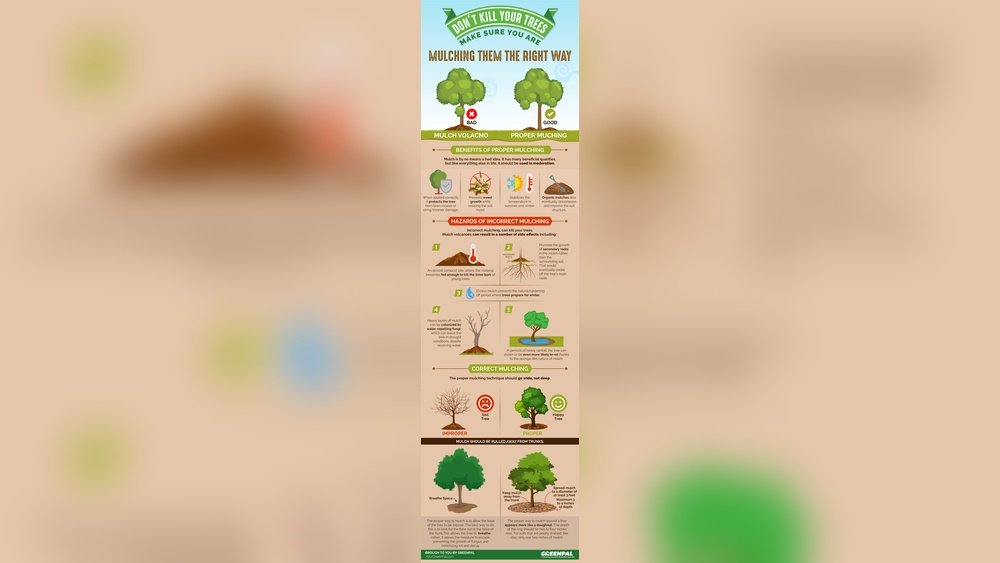
Mulching is one of the simplest, most effective ways to help your trees thrive. But many people make mistakes when mulching around trees, which can actually harm the tree instead of helping it. If you want your trees to grow strong, look beautiful, and stay healthy for years, it’s important to learn how to mulch around trees correctly. Done right, mulching saves water, keeps weeds away, and protects trees from extreme temperatures. But done wrong, it can lead to disease, rot, and weak roots.
In this complete guide, you’ll discover the best mulching methods, materials, and expert tips for every climate and landscape. You’ll also learn what to avoid, how to fix common problems, and get answers to the top questions homeowners ask about tree mulching.
Whether you’re new to gardening or have years of experience, these tips will help your trees reach their full potential.
Why Mulching Around Trees Matters
Mulching isn’t just about making your yard look tidy. The right mulch acts as a protective blanket for tree roots. It keeps moisture in the soil, stops weeds from competing with your tree, and protects roots from heat and cold. Good mulch also adds nutrients to the soil as it breaks down.
Research from the University of Minnesota Extension found that trees with mulch grow up to 20% faster in the first five years than trees without mulch. It also reduces the need for watering by up to 50% during dry months. Mulch helps prevent mower and trimmer damage to the trunk, which is a leading cause of tree death in urban areas.
But the benefits only come when you use mulch the right way. Too much mulch or the wrong kind can suffocate roots, invite pests, or cause fungal diseases. That’s why understanding the correct methods is essential.
Choosing The Right Mulch For Trees
Not all mulches are created equal. The type of mulch you choose affects both the health of your tree and the look of your landscape. Here’s what you need to know about the different options.
Organic Mulch Types
Organic mulches are made from natural materials that break down over time, adding nutrients to the soil. Common types include:
- Wood chips: Lasts long, looks natural, and is widely available. Good for most trees.
- Bark mulch: Attractive and slow to decompose, but can be more expensive.
- Pine needles: Acidic, great for pine, oak, and other acid-loving trees.
- Compost: Rich in nutrients, but may decompose too quickly for some uses.
- Leaves: Free and easy to find, but best shredded to prevent matting.
Inorganic Mulch Types
Inorganic mulches don’t break down, so they last longer but don’t add nutrients.
- Rock or gravel: Good for dry climates and modern landscapes. Can heat up soil in summer.
- Rubber mulch: Made from recycled tires. Long-lasting, but some experts question its safety for trees.
- Landscape fabric: Often used under other mulches to block weeds, but can block water and air if not used carefully.
Comparing Mulch Types
Here’s a quick comparison of common mulch materials:
| Mulch Type | Benefits | Drawbacks | Best For |
|---|---|---|---|
| Wood Chips | Natural look, slow to decompose, controls weeds | Can attract termites if piled against trunk | Most landscape trees |
| Bark Mulch | Long-lasting, attractive | May float away in heavy rain, costlier | Ornamental beds, visible areas |
| Pine Needles | Acidifies soil, easy to spread | Not suitable for all trees | Pines, oaks, azaleas |
| Rock/Gravel | Permanent, low maintenance | Heats soil, no nutrients | Dry or desert climates |
| Rubber Mulch | Long-lasting, weed barrier | Possible toxins, no nutrients | Playgrounds, non-edible trees |
Tips For Selecting Mulch
- Choose organic mulch for most trees, especially young or fruit trees.
- For high-traffic areas, bark mulch or wood chips hold up best.
- Use pine needles if you want to lower soil pH.
- Avoid colored or dyed mulches unless you know the dye is safe for plants.
- Don’t use grass clippings or unshredded leaves, as they can mat and block water.
Credit: www.lawnstarter.com
How To Mulch Around Trees: Step-by-step
Many people just dump a pile of mulch at the base of the tree and call it done. This is a mistake! Correct mulching follows a few simple steps that protect your tree’s roots and trunk.
1. Prepare The Area
Start by clearing away weeds, grass, and any old mulch from the area around the tree. Remove at least a 3-foot circle of grass around young trees, or up to 6 feet for mature trees. This keeps grass from stealing water and nutrients.
2. Check Soil Moisture
Water the soil if it’s dry. Mulch works best on moist soil, as it locks in the water. If you mulch on dry soil, roots may not get enough moisture.
3. Spread The Mulch
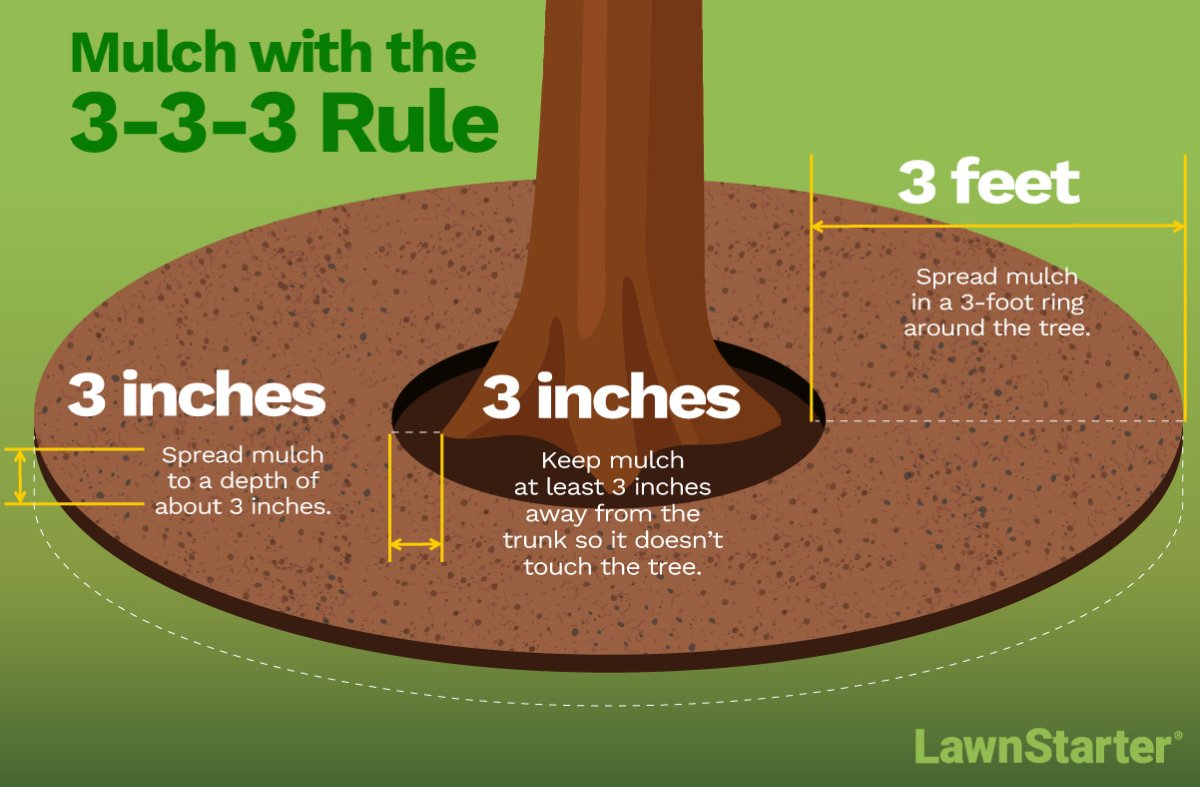
Pour mulch around the base of the tree, starting a few inches from the trunk and spreading it out in a donut shape. The mulch ring should be 2-4 inches deep and extend as far as the tree’s branches (the “drip line”) if possible.
4. Keep Mulch Away From The Trunk
Never pile mulch against the trunk (the tree’s “collar”). Leave a 3-6 inch gap between the mulch and the trunk. This prevents rot, pests, and disease.
5. Smooth And Level
Use a rake or your hands to make the mulch even and flat, not mounded. This helps water soak in and looks better.
6. Water Again
After spreading mulch, water the area well. This helps settle the mulch and ensures the roots get moisture.
Visual Guide: Proper Mulch Placement
Here’s a simple table to help visualize the right and wrong way to mulch around trees:
| Correct Mulching | Incorrect Mulching |
|---|---|
| Mulch 2-4 inches deep 3-6 inch gap from trunk Mulch spread to drip line Donut shape, not piled up |
Mulch touching trunk Mulch more than 4 inches deep Volcano shape (mound against trunk) Uneven or patchy coverage |
Common Mulching Mistakes (and How To Avoid Them)
Even experienced gardeners can make mistakes with mulch. Here are some of the most common problems — and how you can avoid them:
- Mulch Volcanoes: Piling mulch high against the trunk traps moisture, leading to rot, pests, and disease. Always leave a gap.
- Too Much Mulch: More is not better. Over 4 inches can suffocate roots and block water and air.
- Using Fresh Wood Chips: Fresh wood chips can pull nitrogen from the soil as they break down. Use aged mulch or compost first.
- Ignoring Weeds: Weeds can grow through thin mulch layers. Remove weeds before mulching and use a thick enough layer to block sunlight.
- Using Plastic or Non-Breathable Fabrics: These can stop water and air from reaching roots. If you use a weed barrier, choose a breathable landscape fabric.
- Not Refreshing Mulch: Mulch breaks down over time. Top up mulch every year or as needed, but don’t keep piling it higher.
- Wrong Mulch for the Tree: Some trees need specific mulch types. For example, acid-loving trees like pine prefer pine needle mulch.

Credit: www.youtube.com
How Much Mulch Do You Need?
Getting the right amount of mulch is important for both effectiveness and cost. Here’s a simple way to calculate how much mulch you need for your trees.
Calculating Mulch Volume
Measure the area you want to mulch around the tree. Most people use a circle:
- Radius: Distance from the trunk to the edge of the mulch ring (in feet)
- Depth: How deep you want the mulch (in inches, usually 2-4)
Use this formula:
Area = π × (radius)^2
Volume = Area × (depth in feet)
Example: If you want a 4-foot radius ring, 3 inches deep:
- Area = 3.14 × (4)^2 = 50.24 sq ft
- Depth in feet = 3 inches ÷ 12 = 0.25 ft
- Volume = 50.24 × 0.25 = 12.56 cubic feet
Most mulch is sold by the cubic foot or cubic yard (1 yard = 27 cubic feet).
Quick Reference Table
| Mulch Ring Radius | Depth (inches) | Volume Needed (cubic feet) |
|---|---|---|
| 2 feet | 3 | 3.14 |
| 3 feet | 3 | 7.07 |
| 4 feet | 3 | 12.56 |
| 5 feet | 3 | 19.63 |
Best Mulching Practices For Different Climates
The best way to mulch depends on your climate and soil. Here’s how to adjust your mulching for different environments.
Wet Climates
- Use coarse mulch like wood chips that allow water to drain.
- Avoid thick, compacted mulch that can trap too much moisture.
- Don’t let mulch touch the trunk, as wet conditions increase risk of rot.
Dry Or Hot Climates
- Use organic mulches to hold moisture and cool roots.
- Apply a 3-4 inch layer for better water retention.
- Consider rock or gravel only for drought-tolerant or native trees.
Cold Or Temperate Zones
- Mulch helps insulate roots from freeze-thaw cycles.
- Apply mulch in late fall before ground freezes.
- Avoid adding fresh mulch in spring until soil warms up.
Urban Or High-traffic Areas
- Use sturdy mulches like bark or decorative stone that resist breakdown.
- Refresh mulch more often, as foot traffic can compact or scatter it.
- Protect the mulch ring with edging if needed.
Mulching Young Vs. Mature Trees
Mulching benefits all trees, but young and mature trees have different needs.
Young Trees
- Require extra care because their roots are shallow and sensitive.
- Keep mulch at least 3 feet from the trunk outwards.
- Avoid heavy mulches that could suffocate small roots.
- Water regularly after mulching.
Mature Trees
- Need wider mulch rings (up to 6 feet or more).
- Deep mulch is less important, but coverage area is key.
- Refresh mulch as it breaks down, but don’t keep piling higher.
How Mulch Improves Tree Health
Mulching does more than just save water and stop weeds. Here’s how it supports healthy trees:
- Reduces soil compaction: Mulch keeps soil loose, helping roots breathe and grow.
- Improves soil nutrients: As organic mulch breaks down, it feeds the tree naturally.
- Prevents erosion: Mulch stops rain from washing away soil and roots.
- Protects against temperature swings: It keeps soil cool in summer and warm in winter.
- Supports beneficial soil life: Earthworms and microbes thrive under mulch, improving soil structure.
Practical Tips For Perfect Mulching
- Always check soil moisture before and after mulching.
- Use a rake to keep mulch even and tidy.
- Top up mulch every spring or fall, but remove old, matted mulch first.
- Don’t use mulch from diseased trees or plants.
- Watch for signs of pests or fungus, especially if mulch is too wet.
- For very windy areas, heavier mulches like bark or gravel stay in place better.
- For fruit trees, keep mulch away from the base to prevent rodents and insects.
- If you use rock or gravel, check soil moisture often — it doesn’t hold water like organic mulch.
Environmental Impact Of Mulching
Mulching is not just good for trees — it’s also great for the environment. Using organic mulch recycles yard waste, reduces landfill use, and lowers water demand. Mulch can also cool urban areas by reducing heat reflection from bare soil.
When choosing mulch, look for locally sourced materials. This cuts down on transport emissions and supports your local economy. Avoid mulches made from endangered or invasive trees. If you use rubber mulch, check that it’s from safe, recycled sources.
Mulching And Tree Species: What To Know
Different trees can have unique needs. Here are some quick guidelines:
- Conifers (pine, spruce): Prefer pine needle or wood chip mulch; avoid high-pH mulches like limestone.
- Fruit trees: Use compost or aged wood chips, but keep mulch a few inches from the trunk to avoid pests.
- Maple, oak, birch: Do well with wood chips, bark, or leaf mulch.
- Citrus trees: Avoid thick, wet mulch; use light, airy mulch and keep away from trunk.
When To Mulch Trees
The best times to mulch are:
- Spring: Mulch after the soil warms up, to hold moisture and stop weeds early.
- Fall: Mulch before the ground freezes, to insulate roots against winter cold.
Avoid mulching in the middle of winter, as it can trap cold in the soil, or during very hot, dry periods unless you can water well.
Signs You Need To Refresh Or Replace Mulch
Mulch doesn’t last forever. Here’s how to know it’s time to refresh:
- Mulch layer is less than 2 inches deep
- Weeds are breaking through
- Mulch is faded, matted, or smells sour
- Soil is dry under the mulch, or water is running off
When adding new mulch, rake up and loosen old mulch first. Remove any moldy or sour-smelling mulch, as it can harm roots.
Mulching As Part Of Tree Care
Mulching is just one part of a healthy tree care routine. Combine it with proper watering, pruning, and soil testing for best results. Well-mulched trees often need less water and fertilizer, and are less likely to suffer from drought or root stress.
If you’re unsure about the best mulch for your trees, check with a local arborist or your nearest cooperative extension office. They understand the needs of trees in your area and can give advice specific to your climate and soil.
For more in-depth science and research on mulching, visit the Arbor Day Foundation.

Credit: sactree.org
Frequently Asked Questions
What Is The Best Mulch To Use Around Trees?
The best mulch for trees is usually an organic material like wood chips, bark, or pine needles. These break down slowly, feed the soil, and protect roots. Choose mulch based on your tree type, climate, and local availability. Avoid using grass clippings or colored/dyed mulches unless you know they are safe.
How Deep Should Mulch Be Around Trees?
Mulch should be 2 to 4 inches deep for most trees. Too little won’t stop weeds or keep moisture in; too much can suffocate roots. Always keep mulch away from the tree’s trunk by at least 3-6 inches to prevent rot and pests.
Should I Remove Old Mulch Before Adding New Mulch?
It’s a good idea to loosen or remove old mulch before adding new. If the old mulch is matted, moldy, or more than 4 inches deep, take some away. If it’s loose and healthy, you can mix it in with new mulch for best results.
Can I Use Rocks Or Gravel As Mulch Around Trees?
Yes, rocks or gravel can be used, especially in dry or modern landscapes. However, they don’t feed the soil and can make the ground hotter in summer. They’re best for drought-tolerant or native trees, not young or fruit trees.
Why Is Mulching Too Close To The Tree Trunk Bad?
When mulch touches the tree trunk, it traps moisture against the bark. This encourages rot, insects, and diseases. Always leave a gap between the mulch and the trunk to keep your tree healthy and strong.
Mulching is one of the best things you can do for your trees, but only if you do it right. With these tips, you can create a safer, healthier, and more beautiful yard that supports your trees for years to come.
Start with the right mulch, follow the correct steps, and check your trees each season. Healthy roots mean beautiful trees — and better landscapes for everyone.