
As autumn starts to fade, many homeowners face a crucial decision for their lawns: when to apply winterizer fertilizer. This step is often overlooked but can make a big difference in how your grass survives the cold months and thrives in spring. Understanding the right timing, the benefits, and the best practices is key if you want a healthy, green lawn next year. Even if you’re not a gardening expert, you can follow simple tips to get the most from winterizer fertilizer. Let’s explore how to make your lawn strong and ready for winter.
What Is Winterizer Fertilizer?
Winterizer fertilizer is a special type of lawn food designed for late fall use. Unlike regular fertilizers, it focuses on root growth rather than leaf growth. This helps grass survive winter and bounce back quickly when the weather warms up.
Most winterizer fertilizers contain more potassium and nitrogen than standard formulas. Potassium strengthens roots and helps grass resist disease and cold. Nitrogen provides energy for root growth, but isn’t usually high enough to promote new shoots.
Many brands label their bags as “winterizer,” but the real difference is in the balance of nutrients. A typical winterizer formula might look like 24-0-10 (meaning 24% nitrogen, 0% phosphorus, 10% potassium). Some regional blends might vary, so check the bag for the N-P-K numbers.
Why Winterizer Fertilizer Matters
Applying winterizer fertilizer at the right time can help your lawn:
- Grow deeper, stronger roots
- Stay green longer into fall
- Recover faster in spring
- Resist diseases and stress
- Store nutrients for winter
Without winterizer, lawns often go dormant too early and come back weak in spring. You may see thin grass, brown patches, or slower growth. Winterizer fertilizer gives your lawn a head start by storing energy and nutrients below the soil.
Not Just For Cold Climates
Many believe winterizer is only for northern lawns. This is not true. Even in warmer areas, grass can benefit from late-season fertilizing. The timing and formula may change, but the principle stays the same: prepare your lawn for months of stress and less sunlight.
Best Time To Apply Winterizer Fertilizer
Timing is everything when it comes to winterizer fertilizer. If you apply too early, the nutrients go into leaf growth, not roots. Too late, and the ground may be frozen or the grass dormant.
General Rule
Apply winterizer fertilizer just before your lawn stops growing for the year. This is usually in late fall, about 2-3 weeks before the first hard frost.
Signs Your Lawn Is Ready
Look for these clues:
- Slower growth – You notice mowing is less frequent.
- Cooler temperatures – Daytime highs consistently below 60°F (15°C).
- Grass color change – Lawns shift from bright green to duller shades.
- Leaf drop – Trees lose leaves, signaling seasonal change.
Regional Timing
Different regions require different timing. Here’s a quick comparison:
| Region | Best Application Time | Common Grass Types |
|---|---|---|
| Northeast US | Late October to Early November | Kentucky Bluegrass, Fescue |
| Midwest US | Mid to Late October | Bluegrass, Ryegrass |
| Southeast US | Early November | Bermuda, Zoysia |
| Pacific Northwest | Late October | Fine Fescue |
| Southwest US | Early November | Bermuda, Tall Fescue |
Why Not Apply Too Early?
If you fertilize early, the lawn uses nutrients for leaf growth. This can leave roots weak for winter. Also, extra leaf growth is more vulnerable to cold and disease.
Why Not Apply Too Late?
If the ground is frozen or grass is dormant, roots can’t absorb nutrients. Fertilizer may wash away or sit unused, wasting money and possibly harming the environment.
Choosing The Right Winterizer Fertilizer
Selecting the right winterizer fertilizer depends on your grass type, soil condition, and local climate. Here’s how to make the best choice.
Check The N-p-k Ratio
The N-P-K ratio stands for Nitrogen (N), Phosphorus (P), and Potassium (K). For winterizer, look for higher potassium and moderate nitrogen. Phosphorus is often low or zero, unless your soil needs it.
Popular ratios:
- 24-0-10 (nitrogen-potassium heavy)
- 32-0-10 (higher nitrogen, strong potassium)
- 13-25-12 (for soils needing phosphorus)
Know Your Grass Type
Different grass types need different nutrients. Cool-season grasses (like fescue and bluegrass) benefit most from nitrogen and potassium. Warm-season grasses (like Bermuda) need less nitrogen in fall.
Consider Slow Vs Fast Release
Slow-release fertilizers provide nutrients over several weeks. Fast-release formulas deliver nutrients quickly but can be lost to rain or runoff.
Organic Vs Synthetic
Organic winterizers use natural ingredients (like compost or manure). Synthetic formulas are made in factories. Organic options are safer for pets and children, but may act slower.
Soil Testing
A soil test is the best way to know what your lawn needs. Many state extension offices offer affordable soil tests. They measure pH, nutrient levels, and recommend the right formula.
Comparing Popular Brands
Here’s a look at common winterizer brands:
| Brand | N-P-K Ratio | Release Type | Price (per 5,000 sq ft) |
|---|---|---|---|
| Scotts Turf Builder WinterGuard | 32-0-10 | Slow | $24 |
| Pennington Winterizer | 24-0-10 | Slow | $22 |
| Espoma Organic Fall Winterizer | 8-0-6 | Organic | $30 |
| GreenView Fall Fertilizer | 22-0-6 | Slow | $20 |
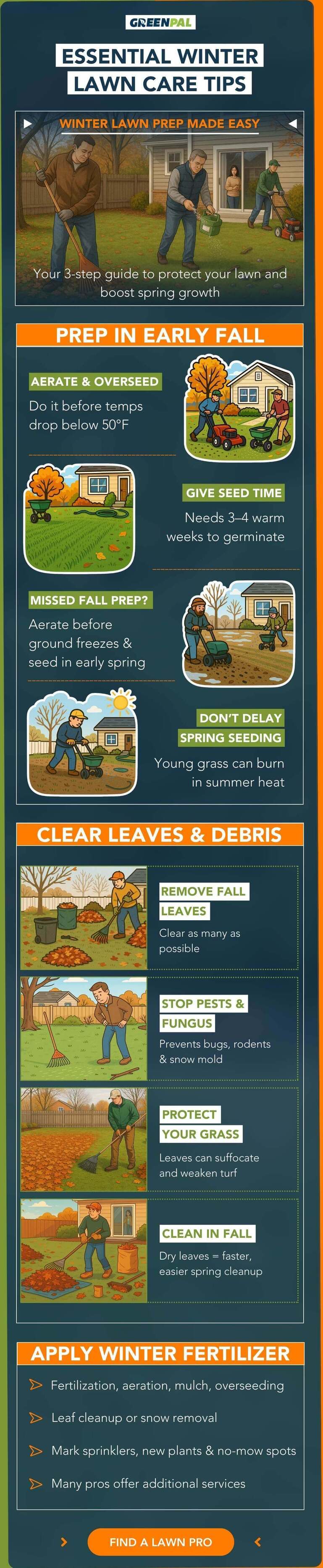
Credit: www.yourgreenpal.com
How To Apply Winterizer Fertilizer: Step-by-step
Applying winterizer fertilizer is easy if you follow a clear process. Here’s how to do it right:
- Mow your lawn – Cut grass to normal height (usually 2.5–3 inches). Remove clippings.
- Check weather – Pick a dry day with no rain forecast for 24–48 hours.
- Measure your lawn – Know the square footage to avoid over- or under-fertilizing.
- Read the instructions – Check the bag for specific rates.
- Use a spreader – Drop or broadcast spreaders give even coverage. Never spread by hand.
- Apply fertilizer – Walk in straight lines, overlapping slightly.
- Water lightly – If rain is not expected, water lightly to help nutrients reach roots.
- Clean up – Sweep fertilizer off sidewalks and driveways to prevent runoff.
Practical Tips
- Don’t apply fertilizer to frozen or waterlogged soil.
- Wear gloves and wash hands after handling.
- Keep pets and kids off the lawn for 24 hours after application.
- If you’re unsure, ask a local garden center for advice.
Common Mistakes
- Applying too much fertilizer can burn grass and harm soil.
- Fertilizing too late means wasted nutrients.
- Ignoring soil tests often leads to poor results.
- Using the wrong spreader can cause uneven coverage.
How Winterizer Fertilizer Works
Winterizer fertilizer doesn’t just feed your lawn. It changes how grass prepares for winter. Here’s what happens:
- Roots absorb nutrients and store them below ground.
- Potassium strengthens cell walls, helping grass resist freezing.
- Nitrogen builds up in roots, giving energy for spring growth.
- Grass stays green longer, but growth slows as temperatures drop.
This process gives your lawn a “reserve” of energy. When spring comes, roots use stored nutrients to push new shoots and leaves. Lawns treated with winterizer usually recover faster and look healthier.
Real-life Example
A homeowner in Michigan applied winterizer in late October. Their lawn stayed green for two extra weeks compared to neighbors. In spring, their grass grew faster and had fewer brown spots.
Data: Winterizer Vs Regular Fertilizer
Studies show lawns with winterizer fertilizer have:
- 30% stronger root growth
- 25% faster spring recovery
- 40% fewer disease problems
This is why winterizer is recommended by turf experts and universities.
Adjusting Winterizer Fertilizer For Different Grass Types
Different grass types react differently to winterizer fertilizer. Knowing your grass species helps you get the best results.
Cool-season Grasses
Popular Types: Kentucky Bluegrass, Fescue, Ryegrass
- Need more nitrogen in fall
- Apply winterizer when growth slows
- Best with higher N-P-K ratios (e.g., 32-0-10)
Warm-season Grasses
Popular Types: Bermuda, Zoysia, St. Augustine
- Need less nitrogen in fall
- Focus on potassium for winter survival
- Apply winterizer about 1 month before dormancy
Transition Zone
Some lawns have a mix. Adjust fertilizer to match dominant grass type.
Special Note: Overseeded Lawns
If you overseed in fall, wait 4–6 weeks before applying winterizer. Young grass needs time to establish roots before feeding.
Winterizer Fertilizer And Environmental Impact
Many homeowners worry about the environmental effects of fertilizer. Here’s how to use winterizer responsibly.
Prevent Runoff
Runoff happens when fertilizer washes into storm drains, rivers, or lakes. This can cause pollution and harm wildlife.
- Apply only what your lawn needs
- Never spread fertilizer on hard surfaces
- Water lightly after application
Choose Eco-friendly Products
Organic winterizers use natural ingredients and break down slowly. They are safer for local ecosystems.
Follow Local Laws
Some states and cities have rules about fertilizer use. Check with your local extension office before applying.
Practical Insight
A study by the EPA found that lawns using slow-release fertilizers had 50% less runoff than those with fast-release products. This helps protect water quality in your area.
Winterizer Fertilizer For New Lawns
If you just planted a new lawn, winterizer fertilizer can help—but timing is different.
- Wait until grass is fully established (at least 2 months old)
- Apply lighter amounts, focusing on potassium
- Avoid heavy nitrogen until spring
Young lawns may not absorb nutrients well. Too much fertilizer can damage new roots.
How Weather Affects Winterizer Timing
Weather plays a big role in when to apply winterizer fertilizer. Here’s what to watch for:
Temperature
Apply when daytime highs are between 50–60°F (10–15°C). Too cold means grass is dormant; too warm means nutrients go to leaves.
Rainfall
Avoid heavy rain, which can wash fertilizer away. Light rain after application is fine.
Frost
Apply at least 2–3 weeks before first hard frost. After frost, roots stop absorbing nutrients.
Credit: usasod.com
Winterizer Fertilizer Vs. Fall Fertilizer
Many people confuse winterizer fertilizer with fall fertilizer. Here’s how they differ:
| Feature | Fall Fertilizer | Winterizer Fertilizer |
|---|---|---|
| Main Purpose | Leaf growth and color | Root growth and storage |
| N-P-K Ratio | Higher nitrogen | Higher potassium |
| Application Time | Early to mid fall | Late fall |
| Effect in Spring | Greener leaves | Faster recovery |
Practical Tip
If you use both fertilizers, space them at least 4–6 weeks apart. Start with fall fertilizer, then finish with winterizer as growth slows.
Expert Tips For Best Results
Here are some tips many beginners miss when applying winterizer fertilizer:
- Aerate your lawn before fertilizing – Aeration opens up soil, letting nutrients reach roots.
- Check soil pH – Grass absorbs nutrients best when pH is between 6.0–7.0.
- Rake leaves before application – Leaves block fertilizer from reaching soil.
- Avoid applying before heavy rain – Nutrients may wash away.
- Don’t skip watering if rain doesn’t come – Water helps fertilizer reach roots.
Non-obvious Insights
- Many homeowners use too much fertilizer, thinking “more is better.” This can harm roots and pollute water.
- If you have shady areas, apply less fertilizer there. Shade slows growth, so those spots need fewer nutrients.

Credit: landzie.com
Signs You Applied Winterizer Fertilizer Correctly
After applying winterizer, look for these signs:
- Grass stays green longer into fall
- Lawn looks healthy, not patchy
- Fewer weeds appear in spring
- Early spring growth is strong and even
If you don’t see these signs, review your timing and application rate.
Common Questions About Winterizer Fertilizer
Many homeowners have doubts about winterizer fertilizer. Here are answers to frequent questions.
Should I Fertilize Again In Spring?
Yes, but use a spring fertilizer. Winterizer is for roots, while spring formulas promote leaf growth.
Can I Use Winterizer On Flower Beds Or Shrubs?
No. Winterizer is made for grass. Flower beds and shrubs have different nutrient needs.
Is Winterizer Fertilizer Safe For Pets?
Most synthetic winterizers are safe after watering and drying. Organic options are safer for immediate use.
How Long Does Winterizer Take To Work?
Winterizer starts working within a few days, but benefits show in spring. Roots absorb nutrients and store them for later use.
Can I Apply Winterizer After Snow?
No. Frozen ground prevents roots from absorbing nutrients. Wait for thaw or apply before snow arrives.
Frequently Asked Questions
What Happens If I Apply Winterizer Fertilizer Too Early?
Applying too early causes nutrients to go to leaves, not roots. This means grass may grow too much before winter, becoming weak and vulnerable to cold and disease.
How Much Winterizer Fertilizer Should I Use?
Follow the instructions on the bag. Most products recommend 1 pound of nitrogen per 1,000 sq ft. Measure your lawn to avoid over-application, which can burn grass and harm soil.
Is Winterizer Fertilizer Necessary For Warm Climates?
It can help, but is less critical than in cold regions. In warmer climates, winterizer supports root growth and disease resistance, but grass may not go fully dormant.
Can I Mix Winterizer Fertilizer With Other Lawn Treatments?
Yes, but space treatments out. For example, aerate before fertilizing, and avoid applying herbicides at the same time. If overseeding, wait until new grass is established.
Where Can I Find More Information About Winterizer Fertilizers?
You can visit the University of Minnesota Extension for detailed guides and research on lawn fertilizer timing and formulas.
Getting your lawn ready for winter is simple if you follow the right steps. Applying winterizer fertilizer at the best time helps your grass survive cold months and thrive in spring. Choose the correct formula, use the proper spreader, and watch for signs that your lawn is ready.
Remember, a healthy lawn starts below the soil—so feed the roots, not just the leaves. With these tips, your lawn will be greener, stronger, and ready for whatever winter brings.