

Growing a lush, green lawn from seed is exciting, but it’s also a test of patience and care. One of the biggest worries for new gardeners is how to water grass seed without washing it away. If you water too hard, the seeds can float, shift, or even disappear, leaving bare spots in your yard.
If you water too little, the seeds dry out and don’t sprout. Striking the right balance is key to getting even, healthy growth. With the right methods, you can keep your grass seed moist, in place, and on its way to becoming a beautiful lawn.
Why Grass Seed Washes Away
Before you start, it helps to understand why grass seed often washes away. Grass seed is small, light, and sits on or just below the soil surface. Heavy watering or rain can easily move the seed, especially on sloped ground.
Dry, loose soil also makes it easier for water to carry seed away. If you sow seed on compacted soil, water can run off instead of soaking in, taking the seed with it. That’s why proper soil preparation and watering technique are so important.
Preparing The Soil To Keep Seed In Place
A good lawn starts with good soil. Preparing your soil well makes it easier for seeds to stay put and get the moisture they need.
- Loosen the topsoil. Use a rake or garden fork to loosen the top 1–2 inches of soil. This helps the seeds settle in and gives water somewhere to go.
- Remove debris and clumps. Clear away rocks, sticks, and large clumps of soil. A smooth, even surface stops water from forming channels that can wash seeds away.
- Level the area. Fill in low spots and flatten high spots. On slopes, create small terraces or gentle steps if possible.
- Firm the soil lightly. After leveling, gently press the soil with a roller or by walking on it. This gives seeds better contact but still lets water soak in.
- Moisten the soil before seeding. Lightly water the soil before you spread the seed. Damp soil holds seeds better than dry, dusty ground.
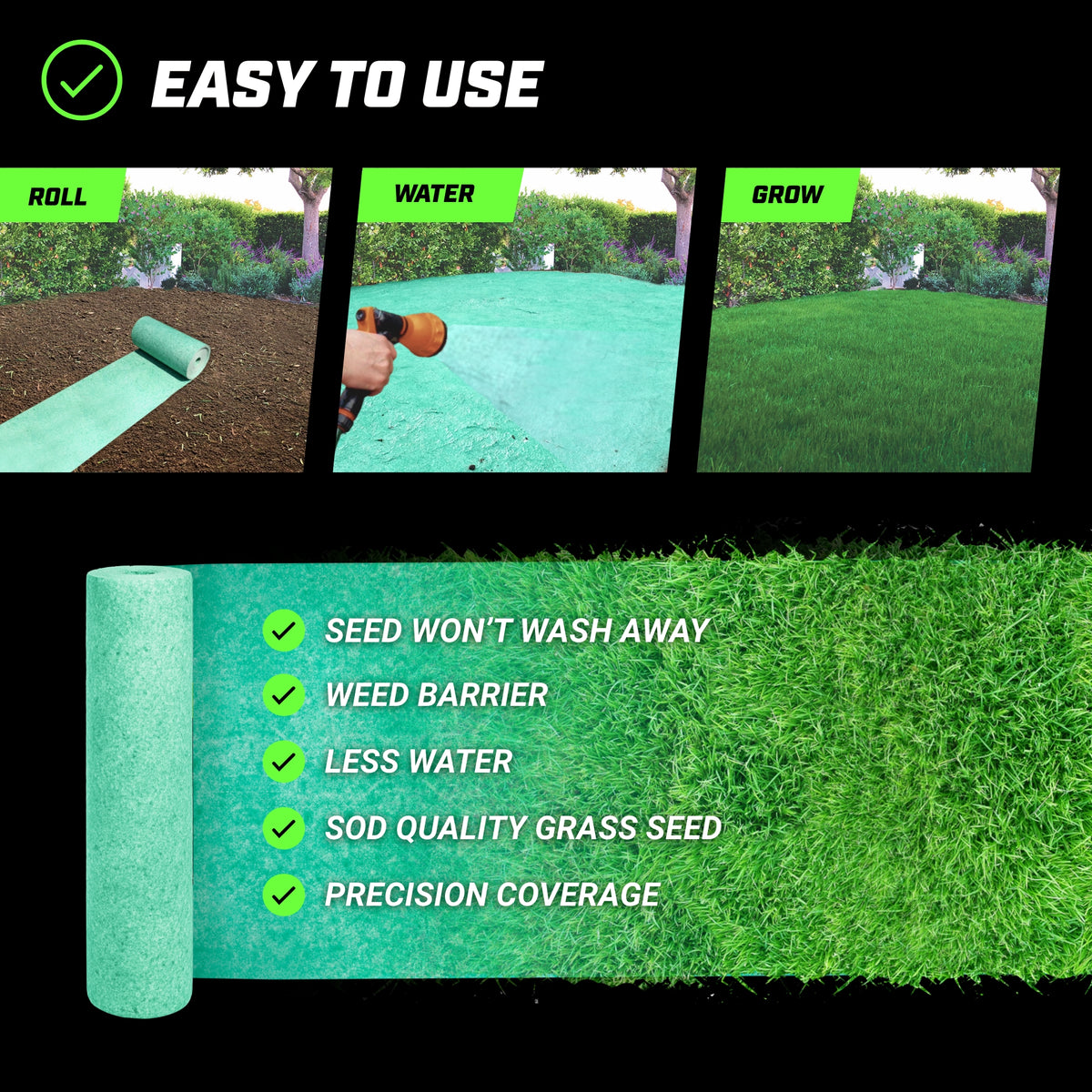
Credit: growtrax.com
Choosing The Right Seed And Cover
Not all grass seeds are equal. Some are coated with a protective layer that helps them stay in place and hold moisture. Others are plain and more likely to move. Read the seed label carefully.
After sowing, covering the seed with a thin layer of mulch or soil can help keep it in place. Options include:
- Straw (weed-free): Spread a thin layer so about 50% of the soil still shows.
- Compost or peat moss: A light dusting (about 1/8 inch) helps hold moisture and seed.
- Seed blankets or erosion control mats: Best for slopes and windy areas.
Never cover seed too thickly—grass needs light to sprout.
How To Water Grass Seed Without Washing Away
The main goal is to keep the top inch of soil evenly moist but not soggy. This means gentle, frequent watering, not deep soaking.
The Best Watering Methods
- Fine spray or mist: Use a sprinkler, hose nozzle, or watering can with a fine spray setting. The water should land softly, like rain, not blast the soil.
- Short, frequent sessions: Water 2–4 times a day for 5–10 minutes each session, depending on heat, wind, and sun. The soil should never dry out but should not puddle.
- Hand watering for small areas: For small patches, hand watering gives you the most control. Move the spray slowly and keep the nozzle above the surface.
- Automated sprinklers: Set timers for short bursts, and check coverage to avoid pooling.
How Much Water Is Enough?
Grass seed needs about 1/8 to 1/4 inch of water per session. The goal is to keep the topsoil damp at all times. If you see puddles or runoff, you’re using too much water at once.
| Watering Method | Seed Movement Risk | Best For |
|---|---|---|
| Fine mist/spray | Very low | All areas, especially slopes |
| Soaker hose | Low | Flat, larger areas |
| Open hose or jet | High | Avoid for new seed |
Watering Schedule Example
- Days 1–7: Water 2–4 times daily. Keep the topsoil moist, not soaked.
- Days 8–14: As seeds sprout, reduce to 1–2 times daily, depending on weather.
- Days 15–21: Water once daily or every other day, enough to keep soil slightly moist.
Adjust for rain—if it rains, skip a session. If it’s hot, increase frequency but not amount per session.
Preventing Washout On Slopes
Slopes are much more likely to lose seed during watering or rain. Special care helps protect your investment.
- Apply mulch or seed blankets. These hold seed and soil together.
- Water from the top down. Start at the highest point and work down so water soaks in gradually.
- Water more often, with less each time. Split sessions into shorter bursts.
- Create shallow furrows across the slope. These small rows catch water and seed, slowing movement.
Example: Protecting A Sloped Lawn
Let’s say you’re seeding a 10-foot slope. First, use a seed blanket or straw mulch. Then, water with a handheld sprayer, starting at the top. Water for just 2–3 minutes per section, moving slowly down the slope. Repeat 2–3 times a day until grass sprouts.
Common Watering Mistakes That Wash Out Seed
Avoid these errors to keep your seed in place:
- Using a hard spray: Even a few seconds of strong water can move seed.
- Watering too long at once: This causes puddles, runoff, and seed movement.
- Skipping mulch or cover: Bare seed is much more likely to wash away.
- Ignoring the weather: Heavy rain can undo all your work. If rain is coming, cover seed with extra mulch or a seed blanket.
- Not checking soil moisture: Don’t guess. Stick your finger in the soil; it should feel damp but not muddy.
Monitoring And Adjusting Your Approach
Watch your seedbed daily, especially in the first week. If you see seeds moving, bare spots, or puddles, adjust your watering right away. Move sprinklers, shorten watering time, or add more mulch. If you notice dry patches, increase frequency or adjust sprinkler coverage.
It’s normal to see some seed movement, but large bare spots mean something needs fixing. Fix problems early for the best results.
Comparing Grass Seed Watering Techniques
Different watering methods offer different levels of control, speed, and risk of washing away seed. Here’s a comparison of popular tools:
| Tool | Control Level | Seed Protection | Area Size |
|---|---|---|---|
| Handheld sprayer | High | Excellent | Small to medium |
| Oscillating sprinkler | Medium | Good | Medium to large |
| Soaker hose | Medium | Good | Large, flat |
| Open hose/no nozzle | Low | Poor | Not recommended |
For most home lawns, a handheld sprayer or oscillating sprinkler on a gentle setting is best. Soaker hoses are helpful for large, flat areas but less effective on slopes.

Credit: scottsmiraclegro.com
Extra Tips For Success
Some practical advice can make all the difference when growing grass from seed.
- Start in the right season. Early fall or spring is best, when temperatures are mild and rain is more likely. Hot, dry weather makes watering harder.
- Don’t walk on new seed. Foot traffic can shift seed and compact wet soil.
- Check for birds. Birds may eat grass seed. Netting or reflective tape can help.
- Be patient. Some seeds take 2–3 weeks to sprout. Keep watering gently until the grass is at least 2 inches tall.
Two Non-obvious Insights
- Soil temperature matters. Grass seed won’t germinate well if the soil is too cold (below 50°F/10°C) or too hot (above 85°F/29°C). Use a soil thermometer for best results.
- Water pressure at the spigot affects spray. If your outdoor faucet has high pressure, even a “gentle” nozzle can deliver too much force. Use a pressure regulator or try watering during off-peak hours.
When To Stop Watering Like This
Once the grass is 2–3 inches tall, you can reduce watering. Switch to deeper, less frequent watering to encourage strong roots. For example, water every other day for 20–30 minutes, soaking the soil to a depth of 4–6 inches.
| Grass Stage | Watering Frequency | Watering Depth |
|---|---|---|
| Seed and sprout | 2–4 times daily | Top 1 inch |
| Young grass (2–3 inches) | Every other day | 2–4 inches |
| Established lawn | 1–2 times per week | 4–6 inches |
This change helps the grass grow deep roots and prepares it for dry periods.

Credit: www.lowes.com
What To Do After Heavy Rain
Sometimes, no matter how careful you are, rain can undo your work. If a storm washes away seed, wait until the soil dries slightly, then gently rake the area, add more seed, and re-cover with mulch. Water gently as before.
Don’t give up—most lawns need a few touch-ups in the first year.
Resources For Further Learning
For more detailed guides, weather advice, and grass seed tips, check reliable sources like the National Gardening Association.
Frequently Asked Questions
How Long Does It Take Grass Seed To Sprout?
Most grass seed takes 7–21 days to sprout, depending on the variety, soil temperature, and moisture. Keep watering gently until you see green shoots.
Can I Use A Sprinkler System For New Grass Seed?
Yes, but make sure it has a fine spray setting. Set timers for short, frequent sessions. Check for runoff and adjust zones as needed.
What If My Soil Is Very Sandy Or Clay-heavy?
Sandy soil dries out faster, so water more often but with less each time. Clay holds water but can puddle—use less water per session. Always check soil moisture with your finger.
Is It Okay To Walk On Seeded Areas?
No, avoid walking on newly seeded areas until the grass is at least 2–3 inches tall. Walking can compact the soil and move seeds, causing bare spots.
Do I Need To Fertilize When Seeding?
Starter fertilizer helps new grass, but do not overdo it. Use a fertilizer made for new lawns, and apply before or just after seeding. Too much fertilizer can burn seeds or cause runoff.
A beautiful, even lawn starts with smart watering. With patience and the right technique, you’ll see your grass seed sprout and thrive—without losing seed to water or weather.