
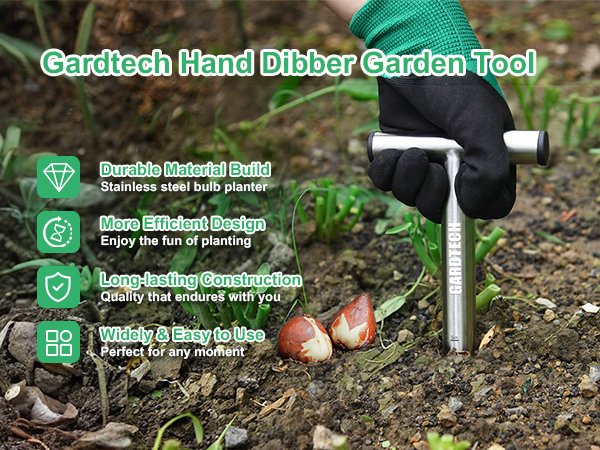
A garden dibber makes planting easier by creating precise holes for seeds and seedlings.
Gardening is a rewarding activity that connects us with nature and the cycle of growth. One of the key tools that can make planting more efficient is a garden dibber. This simple yet effective tool is designed to create holes in the soil for planting seeds or seedlings. Understanding how to use it can elevate your gardening experience, ensuring your plants have the right environment to thrive. Let’s dive into the detailed process and benefits of using a garden dibber for planting, empowering you to cultivate a productive garden.
Understanding the Garden Dibber
A garden dibber is a pointed stick, often made of wood or metal, used to poke holes in the soil. It’s especially useful for setting seeds at the correct depth and spacing. Dibbers come in various designs, including T-shaped, straight, or ergonomic handles for comfortable use.
Benefits of Using a Garden Dibber
- Precision: Ensures consistent seed depth for uniform plant growth.
- Efficiency: Speeds up the planting process, saving time and effort.
- Versatility: Suitable for various planting tasks, like bulbs or seedlings.
How to Use a Garden Dibber
Using a garden dibber is straightforward but requires attention to detail for the best results. Here’s a step-by-step guide:
- Prepare the Soil: Ensure the soil is loose and free of rocks. This makes it easier to insert the dibber and promotes good seed contact with the soil.
- Select the Right Dibber: Choose a dibber that matches the size of the seeds or seedlings you’re planting.
- Mark the Row: Use a string or marker to outline where you want to plant. This maintains straight rows and organized spacing.
- Insert the Dibber: Gently push the dibber into the soil to the desired depth, designated for the specific seed type.
- Create Holes: Rotate the dibber slightly as you insert to create a neat, round hole.
- Plant the Seeds/Seedlings: Place seeds or seedlings into the hole, then cover with soil. Firm the soil lightly to ensure good contact.
Practical Tips
- Soil Conditions: Avoid using a dibber in overly wet or dry soil to prevent compacting the planting area.
- Ergonomics: Choose a dibber that is comfortable to handle, especially for extended planting sessions.
Personal Experience with Garden Dibbers
During my years of gardening, using a dibber has been invaluable, especially for planting bulbs. I remember one spring when I decided to plant tulips. Using a dibber, I quickly created evenly spaced holes, ensuring uniform flowering. It transformed what could have been a tedious task into a swift, enjoyable experience.
Common Mistakes to Avoid
- Incorrect Depth: Ensure the hole is not too shallow or too deep, as this can affect germination.
- Inadequate Spacing: Overcrowding can lead to poor growth and competition for nutrients.
- Ignoring Soil Preparation: Always loosen the soil to allow roots to spread easily.
Frequently Asked Questions of How to Use a Garden Dibber for Planting
What types of dibbers are available?
Dibbers come in wooden, metal, or plastic varieties, with different shapes like T-shaped or straight handles to fit various preferences.
Can I use a dibber for all plants?
While dibbers are versatile, they are best for seeds and small seedlings. Larger plants might need a trowel for bigger planting holes.
How deep should I plant seeds with a dibber?
The depth varies by seed type, but a rule of thumb is to plant seeds twice as deep as their size.
Can a dibber be used in hard soil?
A dibber works best in soft, well-aerated soil. Hard soil might require pre-loosening with a garden fork.
Is a dibber necessary for successful planting?
While not essential, a dibber enhances precision and efficiency in planting, making it a favorite among gardeners.
Conclusion
Mastering the use of a garden dibber can significantly enhance your planting efforts, leading to a thriving garden. Its ability to provide precision and efficiency makes it a must-have tool for both novice and experienced gardeners. Start using a garden dibber today, and witness the improvement in your gardening skills and plant health. Don’t forget to explore additional gardening tools and techniques to further enhance your green space. Consider subscribing to our blog for more insightful gardening tips and tutorials!
