
Last updated: October 2026 · Written by the LawnVibe editorial team.
A push mower is the most common lawn mower for small and medium yards. It is simple, affordable and reliable, and for many homeowners it is the first mower they ever use. But there is more to using one well than just pushing it around. Knowing the controls, setting it up correctly and using good technique makes mowing faster, safer and much less tiring. This guide explains how to use a push lawn mower, from understanding the parts to starting, pushing, turning and finishing the job.
If you are shopping for one, our guide to the best push mower compares gas and battery models.
Types of Push Mowers
The term push mower covers three main types.
| Type | Power | Best for | Notes |
|---|---|---|---|
| Gas push mower | Small gas engine | Small to medium lawns, thick grass | Needs fuel and oil, pull start |
| Battery push mower | Rechargeable battery | Small to medium lawns | Quiet, push-button start |
| Corded electric | Household outlet | Small lawns near an outlet | Light, unlimited runtime, cord to manage |
| Manual reel mower | Your pushing power | Very small, flat lawns | Silent, no fuel, scissor cut |
The technique for pushing, turning and mowing is similar across all types; the main differences are how you start them and how you power them.
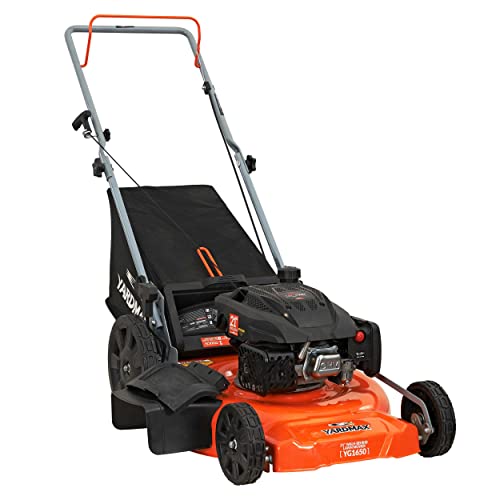
Top picks from our guide: Best Push Mower : 8 Gas, Cordless, Corded and Reel Picks


As an Amazon Associate we earn from qualifying purchases. Prices and availability can change; check the current price on Amazon.
Get to Know the Controls
Before you start, find these parts on your mower.
Blade control bar. Also called the bail or dead man's bar, this bar on the handle must be held against the handle for the blade to spin. Releasing it stops the engine or blade within seconds. Never tie it down.
Throttle or speed control. Many gas mowers have a throttle lever with fast and slow settings. Some have automatic speed control and no lever.
Choke or primer. Gas mowers use a primer bulb, a choke lever or automatic choke for cold starts.
Start button and safety key. Battery mowers usually have a removable safety key plus a push-button start.
Height adjustment. A single lever or individual wheel levers set the cutting height.
Discharge options. A rear bag, side discharge chute or mulch plug decides what happens to clippings.
Step 1: Prepare Yourself and the Lawn
Wear closed-toe shoes with good grip, long pants and eye protection. Hearing protection is a good idea with gas mowers. Walk the lawn and remove sticks, stones, toys, pine cones and pet waste. Make sure children and pets are indoors or well away. Mow only when the grass is dry.
Step 2: Prepare the Mower
Gas mowers: check the oil level on the dipstick and top up if needed, and fill the tank with fresh gasoline.
Battery mowers: charge the battery fully and insert it until it clicks.
Corded mowers: use an outdoor-rated extension cord in good condition, plugged into a GFCI-protected outlet, and loop the cord through the strain-relief hook on the handle.
Check that the blade is sharp and the bag or mulch plug is fitted correctly.
Step 3: Set the Cutting Height
With the engine off or battery removed, set the cutting height for your grass type. Most lawns do best when cut on the higher side, and you should never remove more than about one third of the grass blade in one mowing. If your mower has separate levers for each wheel, set them all to the same position, or the deck will be uneven. Our guide on how to mow a lawn includes a height chart for common grass types.
Step 4: Start the Mower
Place the mower on a flat, already-cut or hard surface, not in tall grass.
Gas: set the throttle, press the primer the number of times the manual says or set the choke, hold the blade control bar and pull the starter cord with a smooth, firm stroke. See our guide on how to start a gas lawn mower.
Battery: insert the safety key, press and hold the start button, then squeeze the bar. See our guide on how to start an electric lawn mower.
Corded: press the safety button and squeeze the bar.
Step 5: Push With Good Posture
Good technique saves your back and arms. Stand upright with the handle at roughly waist height; many mowers have adjustable handle heights, so set it to suit you. Keep your arms slightly bent and push with your legs and body weight rather than your shoulders. Walk at a steady, comfortable pace. Let the mower do the cutting; pushing faster does not cut better and leaves uneven strips in thick grass.
Step 6: Mow the Edges First
Make one or two passes around the perimeter of the lawn. This creates a turning area at each end so you do not scuff the lawn or leave uncut patches when you turn.
Step 7: Mow in Straight, Overlapping Rows
Mow back and forth in straight rows, overlapping each pass by a few inches so you do not leave thin strips of uncut grass. Pick a landmark at the far end and walk toward it to keep rows straight.
Step 8: Turn Efficiently
At the end of each row, push down slightly on the handle to lift the front wheels off the ground, pivot the mower on its rear wheels, and line up the next row. This is much easier than wrestling the mower around on four wheels and avoids scuffing the grass. Always turn on the already-cut header strip.
Step 9: Handle Obstacles and Edges
Slow down near trees, flower beds, fences and paths. Mow around trees in a circle, keeping the deck edge a safe distance from roots and bark. Many mowers have a side that cuts closer to the edge; use that side along fences and beds. Use a string trimmer afterward to reach spots the mower cannot.
Step 10: Mow Slopes Safely
With a push mower, mow across slopes, side to side, rather than up and down. This keeps your footing secure and stops the mower rolling back onto you. Avoid slopes that are too steep to walk across comfortably; a string trimmer is safer there. Never mow slopes when the grass is wet.
Step 11: Empty the Bag and Manage Clippings
Empty the bag when it is about two-thirds full; an overfull bag blocks airflow and leaves clippings on the lawn. Turn the mower off and wait for the blade to stop before removing the bag. Consider mulching or leaving short clippings on the lawn, which returns nutrients and moisture to the soil.
Step 12: Shut Down and Clean Up
Release the blade control bar to stop the mower. On gas mowers, let the engine cool before storing. Remove the battery from battery mowers. Brush clippings off the deck and, with the spark plug disconnected or battery removed, scrape packed grass from underneath. Store the mower in a dry place.
Push Mower Safety Rules
Never reach under the deck while the mower is running. Never pull a running mower backward toward your feet. Keep hands and feet away from the discharge chute. Do not remove safety guards or tie down the blade control bar. Fuel gas mowers only when the engine is cool, and outdoors. Do not let children operate or ride on mowers.
The U.S. Consumer Product Safety Commission tracks thousands of mower-related injuries every year, many involving feet and hands near the blade, which is why these simple rules matter.
Common Beginner Mistakes
Cutting too short. Low settings scalp the lawn, weaken grass and invite weeds. Start high and lower gradually if needed.
Mowing tall grass in one pass. Very long grass bogs the mower down and leaves clumps. Raise the deck, mow, then lower it a few days later.
Rushing. Walking too fast leaves uncut strips and an uneven finish, especially in thick grass.
Forgetting to overlap. Rows that just meet leave thin lines of uncut grass. Overlap each pass by a few inches.
Mowing wet grass. It clogs the deck, tears grass and makes slopes slippery.
Letting the bag overfill. A full bag stops collecting and leaves clippings behind.
Ignoring the blade. A dull blade tears grass and makes pushing harder. Sharpen it once or twice a season.
Patterns That Make Push Mowing Faster
The simplest pattern is straight back-and-forth rows, which suit rectangular lawns. On irregular lawns, divide the yard into smaller rectangles and mow each in rows. Spiral mowing, working inward from the edge, avoids many sharp turns and works well on round or oddly shaped areas, but leaves a less tidy look. Change the direction of your rows each time you mow, lengthwise one week and crosswise the next, so grass grows upright and wheels do not wear ruts.
Seasonal Push Mower Tips
In spring, the first mows face fast, lush growth, so mow often and keep the deck high. In summer, raise the height further to help grass handle heat, and mow early or late in the day to avoid the hottest hours for your own comfort. In fall, keep mowing while the grass grows, and use the mower to mulch light layers of fallen leaves into the lawn. Before winter, clean the mower and either stabilize the fuel or store the battery indoors.
Making Push Mowing Easier
A few changes make a big difference. Mow more often, because short grass is much easier to push through than long grass. Keep the blade sharp. Inflate pneumatic tires to the right pressure. Choose a lighter mower, such as a battery model, if pushing is hard work. Consider larger rear wheels, which roll more easily over bumpy ground.
Push Mower vs Self-Propelled: Which Do You Need?
A push mower is ideal for small, flat lawns. If your lawn is large, hilly or you find pushing tiring, a self-propelled mower makes a big difference. Our guide on what size mower you need for your yard helps you decide based on lawn size and terrain.
The Bottom Line: How to Use a Push Lawn Mower Like a Pro
To use a push lawn mower well, learn the controls, prepare yourself and the lawn, set the right cutting height, start on a hard or cut surface, push with good posture, mow the edges first, overlap straight rows, pivot on the rear wheels to turn, and mow across slopes. With these habits, mowing becomes quicker, safer and easier on your body, and the lawn looks better too.
Frequently Asked Questions
Is a push mower hard to use?
Not on a small, flat lawn. Modern push mowers are lighter than they used to be, especially battery models. Larger lawns and hills make pushing more tiring, which is where self-propelled mowers help.
How do I adjust the height on a push mower?
Most push mowers have either a single lever that raises the whole deck or individual levers or axle positions on each wheel. Stop the engine or remove the battery, then set all four wheels to the same position.
Should I push or pull a lawn mower?
Push it forward. Pulling a running mower back toward your feet is a common cause of injuries. If you must reverse, release the blade control bar first, or look behind you and move slowly.
How do I mow a slope with a push mower?
Mow across the slope, side to side, not up and down. This gives better footing and stops the mower rolling back toward you. Avoid slopes that are too steep to walk comfortably, and never mow slopes when grass is wet.
What is the difference between a push mower and a self-propelled mower?
A push mower moves only when you push it. A self-propelled mower has a drive system that turns the wheels, so you only guide it. Push mowers are lighter, simpler and less expensive.