
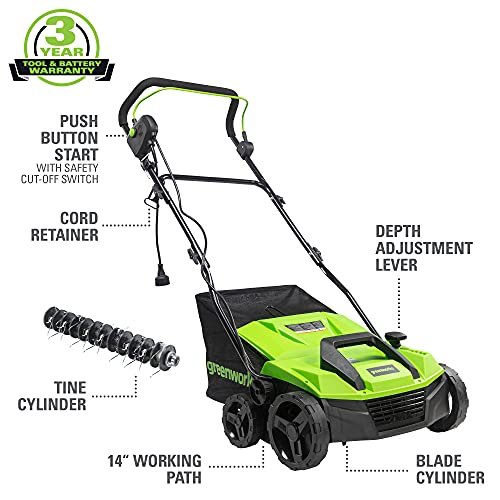
For most homeowners, Greenworks wins. Classen shines for deep core aeration.
Your lawn looks tired. Rain pools in spots. Grass feels spongy and thin. You know it needs help, but what should you use? That is where the Greenworks vs Classen lawn aerator debate begins. Greenworks dethatchers and scarifiers lift thatch and slice the soil. Classen core aerators pull deep plugs for compacted yards. I have used both styles across many lawns. In this guide, I break down when each option makes sense, which models to buy, and how to get fast, real results without wasting time or money.

Greenworks 13 Amp 14-Inch Corded…
2-IN-1 DESIGN – 13A 14-Inch Dethatcher / Scarifer provides the power and versatility to keep your lawn healthy.No load speed : 3200 RPM LIGHTWEIGHT, EASY TO USE – Lightweight design…

Greenworks 40V 15-Inch 2-in-1 Dethatcher…
2-in-1 Dethatcher & Scarifier with Quick-Swap Tine Reels – Easily switch between dethatching and scarifying functions to remove dead grass, moss, and thatch, promoting a healthier, more vibrant lawn. Includes…

Knee-Friendly Manual Lawn Aerator, Adjustable…
1.Reinforced Square-Tube Step Creates a Stable Power Point: The thickened square-tube foot bar offers a firm contact surface for applying concentrated downward force. Its rigid profile helps keep the aerator…
Greenworks 13A 14-Inch Corded Dethatcher/Scarifier
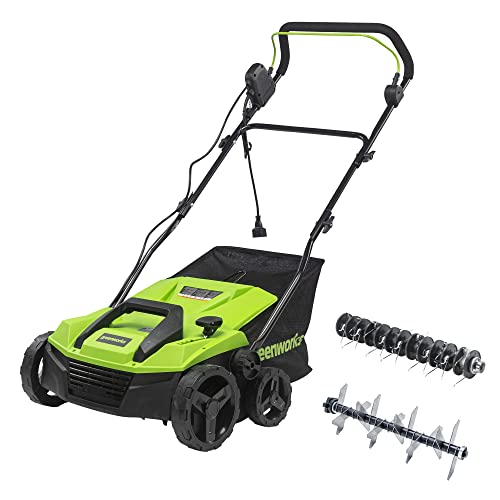
This 13-amp corded unit is a strong pick for small to medium yards. The 14-inch deck is easy to maneuver around beds and trees. It ships with both a spring-tine dethatcher and a scarifier blade reel, so you can lift thatch or slice soil lines. The three-position depth knob helps you dial in gentle lifts or more aggressive cuts.
The push-button start is quick. There is no gas, fumes, or carb issues. It runs at full power as long as you have a good outdoor cord. For most cool-season lawns with a spongy layer under 0.75 inches, this tool speeds up recovery and green-up in spring or fall.
Pros:
- Two drums included: swap between dethatching and scarifying fast
- Strong 13A motor for steady, even pull
- Lightweight and simple to control in tight curves
- Low maintenance with push-button start
- Affordable compared to pro rentals or services
Cons:
- Cord management requires care and a quality extension cord
- Not a core aerator; does not pull plugs like a Classen
- Best for yards under about 1/4 acre per session
My Recommendation
If you want a fast, budget-friendly fix for thatch and surface compaction, start here. In the Greenworks vs Classen lawn aerator decision, this model favors homeowners who need routine thatch control more than deep core aeration. It shines for fescue, bluegrass, and rye in spring or fall. It also helps warm-season lawns when used lightly right before peak growth.
Choose this if you want quick setup and low upkeep. Classen core aerators still beat it for dense clay or high-traffic yards that need deep plugs. But for most small lawns, this Greenworks dethatcher/scarifier makes the biggest difference per dollar. It gives you clean lift, tidy debris lines, and better seed-to-soil contact if you overseed.
| Best for | Why |
|---|---|
| Small suburban lawns | Easy to handle; corded power never fades |
| Thatch under 3/4 inch | Dethatcher reel lifts thatch cleanly without tearing the crown |
| Budget growth boost | Scarifier setting improves seed contact and water flow |
Greenworks 40V 15-Inch Dethatcher & Scarifier Kit

This 40V brushless kit ups the game with cordless freedom. The 15-inch deck covers ground faster than the 14-inch corded model. The kit includes a 5.0Ah battery and a rapid charger. The five-position depth system lets you fine-tune passes for light lift, aggressive thatch removal, or surface slicing before overseeding.
The brushless motor delivers high torque with better efficiency. It runs smoother and keeps noise low. The battery platform also works with other Greenworks 40V tools, which adds value if you build a collection. For mid-size lawns and frequent use, the kit is hard to beat for speed and convenience.
Pros:
- Cordless freedom with strong brushless power
- 5-depth options for precise cuts and lifts
- Includes 5.0Ah battery and rapid charger
- Wide 15-inch path reduces total passes
- Part of a broad 40V ecosystem
Cons:
- Higher price than corded models
- Battery run time varies with depth and thatch level
- Still not a plug aerator like a Classen
My Recommendation
Pick this if you want pro-level control without a cord. In the Greenworks vs Classen lawn aerator choice, this is the homeowner’s daily driver for fast, clean thatch control and pre-seeding prep. It is ideal when you want to split jobs into short sessions and avoid cord drag. It also suits lawns with beds and trees that force tight turns.
Rent or hire a Classen core aerator when you see heavy compaction, thin roots, and poor drainage. Use the Greenworks 40V kit two to three times a year for upkeep. The combo keeps your turf breathing and green while you save the big plug pulls for peak need.
| Best for | Why |
|---|---|
| Mid-size lawns | 15-inch width and cordless speed cut job time |
| Frequent light thatch control | Five depth settings dial in gentle to firm action |
| Battery tool users | Shares 40V batteries across many yard tools |
Knee-Friendly Manual Lawn Aerator (Adjustable)

This adjustable manual aerator focuses on comfort and control. The handle length changes to match your height. The square-tube frame aims to reduce flex and improve leverage. It is built for spot work in hard patches, around mailboxes, and along compacted paths.
If you like a simple tool with no engine, this is a solid choice. It can pull or poke holes in stubborn zones at your pace. Use it after rain or watering, when soil is softer. Pair it with a Greenworks dethatcher for a complete home routine.
Pros:
- Adjustable handle saves your back and knees
- Strong square-tube frame resists bending
- Great for targeted trouble spots
- No fuel, cords, or charging
- Budget-friendly companion to powered tools
Cons:
- Slow for large areas
- Performance depends on soil moisture and user weight
- May not extract deep plugs like a rental Classen
My Recommendation
Use this for spot aeration where traffic crushes soil, like play areas and gate paths. In the Greenworks vs Classen lawn aerator decision, think of this as the scalpel. You treat small problems fast with zero setup. Then you rely on Greenworks for regular thatch care and, when needed, a Classen rental for whole-yard core aeration.
This tool is also handy for test patches. You can check how deep moisture sits and how roots react after holes. If you feel heavy resistance and see shallow roots, plan a Classen plug pull in peak season, then return to routine Greenworks maintenance.
| Best for | Why |
|---|---|
| Spot fixes | Target pressure points without hauling a machine |
| Quiet, early-morning work | No noise or fumes; low disturbance |
| People with back or knee limits | Adjustable height reduces bending and strain |
Walensee Manual Spike Lawn Aerator (15 Spikes)

This spike tool gives you 15 iron points to open shallow channels. It is simple, durable, and easy to store. Use it to relieve surface crusting and improve early spring drainage. It can also prep small areas for overseeding by creating micro-openings.
Spiking is not the same as core aeration. It does not remove soil, so it can compress sides of the hole in heavy clay. Still, it helps where you need quick airflow and water movement without a full machine. Pair it with a dethatcher pass for best results.
Pros:
- Simple spike action improves surface airflow
- Good for wet spots and light crusting
- Very low cost and low storage needs
- Fast to deploy for small problem zones
- Useful before light overseeding
Cons:
- Not a substitute for core aeration
- Limited effect in dense clay if used alone
- Manual effort increases with dry soil
My Recommendation
Choose this for quick touch-ups. In the Greenworks vs Classen lawn aerator question, this is a helper tool, not the main event. It supports surface relief before or after you use a Greenworks dethatcher. It also buys time until you schedule a deep Classen plug pull if your lawn shows classic compaction signs.
Use after a rain for easier penetration. Add compost topdressing after spiking to wash fines into holes. Over a season, that routine boosts soil life and helps roots chase moisture deeper. Keep this tool near the shed door for fast fixes.
| Best for | Why |
|---|---|
| Surface drainage issues | Spikes open quick water paths to reduce puddles |
| Small patch overseeding | Creates micro-pockets for seed and starter fertilizer |
| Budget maintenance | Low cost; pairs well with dethatching passes |
Greenworks 40V 15-Inch Dethatcher/Scarifier (Tool)

This is the same 15-inch 40V platform as the kit, sold tool-only. It is perfect if you already own Greenworks 40V batteries. You get the same brushless power and depth control without paying twice for a pack. It is a smart way to grow your system and save money.
The deck size and design match the kit, so results are consistent. Swap between dethatcher and scarifier drums to match your goal. If you plan to overseed, use the scarifier drum on a shallow cut. Then seed, topdress, and water in for tight seed-to-soil contact.
Pros:
- Best value if you already own 40V batteries
- Brushless performance with 15-inch coverage
- Depth control to match turf and season
- Light and agile around trees and beds
- No cord to fight while you work
Cons:
- Batteries and charger not included
- Not a core aerator; cannot replace a Classen plug machine
- Run time will depend on pack size and depth
My Recommendation
Buy this if you already run Greenworks 40V tools. It gives you the same results as the full kit for less money. In the Greenworks vs Classen lawn aerator choice, this model handles routine thatch jobs with ease. Then you can rent a Classen for deep plug pulls once or twice a year if your soil needs it.
This two-step plan is smart and cost-effective. Keep lawn care simple. Use the Greenworks tool for most passes. Bring in Classen only when compaction demands deep plugs. Your grass and your budget will both be happier.
| Best for | Why |
|---|---|
| Current 40V owners | Use the batteries you have; save on the tool |
| Frequent light maintenance | Quick setup; cordless reach across the yard |
| Overseeding prep | Scarifier drum makes grooves for seed to settle |
FAQs Of Greenworks vs Classen lawn aerator
What is the main difference between Greenworks and Classen?
Greenworks dethatchers and scarifiers lift thatch and slice soil. Classen core aerators pull deep plugs to relieve compaction. Use Greenworks for routine upkeep. Use Classen for dense, compacted soil.
Can a Greenworks dethatcher replace a Classen plug aerator?
No. Dethatching and scarifying help airflow and seed-to-soil contact. But they do not remove cores. For heavy clay and foot traffic areas, rent or hire a Classen.
How do I know if I need core aeration?
If water puddles, roots are shallow, or a screwdriver is hard to push in moist soil, you need core aeration. That is where Classen shines.
When should I dethatch or aerate?
For cool-season grass, early fall or spring is best. For warm-season grass, late spring to early summer is better. Follow local turf guidance.
Is corded or cordless better for dethatching?
Corded is cheaper and runs nonstop. Cordless is faster to deploy and easier around beds. Choose based on lawn size and budget.
Final Verdict: Which Should You Buy?
For most homeowners, a Greenworks dethatcher/scarifier delivers the best value and the biggest visual boost. Rent a Classen core aerator when your lawn shows severe compaction or poor drainage.
Think of Greenworks vs Classen lawn aerator as routine care versus heavy treatment. Use Greenworks often. Bring in Classen only when deep plugs are needed.
How I compare Greenworks vs Classen lawn aerator for real-world lawns
I often get asked if a dethatcher can “aerate.” It depends on what your lawn needs. Dethatching and scarifying open the surface, lift debris, and help new seed take root. That is routine care. Core aeration is a deeper medical procedure. It physically removes soil to fight compaction. In the Greenworks vs Classen lawn aerator question, that is the key separation.
Here is how I decide. I walk the lawn after a rain. If I see puddles or water sitting for hours, I flag compaction. I also push a screwdriver into moist soil. If it stops at an inch or two, I plan a plug pull. For most healthy lawns, I run a Greenworks dethatcher in early spring or early fall. Then I spot-treat with a manual aerator and spike tool as needed. For compacted lawns, I schedule a Classen machine during peak growth so the turf heals fast.
What works in 2026 with battery tools
Battery lawn tools are stronger and smarter today. Brushless motors help maintain torque and extend runtime. The 40V Greenworks lineup offers wide coverage and tight control. Corded tools still make sense for smaller lots and tight budgets. I often start clients with the 13A corded unit. It solves thatch fast, and the cord is not a big deal on small lots. For bigger yards or many trees, I move them to the 40V 15-inch kit or tool-only if they own batteries.
What about Classen models?
Classen core aerators are the rental standard. They are gas-powered and heavy. They pull solid plugs two to three inches deep in soft soil. That is perfect for compacted clay and high-traffic lawns. The trade-off is weight and storage. Most homeowners do not want to own one. Renting for a day or hiring a pro makes more sense. I plan the Classen pass right before the best growth window. For cool-season grass, that is early fall. For warm-season, that is late spring to early summer. Then I follow up with the Greenworks scarifier set shallow for seed grooves.
How to combine tools for the best results
- Do a quick screwdriver test after rain. If it is hard to push, plan a Classen core aeration.
- If thatch is 0.5 to 0.75 inches thick, set a Greenworks dethatcher low and make a slow pass.
- For overseeding, switch to the scarifier drum on a shallow depth. You want grooves, not scalp.
- After spiking or scarifying, topdress with screened compost to feed microbes and improve soil.
- Water lightly and often for two weeks to help seed settle and roots explore new channels.
Signs you are overdoing it
Too many aggressive passes can stress turf. If you see brown tips or thin crowns, back off. Space out deep work by weeks, not days. Keep blades sharp and depth modest. I aim for one strong dethatch in spring and one in fall for cool-season lawns. In between, I use gentle scarify passes and spot aeration.
Greenworks vs Classen lawn aerator for different grass types
- Cool-season (Kentucky bluegrass, perennial rye, tall fescue): Dethatch lightly in early spring or early fall. Core aerate in fall if compacted. Overseed after scarifying for thicker turf.
- Warm-season (Bermuda, Zoysia, St. Augustine in some regions): Dethatch or scalp lightly in late spring as growth ramps up. Core aerate late spring if soil is tight. Avoid deep disruption during dormancy.
Soil and moisture tips
Core aeration and spiking work best when soil is moist but not muddy. Water one to two days ahead if rain is not coming. Thatching is easier on dry surfaces, but I avoid hot, dry stress periods. Early morning starts help the turf recover in the cool hours. I also bag the lifted thatch to keep disease risk low.
Seed and feed timing with Greenworks passes
I pair shallow scarifier passes with overseeding. Then I apply a starter fertilizer with phosphorus where allowed. Seed blends should match your region and sunlight. Lightly rake and topdress with 1/4 inch of compost. The grooves from the Greenworks drum hold the seed. That small step improves germination a lot.
Safety and care
- Wear eye protection and gloves. Thatch can hide sticks and stones.
- Mark sprinklers and shallow cables before you cut.
- For corded use, connect to a GFCI outlet and use a rated outdoor cord.
- Keep kids and pets inside while you work.
- Clean reels after use so rust does not set in.
Why homeowners love the Greenworks vs Classen lawn aerator combo
One tool cleans up thatch and preps seed beds. The other relieves serious compaction. That teamwork gives you the lush look of a pro lawn without overspending. You control timing. You shape the routine to your yard. If you can only pick one to own, Greenworks is the better daily value. Plan Classen rentals as needed. That is how I guide most clients today.
Budget breakdown
- Greenworks 13A corded: Low upfront cost. No fuel. Minimal upkeep.
- Greenworks 40V kit or tool-only: Higher cost, but faster, easier passes. Shares batteries.
- Manual tools: Very low cost. Great for quick fixes and learning your soil.
- Classen rental: Pay only when compaction is high. Plan once or twice a year if needed.
Common mistakes and how to avoid them
- Using a dethatcher instead of a core aerator on hard clay. If the screwdriver test fails, rent Classen.
- Going too deep too soon. Start shallow and step down a notch only if needed.
- Working during peak heat or drought. Schedule passes during active growth and mild weather.
- Skipping debris cleanup. Bag lifted thatch to prevent smothering new growth.
- Not overseeding thin lawns. Scarify lightly, then seed and topdress for fast gains.
Sustainable tips that work
Spread thin compost after Greenworks passes to feed soil life. Leave short clippings during the year to return nitrogen. Water early to reduce loss. Shade roots with proper mowing height. Healthy soil reduces how often you need any machine. That is the real win in the Greenworks vs Classen lawn aerator plan.
Final thoughts from years on the lawn
I have learned that lawns respond best to steady, gentle care and quick heavy help only when needed. Greenworks dethatchers and scarifiers do the steady work. Classen does the heavy help. Keep that idea in mind and your turf will look better every month. The path is simple: test, choose the right action, and follow up with seed and good water habits. The results speak for themselves.