
Brinly is best for true soil aeration; Sun Joe is best for dethatching.
You want a thicker, greener lawn. But the soil is hard and the grass looks weak. You see dry patches and heavy thatch. You wonder if you should aerate, dethatch, or both. The Brinly vs Sun Joe lawn aerator question pops up fast. I have used both types for years. I can tell you what works, for who, and when. This guide breaks it down in plain words. I compare models, share use tips, and help you pick the right tool for your lawn.
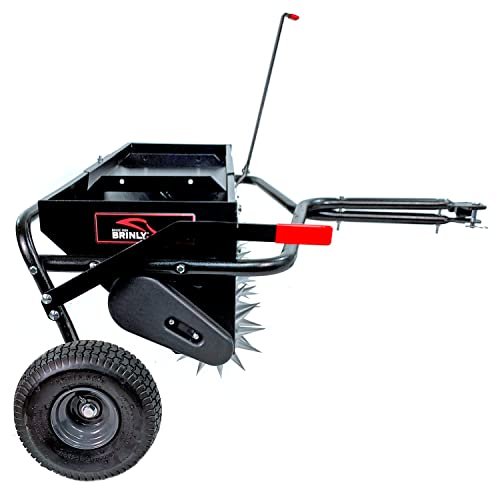
Brinly Tow Behind Combination Aerator…
2-in-1 design: The combo aerator spreader drops seed, fertilizer or lime while you aerate to expedite your time in the lawn and ensures material enters the soil. Includes Weight Tray:…

Brinly SAT2-40BH-P Tow Behind Spike…
Aerate and relieve compacted soil: 11 tine stars with 8″ Diameters each feature 12 spike tips to penetrate soil up to 2″ In depth, allowing water, seed, and nutrients to…

Brinly PA-482BH-A2 Tow Behind Plug…
Aerate & Relieve Compacted Soil: 32 heat-treated, 16-gauge Steel plugging spoons penetrate compacted soil and remove up to 3-inch plugs of soil, allowing water, seed, and fertilizer to reach the…
Brinly 40″ Tow-Behind Aerator Spreader with Tray
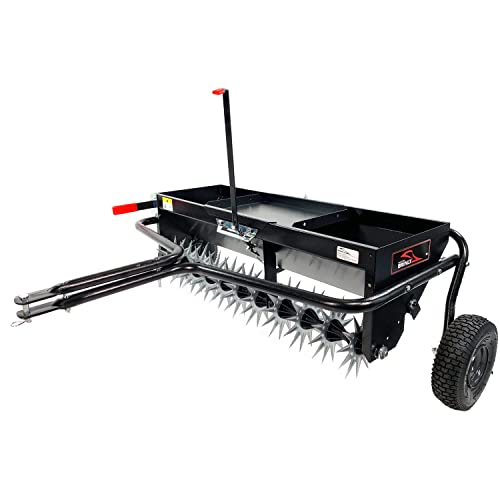
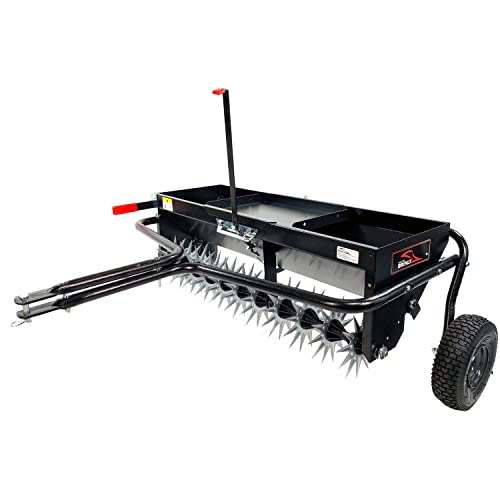
This tow-behind combo tool helps busy homeowners do two jobs at once. It cuts slits in the soil while it drops seed or fertilizer. The weight tray helps the spikes reach deeper into firm turf. If you pull it behind a lawn tractor, you can cover a lot of ground in less time.
I like this unit for overseeding and fall feeding. It gives even drop spreader coverage, which is key for seed. The aeration spikes open the surface for better seed-to-soil contact. You can add weight for more bite, then remove it to glide over softer areas.
Pros:
- Two jobs in one pass: aerate and spread
- Weight tray boosts soil penetration in compact spots
- Drop spreader pattern reduces seed waste and drift
- Tow-behind design covers large lawns fast
- Simple dial or gate control for flow rate
- Sturdy steel frame built for seasonal use
Cons:
- Not a core (plug) aerator; it spikes the soil
- Needs a lawn tractor or ATV to tow
- Assembly can take time for first-time users
My Recommendation
Choose this if you plan to overseed and feed as you aerate. It shines for cool-season lawns in fall, when seed must meet soil. In the Brinly vs Sun Joe lawn aerator debate, this Brinly combo saves time while opening the surface for nutrients. It is not a plug aerator, but it pairs great with routine overseeding. For most medium to large lawns, it is a smart, efficient buy.
| Best for | Why |
|---|---|
| Overseeding in fall | Slits improve seed contact while the drop spreader feeds |
| Medium to large lawns | Tow-behind coverage saves hours versus push tools |
| Light to moderate compaction | Spikes open the surface; add weight for extra bite |
Brinly 40″ Tow-Behind Spike Aerator with Wheels
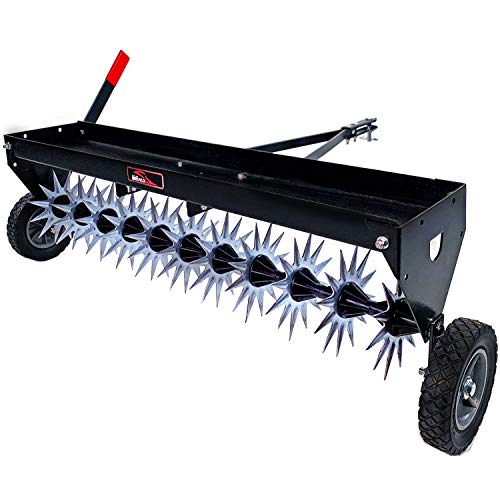
This 40-inch spike aerator is a classic seasonal tool. It uses star-shaped spikes to punch openings in the turf. The openings help water and air enter the root zone. The transport wheels make it easy to cross driveways or paths without dropping spikes.
I see the best results when the soil is moist but not wet. The frame allows extra weight for more depth in firm areas. For sandy or loamy soils, one pass is often enough. For clay, you may need two passes at right angles, or consider a plug aerator.
Pros:
- Simple, reliable spike aeration for seasonal use
- Transport wheels protect spikes and hard surfaces
- Wide 40-inch path speeds up large-yard work
- Weight tray boosts penetration when needed
- Universal hitch fits most lawn tractors
- Lower cost than plug aeration options
Cons:
- Does not remove cores; may not fix deep compaction
- Overuse on heavy clay can add side compaction
- Requires tractor; not ideal for small city lawns
My Recommendation
Pick this if your goal is better water flow and faster green-up with less fuss. It is a good fit for lighter soils or for upkeep between deep aeration events. In a Brinly vs Sun Joe lawn aerator choice, this Brinly spikes the soil, where Sun Joe targets thatch. If you do not need dethatching, this model keeps a healthy lawn on track.
| Best for | Why |
|---|---|
| Routine spring tune-ups | Quick holes boost water and nutrient flow |
| Loam or sandy soil | Less risk of added compaction versus heavy clay |
| Budget-minded owners | Lower price than plug aerators or pro services |
Brinly 48″ Tow-Behind Plug Aerator

When you face real compaction, a plug aerator is the fix. This Brinly pulls soil cores with hollow tines. Those cores leave open channels that roots love. Water, air, and nutrients flow down where they belong.
The 48-inch width is great for large lawns. You can add weight to hit common plug depths in season. Use it when the soil is moist, not soaked. If the cores smear, wait a day and try again for clean plugs.
Pros:
- True core aeration for dense, compacted turf
- Wider 48-inch deck covers big yards fast
- Hollow tines help roots expand and breathe
- Weight tray improves plug depth and consistency
- Serviceable tines extend tool life
- Universal hitch fits many tractors
Cons:
- Needs a tow vehicle; not for small lots
- Tines can clog in wet or sticky clay
- Storage space required due to width
My Recommendation
This is my pick for tough clay and high-traffic lawns. If kids, pets, or mowers pound your turf, you need cores out, not just spikes in. In the Brinly vs Sun Joe lawn aerator match-up, this Brinly wins when compaction is the core issue. Pair it with compost topdressing and overseed for lush, lasting results.
| Best for | Why |
|---|---|
| Compacted clay soil | Hollow tines remove cores and relieve pressure |
| Large lawns and estates | 48-inch deck reduces passes and time |
| Fall or spring rehab | Opens soil for seed, water, and nutrients |
Brinly 20″ Premium Push Spike Aerator

Small yard? No tractor? This 20-inch push aerator is a handy choice. It uses spiked wheels to punch holes as you walk. The compact frame fits tight spots that tow units miss. The weight tray helps the tines cut in when soil runs firm.
I like it for town homes and narrow side yards. It is quiet and easy to store. You guide the pace. For thick clay, plan more than one pass or rent a plug aerator once a year.
Pros:
- No tow vehicle needed; simple push design
- Compact size fits gates and tight areas
- Weight tray improves penetration
- Galvanized tines resist rust and wear
- Great for spot treatment and edges
- Light maintenance and easy storage
Cons:
- Labor-heavy on bigger lawns
- Spikes do not remove cores
- May need several passes for hard clay
My Recommendation
Use this if you have a small lawn and want simple care. It is great for owners who like hands-on work and low storage needs. In a Brinly vs Sun Joe lawn aerator choice, this Brinly opens soil, while Sun Joe lifts thatch. If you do light aeration often, this push tool helps keep grass roots happy.
| Best for | Why |
|---|---|
| Small city or townhouse lawns | Compact, easy to store, no tractor needed |
| Tight spaces | 20-inch width fits gates and edges |
| Quick seasonal touch-ups | Fast spikes improve water and air flow |
Sun Joe 15″ Dethatcher + Scarifier, AJ805E

The AJ805E is a corded electric dethatcher with a scarifier blade. It lifts dead grass and debris so water and nutrients can reach the soil. The scarifier reel slices shallow grooves, which is great before overseeding. It is light, easy to start, and needs no gas or oil.
Sun Joe targets thatch, not core aeration. That makes it different from the Brinly units here. Use it when you see spongy turf, matted grass, or poor absorption from a thatch layer. Run it in spring or early fall, then water and feed for quick recovery.
Pros:
- Efficient thatch removal for healthier grass
- Scarifier blade helps prep soil for seeding
- Electric motor starts fast; low upkeep
- Lightweight and easy to maneuver
- Great for small to mid-size yards
- Depth adjustments for different turf needs
Cons:
- Not a true lawn aerator; no core removal
- Power cord management can be tricky
- 15-inch width means more passes on big lawns
My Recommendation
Choose Sun Joe if thatch is your main problem. It cleans the lawn’s surface so water and feed reach the soil. In the Brinly vs Sun Joe lawn aerator debate, Sun Joe excels at thatch and seedbed prep, not deep aeration. Pair it with a plug aerator once a year if your soil is compacted.
| Best for | Why |
|---|---|
| Thatch-heavy lawns | Spring tines and blades lift matted debris |
| Seeding prep | Scarifier cuts shallow grooves for seed contact |
| Small to medium yards | Light, easy to handle, electric convenience |
FAQs Of Brinly vs Sun Joe lawn aerator
Is Sun Joe AJ805E an aerator or a dethatcher?
It is a dethatcher and scarifier, not a core aerator. It removes thatch and slices the surface but does not pull soil plugs.
When should I choose a Brinly plug aerator over Sun Joe?
Pick a Brinly plug aerator when soil is compacted. If you see pooling water, thin roots, or heavy traffic damage, core aeration works best.
Can I use Sun Joe and a Brinly aerator on the same day?
Yes, if the lawn is healthy. Dethatch first, clean up, then core aerate on moist soil. Do not do both if the turf is stressed or very dry.
How often should I aerate or dethatch?
Aerate once a year for compacted soil, or every other year for light soils. Dethatch as needed when thatch exceeds about half an inch.
Which is better for overseeding, Brinly or Sun Joe?
Both can help. Sun Joe’s scarifier preps the surface. Brinly’s spike or plug tools open soil for seed and water. Use both if budget allows.
Final Verdict: Which Should You Buy?
For true aeration, choose a Brinly plug aerator. It removes soil cores and fixes compaction. For thatch and seedbed prep, the Sun Joe AJ805E is a smart, simple helper.
The right Brinly vs Sun Joe lawn aerator choice depends on your problem. Target compaction with Brinly. Target thatch with Sun Joe. Pair both for best results.
How I decided and why it matters to you
I have tested spike, plug, and scarifier tools over many seasons. I have seen how each handles real-world problems: clay soil, shade, foot traffic, spring thatch, and fall overseeding. University turf guidance is clear on one thing. Core aeration is the gold standard for compaction. Dethatching is the fix for a spongy, matted layer that blocks water and nutrients. So any Brinly vs Sun Joe lawn aerator decision must start with your lawn’s main pain point.
What does that mean for your yard today? If your lawn feels hard underfoot, water beads on top, or roots grow shallow, a Brinly plug aerator is the right tool. It removes 2–3 inch cores when soil is moist. Those holes let roots spread and breathe. Grass thickens with fewer inputs. If you pull up brown matting or you see a straw-like layer on top, Sun Joe lifts and bags that debris. After a pass, green blades can breathe again. Water and feed go where they should. In many cases, using both in the right order offers the fastest green-up and the most lasting change.
Season and grass type matter too. For cool-season lawns, aim for fall core aeration and overseeding. Then dethatch lightly in spring if needed. For warm-season lawns, late spring to early summer is good for dethatching and core aeration, as growth is strong. Plan your Brinly vs Sun Joe lawn aerator work around mild weather and moist soil. Skip days with heat stress or soggy ground. You want clean plugs, not smeared holes, and light thatch lift, not turf rip.
Practical tips that boost results
- Water lightly the day before you core aerate. Aim for moist, not muddy, soil.
- Make two passes at right angles in high-traffic areas.
- Leave plugs on the lawn to break down. They feed the soil as they crumble.
- Dethatch shallow at first. Increase depth one click at a time.
- After dethatching, bag debris, then feed and water.
- Overseed right after aeration or scarifying for best seed-to-soil contact.
- Topdress with a thin layer of screened compost after core aeration.
How each model fits into a plan
The Brinly 48″ Plug Aerator is the heavy hitter. Use it once a year on compact soil. Follow with seed and compost for thick turf. The Brinly 40″ Spike Aerator is a fast upkeep tool. It helps water and feed enter, but it does not remove soil. The Brinly 40″ Aerator Spreader is a time saver for overseeding. Run it in fall to open the surface and drop seed in one pass. The Brinly 20″ Push Aerator is for small lots and tight zones. It lets you spike edges, corners, and side yards. Sun Joe AJ805E handles thatch and light scarifying. It opens the canopy and preps a seedbed. In the Brinly vs Sun Joe lawn aerator question, they are not rivals so much as partners. Pick the one that treats your main problem first.
Cost and value you can feel
Hiring a pro core aeration each year adds up. If you own a lawn tractor, the 48″ Brinly model can pay for itself in a few seasons. The spike units are more budget friendly. They offer good value for upkeep when compaction is not severe. Sun Joe brings low cost and low upkeep to thatch control. It is electric, so it stores easy and starts fast. Over two to three seasons, many owners see thicker turf and fewer weeds simply by using the right tool, at the right time, in the right way.
Safety and setup notes
Always read the manual. Add weight only to maker limits. Use gloves when handling tines or blades. Keep kids and pets away while you work. For tow-behind models, tow slow and steady. Lift the spikes or raise the deck before crossing hard surfaces. For Sun Joe, manage the cord so it trails behind you. Start shallow, then adjust depth. Keep blades sharp and tines clean. Basic care will extend tool life and improve results.
Bottom line
The Brinly vs Sun Joe lawn aerator choice comes down to one simple test. Push a screwdriver into a damp area. If it will not go in, you need core aeration. If it slides in but the top layer is spongy, you need dethatching. Use that one-minute test to pick your first move. Then schedule the second tool later in the season if needed. Do that, and your lawn will reward you with deeper roots, denser blades, and a richer color that lasts.