
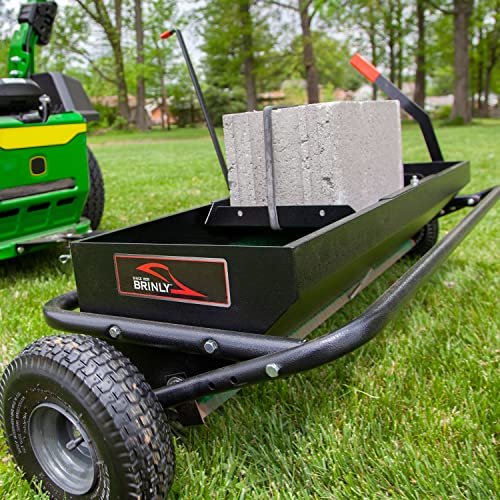
Pick Brinly for true aeration; pick Greenworks for easy dethatching.
You water, you mow, but the lawn still looks tired. Heavy soil, tight roots, and thin grass can make any yard feel stuck. That is where aeration or dethatching helps. The Brinly vs Greenworks lawn aerator debate boils down to method and result. Brinly makes true aerators that open the soil. Greenworks makes powered dethatchers that pull thatch and scratch the surface. I have used both styles on clay and loam. Each tool shines for a different job, season, and lawn size. Below, I break down the best Brinly picks and explain where Greenworks dethatchers fit.
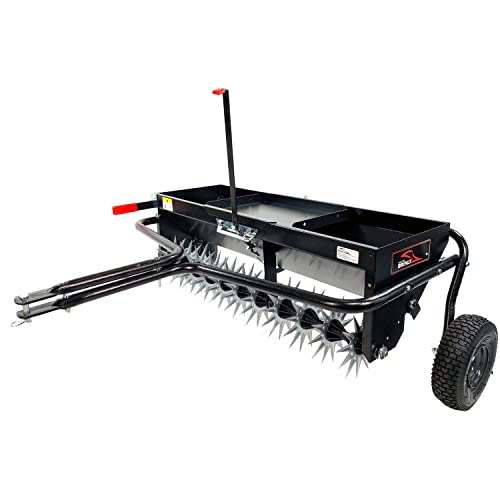
Brinly Tow Behind Combination Aerator…
2-in-1 design: The combo aerator spreader drops seed, fertilizer or lime while you aerate to expedite your time in the lawn and ensures material enters the soil. Includes Weight Tray:…

Brinly SAT2-40BH-P Tow Behind Spike…
Aerate and relieve compacted soil: 11 tine stars with 8″ Diameters each feature 12 spike tips to penetrate soil up to 2″ In depth, allowing water, seed, and nutrients to…

Brinly PA-482BH-A2 Tow Behind Plug…
Aerate & Relieve Compacted Soil: 32 heat-treated, 16-gauge Steel plugging spoons penetrate compacted soil and remove up to 3-inch plugs of soil, allowing water, seed, and fertilizer to reach the…
Brinly 40″ Tow-Behind Aerator Spreader
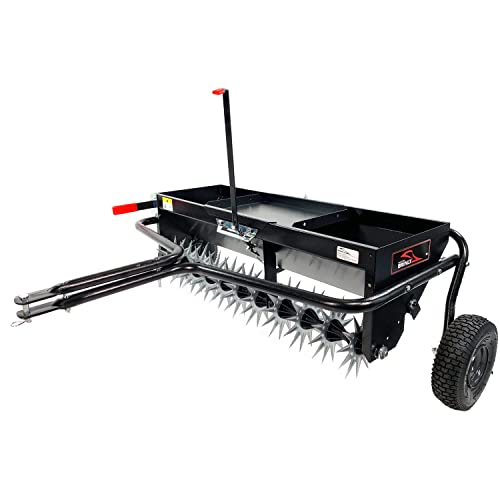
This tow-behind aerator spreader pairs two big lawn tasks into one pass. It spikes the turf to open tiny channels. Then it drops seed or product through those channels. The weight tray lets you add blocks for more bite. The hitch connects to most lawn tractors or ATVs with ease.
I like this for busy weekends and big yards. You can overseed while you aerate. That saves time and helps seed-to-soil contact. In the Brinly vs Greenworks lawn aerator comparison, this model is for true soil access. Greenworks dethatchers do not core or spike like this. They handle thatch instead.
Pros:
- Two jobs in one: aeration plus spreading
- Weight tray boosts penetration when soil is dry
- Universal pin hitch fits most lawn tractors
- Time saver for overseeding in fall or spring
- Solid steel build for long, seasonal use
Cons:
- Needs a tow vehicle to operate
- Spike style is lighter than plug aeration for compaction
- Assembly takes some time and space
My Recommendation
Pick this if you want to aerate and spread seed or soil food in one move. It suits half-acre or larger lawns with light to moderate compaction. In the Brinly vs Greenworks lawn aerator debate, this is for soil access. A Greenworks dethatcher is better if your issue is thick thatch near the surface, not deep compaction.
| Best for | Why |
|---|---|
| Overseeding season | Aerates and drops seed for strong contact |
| Large lawns | Covers wide paths fast with a tow vehicle |
| Light compaction | Spikes open channels without heavy soil removal |
Brinly 40″ Tow-Behind Spike Aerator (Wheels)
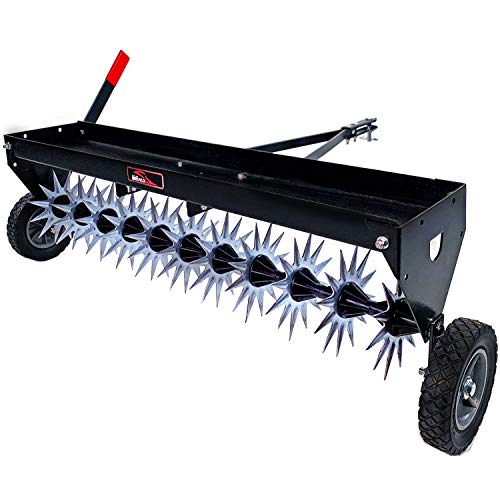
This spike aerator is a simple, tough workhorse. The steel star tines pierce the ground to let in air, water, and nutrients. The transport wheels make it easy to cross driveways and paths. The tray takes added weight for better bite in clay soil.
Use this when you need regular, light aeration through the growing season. It is great before fertilizing. In the Brinly vs Greenworks lawn aerator question, this is the “true aeration” choice. A Greenworks dethatcher will lift debris and thatch but will not punch channels like this.
Pros:
- Easy transport with built-in wheels
- Solid steel spike stars for long life
- Weight tray improves penetration depth
- Simple hookup and quick to use
- Good maintenance pass between plug aerations
Cons:
- Not as effective as a plug aerator for deep compaction
- Needs moist soil for best results
- Requires a tow vehicle to operate
My Recommendation
Choose this for routine, light aeration on a budget. It is perfect for lawns that feel a bit tight but not rock hard. If you compare Brinly vs Greenworks lawn aerator options, go Brinly when you need soil channels. If a thatch mat is the main issue, a Greenworks dethatcher is faster.
| Best for | Why |
|---|---|
| Light to moderate compaction | Spikes open paths for water and nutrients |
| Regular maintenance passes | Quicker than core aeration between seasons |
| Budget-minded buyers | Lower cost than a plug aerator |
Brinly 48″ Tow-Behind Plug Aerator

This is the heavy hitter for compacted turf. The plug spoons remove small soil cores. That breaks the compaction layer in a way spikes cannot. You also create open pockets for roots to grow deep. Add weight to the tray for more depth on dense clay.
Research from turf experts shows core aeration works best for compaction. My field results match that. When I compare Brinly vs Greenworks lawn aerator choices, this wins for hard, high-traffic yards. A Greenworks dethatcher helps with surface thatch. It will not replace core plugs.
Pros:
- True core aeration relieves deep compaction
- Wider 48″ path saves time on big lots
- Durable steel spoons built for seasons of use
- Improves root growth and drought tolerance
- Pairs well with overseeding after cores dry
Cons:
- Heavier and larger than spike units
- Requires a tractor or ATV with enough traction
- Leaves cores on the lawn for a few days
My Recommendation
This is my top pick for compacted, high-traffic lawns. If your soil feels like a brick, start here. In the Brinly vs Greenworks lawn aerator decision, choose this for compaction and root health. Use a Greenworks dethatcher before or after to clear thatch and lift debris.
| Best for | Why |
|---|---|
| Heavy compaction | Pulls cores and breaks the hard layer |
| High-traffic zones | Sports, dogs, and carts pack soil hard |
| Fall renovation | Opens soil for seed and nutrients |
Brinly 40″ Spike Aerator (Carbon Finish)
This carbon-finish variant gives the same spike action with a sleek look. The star tines pierce and open micro-channels. It pulls well behind entry-level tractors. Add blocks to the tray for more soil contact.
I treat this as a steady maintenance tool. It freshens the top few inches when soil is moist. In a Brinly vs Greenworks lawn aerator matchup, this still counts as real aeration. Greenworks dethatchers shine at removing dead thatch. That is a different job than spiking the soil.
Pros:
- Clean, modern finish resists wear
- Simple design with reliable performance
- Good for monthly light aeration passes
- Weight tray helps tailor the depth
- Works with many lawn tractors
Cons:
- Not ideal for severe compaction
- Less impact than plug aerators
- Best results need damp soil
My Recommendation
Use this model if you want a sharp look and steady results through the season. It is a fine fit for light compaction and routine care. If you ask me to pick Brinly vs Greenworks lawn aerator tools, go Brinly for soil access. Add a Greenworks dethatcher if surface thatch is high.
| Best for | Why |
|---|---|
| Routine maintenance passes | Keeps water and feed moving into soil |
| Light compaction on clay-loam | Spikes help without heavy cores |
| Style-conscious buyers | Durable carbon finish looks premium |
Brinly 20″ Push Spike Aerator

This manual push aerator is great for small yards, tight spots, and around beds. The galvanized tines resist rust and keep a sharp edge. The weight tray lets you add bricks for deeper spikes. It is quiet and easy to store in a small shed.
I like it for townhomes, side yards, and gates that block tow tools. It is also handy for touch-ups after rain. In the Brinly vs Greenworks lawn aerator talk, this is your simplest soil access tool. Greenworks dethatchers need power and space. This does not.
Pros:
- Fits small lawns and narrow gates
- Quiet, no gas, no battery
- Rust-resistant tines for long life
- Weight tray for deeper spikes
- Great for spot treatments
Cons:
- Labor-intensive on bigger lawns
- Not a deep-core solution
- Best on damp soil to avoid bouncing
My Recommendation
Buy this if you have a small lawn or need spot fixes in beds and corners. It is a low-cost way to get air and water into soil. In the Brinly vs Greenworks lawn aerator choice, this works where powered dethatchers cannot reach. It is also a smart add-on to a plug aeration plan.
| Best for | Why |
|---|---|
| Small lawns and townhomes | Easy to store and push in tight areas |
| Spot aeration | Fixes tough corners and around beds |
| Low-noise yards | No motor, no cord, no battery |
FAQs Of Brinly vs Greenworks lawn aerator
Does Greenworks make a true lawn aerator?
As of 2026, Greenworks sells dethatchers and scarifiers, not plug or spike aerators. They remove thatch and scratch the surface but do not pull cores or punch deep channels like Brinly aerators.
Which is better for compaction: Brinly spike, Brinly plug, or Greenworks dethatcher?
For compaction, a Brinly plug aerator is best. A Brinly spike aerator helps with light compaction. A Greenworks dethatcher is for thatch removal and surface prep, not deep compaction.
How often should I aerate vs dethatch?
Core aerate once a year on compacted lawns. Spike aerate a few times during the season if needed. Dethatch when the thatch layer is above a half inch or during renovations.
Can a Greenworks dethatcher replace a Brinly aerator?
No. It serves a different job. Use a Greenworks dethatcher to remove thatch and lift debris. Use a Brinly aerator to relieve compaction and improve root depth.
What tow vehicle do I need for Brinly tow-behind units?
A lawn tractor or small ATV with a pin hitch works. Follow weight and speed guidance in the manual. Operate on moist, not soggy, soil for best results.
Final Verdict: Which Should You Buy?
For true soil relief, pick Brinly. The 48″ plug aerator is my top choice for compacted yards, pets, and foot traffic. In the Brinly vs Greenworks lawn aerator matchup, Brinly wins for root depth and compaction.
Use a Greenworks dethatcher when thatch is the main issue or as a prep pass before overseeding. That combo keeps air, water, and nutrients moving all year.