

Last updated: October 2026 · Written by the LawnVibe editorial team.
Digging one or two post holes by hand is manageable. Digging twenty is a different story. An electric post hole digger, also called an electric earth auger, spins a spiral bit into the ground and lifts the soil out, turning a backbreaking job into a much faster one. Electric models avoid the noise, fumes and pull-starting of gas augers, which makes them appealing for homeowners. Choosing the best electric post hole digger depends on power, bit size, whether you want corded or cordless, and the soil you are working in. This guide compares electric augers and explains how to use them safely and effectively.
Our picks are based on published specifications and manufacturer information, not on hands-on testing. For just a few holes, a manual clamshell may be all you need; see our guide to the best manual post hole digger.
Our Top Picks

PROYAMA 1700W Electric Post Hole Digger
Best for: Fence and deck projects with many holes
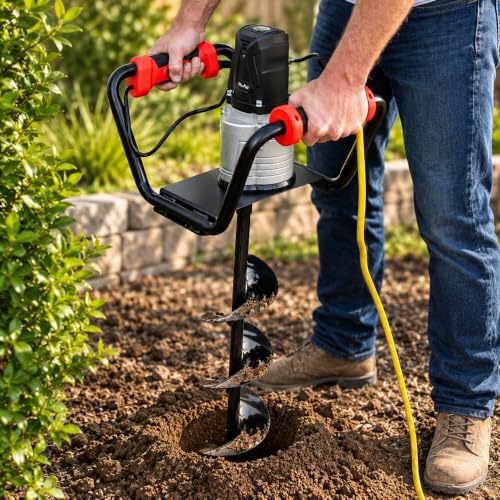
A 1700-watt corded auger with two anti-skid, vibration-reducing grips for leverage and control. Corded power means consistent torque for as long as you need it.
- Strong 1700W motor
- Two-handle control
- No fuel or battery limits
- Needs an extension cord and outlet
- Heavy for long sessions
XtremepowerUS 1500W Electric Post Hole Digger
Best for: Occasional fence and planting holes
A 1500-watt electric auger marketed for fence posts, decks, tree planting and even ice fishing with an appropriate bit.
- Versatile uses
- Good value
- Electric start, no pull cord
- Corded range limits
- Lower power than 1700W models

1700W Electric Post Hole Digger and Ice Auger
Best for: Fence posts, tree planting and ice augering
A 1700-watt electric auger sold for both earth and ice drilling, with a robust motor for fence posts and planting holes.
- 1700W motor
- Earth and ice use
- Electric convenience
- Check bit sizes included
- Corded

BLUEMARS 40V Brushless Cordless Earth Auger
Best for: Remote areas without power
A cordless auger with a 40V brushless motor, 6-inch bit and 2.5Ah battery, giving freedom from cords for planting and small post holes away from outlets.
- Cordless freedom
- Brushless motor
- Light and portable
- Battery limits hole count
- 6-inch bit suits smaller holes
Comparison Table
| # | Product | Best for | Link |
|---|---|---|---|
| 1 | PROYAMA 1700W Electric Post Hole Digger | Fence and deck projects with many holes | Check price |
| 2 | XtremepowerUS 1500W Electric Post Hole Digger | Occasional fence and planting holes | Check price |
| 3 | 1700W Electric Post Hole Digger and Ice Auger | Fence posts, tree planting and ice augering | Check price |
| 4 | BLUEMARS 40V Brushless Cordless Earth Auger | Remote areas without power | Check price |
A Closer Look at Each Pick
PROYAMA 1700W, best overall. High wattage and two vibration-reducing grips make this corded auger a strong choice for fence and deck projects where you need many holes and steady power.
XtremepowerUS 1500W. A good-value corded auger for occasional fence repairs, planting holes and even ice fishing with the right bit.
1700W digger and ice auger. Similar power with a focus on versatility across earth and ice drilling.
BLUEMARS 40V cordless. A brushless cordless auger that frees you from extension cords, ideal for planting and smaller holes in areas far from an outlet.
Electric vs Manual vs Gas Augers
Manual clamshell diggers are cheap, precise and quiet, but slow and tiring for many holes. Gas augers are powerful and portable but loud, heavy, and need fuel mixing and maintenance. Electric augers sit in between: quieter, cleaner and easier to start than gas, faster than manual digging, and generally lighter than one-person gas augers. Their limits are cord reach or battery capacity, and less brute power for very hard or rocky ground.
How to Choose an Electric Post Hole Digger
When choosing, start with power. Higher wattage on corded models and higher voltage with brushless motors on cordless models deliver more torque for clay and roots. Next, consider bit size and length. Common bits range from about 4 to 8 inches in diameter. Smaller bits suit planting bulbs and small shrubs; 6- to 8-inch bits suit fence and deck posts. Bit length determines maximum depth, and extension rods can add depth on some models. Then look at handles and control. Two wide handles give leverage and help you resist twisting forces. A reverse function, available on some models, helps free a stuck bit. Finally, think about weight, since you will lift and lower the auger repeatedly.
How to Use an Electric Auger Safely
Before you start, contact 811 so buried utilities are marked, because an auger can cut a cable or pipe in seconds. Mark hole locations with a string line. Wear safety glasses, gloves, hearing protection and sturdy boots. Hold the auger with both hands, feet apart and balanced. Start slowly, letting the bit bite into the soil, and do not force it down. Lift the auger every few inches to clear soil from the hole, which reduces strain and prevents the bit from binding. If the bit hits a rock or root, release the trigger immediately; augers can twist hard when they stop suddenly. Use a digging bar to loosen or remove the obstruction before continuing.
Digging in Different Soils
Electric augers perform best in loam and sandy soils, where they cut quickly and cleanly. In clay, progress is slower, and clay tends to stick to the bit; lift frequently and moisten very dry clay the day before. Rocky soil is the biggest challenge: small stones are usually fine, but large rocks stop the bit and can cause kickback, so probe the ground first and keep a digging bar handy. Root-filled areas near trees can bind the bit; cut roots with a pruning saw or loppers as needed.
Projects That Suit an Electric Auger
Electric augers shine on fence lines with many evenly spaced posts, deck footings in workable soil, planting rows of shrubs or trees, installing garden stakes and trellis posts, and planting large numbers of bulbs with a small bit. For a single mailbox post or a couple of repairs, a manual digger is often quicker once you factor in setup. For very large projects in hard ground, many homeowners rent a two-person gas auger or a towable auger.
Extension Cords for Corded Augers
A corded auger draws substantial power, so the extension cord matters. Use a heavy-duty, outdoor-rated cord of the gauge recommended in the manual, as short as practical. Long, thin cords cause voltage drop, which reduces power and can overheat the motor. Plug into a GFCI-protected outlet, keep the cord behind you and away from the bit, and never use a damaged cord.
Battery Tips for Cordless Augers
Cordless augers use a lot of energy, especially in clay. Carry a spare battery for bigger jobs, let hot batteries cool before charging, and store batteries indoors. If you already own tools on the same battery platform, choosing a compatible auger saves money.
Maintaining Your Auger
After use, knock soil off the bit and wipe it dry to prevent rust. Check the bit's cutting edges and replace or sharpen dull points, since a dull bit makes the motor work harder. Inspect cords, plugs and switches for damage. Store the auger and bits in a dry place, and remove the battery from cordless models during storage.
Common Mistakes
Digging without calling 811. Forcing the auger down instead of letting the bit cut. Failing to lift and clear soil, which binds the bit. Using a thin, long extension cord. Standing off balance or using one hand. Ignoring the first sign of a rock and letting the auger twist. Expecting an electric auger to handle heavy rock or tree roots without help from a digging bar.
How Deep Should Post Holes Be?
A common guideline for fence posts is to bury about one third of the post's above-ground height, often 24 to 36 inches for residential fences, and below the frost line in cold climates. Deck footings usually have code-specified depths and diameters, and may need inspection before concrete is placed. Check your auger's maximum depth and whether extension rods are available before starting a deep footing project.
How Wide Should Holes Be?
For posts set in concrete, holes are commonly about three times the post's width. A 4×4 post often uses a 10- to 12-inch hole, though many homeowners use an 8-inch auger for smaller posts and line posts. Planting holes depend on the root ball; for bulbs and plugs, small 2- to 4-inch bits are ideal.
Electric Auger for Planting
Augers are not just for posts. Small-diameter bits make planting bulbs, annuals and plugs fast, and larger bits dig holes for shrubs and young trees. When planting, loosen the sides of auger holes in clay with a hand fork, because smooth, glazed walls can make it hard for roots to spread.
Renting vs Buying
If you have one fence project, renting a powerful auger may be economical. If you plant regularly or build fences and decks over several seasons, owning an electric auger pays off in convenience, especially since there is no fuel to store.
One-Person vs Two-Person Augers
Most electric augers are designed for one person, which makes them convenient for homeowners. Large gas augers for big holes often need two people to control the torque. If your project needs holes wider than about 8 inches or very deep footings, consider renting a two-person or towable auger, or a skid steer with an auger attachment for big jobs.
Clearing Loose Soil From the Hole
Augers leave some loose soil at the bottom of each hole. Pull it out with a clamshell digger or a narrow shovel before setting posts, because loose soil settles and lets posts sink. Tamp the base firm or add gravel for drainage.
Is an Electric Auger Worth It?
For anyone digging more than a handful of holes in workable soil, yes. It saves hours of hard labor and gives clean, consistent holes, while avoiding the fuel and maintenance of gas augers.
Storage
Store augers indoors with the bit removed and cleaned, cords coiled loosely, and batteries kept at room temperature.
Working Near Trees
Avoid augering close to the trunks of valuable trees, where large roots grow. Cutting major roots can harm the tree and jam the auger.
Noise and Neighbors
Electric augers are far quieter than gas models, so you can work earlier or later without disturbing neighbors as much, though local noise rules still apply.
Auger Bit Types
Standard earth bits have a single or double spiral flighting and a pointed tip with cutting blades. Some bits have replaceable tips and blades, which extend their life in rocky soil. Ice auger bits are designed for ice and should not be used in soil unless the manufacturer says they are interchangeable.
After Digging: Setting Posts
Augers leave clean, round holes, but loose soil often remains at the bottom. Clear it out with a manual clamshell digger, add a few inches of gravel for drainage, and tamp it firm; our guide on how to use a tamper explains the technique. Set the post, check plumb, and fill with concrete or tamped soil as your project requires. For chain link projects, our guides to the best chain link fence post and how to install a chain link fence cover sizes and steps.
The Bottom Line
The best electric post hole digger for most homeowners is a powerful corded auger with two handles and a bit sized for your posts, while cordless augers suit planting and smaller holes away from outlets. Call 811 before digging, lift frequently to clear soil, release the trigger the moment the bit binds, and keep a manual digger and digging bar on hand for cleanup and rocks.
Frequently Asked Questions
Are electric post hole diggers worth it?
For projects with many holes in reasonably workable soil, yes. Electric augers dig much faster than manual diggers, with no fuel or pull cords. In very rocky or root-filled ground, they can struggle and a manual digger and digging bar may still be needed.
Corded or cordless auger?
Corded augers deliver steady power without battery limits but need an outlet and extension cord. Cordless augers offer freedom to work anywhere but are limited by battery capacity and are usually better for smaller holes.
What size auger bit do I need for fence posts?
A common guideline is a hole about three times the post width for concrete-set posts. Many homeowners use 6- to 8-inch bits for 4×4 posts and smaller bits for planting.
Can an electric auger dig through clay?
Yes, but slowly. Lift the auger frequently to clear soil, and moisten very hard clay the day before. Dense, dry clay can bind the bit.
Is an auger dangerous?
Augers can twist suddenly if the bit hits a rock or root. Use both handles, stand balanced, wear protective gear, and release the trigger immediately if the bit jams.