
Last updated: October 2026 · Written by the LawnVibe editorial team.
The best gas chainsaw for most homeowners is a 40cc to 50cc saw with an 18 to 20-inch bar. That size cuts firewood, clears storm damage and drops small trees without being too heavy to control. Our top pick is the Husqvarna 450 Rancher because its 50cc engine and 20-inch bar cover nearly every common property task. If you mainly prune limbs, a lighter 16-inch saw like the Husqvarna 120 Mark III is easier to handle, while the Husqvarna 460 Rancher is the step up for big trees and serious firewood cutting.
Our picks are based on published manufacturer specifications, Amazon listing details and general chainsaw safety guidance, not on hands-on testing. We do not list prices because they change frequently. Engine figures and features below are as stated by each brand. If you are still deciding on a power source, read our comparison of battery vs gas chainsaw first.
Our Top Picks

Husqvarna 450 Rancher 20-Inch Gas Chainsaw
Best for: Homeowners cutting firewood, storm cleanup and small trees
Husqvarna lists a 50.2cc, 3.2 HP X-Torq engine, Smart Start, an inertia-activated chain brake and Air Injection pre-cleaning, with a recommended bar range of 13 to 20 inches. It sits in the middle of the power range, which suits most property owners.
- 50cc class balances power and weight
- Smart Start for easier pulls (per maker)
- Air Injection helps keep the filter cleaner
- Wide dealer and parts network
- Heavier than 16-inch homeowner saws
- Overkill for occasional limb trimming

Husqvarna 120 Mark III 16-Inch Gas Chainsaw
Best for: Pruning, limbing and occasional light cutting
A 38cc, 1.8 HP X-Torq homeowner saw with a 16-inch bar, air purge primer, combined choke/stop control, automatic oiler and inertia chain brake, according to the listing. It is aimed at yard tasks rather than big logs.
- Light and easy to handle
- Simple starting controls
- Good entry point for first-time gas saw owners
- Automatic chain oiler
- Limited power for dense hardwood
- 16-inch bar limits log diameter

Husqvarna 440 18-Inch Gas Chainsaw
Best for: Regular yard work and moderate firewood cutting
Husqvarna lists a 40cc, 2.4 HP X-Torq engine with Smart Start, LowVib dampeners and Air Injection, plus a slimmer saw body. It steps up from entry saws without the weight of 50cc models.
- LowVib dampening for comfort
- Maker states lower emissions and better fuel efficiency
- 18-inch bar handles typical firewood
- Slim body for maneuverability
- Not built for all-day felling
- Less torque than 50cc+ saws
Echo CS-4510 18-Inch 45cc Gas Chainsaw
Best for: Buyers who prefer Echo and its long consumer warranty
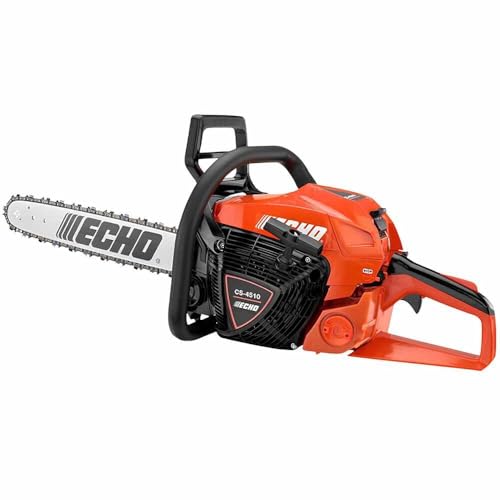
The listing describes a 45cc 2-stroke rear-handle chainsaw with an 18-inch bar and 20BPX chain. Echo is a long-established outdoor power equipment brand; check Echo for the current warranty terms.
- 45cc sits between light and mid-size
- 18-inch bar for firewood rounds
- Echo dealer and service network
- Rear-handle design for ground work
- Amazon listing has limited spec detail
- Confirm seller and warranty before buying

Husqvarna 460 Rancher 24-Inch Gas Chainsaw
Best for: Large trees, big rounds and rural properties
A 60.3cc, 3.6 HP X-Torq saw that Husqvarna rates for bars from 13 up to 24 inches, with Smart Start, inertia chain brake and an adjustable automatic oil pump. It is built for larger wood than typical yard saws.
- High power for hardwood and big logs
- Up to 24-inch bar capacity
- Adjustable oil pump
- Strong choice for heating with wood
- Heavy for beginners and overhead work
- Long bars increase kickback risk if misused

PROYAMA 62cc Gas Chainsaw with 18 and 22-Inch Bars
Best for: Budget buyers who want two bar lengths
The listing describes a 62cc, 3.5 HP 2-cycle engine, EPA certification, a 3-point spring anti-vibration system, a transparent fuel tank and two included bars (18 and 22 inches). It is a value-brand alternative to the big names.
- Two bars and chains included
- EPA certified per listing
- See-through fuel tank
- Lots of displacement for the money
- Smaller dealer and parts network
- Long-term durability less established than legacy brands

Husqvarna 455 Rancher 20-Inch Gas Chainsaw
Best for: Heavy firewood cutting at home
A 55cc, 3.5 HP Rancher that Husqvarna rates for bars from 13 to 24 inches.
- More power than the 450
- Bar options up to 24 inches
- Heavier than 50cc saws

Echo CS-590 20-Inch 59.8cc Gas Chainsaw
Best for: Large logs and storm cleanup
A 59.8cc Echo saw with a 20-inch bar, popularly known as the Timber Wolf.
- High displacement
- Echo dealer support
- Listing has limited detail; confirm seller
Comparison Table
| # | Product | Best for | Link |
|---|---|---|---|
| 1 | Husqvarna 450 Rancher 20-Inch Gas Chainsaw | Homeowners cutting firewood, storm cleanup and small trees | Check price |
| 2 | Husqvarna 120 Mark III 16-Inch Gas Chainsaw | Pruning, limbing and occasional light cutting | Check price |
| 3 | Husqvarna 440 18-Inch Gas Chainsaw | Regular yard work and moderate firewood cutting | Check price |
| 4 | Echo CS-4510 18-Inch 45cc Gas Chainsaw | Buyers who prefer Echo and its long consumer warranty | Check price |
| 5 | Husqvarna 460 Rancher 24-Inch Gas Chainsaw | Large trees, big rounds and rural properties | Check price |
| 6 | PROYAMA 62cc Gas Chainsaw with 18 and 22-Inch Bars | Budget buyers who want two bar lengths | Check price |
| 7 | Husqvarna 455 Rancher 20-Inch Gas Chainsaw | Heavy firewood cutting at home | Check price |
| 8 | Echo CS-590 20-Inch 59.8cc Gas Chainsaw | Large logs and storm cleanup | Check price |
A Closer Look at Each Pick
Husqvarna 450 Rancher, best overall. The 450 Rancher sits in the sweet spot for property owners. Husqvarna lists a 50.2cc, 3.2 HP engine and recommends bars between 13 and 20 inches, which means you can run a shorter bar for limbing or the full 20 inches for bucking logs. Smart Start is designed to reduce pull effort, and the centrifugal Air Injection system spins larger debris away from the air filter. For someone heating part of their home with wood or cleaning up after storms, it is the saw most people will grow into rather than out of. Check current price on Amazon
Husqvarna 120 Mark III, best lightweight. If you mostly prune branches, trim fallen limbs and cut small logs, a big saw is tiring and harder to control. The 120 Mark III uses a 38cc engine and 16-inch bar, with an air purge primer and combined choke/stop control to simplify starting. It is a sensible first gas chainsaw, but it will feel slow in large-diameter hardwood. Check current price on Amazon
Husqvarna 440, best mid-size. The 440 bridges the gap between entry and Rancher models. Its 40cc engine and 18-inch bar handle typical firewood rounds, and the LowVib dampeners reduce vibration reaching your hands. Husqvarna also claims lower emissions and better fuel efficiency from its X-Torq engine design. Check current price on Amazon
Echo CS-4510, best Echo pick. Echo has a strong reputation among homeowners and landscapers, and the CS-4510 offers 45cc of displacement with an 18-inch bar. The Amazon listing is thin on details, so check Echo's official product page for weight and warranty coverage, and make sure you buy from an authorized seller so warranty terms apply. Check current price on Amazon
Husqvarna 460 Rancher, best heavy-duty. When you regularly cut large trees or process a lot of firewood, more displacement saves time and effort. The 460 Rancher's 60.3cc, 3.6 HP engine supports bars up to 24 inches, and its adjustable oil pump lets you increase lubrication for longer bars. It is heavier, so it suits experienced users. Check current price on Amazon
PROYAMA 62cc, best value two-bar kit. Value brands have become a popular alternative, and this kit includes both an 18-inch and a 22-inch bar with chains, a 3-point spring anti-vibration system and a transparent fuel tank, according to the listing, which also states EPA certification. The trade-off is a smaller service network and less established long-term track record than legacy brands. Check current price on Amazon
Husqvarna 455 Rancher, best step-up Rancher. The 455 sits between the 450 and 460, with a 55cc engine and support for bars up to 24 inches. It suits homeowners who process a lot of firewood but do not need the full 60cc class. Check current price on Amazon
Echo CS-590, best Echo heavy-duty. Known as the Timber Wolf, this 59.8cc saw is a popular heavy-duty homeowner choice for big rounds and storm cleanup. Buy from an authorized seller so the Echo warranty applies. Check current price on Amazon
Who Should Buy a Gas Chainsaw?
Gas chainsaws make the most sense when you need power and runtime. If you heat with wood, own wooded acreage, clear storm damage regularly or cut trees thicker than about 12 inches, a gas saw is usually the better tool. You can refuel in seconds and keep working, and gas saws are available with longer bars than most battery models. If your cutting is limited to occasional limbs and small branches around a suburban yard, a battery saw may be quieter and more convenient. Our guide to the best battery chainsaw covers that alternative.
How to Choose the Best Gas Chainsaw
Engine Displacement
Displacement, measured in cubic centimeters (cc), is the clearest indicator of power. Saws under about 40cc are light and suited to pruning and small cutting. The 40cc to 50cc range is the homeowner sweet spot. Saws from 50cc to 60cc handle heavy firewood cutting and larger trees, and saws above 60cc are typically for professionals, loggers and very large timber. More displacement also means more weight and fuel use.
Bar Length
Bar length determines the maximum diameter you can cut efficiently. A practical rule is to choose a bar about 2 inches longer than the thickest wood you cut regularly. Longer bars need more power to pull the chain through the cut and add weight and kickback risk at the tip. Each saw has a manufacturer-recommended bar range, and running a bar longer than the engine supports slows cutting and strains the saw. For detailed sizing advice, see what chainsaw size for firewood.
| Bar Length | Typical Use | Typical Engine Size |
|---|---|---|
| 14 to 16 inches | Pruning, limbing, small trees | 30cc to 40cc |
| 18 inches | Firewood, medium trees | 40cc to 50cc |
| 20 inches | Firewood, storm cleanup, larger trees | 45cc to 55cc |
| 24 inches and up | Large trees, heavy firewood | 55cc and up |
These ranges are general guidelines; always follow the maker's recommended bar range for your saw.
Weight and Balance
A chainsaw that is too heavy causes fatigue, and fatigue causes mistakes. Check the powerhead weight, which is often listed without bar, chain or fuel, and add a couple of pounds for the bar, chain and full tanks. A well-balanced saw feels steady in your hands without tipping forward.
Starting System
Many modern saws include features that make starting easier, such as primer bulbs (air purge), decompression valves, combined choke/stop levers and spring-assisted starters marketed as Smart Start or i-Start. These reduce the effort and number of pulls needed.
Anti-Vibration
Vibration dampening, through springs or rubber mounts between the handles and engine, reduces fatigue and the risk of long-term hand and arm issues from prolonged use. If you plan long cutting sessions, prioritize this feature.
Safety Features
Look for an inertia-activated or manual chain brake, a chain catcher, a throttle lockout, a right-hand guard and a low-kickback chain. A chain brake can stop the chain very quickly when kickback occurs. Our guide to chainsaw kickback prevention explains why kickback happens and how to avoid it.
Chain Tensioning
Traditional saws use a screw tensioner adjusted with a scrench (combination tool). Some saws offer tool-free side tensioning, which is convenient but can be less secure if not tightened properly. Either works when used correctly.
Oiling System
All of our picks include an automatic chain oiler. An adjustable oil pump is helpful with longer bars or in hot conditions. Always keep the bar oil tank filled whenever you refuel.
Emissions and Fuel Efficiency
Modern engines designed to meet EPA and CARB requirements burn cleaner and often more efficiently than older designs. If you live in California, check that the saw is CARB compliant before buying.
Dealer Support and Parts
Gas chainsaws need maintenance and occasional repairs. Brands with local dealers make it easier to buy chains, bars, filters and spark plugs and to get warranty service. This is one reason Husqvarna, Echo and Stihl remain popular, although Stihl saws are mainly sold through dealers rather than Amazon.
2-Stroke Engines and Fuel Mix
Almost all handheld gas chainsaws use 2-stroke engines, which require a mix of gasoline and 2-cycle oil. The most common ratio is 50:1, but always check your owner's manual. Use fresh, high-octane unleaded gasoline as specified by the maker, and avoid fuel with high ethanol content, which can damage small engines over time. Pre-mixed, ethanol-free canned fuel is a convenient option for occasional users. Our guide on how to mix chainsaw oil and gas correctly walks through ratios and mixing steps.
Chainsaw Safety Essentials
A chainsaw is one of the most dangerous tools a homeowner can use, and safe technique matters more than any feature. Always read the manual before first use. Wear personal protective equipment: a helmet or hard hat, eye protection, hearing protection, cut-resistant chaps or pants, sturdy gloves and steel-toe boots. Keep a firm grip with both hands, stand to the side of the cutting path, never cut above shoulder height and never cut with the tip of the bar. Make sure bystanders stay at least two tree lengths away when felling. The U.S. Occupational Safety and Health Administration publishes chainsaw safety guidance for workers, and the chainsaw article on Wikipedia provides useful background on how saws and chains work.
Gas Chainsaw Maintenance Basics
Sharpen the Chain
A sharp chain produces chips, cuts quickly and pulls itself into the wood. A dull chain produces fine sawdust, requires pushing and increases kickback risk. Sharpen frequently with a round file of the correct size or a powered sharpener. See how to sharpen a chainsaw chain at home.
Check Chain Tension
A properly tensioned chain should fit snugly against the bar but still pull around by hand with gloves on. Check it before each use and frequently during the first hours with a new chain, which stretches as it breaks in. Read how tight a chainsaw chain should be for details.
Clean the Air Filter
A clogged air filter reduces power and can damage the engine. Clean it regularly, especially in dusty conditions, according to the manual.
Inspect the Bar
Flip the bar periodically to spread wear evenly, clean the groove and oil holes and remove burrs from the rails with a flat file.
Spark Plug and Fuel System
Replace the spark plug according to the maintenance schedule, and drain fuel or use a stabilizer if the saw will sit unused for more than a month. Stale fuel is one of the most common reasons a saw will not start; our guide on how to fix a chainsaw that won't start covers troubleshooting.
Gas vs Battery vs Corded Chainsaws
| Type | Strengths | Limitations | Best For |
|---|---|---|---|
| Gas | Most power, long bars, unlimited runtime | Noise, fumes, fuel mixing, more maintenance | Firewood, large trees, rural properties |
| Battery | Quiet, instant start, low maintenance | Limited runtime, shorter bars, battery cost | Suburban yards, pruning, light cutting |
| Corded electric | Light, inexpensive, no fuel | Limited by cord length, less power | Small cutting jobs near an outlet |
What a Gas Chainsaw Can and Cannot Do
A good gas chainsaw can buck firewood rounds, fell small and medium trees with proper technique, limb fallen trees and clear storm debris. It is not the right tool for overhead pruning beyond safe reach, where a pole saw is safer; see our comparison of pole saw vs chainsaw. It is also not a substitute for a professional arborist when trees are large, leaning, near power lines or close to structures.
Common Mistakes When Buying a Gas Chainsaw
Common mistakes include buying the biggest saw available when most cutting is small branches, choosing a bar longer than the engine can support, ignoring weight, skipping safety gear in the budget, buying from unauthorized sellers that may not honor warranties, using the wrong fuel mix and neglecting chain sharpening. Matching the saw to your actual workload is the key to satisfaction and safety.
The Bottom Line on the Best Gas Chainsaw
For most homeowners, the best gas chainsaw is a 40cc to 50cc model with an 18 to 20-inch bar, and the Husqvarna 450 Rancher is our top recommendation in that class. Choose the Husqvarna 120 Mark III for lighter pruning and yard work, the Husqvarna 440 or Echo CS-4510 for a balanced mid-size saw, the Husqvarna 460 Rancher for large trees and heavy firewood cutting, and the PROYAMA two-bar kit for value. Whichever you choose, invest in safety gear, keep the chain sharp and use fresh, correctly mixed fuel.
More Questions People Ask
What is the most reliable gas chainsaw brand?
Husqvarna, Stihl and Echo have long track records and wide dealer networks for parts and service, which is why they are common recommendations. Reliability still depends heavily on fuel quality and maintenance.
Is a 20-inch chainsaw too big for a homeowner?
Not necessarily. A 20-inch bar on a 50cc saw is a popular homeowner setup for firewood and storm cleanup. If you mainly prune limbs, a 16 to 18-inch saw is lighter and easier to control.
How much does a good gas chainsaw weigh?
Homeowner saws in the 38cc to 50cc range commonly weigh around 10 to 13 pounds without bar and chain, and larger saws weigh more. Check the manufacturer specification for the exact model.
Should I buy a gas chainsaw online or from a dealer?
Both can work. Buying from an authorized seller matters for warranty coverage, and local dealers can help with setup, parts and repairs.
Frequently Asked Questions
What is the best gas chainsaw for a homeowner?
For most homeowners, a 40cc to 50cc saw with an 18 to 20-inch bar, such as the Husqvarna 440 or 450 Rancher, balances power, weight and safety for firewood, storm cleanup and small trees.
What size gas chainsaw do I need?
As a rule of thumb, choose a bar about 2 inches longer than the thickest wood you cut regularly. 14 to 16 inches suits pruning, 18 to 20 inches suits firewood and most trees, and 24 inches or more suits large trees.
Is a gas chainsaw better than a battery chainsaw?
Gas saws offer more power, longer bars and unlimited runtime with refueling, which matters for big wood. Battery saws are quieter, lighter and need less maintenance for light work.
What fuel does a gas chainsaw use?
Most gas chainsaws are 2-stroke engines that need gasoline mixed with 2-cycle oil, commonly at 50:1. Always follow the ratio in your owner's manual and use fresh fuel.
How long does a gas chainsaw last?
With regular chain sharpening, air filter cleaning, fresh fuel and proper storage, a quality gas chainsaw can last many years. Neglect, stale fuel and dull chains are the main causes of early failure.