
Last updated: October 2026 · Written by the LawnVibe editorial team.
The best drip irrigation kit for most home gardens combines 1/2 inch mainline with 1/4 inch tubing and quick-connect fittings, so you can feed several beds and still reach individual plants. Our top pick is the 2026-Upgraded Quick Connect kit, but the right kit depends on whether you water vegetable rows, raised beds, containers, shrub beds or a balcony with no faucet. Below are nine kits compared, a buying guide and answers to the questions people ask most before buying.
Product details and availability change often, so always check the current listing on Amazon before you buy. As an Amazon Associate we earn from qualifying purchases.
Our top picks at a glance
| # | Product | Best for | Link |
|---|---|---|---|
| 1 | 2026-Upgraded Quick Connect Drip Irrigation Kit (233 ft, 1/2″ + 1/4″) | Mixed gardens with beds, rows and containers | Check price |
| 2 | MIXC 230 ft Drip Irrigation System | Pots, raised beds and greenhouse benches | Check price |
| 3 | Maotong 240 ft Drip Irrigation System Kit | Larger vegetable plots and greenhouses | Check price |
| 4 | Garden Grid Preassembled Raised Bed Watering System (4×8) | Square-foot and 4×8 raised beds | Check price |
| 5 | CARPATHEN Adjustable Quick Connect Drip System (up to 130 ft) | Gardens up to about 130 ft of beds | Check price |
| 6 | Raindrip R560DP Automatic Drip Kit with Timer | Patios, containers and hanging baskets | Check price |
| 7 | Rain Bird LNDDRIPKIT Landscape Drip Kit | Shrub beds and foundation plantings | Check price |
| 8 | JIYANG Solar Automatic Drip Irrigation Kit (20-30 pots) | Balconies and pots without a nearby faucet | Check price |
| 9 | YIFOR Drip Kit with 7 Gal Reservoir, Pump and Timer | Indoor plants and greenhouses without plumbing | Check price |
Best drip irrigation kit reviews

2026-Upgraded Quick Connect Drip Irrigation Kit (233 ft, 1/2" + 1/4")
Best for: Mixed gardens with beds, rows and containers
An all-in-one kit that pairs 1/2 inch mainline with 1/4 inch distribution tubing, the layout most home gardens need. The quick-connect fittings make it one of the easier kits to lay out and change later.
- Both 1/2" mainline and 1/4" tubing included
- 233 ft total covers a medium garden
- Quick-connect fittings for tool-free assembly
- Works for beds, lawn edges, greenhouse and raised beds
- Lots of parts to sort before you start
- Check that a filter and pressure regulator are included or add them

MIXC 230 ft Drip Irrigation System
Best for: Pots, raised beds and greenhouse benches
A large 1/4 inch tubing kit with drip emitters and connectors. The long length of small-diameter tubing suits container groups and small beds close to the faucet.
- 230 ft of 1/4" tubing
- Includes drip emitters and quick connectors
- Flexible tubing is easy to route between pots
- All 1/4" tubing limits run length on bigger beds
- Layout needs planning to avoid long single runs
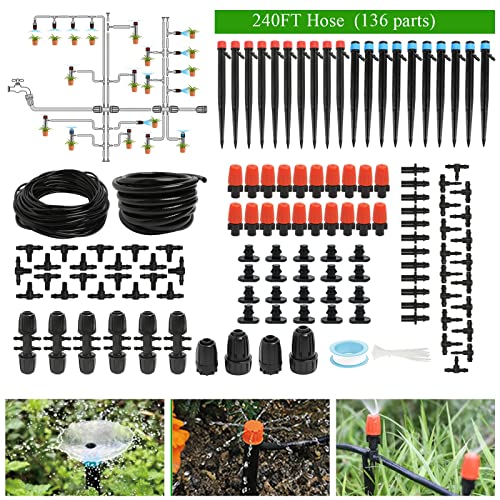
Maotong 240 ft Drip Irrigation System Kit
Best for: Larger vegetable plots and greenhouses
Includes 1/2 inch hose for the main line and 1/4 inch distribution tubing plus drip and misting accessories, so one box can cover beds and a greenhouse.
- 1/2" main line plus 1/4" laterals
- Drip and misting parts in one kit
- Long total length for the price class
- Kit is bulky to store
- Misting parts are not needed in every garden
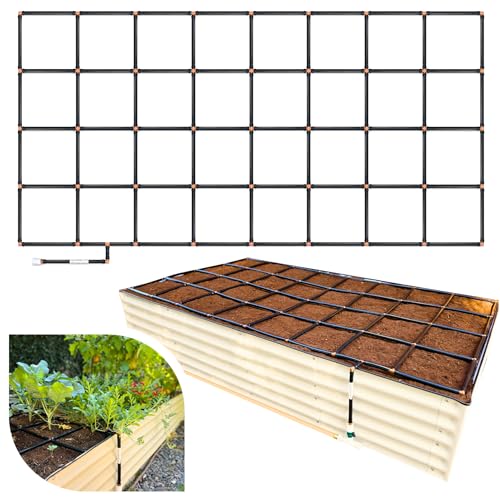
Garden Grid Preassembled Raised Bed Watering System (4×8)
Best for: Square-foot and 4×8 raised beds
A preassembled grid sized for a 4 by 8 foot raised bed. You drop it on the bed and connect a hose, which removes most of the layout work.
- Preassembled grid, almost no setup
- Even coverage across a 4×8 bed
- Easy to lift out at season end
- Fixed size; other bed sizes need a different grid
- Costs more per square foot than a DIY kit

CARPATHEN Adjustable Quick Connect Drip System (up to 130 ft)
Best for: Gardens up to about 130 ft of beds
A complete kit with 1/2 inch and 1/4 inch tubing and adjustable emitters, aimed at gardeners who want to fine-tune flow plant by plant.
- Adjustable 1/4" emitters
- 1/2" and 1/4" tubing included
- Quick-connect fittings
- Sized for small to medium gardens
- Larger layouts need extra connectors
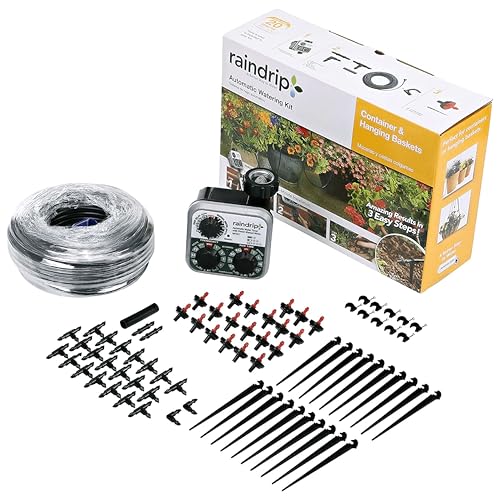
Raindrip R560DP Automatic Drip Kit with Timer
Best for: Patios, containers and hanging baskets
A small kit that includes a programmable timer and 20 drippers, built for up to about 20 container plants or hanging baskets.
- Timer included in the box
- Waters up to about 20 plants
- Good starter kit for patios
- Too small for in-ground vegetable beds
- Limited expansion compared with larger kits
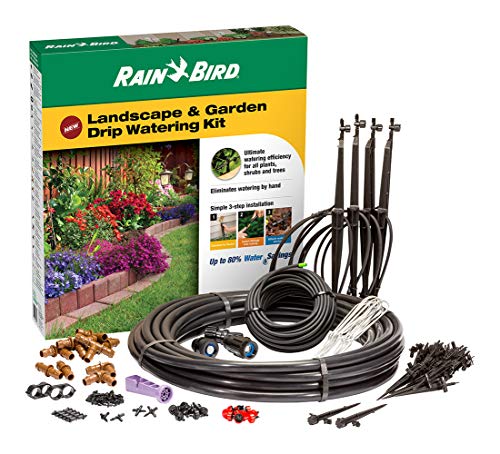
Rain Bird LNDDRIPKIT Landscape Drip Kit
Best for: Shrub beds and foundation plantings
From a long-established irrigation brand, this kit mixes drippers, micro-bubblers and micro-sprays, which suits landscape beds with different plant sizes.
- Drippers, bubblers and micro-sprays included
- Well-known irrigation brand
- Good for shrubs and mixed landscape beds
- Less tubing than bulk kits
- Micro-sprays lose more water to evaporation than drippers

JIYANG Solar Automatic Drip Irrigation Kit (20-30 pots)
Best for: Balconies and pots without a nearby faucet
A solar-powered pump unit that draws from a bucket or reservoir and offers 12 timing modes, so you can water pots where there is no outdoor tap.
- Solar powered, no outlet needed
- 12 timing modes
- Anti-siphon device included
- Output depends on sunlight
- For pots, not full garden beds

YIFOR Drip Kit with 7 Gal Reservoir, Pump and Timer
Best for: Indoor plants and greenhouses without plumbing
A self-contained kit with a 7 gallon reservoir, pump, timer and 12 emitters, useful where there is no water line at all.
- Built-in 7 gal reservoir
- Pump and timer included
- 12 emitters for a plant group
- Reservoir must be refilled
- Only 12 emitters and 65 ft of tubing
How we chose these kits
We looked at what each kit actually contains and matched it to the garden it suits best. The main factors were the type and length of tubing, whether the kit includes a mainline, the kind of emitters, whether a filter, pressure regulator or timer is in the box, and how easy it is to expand. We grouped kits by use, because a kit that is perfect for twenty patio pots is the wrong choice for a 30 foot vegetable plot. We do not list prices, because they change frequently; use the links to see current pricing, ratings and full specifications.
Drip irrigation kit buying guide
1. Match the kit to your garden layout
Start with a quick sketch of your garden. Count the beds, measure the rows and note where the faucet is. Then pick the kit type that matches:
- Vegetable rows and in-ground beds: a kit with 1/2 inch mainline and 1/4 inch laterals or inline dripline.
- Raised beds: a bed-sized grid or a kit with enough 1/4 inch tubing to snake through each bed.
- Containers and hanging baskets: a 1/4 inch kit with many individual drippers, ideally with a timer.
- Shrub and foundation beds: a landscape kit with drippers and bubblers sized for larger plants.
- No faucet nearby: a solar or reservoir-and-pump kit.
2. Tubing size and length
Kits use two main tubing sizes. 1/2 inch tubing is the mainline that carries water from the faucet to the beds. 1/4 inch tubing branches off to individual plants or short rows. A kit with only 1/4 inch tubing works for small, compact gardens, but long single runs of 1/4 inch tubing lose flow, so the far end waters less. If your beds are more than about 30 feet from the faucet, or you have several beds, choose a kit with a mainline.
To estimate length, add the distance from the faucet to the garden, the length of the mainline along the beds and the length of every lateral, then add about 10 percent for turns and mistakes.
3. Emitter type
- Fixed drippers deliver a set flow, often 1 or 2 gallons per hour, and are simple and reliable.
- Adjustable drippers let you turn flow up or down for each plant, which is useful in mixed beds.
- Micro-sprays and bubblers wet a wider area, good for dense plantings or shrubs, but lose more water to evaporation.
- Inline dripline has emitters built in at set spacing, ideal for rows of closely spaced crops.
If you are unsure what flow rate each plant needs, see our guide to drip emitter size.
4. Filter, pressure regulator and backflow
Drip parts are designed for low pressure, usually far below household pressure. A pressure regulator protects fittings from popping apart, and a filter keeps sediment from clogging emitters. A backflow preventer protects your drinking water. Many kits include a filter and regulator, but not all, so check the listing. Our guide to the drip irrigation head assembly explains the correct order of parts at the faucet.
5. Timer or no timer
A timer is what turns drip into a hands-off system. Small container kits sometimes include one, but most larger kits do not. A battery hose timer at the faucet is inexpensive and easy to add. If you water while traveling, a timer with a rain delay is worth considering.
6. Quick-connect vs barbed fittings
Quick-connect fittings push together and come apart easily, which is great for beginners and for gardens that change every season. Barbed fittings hold very securely once pushed in but are harder to remove. Both work; choose quick-connect if you expect to move lines often, such as when you rotate crops.
7. Expandability
Gardens grow. A kit that uses standard 1/2 inch and 1/4 inch sizes is easy to expand with extra tubing, tees and emitters from any brand. Kits with unusual sizes, such as some 5/16 inch systems, can be harder to match later.
Which kit is right for you?
- Most home gardens: the 2026-Upgraded Quick Connect kit for its mix of mainline and distribution tubing.
- Big vegetable plots or a greenhouse: the Maotong 240 ft kit.
- One or two 4×8 raised beds: the Garden Grid preassembled system.
- Patio pots and baskets: the Raindrip R560DP with its included timer.
- Shrub beds and landscapes: the Rain Bird landscape kit.
- No outdoor tap: the JIYANG solar kit outdoors or the YIFOR reservoir kit indoors.
How to set up a drip irrigation kit
- Plan the layout on paper, marking the faucet, mainline route and each bed.
- Install the head assembly at the faucet: backflow preventer, timer if used, filter and pressure regulator.
- Run the mainline to the beds and stake it every few feet.
- Punch holes and add laterals or emitters at each plant.
- Flush the lines with the end caps off to clear debris.
- Cap the ends and test, checking that every emitter drips.
- Cover with mulch to protect the tubing and reduce evaporation.
For a complete walkthrough, see our guide to set up drip irrigation. For bed-specific layouts, see drip irrigation for raised beds.
What size kit do you need?
As a rough guide, small patio setups of ten to twenty pots are well served by compact 1/4 inch kits of 50 to 100 feet. A couple of raised beds or a small vegetable plot usually needs 100 to 150 feet with some mainline. Larger vegetable gardens, several beds or a greenhouse often need 200 feet or more, with a 1/2 inch mainline carrying water to each area. If you are between sizes, buy the larger kit or plan on adding a roll of tubing and a bag of emitters; it is much easier to have spare parts than to stop halfway through installation.
Common mistakes when buying a drip kit
- Buying only 1/4 inch tubing for a large garden, which leaves the far beds dry.
- Skipping the pressure regulator and filter because the kit did not include them.
- Choosing micro-sprays for everything, which wastes water compared with drippers.
- Ignoring the timer, so the system still depends on remembering to turn on the tap.
- Underestimating tubing length for the run from the faucet to the garden.
- Mixing incompatible tubing sizes from different brands when expanding.
Drip kits for specific situations
Sloped gardens: water runs downhill inside the tubing, so the lowest emitters can drip more and the system may drain out after each run. Look for pressure-compensating emitters and run laterals across the slope rather than up and down it.
Rain barrels: most kits are built for faucet pressure. Gravity-fed rain barrel water has very little pressure, so choose kits labeled for low-pressure or gravity use, skip the pressure regulator and keep runs short. Our guide to a rain barrel watering system covers gravity setups in detail.
Hot, dry climates: run drip under mulch, choose drippers over micro-sprays and add more emitters per plant rather than longer run times on a single emitter, so water spreads across the root zone. Water early in the morning, when evaporation is lowest, and check soil moisture a few inches down before increasing run times.
Who should skip a drip kit
Drip is not the best answer for every yard. If you mostly water a lawn, a sprinkler system or hose-end sprinkler is more practical. If you have a single small bed and are on a tight budget, a soaker hose may be enough. And if you only have a few houseplants, self-watering pots or a watering can may be simpler than any kit.
Maintaining your drip system
A drip system needs a little regular care to keep every emitter working. Clean the filter screen every few weeks during the season, and more often on well water. Flush each line by removing the end caps at the start of the season and occasionally during summer. Walk the beds while the system runs and look for emitters that have stopped, tubing that has been nicked by tools or chewed by animals, and fittings that have popped apart. Replace clogged emitters rather than poking them open. In cold climates, disconnect the head assembly, drain the tubing and store the timer, filter and regulator indoors before the first hard freeze.
Drip kit vs soaker hose vs sprinkler
A soaker hose is cheaper and simpler but waters less evenly along long runs and cannot target individual plants. A sprinkler covers large areas quickly but wets leaves and loses water to wind and evaporation. A drip kit costs a little more and takes more time to lay out, but it delivers water exactly where roots need it and is the most efficient choice for beds and containers. The EPA WaterSense program notes that drip-style irrigation can greatly reduce outdoor water waste compared with sprinklers in planted beds.
Tips to get the most from your kit
- Group plants by water need and give each group its own line or zone.
- Check emitters monthly while the system runs and clear any that clog.
- Clean the filter screen every few weeks in the growing season.
- Adjust run times as plants grow and the weather warms.
- Drain and store tubing and the timer before freezing weather in cold climates.
If you are choosing a kit specifically for vegetables, our guide on how to choose a drip irrigation kit goes deeper into matching kit types to crops.
The bottom line
For most gardens, the best drip irrigation kit is one that pairs a 1/2 inch mainline with 1/4 inch tubing and quick-connect fittings, like our best overall pick. Choose a preassembled grid for raised beds, a timer kit for containers, a landscape kit for shrubs and a solar or reservoir kit where there is no faucet. Whichever you choose, add a filter, pressure regulator and timer, flush the lines and cover them with mulch for years of efficient watering.
Frequently Asked Questions
What is the best drip irrigation kit for a vegetable garden?
A kit with 1/2 inch mainline and 1/4 inch distribution tubing, such as our best overall pick, suits most vegetable gardens because it can feed several rows and reach individual plants.
Do drip irrigation kits come with a timer?
Some do, such as the Raindrip R560DP. Most larger kits do not, so plan to add a hose timer at the faucet.
Do I need a pressure regulator and filter?
Yes for most hose-fed kits. Drip parts are designed for low pressure, and a filter keeps emitters from clogging. Many kits include both; check before buying.
How much tubing do I need?
Measure the distance from the faucet to the beds for the mainline, then add the length of every row or loop for laterals, plus about 10 percent extra.
Can a drip irrigation kit water a lawn?
Drip is meant for beds, rows, shrubs and containers. Lawns are usually better served by sprinklers.