

Last updated: October 2026 · Written by the LawnVibe editorial team.
A compost accelerator, also called a compost starter or activator, is a product designed to speed up decomposition. Most contain beneficial bacteria, sometimes fungi and enzymes, and often a nitrogen or sugar source to feed them. They promise faster, less smelly compost. The truth is that composting is a natural process driven by microbes already present on organic materials, so a well-managed pile does not strictly need an accelerator. Where they do help is in kick-starting new bins, carbon-heavy piles like autumn leaves, and enclosed systems with no soil contact. Choosing the best compost accelerator means matching the product to your system and fixing the basics first.
Our picks are based on published product information and composting guidance from extension services, not on hands-on testing. Decomposition times quoted by manufacturers assume ideal conditions. For tools that help aerate and turn piles, see our guide to the best gardening tools for composting.
Our Top Picks
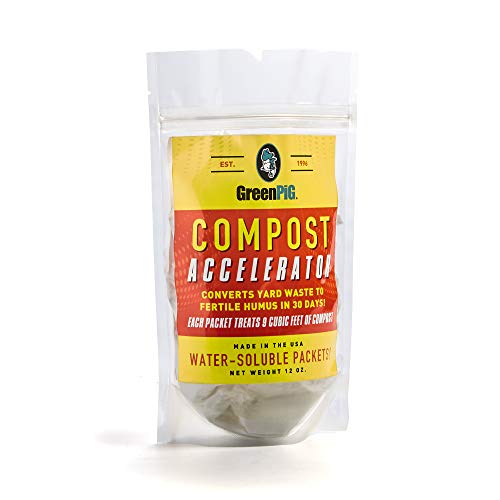
Green Pig Compost Accelerator
Best for: Backyard piles and bins of yard waste
Dissolvable packets of beneficial bacteria cultures. The maker states each packet treats about 9 cubic feet of compost and claims yard waste can become humus in around 30 days under good conditions. Pre-measured packets make dosing simple: dissolve in a watering can and soak the pile.
- Pre-measured dissolvable packets
- Simple watering-can application
- Each packet sized for a typical bin
- 30-day claim assumes ideal conditions
- Still needs correct greens, browns, air and moisture

Dr. Connie’s Compost Plus
Best for: Gardeners treating several bins or large piles
A highly concentrated compost accelerator that the maker describes as 100 times more concentrated than leading compost starters. Concentrates go a long way, making this a practical choice if you run several bins or a large pile and want to treat them regularly through the season.
- Highly concentrated, goes a long way
- Works for piles, bins and tumblers
- Suits frequent applications
- Concentration claim comes from the maker
- Measuring carefully matters with concentrates

Compost-It Compost Accelerator/Starter
Best for: Small kitchen bins, tumblers and worm farms
A 100 g spout pack that the maker says contains over 60 active ingredients and is suitable for all composting systems including worm farms. The shaker spout makes it easy to sprinkle a little over each new layer of kitchen scraps.
- Shaker spout for easy sprinkling
- Labeled for worm farms and all systems
- Good for small household bins
- Small pack for big piles
- Four-week claim depends on conditions
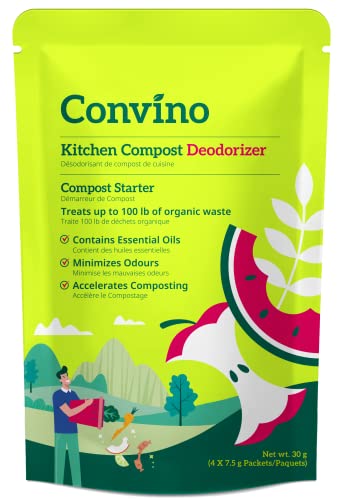
Convino Compost Starter/Accelerator
Best for: Kitchen waste bins that smell
A compost starter positioned around reducing kitchen waste odor and converting yard waste to humus in all composting systems. For apartment, balcony or patio composters where smell is the main worry, an odor-focused starter combined with enough dry browns is a sensible pairing.
- Aimed at reducing kitchen waste odor
- Works in all composting systems
- Helpful for patio and small-space bins
- Odor control still depends on aeration and browns
- Limited published detail on contents

Green Pig Commercial Strength Compost Accelerator
Best for: Large volumes of leaves and yard waste
A commercial-strength version of Green Pig for larger volumes, sold to convert yard waste to humus in about 30 days and help control odors. Suited to big leaf piles in autumn, multi-bay systems and community gardens.
- Commercial strength for big volumes
- Also aimed at odor control
- Good for autumn leaf piles
- Overkill for a small kitchen bin
- Results still hinge on pile management
Comparison Table
| # | Product | Best for | Link |
|---|---|---|---|
| 1 | Green Pig Compost Accelerator | Backyard piles and bins of yard waste | Check price |
| 2 | Dr. Connie’s Compost Plus | Gardeners treating several bins or large piles | Check price |
| 3 | Compost-It Compost Accelerator/Starter | Small kitchen bins, tumblers and worm farms | Check price |
| 4 | Convino Compost Starter/Accelerator | Kitchen waste bins that smell | Check price |
| 5 | Green Pig Commercial Strength Compost Accelerator | Large volumes of leaves and yard waste | Check price |
A Closer Look at Each Pick
Green Pig compost accelerator, best overall. Pre-measured packets make dosing simple, and each is sized for a typical backyard bin.
Dr. Connie's Compost Plus, best concentrate. A concentrate suits gardeners treating several bins or large piles regularly.
Compost-It starter, best for worm farms. The shaker spout makes it easy to sprinkle on small additions, and it is labeled for worm farms.
Convino compost starter, best for odor control. A good pairing for patio and kitchen-scrap bins where smell is the main concern.
Green Pig commercial strength, best heavy-duty. For big leaf piles, multi-bay systems and community gardens.
How Compost Accelerators Work
Decomposition is carried out mainly by bacteria and fungi that consume organic matter. In the hot phase of composting, heat-loving bacteria multiply rapidly and can raise pile temperatures significantly. Accelerators add concentrated microbial cultures and often food for them, giving the pile a large population from the start. Some also supply nitrogen, which is often the limiting factor in carbon-rich piles. Enzymes in some products help break down tough materials.
When an Accelerator Helps Most
New bins and tumblers. Enclosed systems that start with no soil or old compost have fewer microbes to begin with.
Carbon-heavy piles. Piles mostly of dry leaves, straw, wood chips or sawdust lack nitrogen. An accelerator with a nitrogen source helps.
Cold weather. Microbes slow down in cold conditions. A boost can help, though temperature remains the main constraint.
Stalled piles. A pile that has gone cold and stopped breaking down may restart with an accelerator plus turning and moisture.
Odor problems. Some products are aimed at reducing odors in kitchen-waste bins.
When You Probably Do Not Need One
If your pile has a good mix of greens and browns, adequate moisture, regular aeration and some garden soil or finished compost mixed in, it already has a thriving microbial community. Extension services generally note that commercial activators are not necessary for well-managed piles. In that case, an accelerator may make only a small difference.
Free Ways to Accelerate Compost
Add finished compost or garden soil. A shovelful introduces billions of microbes.
Balance greens and browns. Aim for roughly two to three parts browns to one part greens by volume.
Chop materials small. Smaller pieces have more surface area for microbes.
Keep it moist. The pile should feel like a wrung-out sponge.
Turn or aerate. Oxygen keeps aerobic microbes working fast.
Build a big enough pile. About three feet in each direction helps it heat up.
Add nitrogen-rich materials. Fresh grass clippings, coffee grounds, manure and comfrey leaves act as natural activators.
For a step-by-step fast method, see our guide to hot composting in 18 days.
How to Use a Compost Accelerator
Read the label for dosage. Most products are dissolved in water and poured or sprayed over the pile, or sprinkled dry between layers. Apply when building a new pile, then again when adding large amounts of new material or every few weeks. Moisten the pile thoroughly as you apply so microbes are distributed. Turn or aerate the pile afterward to mix the product through. Avoid applying in strong sun on hot days, which can harm live cultures.
Liquid vs Powder vs Packet Accelerators
Liquid concentrates mix quickly in a watering can or sprayer and soak evenly through a pile. They are convenient for large or multiple piles.
Powders can be sprinkled dry between layers or dissolved. Shaker packs make small, frequent additions easy for kitchen bins.
Dissolvable packets are pre-measured, which removes guesswork and reduces waste.
All three work similarly once they are in the pile; choose the format that best fits how you add material.
Compost Accelerators for Leaves
Autumn leaves are high in carbon and break down slowly, especially whole oak leaves. Shred leaves with a mower, mix in a nitrogen source such as grass clippings or coffee grounds and apply an accelerator. Keep the pile moist and turn it every couple of weeks. Leaves processed this way can become usable compost or leaf mold much faster than an untreated whole-leaf pile.
Accelerators in Tumblers and Bins
Tumblers and enclosed bins are convenient but can be slow to start because they lack soil contact. Adding an accelerator or a shovel of finished compost helps establish microbes. Tumblers often become too wet; add shredded cardboard or dry leaves if contents are clumping and smelly.
Worm Farms and Bokashi
Worm bins rely on worms and their associated microbes. Some accelerators are labeled for worm farms and may help break down food faster, but avoid products that heat the bin or contain harsh ingredients. Bokashi systems use their own inoculated bran and do not need a separate accelerator.
Composting in Cold Weather
Microbial activity slows dramatically as temperatures drop. To keep compost working in late autumn and winter, build larger piles that retain heat, insulate bins with straw bales or bags of leaves, and add plenty of nitrogen-rich greens. An accelerator can help restart activity during mild spells. Many gardeners simply keep adding scraps through winter and let the pile resume in spring, when it often heats quickly with a good turning and a dose of starter.
Measuring Compost Temperature
A long-stem compost thermometer is the best way to see whether your pile is working. Active hot piles commonly reach roughly 130 to 160 degrees Fahrenheit in the center. If temperatures fall after a few days, turning the pile and adding moisture or nitrogen usually reheats it. A pile that never warms up is too small, too dry or lacking greens; that is when an accelerator, plus correcting the mix, is most useful.
Troubleshooting Slow or Smelly Compost
Pile is dry and not breaking down. Water it while turning.
Pile is wet and smells sour. Add dry browns and turn to add air.
Pile smells of ammonia. Too much nitrogen; add browns.
Pile is cold. It may be too small, too dry or lacking nitrogen.
Large pieces remain. Chop or shred material.
Our guide on fixing a smelly compost bin covers odor problems in more detail.
Compost Accelerator vs Compost Starter Kit
Compost accelerators are generally microbial products added to piles, bins or tumblers. Some electric kitchen composters use their own branded starter material, which serves a similar purpose for that specific machine. If you use an electric composter, follow the maker's recommendations; our guide to the best compost starter kit covers that category.
What to Add and What to Leave Out
Good compost ingredients include fruit and vegetable scraps, coffee grounds and filters, tea leaves, eggshells, grass clippings, leaves, straw, shredded paper and cardboard, and plant trimmings. Most home composting guides recommend leaving out meat, fish, dairy, oils, pet waste from cats and dogs, diseased plants and weeds that have gone to seed. An accelerator will not make these problem materials safe in a home pile.
Using Finished Compost
Compost is ready when it is dark, crumbly and smells earthy, and you can no longer identify the original materials. Screen out unfinished pieces and return them to the pile. Spread finished compost on beds, mix it into planting holes and potting mixes, or top-dress lawns.
DIY Compost Activators
You can make simple activators at home. Comfrey and nettle leaves are rich in nitrogen and break down quickly; chop them and mix them into the pile, or steep them in water for a few weeks to make a liquid activator. A bucket of water with a cup of molasses or sugar stirred in feeds microbes when poured over a pile, though it should be used sparingly. Diluted urine is a traditional, effective nitrogen source for carbon-heavy piles. Aged chicken or rabbit manure also supplies nitrogen and microbes. These options cost little or nothing and work alongside or instead of commercial products.
Accelerators for Community and Large-Scale Composting
Community gardens, schools and allotments often manage large piles of mixed materials. Commercial-strength accelerators can help when large volumes of carbon-rich materials such as leaves arrive at once. However, larger piles also retain heat naturally, so the main tasks remain balancing greens and browns, turning regularly and monitoring temperature and moisture. Keep simple records of what was added and when, so you can see how fast different batches finish.
How Long Should Compost Take?
With a well-balanced, hot pile turned regularly, finished compost can be ready in a few weeks to a few months. A cold pile with occasional additions may take six months to two years. Accelerators can shorten the early stages, but curing, the final slow phase where compost matures and stabilizes, still takes time. Giving compost a few extra weeks to cure before using it around seedlings is worthwhile.
Storage and Shelf Life
Live microbial products lose viability over time and with heat. Store accelerators in a cool, dry place, seal packages after opening and use them before any expiration date.
Common Mistakes With Compost Accelerators
Common mistakes include expecting accelerators to fix piles that are too dry, too wet or unaerated, using them on piles that are too small to heat up, applying in direct hot sun, overdosing rather than following the label and relying on accelerators instead of balancing greens and browns.
The Bottom Line on the Best Compost Accelerator
For most backyard bins, Green Pig's pre-measured packets are an easy way to kick-start a pile. Dr. Connie's concentrate suits larger or multiple piles, Compost-It works for small bins and worm farms, Convino targets kitchen waste odors and Green Pig commercial strength handles big leaf piles. Above all, remember that air, moisture, the right balance of greens and browns and a shovel of finished compost are the most powerful accelerators of all.
Frequently Asked Questions
Do compost accelerators really work?
They can help piles that lack microbes or nitrogen, such as all-leaf piles or brand-new bins. In a well-built pile with garden soil or finished compost mixed in, the native microbes usually do the job, so the effect is smaller.
What is a natural compost accelerator?
A shovel of finished compost or garden soil, fresh grass clippings, manure, coffee grounds and comfrey or nettle leaves all add microbes or nitrogen that speed decomposition.
How often should I add compost accelerator?
Follow the label. Most suggest an application when starting a pile and again with each large addition of material, or every few weeks.
Can I use a compost accelerator in a tumbler?
Yes. Most products are suitable for tumblers, bins and open piles. Tumblers especially benefit because they often start with little soil contact.
Why is my compost not breaking down?
Common causes are too much dry brown material, too little moisture, lack of air, pieces that are too large, or a pile that is too small to heat up.