
Last updated: October 2026 · Written by the LawnVibe editorial team.
Commercial turf takes a beating. Sports fields, parks, school grounds, HOA common areas and estate lawns carry foot traffic, mowers and events that compact the soil, choke roots and leave grass thin and patchy. Core aeration is one of the most effective ways to restore them, but aerating acres of turf with a homeowner tool is not realistic. The best aerators for commercial use cover a lot of ground quickly and pull real soil cores. Our top pick for large areas is the Brinly PA-403BH-A 40 inch tow-behind plug aerator. Below we compare eight options, from 40 and 48 inch tow-behind plug aerators to an aerator-spreader combo, a hand corer for tight spots and a common service part for walk-behind units, and explain how to plan aeration on large sites.
Listings change often, so check current details on Amazon before you buy. As an Amazon Associate we earn from qualifying purchases.
Our top picks at a glance
| # | Product | Best for | Link |
|---|---|---|---|
| 1 | Brinly PA-403BH-A Tow-Behind Plug Aerator (40 inch) | Large lawns, sports areas and estate grounds | Check price |
| 2 | Brinly PA-403BH-A2 Tow-Behind Plug Aerator (40 inch) | Fleets that standardize on one model | Check price |
| 3 | Doniks 48 inch Tow-Behind Plug Aerator with Transport Wheels | Maximum coverage per pass | Check price |
| 4 | Hipicute 48 inch Tow-Behind Plug Aerator (32 Blades) | Budget-minded large-area aeration | Check price |
| 5 | SierraSquad 48 inch Tow-Behind Aerator | Rough, compacted grounds | Check price |
| 6 | Brinly AS2-40BH-P Tow-Behind Aerator Spreader | Overseeding and fertilizing in one pass | Check price |
| 7 | Landzie Original Hollow Tine Lawn Aerator (42 inch) | Crews touching up tight or compacted spots | Check price |
| 8 | Ryan 4118356 Clutch Spring (fits Ryan aerators) | Keeping Ryan walk-behind aerators running | Check price |
Best aerators for commercial use: reviews

Brinly PA-403BH-A Tow-Behind Plug Aerator (40 inch)
Best for: Large lawns, sports areas and estate grounds
A 40 inch tow-behind plug aerator with a universal hitch that pulls cores across large turf areas behind a tractor or ATV.
- True core (plug) aeration
- Universal hitch
- Established tow-behind brand
- Needs a tractor or ATV
- Add weight for hard soil
Brinly PA-403BH-A2 Tow-Behind Plug Aerator (40 inch)
Best for: Fleets that standardize on one model
An updated version of Brinly’s 40 inch plug aerator with universal hitch for covering big areas efficiently.
- Proven Brinly design
- Universal hitch
- Covers big areas quickly
- Tow vehicle required
- Weight tray needs ballast

Doniks 48 inch Tow-Behind Plug Aerator with Transport Wheels
Best for: Maximum coverage per pass
A 48 inch plug aerator with 30 galvanized steel tines and transport wheels for moving between work areas.
- Wide 48 inch coverage
- Transport wheels
- Galvanized tines
- Lesser-known brand
- Assembly takes time

Hipicute 48 inch Tow-Behind Plug Aerator (32 Blades)
Best for: Budget-minded large-area aeration
A 48 inch tow-behind plug aerator with 32 blades and adjustable settings for tractors and ATVs.
- 48 inch width
- Adjustable depth design
- Good value
- Newer brand
- Check hitch compatibility
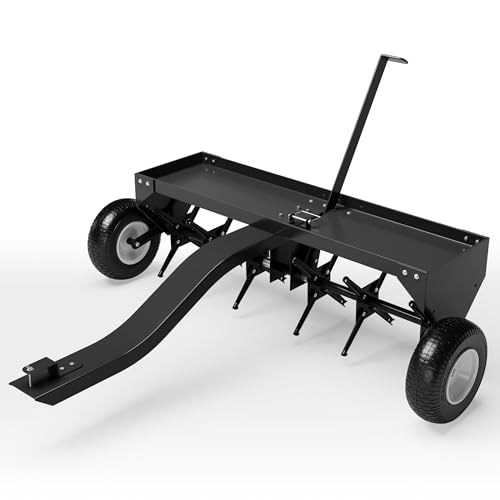
SierraSquad 48 inch Tow-Behind Aerator
Best for: Rough, compacted grounds
A 48 inch tow-behind aerator with an all-steel chassis and reinforced tines built to resist bending.
- All-steel build
- Reinforced tines
- Wide coverage
- Check whether spike or plug style suits your soil
- Heavy to maneuver by hand
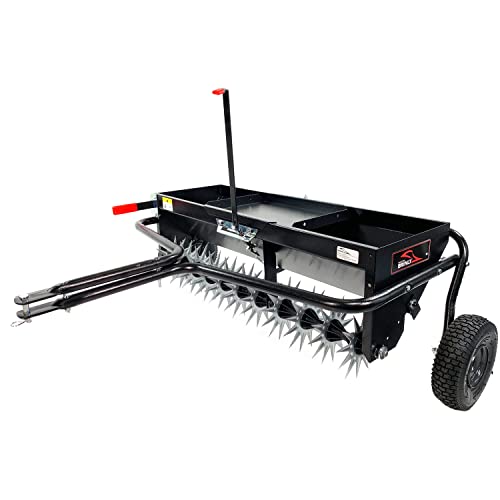
Brinly AS2-40BH-P Tow-Behind Aerator Spreader
Best for: Overseeding and fertilizing in one pass
A 2-in-1 tow-behind that aerates while dropping seed, fertilizer or lime, cutting the number of passes on large sites.
- Aerates and spreads together
- Weight tray included
- Saves time on big jobs
- Spike aeration, not plugs
- Calibration needed for spread rates

Landzie Original Hollow Tine Lawn Aerator (42 inch)
Best for: Crews touching up tight or compacted spots
A 42 inch hollow-tine hand aerator for pulling cores in spots machines cannot reach, such as around trees and beds.
- Pulls real cores
- Reaches tight spots
- No fuel or maintenance
- Manual and slow for big areas
- Physical effort

Ryan 4118356 Clutch Spring (fits Ryan aerators)
Best for: Keeping Ryan walk-behind aerators running
A replacement clutch spring that the listing says fits Ryan aerators new and old, a common wear part on commercial walk-behind units.
- Fits Ryan aerators
- Low-cost repair part
- Reduces downtime
- Part only
- Confirm model before ordering
How we chose these aerators
We focused on equipment that suits large turf areas: wide tow-behind plug aerators from established and value brands, a combination aerator-spreader for one-pass renovation, a hand hollow-tine corer for spot work and a maintenance part for commercial walk-behind machines. Dedicated self-propelled walk-behind core aerators, the workhorses of many landscaping crews, are usually purchased or rented through specialist equipment dealers rather than general retailers, so they are not listed here. We do not list prices because they change often.
Plug vs spike aeration for heavy-use turf
Plug (core) aerators use hollow tines to remove small cylinders of soil, creating space for air, water and roots and relieving compaction. The cores break down on the surface and act as a light topdressing. Spike aerators push solid tines into the ground. They are cheaper and faster but do not remove soil, and in heavy clay they can compact the sides of each hole. For commercial and high-traffic turf, plug aeration is the standard choice. Spike units, including aerator-spreader combos, are useful for light aeration and for working seed and fertilizer into the soil.
Tow-behind vs walk-behind aerators
Tow-behind aerators attach to a tractor, zero-turn or ATV and cover open areas very quickly. They are ideal for parks, fields and large estates, but less maneuverable around trees, beds and tight corners. Walk-behind core aerators are self-propelled machines that pull deep cores with heavy, reciprocating or rolling tines. They handle smaller commercial properties, slopes and obstacles well and are the usual choice for lawn care businesses. Many crews use both: a walk-behind for residential and tight sites and a tow-behind for big open spaces.
Choosing the right tow-behind aerator
- Width: 40 inch units suit lawn tractors and smaller ATVs; 48 inch units cover more ground but need more pulling power and ballast.
- Tine type: hollow plug tines for real core aeration; spike or knife tines for faster, lighter work.
- Weight tray capacity: more ballast capacity means deeper penetration in firm soil.
- Hitch: a universal hitch fits most tractors, zero-turns and ATVs; check pin size and height.
- Transport wheels: let you move between areas or cross paths without tines engaging.
- Build quality: steel frames and galvanized or hardened tines last longer in abrasive soil.
- Lift mechanism: a lever or transport mode that lifts tines makes turning and trailering easier.
Estimating coverage and time
A tow-behind aerator's coverage depends on its width, your ground speed and how much you overlap passes. Wider units and steady speeds cover open areas fast, while obstacles, slopes and tight turns slow you down. Plan for a second pass at an angle on heavily used areas such as goalmouths, paths and event lawns, where compaction is worst. Walking the site beforehand and dividing it into zones helps estimate time and avoid missed strips.
Renting vs buying
For property managers and businesses that aerate occasionally, renting a self-propelled walk-behind core aerator from an equipment rental store can be cost-effective. If you aerate many sites every season, owning equipment pays off quickly and lets you schedule jobs around ideal soil conditions instead of rental availability. Tow-behind plug aerators are relatively affordable and simple to maintain, which makes them a practical purchase for estates, farms and grounds crews who already have a tractor or ATV.
Aeration for different commercial sites
Sports fields need regular core aeration, often combined with overseeding and topdressing, especially in high-wear zones. Parks and school grounds benefit from annual aeration along paths and gathering spots. HOA common areas and office campuses look denser and greener after aeration paired with fertilization. Golf course roughs and large estates suit wide tow-behind units that cover open areas quickly. Matching the equipment to the site saves time and gives better results.
When to aerate commercial turf
Timing depends on grass type. Cool-season grasses such as tall fescue, Kentucky bluegrass and perennial ryegrass are usually best aerated in early fall, with spring as a secondary window, when grass is actively growing and can recover quickly. Warm-season grasses such as Bermuda, zoysia and St. Augustine are best aerated in late spring to early summer, when they are growing vigorously. Avoid aerating during drought, heat stress or dormancy. On sports fields, schedule aeration around the playing calendar so turf has time to recover. Regional extension services such as Penn State Extension publish turf management guidance for local conditions.
Preparing the site
A little preparation prevents damaged irrigation, missed strips and shallow cores on big jobs.
- Mark sprinkler heads, valve boxes, shallow cables and other obstacles with flags.
- Mow the turf to a normal or slightly lower height.
- Water a day or two before if the soil is dry, so tines penetrate to depth; avoid saturated soil.
- Walk the site to remove debris and identify slopes and soft areas.
- Plan your pattern: long straight passes with overlap, and a second pass at an angle on heavily compacted areas.
Our guide on how to prepare your lawn for aeration and overseeding in fall covers the basics in more detail.
Getting good core depth
Shallow aeration wastes time and fuel. These steps help every pass pull meaningful cores.
Depth is what makes aeration worthwhile. Tow-behind aerators rely on their own weight to push tines into the ground, so most have a tray for adding concrete blocks, sandbags or other ballast. Add weight gradually until cores come up at a useful depth, often around a couple of inches or more in firm soil, and check cores regularly as you work. Moist soil gives much better penetration than dry, hard ground. If cores are shallow, slow down, add weight or make a second pass. Our guide on how to adjust the height of a lawn aerator for different terrains explains settings for varied ground.
Overseeding and fertilizing after aeration
The days right after aeration are the best time of the year to improve thin turf.
Aeration creates ideal conditions for seed and fertilizer to reach the soil. On thin or worn turf, overseed immediately after aerating so seed falls into the holes and contacts soil. An aerator-spreader combo can do both in one pass, saving time on large sites. Follow with fertilizer suited to the grass and season, and water lightly and frequently until new seed establishes. Leave cores on the surface to break down naturally; mowing or dragging them helps them crumble faster.
Maintenance for commercial aerators
In peak season an aerator may run day after day, so a short maintenance routine prevents costly breakdowns.
Aerators work in abrasive soil, so wear parts need attention. Clean soil from tines and spoons after each job, check for bent or worn tines and replace them before they lose cutting efficiency. Grease bearings and pivot points as specified, check hitch hardware and tire pressure on tow-behind units, and inspect springs, belts and clutches on walk-behind machines. Keeping common spare parts on hand avoids downtime in the busy aeration season. See how to clean a lawn aerator after use and how to sharpen aerator blades.
Safety on large sites
- Mark irrigation heads and utilities before aerating.
- Follow tow vehicle slope limits; heavy aerators affect stability on hills.
- Lift tines before turning sharply or crossing paved areas.
- Keep bystanders away, especially on public sites.
- Wear sturdy boots, gloves and hearing protection around engines.
Common mistakes
- Aerating dry, hard soil, which gives shallow cores.
- Using spike aerators on heavily compacted clay where cores are needed.
- Skipping ballast on tow-behind units.
- Hitting unmarked sprinkler heads.
- Aerating at the wrong time for the grass type.
- Turning with tines engaged, which tears turf.
- Removing cores immediately; leaving them to break down returns soil and microbes to the surface.
- Aerating saturated soil, which smears hole walls and makes a mess of the site.
- Skipping overseeding on thin areas right after aeration, when seed contact is best.
Signs turf needs aeration
- Water puddles or runs off instead of soaking in.
- Grass thins in high-traffic areas such as paths and field centers.
- Soil feels hard and a screwdriver is difficult to push in.
- Thatch builds up more than about half an inch.
- Roots are shallow when you pull a plug of turf.
If several of these apply, core aeration followed by overseeding usually makes a visible difference within a season.
Is a commercial-grade aerator worth it?
For anyone maintaining large or heavily used turf, yes. Regular core aeration improves drainage, root depth and turf density, which reduces long-term costs for water, fertilizer and reseeding. A good tow-behind plug aerator or access to a walk-behind core aerator is one of the best investments a grounds crew can make.
The bottom line
For large commercial turf areas, the Brinly PA-403BH-A tow-behind plug aerator is our top pick, with the PA-403BH-A2 as an equally solid alternative. Choose the Doniks or Hipicute 48 inch units for wider coverage per pass, the SierraSquad for a heavy all-steel build, the Brinly aerator-spreader to seed and aerate in one pass, the Landzie hand corer for tight spots and keep Ryan service parts on hand for walk-behind machines. Aerate moist soil at the right time of year, add ballast for depth and overseed straight after.
Frequently Asked Questions
What aerator do landscapers use?
Many crews use self-propelled walk-behind core aerators from specialist brands, usually bought or rented through equipment dealers. Tow-behind plug aerators are popular for very large open areas.
Plug or spike aerator for commercial turf?
Plug (core) aerators remove soil cores and relieve compaction more effectively. Spike aerators push holes and can compact soil around them, so plugs are preferred for heavy use.
How wide should a commercial tow-behind aerator be?
40 to 48 inches is common for tractors and ATVs; wider units cover more ground but need more pulling power and weight.
How often should commercial turf be aerated?
High-traffic turf such as sports fields often benefits from aeration once or twice a year, timed to the grass type's active growth.
Do tow-behind aerators need extra weight?
Usually. Adding weight to the tray helps tines penetrate firm soil to a useful depth.