
Last updated: October 2026 · Written by the LawnVibe editorial team.
Clover is one of the most common reasons people go shopping for a lawn weed killer, and also one of the most misunderstood. White clover (Trifolium repens) is a low, creeping perennial that roots wherever its stems touch the soil, so pulling a few plants rarely solves the problem. The best clover killer for most homeowners is a selective lawn herbicide that lists clover on the label, is approved for your grass type, and comes in a format that matches the size of the job: a ready-to-use spray for a few patches, a concentrate for a tank sprayer, a hose-end bottle for whole lawns, or granules you can spread.
Our picks are based on published product information, manufacturer specifications and university turf guidance, not on hands-on testing. Claims such as coverage area or speed of results are the manufacturers' own, as stated in their product listings. If you would rather start with cultural fixes before reaching for a product, our guide on how to control clover in your lawn covers mowing, feeding and spot treatment together.
Quick Answer
The best clover killer for most homeowners is a selective lawn herbicide that lists clover on the label, is approved for your grass type, and comes in a format that matches the size of the job: a ready-to-use spray for a few patches, a concentrate for a tank sprayer, a hose-end bottle for whole lawns, or granules you can spread.
Key takeaways:
- For a cool-season lawn where clover is the main target, a dedicated chickweed, clover and oxalis concentrate like Ortho’s, applied with a good tank sprayer, is the most focused choice.
- If you only have scattered patches, Bonide’s ready-to-use jug saves mixing.
- Large lawns with mixed weeds are faster to treat with a hose-end product from Spectracide, Ortho or BioAdvanced, and BioAdvanced is the most flexible of the three for Southern grasses listed on its label.
- Scotts Weed Control granules or Scotts Weed & Feed3 handle clover and, in the case of the weed and feed, the underfeeding that invited it.
Our Top Picks
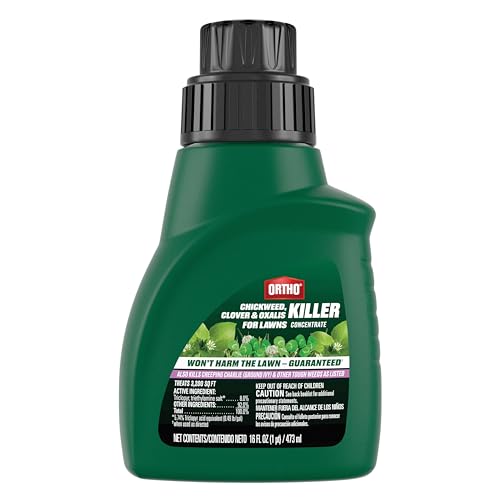
Ortho Chickweed, Clover & Oxalis Killer for Lawns Concentrate, 16 fl. oz.
Best for: Targeted clover control on cool-season and zoysia lawns
A dedicated concentrate that Ortho says controls red and white clover, chickweed, oxalis, creeping Charlie and wild violet to the root. One 16 fl. oz. bottle is rated to treat up to 3,200 sq. ft. when diluted in a tank sprayer.
- Lists red and white clover specifically
- Also targets creeping Charlie and wild violet
- Concentrate format for tank sprayers
- Labeled grasses exclude Bermuda and St. Augustine
- Needs a separate sprayer and careful mixing
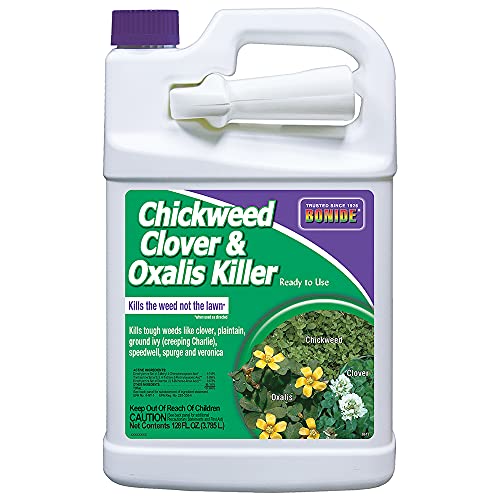
Bonide Chickweed, Clover & Oxalis Killer, 128 oz Ready-to-Use Spray
Best for: Spot-treating clover patches with no mixing
Bonide describes this 128 oz ready-to-use spray as killing chickweed, clover, dandelions and ground ivy roots and all without killing lawn grasses when used as directed, with more than 100 weeds listed on the label.
- No measuring or mixing
- Large gallon jug for repeat spot treatments
- Clear guidance on temperature and drift
- Slower for whole-lawn coverage
- Avoid spraying above 90°F

Spectracide Weed Stop For Lawns Concentrate Ready-To-Spray, 32 Oz
Best for: Big lawns with clover mixed among many weeds
A hose-end concentrate that Spectracide rates for up to 21,333 sq. ft., listing 460+ weed types including dandelion, clover, chickweed and yellow nutsedge, with visible results in about 3 hours.
- Very large rated coverage
- Labeled for bluegrass, fescue, zoysia, Bermuda and ryegrass
- Fast visible results per manufacturer
- Hose-end spraying is less precise
- Not for zoysia just emerging from dormancy

Ortho WeedClear Lawn Weed Killer Ready-to-Spray, 32 fl. oz.
Best for: Lawns where clover shares space with crabgrass
Ortho rates this hose-end spray for up to 5,000 sq. ft. and lists crabgrass, foxtail, dandelion, clover, chickweed and creeping Charlie among its targets, all with a single application on young, actively growing weeds.
- Adds crabgrass and foxtail control
- Simple hose-end on/off switch
- Wide list of labeled lawn grasses
- Smaller coverage than some hose-end rivals
- Best on young weeds

BioAdvanced Lawn Weed Killer Ready-to-Spray, Broadleaf Formula, 32 oz, Weed Killer Spray
Best for: Mixed or Southern lawns, including some St. Augustine varieties
BioAdvanced lists 200+ weeds including clover, dandelion, dollarweed and chickweed, with coverage up to 8,000 sq. ft. and rainproof protection in 1 hour. It is formulated for both Southern and Northern lawn grasses.
- Rainproof in 1 hour per manufacturer
- Covers dollarweed, a common Southern weed
- Works on many warm- and cool-season grasses
- Only some St. Augustine varieties are listed
- Hose-end application is less targeted
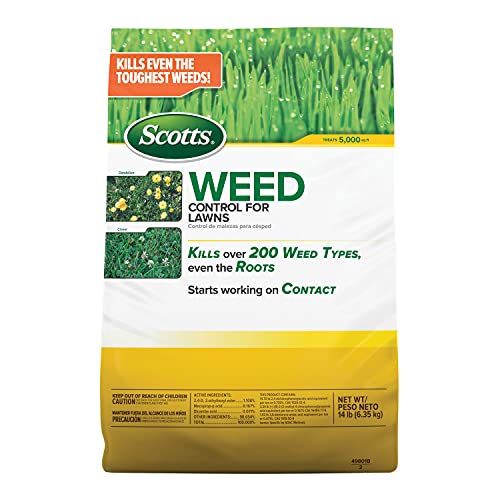
Scotts Weed Control for Lawns, 14 lbs.
Best for: Spreader users who prefer not to spray
A 14 lb. granular weed control that Scotts says covers 5,000 sq. ft. and controls 200+ weeds including clover, dandelion, dollarweed, ground ivy and oxalis. Apply in spring or early fall when weeds are actively growing.
- No drift onto garden beds
- Easy with a broadcast spreader
- Long list of controlled weeds
- Not for Floratam St. Augustine, dichondra, carpetgrass or bentgrass
- Granules need damp leaves to stick

Scotts Turf Builder Weed & Feed3, 14.29 lbs.
Best for: Underfed lawns where clover is moving in
Scotts calls Turf Builder Weed & Feed3 its most powerful weed and feed, claiming up to 2X more dandelion and clover control than its previous formula, while it feeds to thicken lawns and crowd out weeds. The bag covers 5,000 sq. ft.
- Kills clover and fertilizes in one step
- Feeding addresses the low-nitrogen cause
- Covers 5,000 sq. ft.
- Treats the whole lawn, not just weedy spots
- Timing must suit both feeding and weed control

Bonide Chickweed, Clover and Oxalis Killer, 16 oz Concentrate
Best for: Pump-sprayer owners with small to medium lawns
The concentrate version of Bonide’s chickweed, clover and oxalis formula. Bonide says it kills broadleaf weeds in lawns roots and all without killing lawn grasses when used as directed, and lists more than 100 controlled weeds.
- Same weed list as the ready-to-use jug
- Compact 16 oz bottle
- Mix only what you need
- Requires a sprayer and measuring
- Not for use above 90°F
Comparison Table
| # | Product | Best for | Link |
|---|---|---|---|
| 1 | Ortho Chickweed, Clover & Oxalis Killer for Lawns Concentrate, 16 fl. oz. | Targeted clover control on cool-season and zoysia lawns | Check price |
| 2 | Bonide Chickweed, Clover & Oxalis Killer, 128 oz Ready-to-Use Spray | Spot-treating clover patches with no mixing | Check price |
| 3 | Spectracide Weed Stop For Lawns Concentrate Ready-To-Spray, 32 Oz | Big lawns with clover mixed among many weeds | Check price |
| 4 | Ortho WeedClear Lawn Weed Killer Ready-to-Spray, 32 fl. oz. | Lawns where clover shares space with crabgrass | Check price |
| 5 | BioAdvanced Lawn Weed Killer Ready-to-Spray, Broadleaf Formula, 32 oz, Weed Killer Spray | Mixed or Southern lawns, including some St. Augustine varieties | Check price |
| 6 | Scotts Weed Control for Lawns, 14 lbs. | Spreader users who prefer not to spray | Check price |
| 7 | Scotts Turf Builder Weed & Feed3, 14.29 lbs. | Underfed lawns where clover is moving in | Check price |
| 8 | Bonide Chickweed, Clover and Oxalis Killer, 16 oz Concentrate | Pump-sprayer owners with small to medium lawns | Check price |
How Each Clover Killer Fits a Different Lawn
Ortho Chickweed, Clover & Oxalis Killer Concentrate. This is the specialist pick. Ortho lists red and white clover, chickweed, oxalis, creeping Charlie and wild violet as target weeds, which is exactly the group of low, creeping broadleaves that general weed sprays sometimes struggle with. The 16 fl. oz. bottle is rated by Ortho to treat up to 3,200 sq. ft. once diluted in a tank sprayer. The label limits use to buffalograss, fescues, Kentucky bluegrass, ryegrass and zoysiagrass, so it is a cool-season and zoysia choice rather than a Southern lawn product.
Bonide Chickweed, Clover & Oxalis Killer Ready-to-Use. A gallon jug with a trigger sprayer, designed for people who want to walk the yard and hit clover patches without measuring anything. Bonide says it controls more than 100 weeds and kills them roots and all without killing lawn grasses when used as directed. The listing also gives practical guidance most labels share: spray actively growing weeds, keep temperatures under 90°F, and avoid windy days so the mist does not drift onto flowers or vegetables.
Bonide Chickweed, Clover and Oxalis Killer Concentrate. The same weed list as the ready-to-use jug, but in a 16 oz concentrate you mix yourself. This makes sense if you already own a pump or battery sprayer and want to treat more ground per bottle.
Spectracide Weed Stop For Lawns Concentrate Ready-To-Spray. A hose-end bottle for big, mixed-weed lawns. Spectracide rates it to treat up to 21,333 sq. ft. and says it kills more than 460 listed weed types, including dandelion, clover, chickweed and yellow nutsedge, with visible results in about three hours. It is labeled for bluegrass, fescue, zoysia, Bermuda and perennial ryegrass, with a caution not to apply to zoysia just emerging from dormancy.
Ortho WeedClear Lawn Weed Killer Ready-to-Spray. Another hose-end option, but with a broader target list that includes crabgrass and foxtail as well as clover, dandelion and creeping Charlie. Ortho rates the 32 fl. oz. bottle for up to 5,000 sq. ft. It is a good fit when clover is only one of several weeds in the lawn and you want a single pass.
BioAdvanced Lawn Weed Killer Ready-to-Spray, Broadleaf Formula. BioAdvanced lists more than 200 weeds including clover, dandelion, dollarweed and chickweed, with coverage up to 8,000 sq. ft. and rainproof protection in one hour. The brand says it is formulated for both Southern and Northern lawns, including fescue, Kentucky bluegrass, Bermuda, buffalo and some varieties of St. Augustinegrass, which makes it the most flexible spray here for mixed regions.
Scotts Weed Control for Lawns (granular). Granules suit people who already own a broadcast spreader and prefer not to spray. Scotts says the 14 lb. bag covers 5,000 sq. ft. and controls over 200 listed weeds including clover, dandelion, dollarweed and ground ivy. It is meant to be applied in spring or early fall when broadleaf weeds are actively growing. Note the exclusions: no dichondra, carpetgrass, Floratam St. Augustinegrass or creeping bentgrass, and not where you want to keep clover.
Scotts Turf Builder Weed & Feed3. This one combines weed control with fertilizer. Scotts describes it as its most powerful weed and feed, claiming up to twice the dandelion and clover control of the previous formula, and the feeding helps thicken turf so clover has less room to spread. It is the efficient choice when your lawn also needs nitrogen, which, as you will see below, is often the root cause of a clover problem.
How Selective Clover Killers Work
Lawn clover killers are selective broadleaf herbicides. They are absorbed through leaves, move inside the plant and disrupt growth in broadleaf species, while narrow-leaf turfgrasses tolerate the labeled rate. That is why the wording "won't harm grass when used as directed" appears on almost every product above. The phrase matters: exceed the rate, spray in summer heat or apply to a grass that is not on the label, and injury becomes much more likely.
Clover is tougher than dandelion for many products. Its waxy leaves shed spray, and its creeping stolons can resprout if the herbicide does not move far enough through the plant. University turf programs such as Purdue Turfgrass Science note that clover is better controlled by mixtures and active ingredients known for clover activity than by 2,4-D on its own. In practice, that means reading the active ingredient panel on the back label and choosing a product that names clover specifically, rather than assuming any weed killer will do.
What to Look for in a Clover Killer
Clover on the label
This sounds obvious, but it is the most important filter. A product that lists red and white clover has been tested and registered for that use. Products that only list "dandelions and other broadleaf weeds" may suppress clover without killing it.
Grass type compatibility
The second filter is your lawn. Cool-season lawns of fescue, Kentucky bluegrass and ryegrass tolerate most clover killers. Warm-season grasses are more variable. St. Augustinegrass and centipedegrass are sensitive to several common lawn herbicides, so if you have either, choose a product that names it, and follow any reduced-rate instructions exactly.
Format and coverage
- Ready-to-use trigger or wand sprays are best for a few clover patches or a small yard. No mixing, minimal waste.
- Concentrates are economical for medium lawns and work best in a pump or battery sprayer. Our guide to the best battery-powered sprayer covers sprayers that make even, low-drift applications easier.
- Hose-end ready-to-spray bottles cover large lawns fast but are less precise and can over-apply if you walk too slowly.
- Granules are spread with a broadcast spreader onto damp grass so the particles stick to weed leaves. They avoid drift but need the right moisture to work.
Speed versus thoroughness
Some products advertise visible results in hours. Fast leaf curling is satisfying, but what matters is whether the stolons die. Expect one to three weeks for complete control and plan for a follow-up spot spray.
Weather tolerance
Rainfast time tells you how soon rain or irrigation can follow without washing the product off. Temperature limits, often 85 to 90°F, protect your grass. Wind limits protect your garden.
When to Apply Clover Killer for the Best Results
Timing is where many clover treatments fail. Clover should be actively growing, not stressed by drought or heat. Mid-spring after the lawn greens up, and early fall when nights cool down, are the two reliable windows. Penn State Extension's white clover fact sheet is a helpful regional reference on identification and management.
Fall deserves special attention. As days shorten, perennial weeds move sugars down into roots and stolons to store for winter. A systemic herbicide applied then travels with those sugars, which is why many turf specialists rank September and October as the most effective time to control clover. Spring applications still work, but clover may need a second pass.
Avoid spraying right after mowing. Mow two or three days before, and wait two or three days after, so there is enough leaf surface to absorb the product and time for it to move through the plant.
Step-by-Step: Applying a Clover Killer Safely
- Read the whole label first. Check grass compatibility, rate, temperature limits, reentry instructions and the interval before reseeding.
- Pick a calm, dry day. Look for light wind, no rain in the forecast for at least the rainfast period, and temperatures within the label range.
- Water a stressed lawn a day or two before. Herbicides work best on actively growing weeds and are kinder to grass that is not drought-stressed.
- Mix accurately. For concentrates, measure with a dedicated cup and add to the sprayer with the correct amount of water. Never guess.
- Spray to wet, not to drip. Coat clover leaves evenly. Runoff wastes product and does not improve control.
- Keep people and pets off until the spray has dried, or longer if the label says so.
- Rinse equipment and store products in the original containers, out of reach of children.
- Follow up. Recheck in two to three weeks and spot-treat survivors if the label allows a repeat.
Why Clover Keeps Coming Back
Clover is a legume. Bacteria in its root nodules fix nitrogen from the air, which gives it an advantage in lawns where grass is underfed. If your lawn is pale, thin and patchy, clover moves in because it does not need the fertilizer the grass is missing. Other common triggers are compacted soil, mowing too short, and bare spots after summer stress.
Killing clover without fixing those conditions only creates space for it, or another weed, to return. A sound plan pairs the herbicide with:
- Regular feeding on a schedule suited to your grass type, which is why a weed-and-feed product can make sense for clover-heavy lawns. If you go that route, see our guide on how to apply weed and feed correctly.
- A higher mowing height, usually 3 to 4 inches for cool-season grasses, so grass shades out low-growing clover.
- Core aeration where soil is compacted.
- Overseeding bare areas, timed after the reseeding interval on your herbicide label.
Clover Killer vs. General Weed Killer vs. Weed and Feed
A dedicated chickweed, clover and oxalis killer is the most targeted option. It is the right choice when clover, chickweed, oxalis or wild violet are the main problem.
A broad-spectrum lawn weed killer, such as the Spectracide, Ortho WeedClear or BioAdvanced sprays above, lists hundreds of weeds including clover. It suits lawns with a mix of dandelions, plantain and clover. Some, like Ortho WeedClear, add crabgrass control. If crabgrass is your bigger headache, our roundup of the best crabgrass killer compares products made specifically for grassy weeds.
Weed and feed combines a granular herbicide with fertilizer. It saves a step and addresses the nitrogen gap that encourages clover, but it treats the whole lawn whether or not every area has weeds, and timing has to suit both the fertilizer and the weed control.
Non-selective weed killers, the "kill everything" products for driveways and fence lines, are not clover killers for lawns. They will kill the grass along with the clover.
Safety, Pets and the Environment
Treat every lawn herbicide as a pesticide, because it is one. The U.S. EPA's guidance on using pesticides safely stresses reading the label before every use, which is the legal instruction for that product. Keep children and pets away until the spray is dry, store products locked away in original containers, and never spray on windy days near vegetable gardens, flower beds, ponds or storm drains.
Clover flowers attract bees. If clover is blooming, mow the flowers off a day or two before spraying so pollinators are not foraging in the treated area. Spot treatment rather than blanket spraying reduces both cost and environmental load.
Should You Keep Some Clover?
Not everyone wants a clover-free lawn. Clover stays green in drought, feeds pollinators and adds nitrogen to the soil. Some homeowners overseed with microclover deliberately. If you are on the fence, consider spot-treating only clover in high-traffic or high-visibility areas and leaving it elsewhere. Remember that most clover killers will also wipe out clover you planted on purpose, which is why labels like Scotts Weed Control specifically warn against use where desirable clovers are present. For a chemical-free route, our guide on removing clover without chemicals explains manual and cultural methods.
Common Mistakes With Clover Killers
- Spraying in summer heat. Above roughly 85 to 90°F, grass injury risk rises and clover is often semi-dormant.
- Using the wrong product on sensitive grasses. St. Augustinegrass and centipedegrass injury is a common, avoidable mistake.
- Mowing right before or after. Less leaf means less absorption.
- Expecting instant results. Curling leaves are not the same as dead stolons. Give it time before reapplying.
- Reseeding too soon. Most labels require a waiting period before overseeding.
- Ignoring the cause. Without feeding and better mowing, clover returns.
The Bottom Line on the Best Clover Killer
For a cool-season lawn where clover is the main target, a dedicated chickweed, clover and oxalis concentrate like Ortho's, applied with a good tank sprayer, is the most focused choice. If you only have scattered patches, Bonide's ready-to-use jug saves mixing. Large lawns with mixed weeds are faster to treat with a hose-end product from Spectracide, Ortho or BioAdvanced, and BioAdvanced is the most flexible of the three for Southern grasses listed on its label. Prefer spreading to spraying? Scotts Weed Control granules or Scotts Weed & Feed3 handle clover and, in the case of the weed and feed, the underfeeding that invited it.
Whatever you choose, match the label to your grass, spray actively growing clover in spring or early fall, and follow up with feeding and higher mowing so the grass, not the clover, fills the space.
More Questions People Ask
What kills clover but not grass?
Selective broadleaf herbicides containing ingredients such as triclopyr, dicamba, MCPP or fluroxypyr target clover while sparing most lawn grasses when used as directed. Check that your grass type is on the label.
When is the best time to kill clover?
Spring and early autumn, when clover is actively growing and temperatures are mild, are usually most effective. Avoid spraying in heat or drought.
How long does clover killer take to work?
Many products show curling or yellowing within days, with full control in one to three weeks. Some clover may need a second application as the label allows.
Does nitrogen fertilizer get rid of clover?
Clover thrives in low-nitrogen lawns. Feeding a lawn appropriately helps grass outcompete clover over time but rarely removes it on its own.
Frequently Asked Questions
What is the best clover killer that won’t kill grass?
Look for a selective lawn weed killer whose label lists clover and your grass type, such as a chickweed, clover and oxalis formula or a broad-spectrum lawn weed killer. Selective products target broadleaf weeds and, used as directed, leave established turfgrass alone.
When is the best time to spray clover?
Spray when clover is actively growing and air temperatures are moderate, typically mid-spring or early fall. University turf programs point to fall as especially effective for perennial broadleaf weeds because the plants move sugars, and herbicide, down into their roots.
How long does it take for clover killer to work?
Leaves usually curl or twist within hours to a few days, but full kill of the stolons often takes one to three weeks. Some labels allow a repeat application after a set interval if clover survives.
Will clover come back after spraying?
It can, because clover spreads by creeping stems and seed. Thin turf and low nitrogen give it room to return, so pair the spray with feeding, overseeding and a higher mowing height.
Can I use clover killer on St. Augustine or centipede grass?
Only if the label says so. Some products are safe on these warm-season grasses at reduced rates while others can injure them, so check the list of tolerant grasses before you buy.