

Last updated: October 2026 · Written by the LawnVibe editorial team.
The right fire pit distance from house walls is a key part of backyard fire safety. As a general rule, many fire pit manufacturers and fire departments recommend keeping a wood-burning fire pit at least 10 feet from your home and any other structure, and widely adopted model fire codes call for 15 to 25 feet depending on the type of fire. Because local rules vary, the safest answer is to follow the strictest of three sources: your local fire code or ordinance, your homeowner association or lease, and your fire pit manufacturer's instructions.
This guide explains typical clearances for houses, fences, trees, decks, sheds and property lines, plus how to choose a safe location. It is based on published fire code guidance and fire safety resources, not on-site inspection, so confirm the rules for your address. For fire pit recommendations, see our guide to the best wood burning fire pit.
Why Fire Pit Distance Matters
A wood fire throws off radiant heat, sparks and embers. Radiant heat can scorch siding, melt vinyl and dry out nearby plants, while embers can drift on the wind and land on roofs, in gutters full of leaves, on wooden decks or in dry mulch. Most backyard fire pit accidents involve something combustible being closer than expected. Distance is the simplest and most effective safety measure, because it gives heat time to dissipate and embers time to burn out before they land on anything flammable.
Top picks from our guide: Best Wood Burning Fire Pit : Bowls, Cooking Pits and Fire Pit Tables

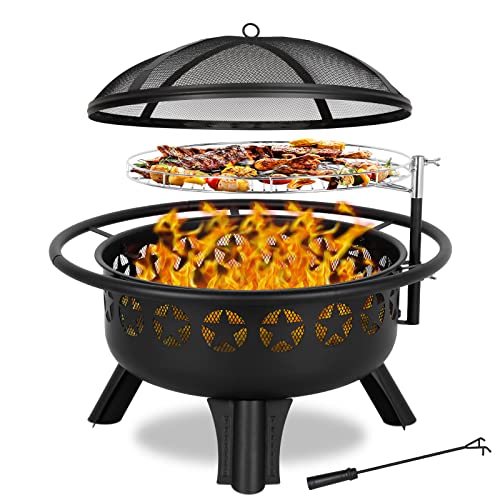
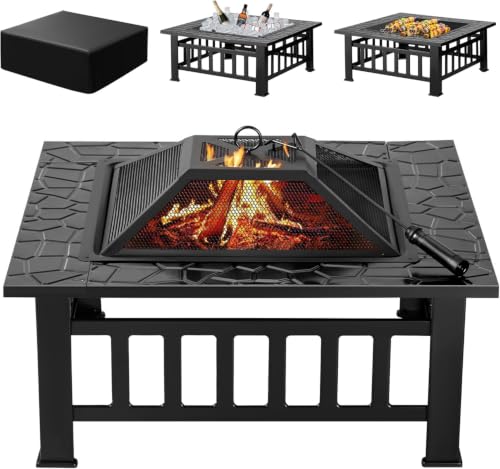
As an Amazon Associate we earn from qualifying purchases. Prices and availability can change; check the current price on Amazon.
What Fire Codes Typically Say
Many US jurisdictions base their rules on the International Fire Code, a model code that local governments adopt and often amend. In general terms, the model code distinguishes between open burning, recreational fires and portable outdoor fireplaces, with different clearances for each. Recreational fires, such as a backyard fire pit used for warmth or cooking, are commonly required to be at least 25 feet from structures or combustible material unless contained in an approved container, in which case a reduced distance such as 15 feet may apply. Portable outdoor fireplaces are commonly subject to a 15-foot clearance. Some jurisdictions accept smaller distances for listed appliances used per the manufacturer's instructions, while others are stricter or ban wood burning entirely.
Because these figures depend on which edition your area has adopted and on local amendments, treat them as a starting point and confirm with your local fire department or building office. The National Fire Protection Association also publishes consumer outdoor fire safety guidance.
Typical Fire Pit Clearance Guidelines
| Feature | Common Minimum Guideline | Notes |
|---|---|---|
| House or garage wall | 10 to 25 feet | Follow local code; more for vinyl siding |
| Wooden fence or shed | 10 feet or more | Treat as a combustible structure |
| Overhanging branches | 10 feet or more of open sky | More for low or dry branches |
| Property line | Varies by ordinance | Some areas require 10 to 25 feet |
| Seating | 3 to 7 feet from the fire edge | Comfortable warmth without scorching |
| Covered patio or pergola | Do not use wood fire under a roof | Unless the manufacturer allows it |
These are general guidelines compiled from common code language and manufacturer recommendations. They are not a substitute for your local rules.
Fire Pit Distance From Fences
Wooden fences are one of the most common things damaged by backyard fires. They are dry, often old and run right along the edge of the yard where people like to tuck a fire pit. Treat a wooden fence like a structure and give it at least 10 feet, more on windy sites. Vinyl fences can warp or melt from radiant heat even if they do not catch fire. Hedges and ornamental grasses along a fence add more fuel, so factor them into the distance as well.
Fire Pit Distance From Trees and Overhangs
Always check what is above the fire. Overhanging branches, utility lines, awnings, umbrellas, pergolas and roof eaves can all be ignited by rising heat and sparks. A common guideline is to keep at least 10 feet of clear space above the fire, and more if the branches are low, dry or coniferous. Evergreens such as pine, spruce and juniper contain resin and catch fire easily. Remember that a tree that looks far away in summer can drop dry leaves and needles around the pit in autumn.
Fire Pit Distance From Property Lines
Many local ordinances set minimum distances from property lines in addition to structure clearances, partly to protect neighbors from smoke as well as fire. These vary widely, so check your city or county code. Even where rules are relaxed, consider your neighbors: smoke drifting into an open window or onto a patio is a frequent cause of complaints. Placing the fire pit where prevailing winds carry smoke away from homes is a courtesy that also helps avoid conflict.
Fire Pits Near Decks and Under Covered Patios
Decks and covered patios raise special concerns. Wooden and composite deck boards can scorch or ignite from embers or radiant heat, and roofs trap heat and smoke. Most manufacturers say not to use wood-burning fire pits under any roof, pergola or covered patio. For the full picture on using a fire pit on decking, including heat shields and listed products, read our guide on whether you can put a fire pit on a deck.
Gas and Propane Fire Pit Clearances
Gas and propane fire pits do not throw sparks and embers the way wood fires do, so they are often allowed in places where wood fires are not. They still produce significant heat. Clearances are set by the manufacturer and the product's listing, typically specifying minimum distances to walls, combustible materials and overhead structures. Follow the installation manual exactly, keep propane tanks positioned as directed and never use a gas fire pit indoors or in an enclosed space because of carbon monoxide risk.
How to Choose a Safe Fire Pit Location
Start With Level, Non-Combustible Ground
Place the fire pit on a flat, stable surface such as pavers, gravel, concrete or bare soil. Clear a ring of at least a few feet around the pit of grass, leaves, mulch and other debris. Gravel or pavers around the pit create a non-combustible buffer zone.
Check the Wind
Notice the prevailing wind direction in your yard. Position the pit so smoke and sparks blow away from the house, neighbors and wooded areas. Avoid narrow side yards that funnel wind.
Look Up and Around
Check overhead for branches, wires and eaves, and look around for sheds, fences, woodpiles, propane tanks, play structures and vehicles. Keep firewood stacks well away from the fire pit, with only a small supply nearby.
Plan for Access and Water
Make sure you can reach the fire pit easily with a garden hose, and that people can walk around it without tripping. Leave enough room for seating at a comfortable distance and clear paths.
Seating Distance Around the Fire Pit
Chairs are usually comfortable 3 to 7 feet from the edge of the fire, depending on its size and heat. Closer seating risks burns, melted plastic chairs and sparks landing on clothing. Use non-flammable or fire-resistant outdoor furniture, and keep cushions and blankets back from the fire.
Safety Equipment to Keep Nearby
Keep a garden hose, a bucket of water or sand and a fire extinguisher within reach whenever the fire is lit. A spark screen helps contain embers, especially when burning softwoods. Use a long-handled poker so you do not need to reach over the flames. Choosing seasoned hardwood also reduces sparks and smoke; see our guide to the best wood to burn in a fire pit.
Rules for Renters and HOAs
If you rent, your lease may ban open flames, and homeowner associations often have their own rules about fire pit type, size and placement. Some allow only gas fire pits. Check these documents before buying or installing a fire pit, since violating them can lead to fines or insurance problems.
Homeowners Insurance Considerations
Some homeowners insurance policies have conditions related to fire pits or open burning. Following local codes and manufacturer instructions helps protect your coverage if something goes wrong. If in doubt, ask your insurer whether there are any requirements.
Measuring Clearance Correctly
Measure from the outside edge of the fire pit, not its center, to the nearest point of the structure or combustible material. For houses, that nearest point may be a roof overhang, a bay window, a gutter or a downspout rather than the foundation wall. For trees, measure to the nearest branch tip, both horizontally and vertically. Remember to include temporary items too: patio umbrellas, outdoor rugs, cushions, toys and parked vehicles can all end up closer to the fire than you planned. A tape measure and a few minutes before the first fire is all it takes.
Portable vs Permanent Fire Pits
A portable steel fire bowl gives you flexibility, because you can move it away from structures when the wind changes or the season dries out the yard. A permanent stone or block fire pit is fixed, so location decisions matter even more. Before building a permanent pit, check local permit requirements, mark utility lines by calling your local utility locating service, and choose a site that meets clearance rules in every direction. Once a permanent pit is built in the wrong spot, it is expensive to move.
Seasonal and Weather Factors
Safe distances on a calm, damp spring evening may not be enough on a dry, windy autumn night. During drought, high winds or low humidity, embers travel farther and vegetation ignites more easily. Many areas issue temporary burn bans during these periods, so check your local fire department's announcements before lighting a fire. Clean gutters of dry leaves and needles regularly during fire pit season, since gutters are a common landing spot for embers.
Placement for Small Yards
Small yards and townhome patios can make the recommended distances difficult to achieve. If you cannot meet the clearance for a wood fire, consider a gas or propane fire pit listed for reduced clearances, or a tabletop model designed for small spaces, following the manufacturer's requirements. Never compromise on overhead clearance or place a wood fire under a balcony. Sometimes the safest choice is skipping a wood fire in that location.
Checking Local Rules: A Simple Process
Start with your city or county website and search for open burning or recreational fire rules. Look for any permit requirement, permitted hours, approved fuels, clearance distances and burn ban notices. If anything is unclear, call the non-emergency number for your local fire department. Then check your HOA documents or lease, and finally the fire pit manual. Use the strictest requirement from all of these sources.
Safety Gear for a Well-Placed Fire Pit
These accessories add a layer of protection once you have chosen a safe spot. Details come from Amazon listings; we have not hands-on tested them.
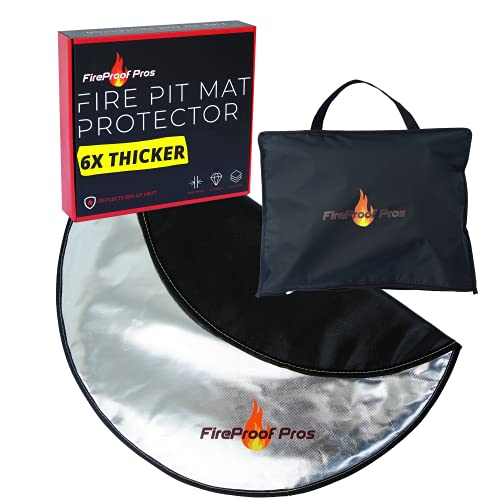
Fireproof Pros 36-Inch Fire Pit Protector
Best for: Fire pits on decks and patios
A heat-resistant mat designed to sit under a fire pit on a deck or patio.
- Helps protect surfaces from heat and embers
- 36-inch size
- Not a substitute for clearance rules

Hydream 36-Inch Fire Pit Spark Screen
Best for: Windy yards
A round spark screen with handle to contain embers.
- Reduces flying embers
- Handle for lifting
- Check size before buying

Porch Shield 600D Round Fire Pit Cover, 36 Inch
Best for: Protecting the pit between uses
A waterproof 600D fabric cover for round fire pits and tables.
- Keeps rain out
- Limits rust
- Only use when fully cool

32-Inch Heavy Duty Fire Pit Poker
Best for: Spreading and stirring embers
A long steel poker with a 16 mm shaft for stirring embers at a safe distance.
- Long reach
- Heavy-duty shaft
- Basic finish
Choose a pit that fits your space with our best wood burning fire pit guide.
Common Fire Pit Placement Mistakes
Common mistakes include placing the pit too close to the house to stay near the kitchen, setting it under a tree or pergola, using it on a wooden deck without a listed product and heat protection, ignoring the wind direction, building on dry grass or mulch, storing firewood next to the pit and assuming gas fire pits need no clearance at all.
Final Thoughts on Fire Pit Distance From House
A safe fire pit starts with location. Keep wood-burning fire pits at least 10 feet from your house and other structures, and follow your local code where it calls for 15 to 25 feet. Leave open sky above, keep fences and plants back, mind the wind and keep water ready. When the evening ends, follow our guide on how to put out a fire pit safely.
More Questions People Ask
How far should a fire pit be from a fence?
Treat a wooden fence like a structure and keep at least 10 feet away, more on windy sites or if your local code requires it.
Can I put a fire pit under a tree?
No. Keep at least 10 feet of clear space above the fire, more for low or dry branches and evergreens.
How far should a propane fire pit be from a house?
Follow the manufacturer listing and installation manual. Gas fire pits often have smaller clearances than wood fires, but they still need distance from walls and overhead structures.
Does a fire pit need to be on concrete or pavers?
Fire pits should sit on stable, non-combustible ground such as pavers, gravel, concrete or bare soil, with a cleared ring around them.
Frequently Asked Questions
How far should a fire pit be from a house?
Many manufacturers and fire departments recommend at least 10 feet, and widely used model fire codes call for 15 to 25 feet depending on the type of fire. Your local rules and the manufacturer's instructions take priority.
How far should a fire pit be from a fence?
Treat a wooden fence like any other combustible structure. A distance of at least 10 feet is a common minimum, and more is better for wood fences, vinyl fences and hedges.
Can a fire pit be under a tree?
No. Keep fire pits clear of overhanging branches. A common guideline is at least 10 feet of open sky above the fire, and more for low or dry branches.
Do gas fire pits need the same clearance?
Gas fire pits produce fewer embers, but they still need the clearances listed by the manufacturer for walls, overhead structures and combustibles. Always follow the installation manual.
Do I need a permit for a backyard fire pit?
It depends on where you live. Some cities require permits or ban wood burning, while others allow small recreational fires with conditions. Check with your local fire department.