

Last updated: October 2026 · Written by the LawnVibe editorial team.
Nothing beats the crackle, glow and smell of a real wood fire on a cool evening. A wood-burning fire pit brings that campfire experience to your backyard, gives off more radiant heat than most propane units and lets you roast marshmallows or grill dinner over the coals. The best wood burning fire pit for you depends on how many people gather around it, whether you want to cook over it, the space you have and how long you want it to last outdoors. A traditional fire pit is simple, but design details make a real difference.
Our picks are based on published product information from the official Amazon listings and established outdoor fire safety guidance, not on hands-on testing. If smoke reduction is your top priority, see our dedicated guide to the best smokeless fire pit.
Our Top Picks

OutVue 36-Inch Wood Burning Fire Pit with 2 Grills
Best for: Backyard fires and grilling for groups
A large 36-inch steel fire bowl supplied with two grill grates, plus accessories per the listing.
- Big fire area for groups
- Cooking grates included
- Large footprint
- Steel needs a cover to limit rust
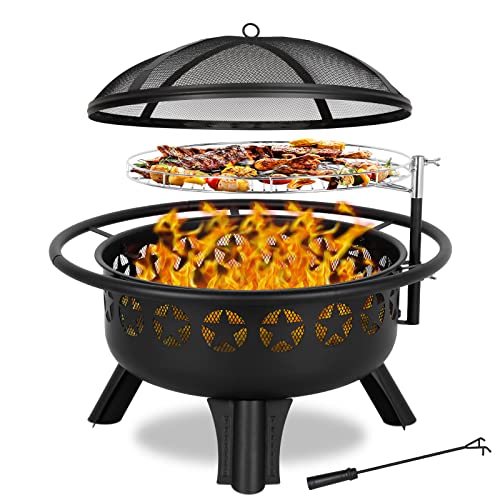
Hykolity 2-in-1 31-Inch Fire Pit with Grill
Best for: Campfire-style cooking at home
A 31-inch fire pit with a cooking grate and spark screen for both fires and grilling.
- Grill and spark screen included
- Mid-size
- Thin steel compared with premium pits
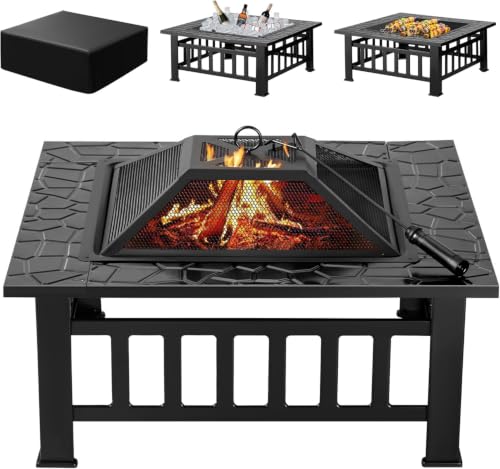
Devoko 32-Inch Square Fire Pit Table
Best for: Patios with a table-height setup
A square metal fire pit table with a central bowl and cover, doubling as a patio table.
- Table surface when not burning
- Spark screen and cover
- Smaller fire bowl than open rings
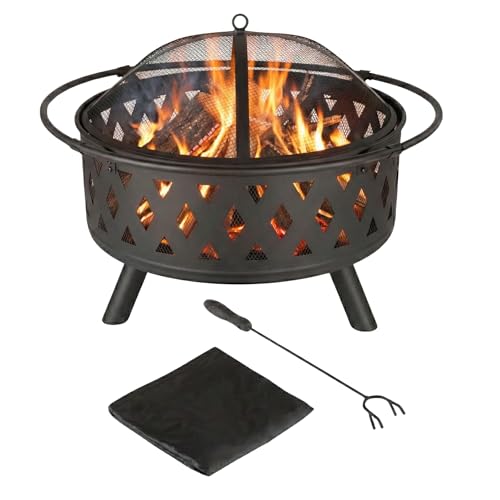
Pure Garden 32-Inch Cross Weave Fire Pit
Best for: Low-cost backyard fires
A 32-inch steel fire bowl with decorative cross-weave sides and spark screen.
- Affordable
- Decorative glow pattern
- Lighter-gauge steel
- Shorter lifespan if left uncovered

Gas One 22-Inch Wood Burning Fire Pit
Best for: Camping, small patios and moving around
A compact 22-inch fire pit with mesh lid and poker.
- Compact and light
- Mesh spark lid
- Small fire, less heat

Breeo X Series 24 Corten Steel Smokeless Fire Pit
Best for: Buy-once owners who want longevity
A heavy Corten steel smokeless fire pit that develops a protective patina, from Breeo.
- Thick Corten steel
- Smokeless airflow design
- Premium cost
- Heavy to move

Solo Stove Bonfire with Stand, 19.5 Inch
Best for: Reducing smoke on patios
A double-wall stainless smokeless fire pit with a stand to reduce heat on the surface below.
- Low-smoke secondary burn
- Stand included
- Needs short, dry logs
- Smaller fire area
Comparison Table
| # | Product | Best for | Link |
|---|---|---|---|
| 1 | OutVue 36-Inch Wood Burning Fire Pit with 2 Grills | Backyard fires and grilling for groups | Check price |
| 2 | Hykolity 2-in-1 31-Inch Fire Pit with Grill | Campfire-style cooking at home | Check price |
| 3 | Devoko 32-Inch Square Fire Pit Table | Patios with a table-height setup | Check price |
| 4 | Pure Garden 32-Inch Cross Weave Fire Pit | Low-cost backyard fires | Check price |
| 5 | Gas One 22-Inch Wood Burning Fire Pit | Camping, small patios and moving around | Check price |
| 6 | Breeo X Series 24 Corten Steel Smokeless Fire Pit | Buy-once owners who want longevity | Check price |
| 7 | Solo Stove Bonfire with Stand, 19.5 Inch | Reducing smoke on patios | Check price |
A Closer Look at Each Pick
OutVue 36-inch with grills, best overall. The 3-in-1 design makes the most of patio space: a fire pit on chilly evenings, a grill for casual cookouts and a table when the lid is on. For families who entertain, that versatility is hard to beat. Check current price on Amazon
Hykolity 31-inch 2-in-1, best for cooking. The swivel grate is the highlight, letting you swing food over the flames or away from them, much like a campfire grill. Check current price on Amazon
Devoko 32-inch square table, best fire pit table. A square table format sits neatly within a patio furniture arrangement, and the included cover protects it between uses. Check current price on Amazon
Pure Garden 32-inch, best budget. A simple bowl with decorative cutouts that glow at night, ideal if you just want a fire without extra features. Check current price on Amazon
Gas One 22-inch, best portable. Compact enough for camping trips and small yards, with a mesh lid to contain sparks. Check current price on Amazon
Breeo X Series 24, best premium. Heavy corten steel and a smoke-reducing design for buyers who want a fire pit built to stay outdoors for many years. Our comparison of Solo Stove vs Breeo covers premium options in more depth. Check current price on Amazon
Solo Stove Bonfire with stand, best smokeless alternative. If smoke drifting toward your house or neighbors is the main complaint, a double-wall smokeless design reduces visible smoke once the fire is hot. It needs short, dry hardwood. See our best smokeless fire pit guide for more options. Check current price on Amazon
Types of Wood Burning Fire Pits
Fire bowls. Simple round steel bowls on legs. Affordable and easy to move, but heat and sparks radiate freely, so a screen helps.
Fire pits with grills. Bowls with cooking grates, sometimes swiveling, for grilling over wood coals.
Fire pit tables. Square or round pits set into a table-height frame, often with a lid that turns them into a table. They look tidy but put the fire higher, which warms legs less.
Smokeless fire pits. Double-walled stainless or steel pits that use secondary combustion to burn off smoke. Cleaner but pricier; see our explainer on how smokeless fire pits work.
Portable fire pits. Smaller, lighter pits that travel to campsites and fit small spaces.
In-ground and masonry pits. Permanent stone or block fire rings built into the landscape.
How to Choose the Best Wood Burning Fire Pit
Size and Seating
Match diameter to your group. A 22- to 30-inch pit suits a couple or small family; 32 to 42 inches suits gatherings of six or more. Allow room for chairs at a comfortable distance, usually a few feet back from the rim.
Material and Thickness
Thicker steel resists warping and burn-through. Powder coating and high-temperature paint protect against rust but wear over time. Stainless steel and corten steel last longest outdoors. Cast iron holds heat well but is heavy.
Cooking Features
If you plan to cook, look for sturdy grates, adjustable or swiveling cooking surfaces and enough space for coals. A lid or cover helps when the pit is not in use.
Spark Control
A mesh spark screen or lid reduces flying embers, which matters near trees, decks or dry grass.
Ash Management
Removable ash pans or drain holes make cleanup easier and prevent water pooling that causes rust.
Portability
Lighter pits are easier to move or take camping; heavy steel pits stay put and last longer.
Where to Place a Wood Fire Pit
Place the fire pit on a level, non-combustible surface such as pavers, concrete, gravel or a fire pit mat. Keep at least 10 feet, and often more depending on local codes, from your house, fences, sheds, overhanging branches and vehicles. Avoid placing it under covered porches or pergolas. Wooden decks are a special case; read our guide on whether you can put a fire pit on a deck before doing so. Check with your local fire department or municipality, as many areas have burn bans, permit requirements or restrictions on open burning, especially during dry seasons.
Choosing and Storing Firewood
Burn only seasoned hardwood, wood that has been split and dried for at least six months to a year. Oak, hickory, ash, maple and cherry burn hot and relatively clean. Softwoods like pine burn fast and pop more. Never burn treated, painted or stained lumber, plywood, pallets with chemical treatment, trash or plastics, which release toxic smoke. Store firewood off the ground, covered on top but open on the sides for airflow, away from the house to discourage pests.
How to Build and Light a Fire
Start with crumpled paper or natural fire starters in the center, add a small teepee or log-cabin structure of dry kindling, and place two or three small split logs around it. Light the base and add larger logs gradually as the fire establishes. Never use gasoline or lighter fluid to start or revive a fire. Keep the fire a manageable size, below the rim of the pit.
Fire Pit Safety
Always keep a bucket of water, a hose or a fire extinguisher nearby. Supervise the fire at all times and keep children and pets at a safe distance. Do not burn on windy days. Use a screen when embers fly. When finished, let the fire burn down, spread the coals, douse them thoroughly with water and stir until everything is cool to the touch. Ashes can stay hot for a long time, so store them in a metal container away from the house. The U.S. Fire Administration and local fire departments publish outdoor fire safety guidance worth reading.
Cooking Over a Wood Fire
Wait for flames to die down to glowing coals before grilling; coals give steady heat while flames char food. Use a grate positioned several inches above the coals and move food around to manage heat. Hardwoods add a pleasant smoky flavor. Classic options include hot dogs, burgers, kebabs, foil-packet vegetables and, of course, s'mores. Clean the grate after it cools.
Maintenance and Longevity
Remove ashes after each use once fully cold, since wet ash is corrosive. Keep the fire pit covered or stored when not in use, and tip it to drain water if it has no drainage holes. Touch up painted surfaces with high-temperature paint when chips appear. Corten steel needs no painting; its rust patina is protective. Inspect legs and welds periodically for weakness.
Wood vs Propane Fire Pits
Wood fire pits offer authentic crackle, aroma, more radiant heat and cooking options, and they are generally cheaper to buy. Propane fire pits are cleaner, smoke-free, instant on and off, and allowed in some places where wood burning is restricted. If you want a real campfire experience and your local rules allow it, wood is hard to beat.
Fire Pit Accessories Worth Having
A few accessories make a wood fire pit safer and more enjoyable. A long fire poker lets you move logs without leaning over the flames. Heat-resistant gloves protect your hands when adding wood or adjusting grates. A spark screen with a handle can be lifted with the poker. A fitted cover keeps rain and snow out of the bowl between uses. A heat-resistant fire pit mat protects patios and decks from heat and embers. A log rack keeps a supply of dry wood close by, and a metal ash bucket with a lid makes cleanup safe.
Heat Output and Comfort
Wood fire pits radiate heat mostly sideways and upward, so the size of the fire and the height of the pit affect how warm guests feel. Low bowls warm legs and feet well, while raised fire pit tables put the fire at seated chest height but warm the lower body less. Larger fires produce more heat but also more smoke and sparks, so it is usually better to add smaller logs regularly than to build a huge fire. Seating in a circle about three to four feet from the edge balances warmth and safety.
Dealing With Smoke
All wood fires produce some smoke, especially when lighting and when adding fresh logs. To minimize it, burn dry, seasoned hardwood, build the fire with good airflow, avoid smothering it with too many logs at once and keep it burning hot rather than smoldering. Position seating so the prevailing wind carries smoke away from guests and your neighbors' windows. If smoke is a major concern, a double-walled smokeless design is worth the extra cost.
Fire Pits in Winter
Many people enjoy their fire pits most in late autumn and winter. Clear snow from around the pit, make sure the base is stable on frozen ground and keep a path to it clear. Cold metal can become brittle, so avoid dropping heavy logs onto a frozen bowl. After each use, cover the pit or tip it to keep meltwater from pooling and freezing inside.
Checking Local Burn Rules
Before buying, look up your city or county rules on recreational fires. Some areas require fires to be in an approved container, set minimum distances from structures, limit burning to certain hours or prohibit wood burning entirely on poor air-quality days. Homeowners associations may also have rules. A quick call to the local fire department avoids fines and keeps neighbors happy.
Common Mistakes
Common mistakes include placing the pit too close to buildings or trees, burning green or treated wood, using lighter fluid, leaving the fire unattended, skipping a spark screen near combustibles, letting rain sit in the bowl and dumping hot ashes into plastic bins.
The Bottom Line on the Best Wood Burning Fire Pit
For most families, the OutVue 36-inch with grills offers the best mix of fire, cooking and table space. Choose the Hykolity for campfire-style cooking, the Devoko for a square patio table, the Pure Garden for a budget-friendly bowl, the Gas One for portability and the Breeo X Series 24 for a premium pit built to last outdoors. Whatever you choose, place it on a non-combustible surface with plenty of clearance, burn only seasoned hardwood and always put the fire out completely.
More Questions People Ask
What is the best material for a wood burning fire pit?
Thick steel, Corten (weathering) steel, cast iron and stainless steel are all durable. Thin painted steel is cheaper but tends to rust and burn through sooner, especially if left uncovered.
How big should a wood burning fire pit be?
A 22 to 24-inch fire pit suits two to four people, while 30 to 36 inches suits larger groups and bigger logs. Leave room for seating about 3 to 7 feet from the fire edge.
Are smokeless fire pits really smokeless?
They produce noticeably less smoke once the fire is hot and burning dry wood, thanks to a secondary burn of smoke gases. They still smoke when lighting, when overloaded or when burning wet wood.
Can you cook on a wood burning fire pit?
Yes. Many fire pits include a cooking grate, and wood fires are good for grilling, skewers and cast iron cooking. Use hardwood, not treated or painted wood.
Frequently Asked Questions
What size wood burning fire pit should I buy?
For two to four people, 22 to 30 inches is usually enough. For groups of six or more, look at 32 to 42 inches. Leave at least 10 feet of clearance from buildings and overhanging branches.
Is a wood burning or propane fire pit better?
Wood gives real crackle, aroma and more heat, and lets you cook over the fire. Propane is cleaner, instant on and off, and allowed in more places. Many people choose based on local rules and how they plan to use the pit.
What is the best wood to burn in a fire pit?
Seasoned hardwoods such as oak, hickory, ash and maple burn hotter and cleaner with less smoke. Avoid green wood, treated lumber, painted wood and trash.
Can I put a wood burning fire pit on grass?
It can scorch grass and is a fire risk. Place it on a non-combustible surface such as pavers, gravel or a fire pit mat, and check local rules.
Do wood fire pits need a spark screen?
A spark screen or mesh lid is strongly recommended to reduce flying embers, especially near trees, decks or dry vegetation.