
Anyone who drives a Jeep Wrangler knows how important the brakes are, especially if you love off-roading or live in hilly areas. Over time, air can get into the brake lines, making your brake pedal feel soft or “spongy. ” This means your brakes don’t work as well, and that can be dangerous.
Bleeding the brakes on your Jeep Wrangler is not difficult, but it does need patience, the right tools, and some good tips to avoid mistakes. If you’re new to car maintenance or want to do it yourself, this guide will walk you through every step with clear advice and practical examples.
Why Bleeding Brakes Matters
When you press the brake pedal, you expect your Jeep to stop quickly. The brake system works by moving brake fluid through lines to each wheel. If there is air in the lines, the pedal will feel soft because air can be compressed, unlike fluid. The main reasons you might need to bleed your brakes:
- After replacing brake lines or calipers
- If the brake fluid is old or dirty
- Whenever the pedal feels soft or squishy
- After heavy off-road use or deep water crossings
Ignoring a spongy pedal can lead to longer stopping distances and less control on the road or trail. For a Jeep Wrangler, which often faces tough conditions, keeping the brakes sharp is critical.
Understanding The Jeep Wrangler Brake System
Before you start, it helps to know a bit about the Wrangler’s brake setup. Most modern Jeep Wranglers (like the JK, JL, and Gladiator models) use a hydraulic brake system with:
- Master cylinder (by the brake pedal)
- Brake lines running to each wheel
- Front disc brakes (rotors and calipers)
- Rear brakes, which can be disc or drum, depending on the model
Some Wranglers also have ABS (Anti-lock Braking System), which adds complexity. Bleeding brakes with ABS is still possible at home, but you may need extra steps or tools. Always check your Wrangler’s manual for exact details.
Tools And Supplies You’ll Need
Having the right tools makes the job much easier. Here’s what you should have ready:
- Box-end wrench (usually 10mm or 11mm for bleeder screws)
- Clear plastic tubing (about 2 feet, fits over bleeder)
- Catch bottle (to hold old fluid)
- Fresh brake fluid (check your manual; usually DOT 3 or DOT 4)
- Turkey baster or syringe (for removing old fluid from master cylinder)
- Jack and jack stands (to lift the Jeep safely)
- Wheel chocks (so it doesn’t roll)
- Gloves and safety glasses
- Brake cleaner (for cleaning up spills)
- Assistant (optional, but helpful)
Non-obvious tip: Using a clear tube and bottle not only makes it easier to see bubbles, but also prevents fluid from spraying onto your driveway or garage floor.
How Often Should You Bleed Your Wrangler’s Brakes?
Most Jeep owners bleed their brakes every 2-3 years or whenever they change brake parts. However, if you do a lot of off-roading, river crossings, or towing, consider bleeding them once a year. Water or dirt can get into the lines, especially after tough trails.
Getting Ready: Safety And Prep
Safety always comes first. Make sure your Jeep is parked on a flat surface, the engine is off, and the wheels are chocked. Never trust just a jack—always use jack stands. Wear gloves and eye protection because brake fluid is toxic and can damage paint.
If your Jeep has been running, let the brakes cool down before starting. Hot brake parts can burn you and make fluid boil.
Pro tip: Lay old towels or cardboard under the brake area to catch any drips.
Step-by-step Guide: Bleeding Brakes On A Jeep Wrangler
Let’s break the process into clear, easy steps. This guide covers the most common method: the two-person “pump and hold” technique. Later, we’ll mention other methods like vacuum or pressure bleeding.
1. Lift The Jeep And Remove Wheels
- Loosen the lug nuts on all wheels before lifting the Jeep.
- Raise the Jeep using a jack, then place it securely on jack stands.
- Remove the wheels for easy access to the brake calipers or drums.
2. Check And Top Off Brake Fluid
- Open the hood and locate the brake master cylinder (usually on the driver’s side firewall).
- Clean the cap area to prevent dirt from falling in.
- Remove the cap and use a turkey baster to remove as much old fluid as possible.
- Fill with fresh brake fluid to the “MAX” line.
Insight: Never reuse old brake fluid. It absorbs water and can cause rust inside your brake system.
3. Find The Bleeder Screws
- Each caliper (or drum) has a small bleeder screw (usually at the top).
- Spray with penetrating oil if they look rusty.
- Make sure you use the correct size wrench to avoid rounding them off.
4. Attach The Tubing And Catch Bottle
- Slide the clear tubing over the bleeder screw.
- Place the other end in your catch bottle (partially filled with brake fluid to prevent air from flowing back in).
5. Follow The Correct Bleeding Order
Most Jeep Wranglers use a diagonal bleeding order. This means you start with the wheel farthest from the master cylinder and work your way closer. For left-hand drive Wranglers:
- Rear passenger side
- Rear driver side
- Front passenger side
- Front driver side
Check your manual if you’re unsure—some older models use a different order.
6. Bleeding Each Brake
Now the actual bleeding begins:
- Ask your helper to sit in the driver’s seat.
- Tell them to pump the brake pedal slowly 3-5 times and then hold it down.
- While the pedal is held, open the bleeder screw about a quarter turn.
- Old fluid and air will flow into the tube. Close the screw before your helper releases the pedal.
- Repeat until only clear fluid with no bubbles comes out.
- Top off the master cylinder after each wheel—never let it run dry.
Non-obvious tip: If you don’t close the bleeder before your helper lifts the pedal, air can get sucked back in. Communication is key!
7. Repeat For All Wheels
Move through the bleeding order, repeating the process for each wheel. Always check fluid levels between each wheel.
8. Finish Up
- Double-check that all bleeder screws are tight (but don’t overtighten).
- Clean up any spilled fluid with brake cleaner.
- Reinstall the wheels, hand-tighten the lug nuts, lower the Jeep, then torque the nuts to spec.
After the job, pump the brake pedal a few times to make sure it feels firm. Test the brakes at low speed in a safe area before normal driving.
Alternative Bleeding Methods
Sometimes you don’t have a helper, or you want an easier way. Here are some other methods Wrangler owners use:
One-person Bleeder Kits
These kits use a one-way valve that lets you pump the brake pedal yourself. They’re cheap and easy, but you still need to keep the fluid topped up.
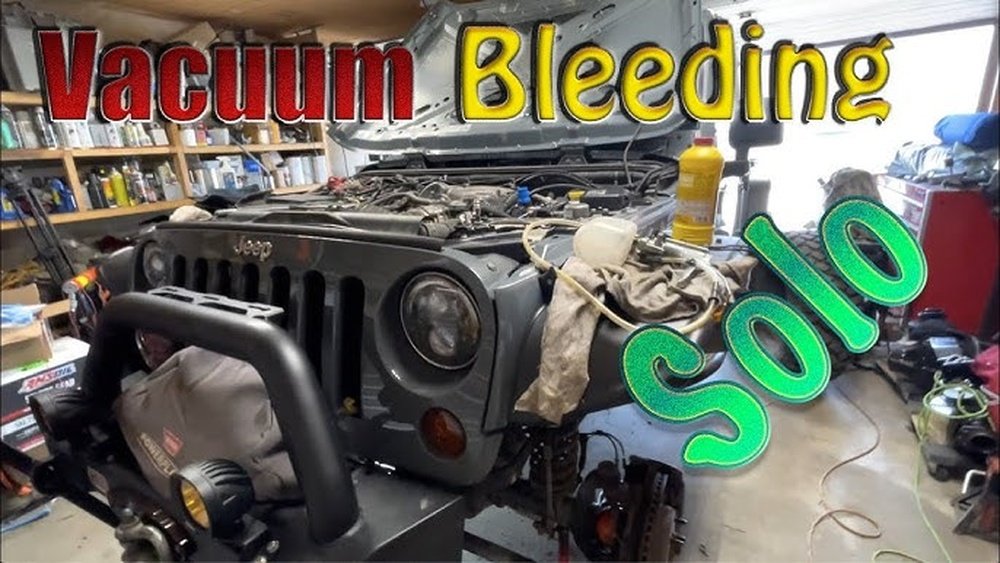
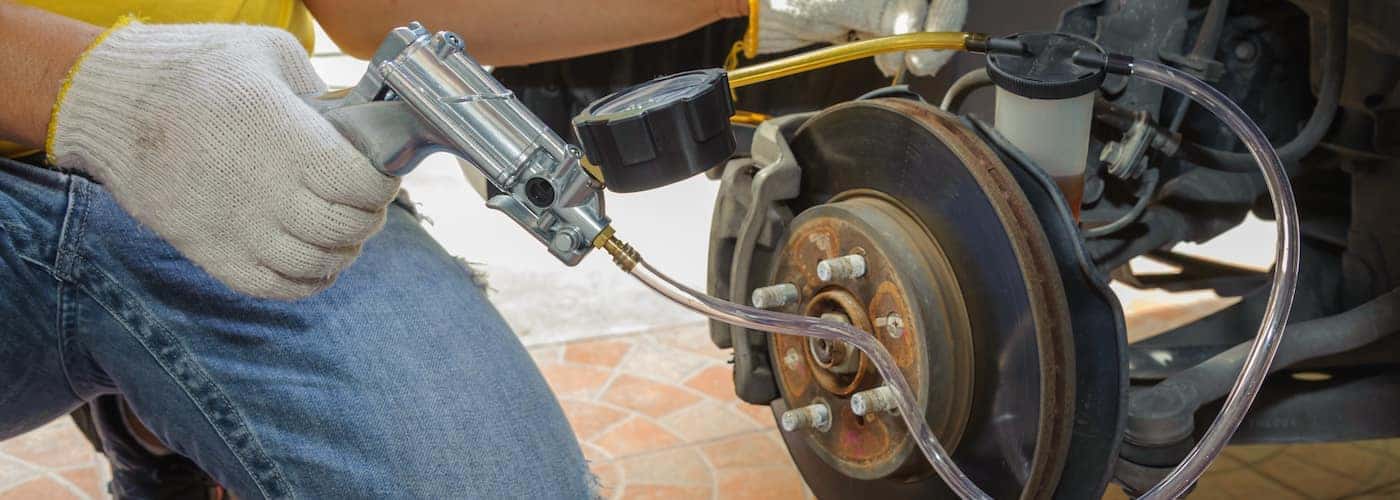
Vacuum Bleeding
A vacuum pump pulls fluid and air out through the bleeder. This is faster and can be done solo. The downside: cheap pumps sometimes suck in air around the bleeder threads, making it look like you have bubbles when you don’t.
Pressure Bleeding
This tool attaches to the master cylinder and pushes fluid through the system under pressure. It’s the fastest and best way, especially if you bleed brakes often or have ABS. However, these kits are more expensive.
| Method | Helper Needed? | Cost | Best For |
|---|---|---|---|
| Pump & Hold | Yes | Low | Beginners, DIYers |
| Vacuum Bleeder | No | Medium | Solo jobs, quick fixes |
| Pressure Bleeder | No | High | Frequent maintenance, ABS systems |
| One-person kit | No | Low-Medium | Simple jobs, emergencies |
Common Mistakes To Avoid
Bleeding brakes sounds simple, but many beginners make the same mistakes. Here’s what to watch out for:
1. Letting The Master Cylinder Run Dry
This can suck air into the whole system, forcing you to start over.
2. Not Cleaning The Bleeder Area First
Dirt can fall inside and clog the system.
3. Opening The Bleeder Too Far
Only a quarter turn is needed. More can let air in around the threads.
4. Using The Wrong Brake Fluid
Jeep Wranglers usually use DOT 3 or DOT 4. Mixing types can damage seals.
5. Not Checking For Leaks
After bleeding, look for drips or wet spots at all four corners.
6. Overtightening Bleeder Screws
This can strip the threads or snap the screw.
7. Forgetting The Proper Order
Bleeding in the wrong order can leave air trapped.
Special Tips For Jeep Wrangler Owners
Jeep Wranglers face unique challenges. Here are some Wrangler-specific tips:
- Off-road use: After deep water crossings, air or water may enter brake lines. Check for a soft pedal.
- Lifted Wranglers: Long brake lines on lifted Jeeps can trap air at high points. Gently tap the lines with a rubber mallet during bleeding to dislodge trapped bubbles.
- ABS systems: If you replaced ABS components, you may need a scan tool to cycle the ABS pump. Most routine bleeding can be done without it.
Example: After a tough trail, a Wrangler owner noticed the pedal went soft. Bleeding the brakes revealed dirty fluid and air bubbles, restoring normal pedal feel.
When To Replace Brake Fluid
Bleeding removes air, but sometimes the fluid itself is the problem. Old brake fluid turns dark and absorbs water, which lowers its boiling point. This can cause brake fade when going downhill or towing.
Signs you need to replace brake fluid:
- Fluid is brown or black, not clear
- Moisture test shows over 2% water content
- Unusual smell or gritty feel
Pro tip: Use a brake fluid tester if you do a lot of water crossings. Fresh fluid can save your brakes on hot descents.
| Fluid Condition | Color | Action Needed |
|---|---|---|
| Good | Clear or light amber | No change needed |
| Old | Dark brown | Flush and replace |
| Contaminated | Cloudy or milky | Flush immediately |
How Bleeding Brakes Affects Performance
A well-bled brake system gives you:
- Shorter stopping distances
- More pedal control
- Less fade on long hills
- Fewer repairs down the line
For Jeep Wranglers, this means safer highway driving and better control on the trail. If you’ve ever felt your pedal sink toward the floor, you know how uncomfortable that is. Fresh fluid and no air make a world of difference.
How Long Does It Take?
For a first-timer, bleeding all four brakes on a Jeep Wrangler usually takes 60–90 minutes. With practice, you can do it in under an hour. Vacuum or pressure bleeders can cut that time almost in half.
If you’re replacing fluid completely (not just bleeding air), allow more time to push all the old fluid out.

Credit: www.linestogo.com
What To Do If The Pedal Still Feels Soft
Sometimes, bleeding doesn’t fix the problem. Here’s what to check next:
- Leaks: Inspect all brake lines, hoses, and calipers for wet spots.
- Master cylinder: If it’s leaking internally, the pedal will stay soft.
- ABS system: Air can get trapped in the ABS pump. Some problems need a scan tool to fix.
- Flexible hoses: Old hoses can bulge under pressure, making the pedal soft.
- Wheel bearings: Loose bearings can give a false “soft pedal” feel.
If in doubt, ask a trusted mechanic to inspect the system.
How To Dispose Of Old Brake Fluid
Never pour brake fluid down the drain or onto the ground. Collect it in a clean, sealed container and take it to your local hazardous waste disposal center or auto parts store. Many will accept used fluids for free.
Credit: www.twinlakescdjr.com
Cost Comparison: Diy Vs Shop Bleeding
Wondering if it’s worth doing yourself? Here’s a simple comparison of typical costs:
| Method | Cost (USD) | Time Needed | Skill Level |
|---|---|---|---|
| DIY (manual) | $10–$40 | 1–2 hours | Beginner |
| DIY (vacuum/pressure) | $30–$100 (tools) | 30–60 min | Intermediate |
| Professional shop | $80–$150 | 1–2 hours (including wait) | None |
DIY saves money and helps you understand your Jeep better, but a shop may be needed if you have ABS problems or stubborn issues.
The Best Brake Fluids For Jeep Wrangler
Not all brake fluids are the same. Most Jeep Wranglers use DOT 3 or DOT 4. DOT 4 has a higher boiling point, which is helpful for heavy towing or mountain driving. Never use DOT 5 unless your manual says so—it’s silicone-based and not compatible with most Wranglers.
Top brands:
- Prestone DOT 4
- Castrol GT LMA
- Motul 600 (for extreme use)
Check your owner’s manual before buying. Mixing types can damage seals and reduce braking power.
Signs You Need To Bleed Your Brakes
How do you know it’s time? Watch for these signs:
- Spongy or soft pedal
- Longer stopping distances
- Brake warning light
- Visible air bubbles in fluid reservoir
- Recent repairs to brake parts
If you notice any of these, don’t wait—bleed your brakes soon.
Bleeding Brakes With Abs: What’s Different?
Modern Jeep Wranglers often have ABS. For routine bleeding, you can use normal methods. But if you replaced ABS parts or have a very stubborn air bubble, you may need a scan tool to run the ABS pump and cycle out trapped air.
Tip: If you do a lot of DIY work, some scan tools can activate the ABS pump for around $100–$200.
For most jobs, careful bleeding (and maybe a second round) is enough.
How To Make Brake Bleeding Easier
- Soak bleeder screws with penetrating oil the night before.
- Use a snug-fitting box wrench to avoid rounding screws.
- Keep your work area clean to prevent dirt in the system.
- Tap brake lines gently with a rubber mallet to free trapped bubbles.
- Have all tools and supplies ready before starting.
These small steps save time and headaches.
Wrapping Up: Confidence On Every Drive
Bleeding the brakes on your Jeep Wrangler isn’t just about maintenance—it’s about safety and control, both on the highway and off the beaten path. With the right tools, a bit of patience, and the clear steps above, you can keep your Wrangler’s brakes firm and reliable.
Remember to check fluid levels, use the correct bleeding order, and don’t rush. The feeling of a confident, solid brake pedal is worth every minute.
If you ever feel unsure or run into problems you can’t solve, don’t hesitate to reach out to a trusted mechanic or Jeep community forum. For more details on brake systems, the official Wikipedia Brake Bleeding Page offers helpful background.

Credit: www.youtube.com
Frequently Asked Questions
How Often Should I Bleed My Jeep Wrangler’s Brakes?
You should bleed your brakes every 2–3 years, or whenever the pedal feels soft. If you off-road or tow often, do it yearly.
Can I Bleed Brakes Alone, Or Do I Need A Helper?
You can use a vacuum or pressure bleeder, or a one-person kit, to bleed brakes alone. The classic method needs a helper to pump the pedal.
What Type Of Brake Fluid Does A Jeep Wrangler Use?
Most Wranglers use DOT 3 or DOT 4 brake fluid. Check your owner’s manual to be sure.
What If I Can’t Get All The Air Out Of My Brakes?
Check for leaks, make sure you’re using the right bleeding order, and try tapping the lines. If you have ABS, you may need a scan tool to cycle the pump.
Is It Safe To Drive With A Soft Brake Pedal?
No. A soft pedal means there’s air or a problem in the system. Fix it before driving to stay safe.