
Growing your own cilantro from seed is more rewarding than buying bunches from the grocery store. The aroma of freshly snipped leaves, the satisfaction of watching tiny sprouts turn into a lush herb patch—these joys are simple but real. Cilantro, also known as coriander in many parts of the world, is a cool-weather annual that can be a bit tricky for beginners.
But with the right guidance, anyone can master the process.
This article is your complete guide to growing cilantro from seed, whether you want to fill window boxes, garden beds, or even indoor pots. You’ll learn how to choose seeds, prepare your soil, avoid common pitfalls, and keep your cilantro thriving.
Along the way, you’ll find practical tips, tables to help you compare conditions, and answers to questions you might not even know you had. Let’s get your cilantro journey started.
Why Grow Cilantro From Seed?
Cilantro is one of those herbs that rarely travel well. The leaves wilt fast after harvest, and store-bought bunches often lose flavor. Growing from seed means you get fresher leaves, more intense aroma, and a constant supply. Unlike other herbs, cilantro does not always transplant well. Direct seeding ensures healthier, more robust plants.
Another benefit: continuous harvests. By sowing seeds every few weeks, you can have a steady supply for salads, salsas, and curries. And if you let some plants flower, you’ll also get coriander seeds—a two-in-one deal.
Understanding The Cilantro Plant
Cilantro (Coriandrum sativum) is a member of the Apiaceae family, related to parsley and carrots. The leaves and stems are called cilantro, while the seeds are called coriander. This plant prefers cooler temperatures and tends to bolt (go to seed) in hot weather. This makes timing and care important.
Cilantro grows quickly, usually ready for the first harvest in about 3 to 4 weeks. Most varieties reach 12 to 24 inches tall. It has feathery, bright green leaves and small white or pink flowers when mature. The root system is shallow, which means soil preparation and watering are key.
Choosing The Right Cilantro Variety
Not all cilantro is the same. Some varieties are bred to resist bolting, while others are better for seed production. Here’s a quick guide to popular types:
| Variety | Main Feature | Best For |
|---|---|---|
| Slow Bolt | Resistant to early flowering | Hotter climates, longer leaf harvest |
| Santo | Uniform growth, aromatic | General culinary use |
| Calypso | Very slow to bolt | Continuous leaf harvest |
| Leisure | Fast-growing, strong flavor | Quick harvests, short seasons |
| Indian Summer | Heat tolerant, good for seeds | Coriander seed production |
For most home gardeners, Slow Bolt or Calypso are excellent choices. If you want both leaves and seeds, try a mix or plant in succession.
When To Plant Cilantro Seeds
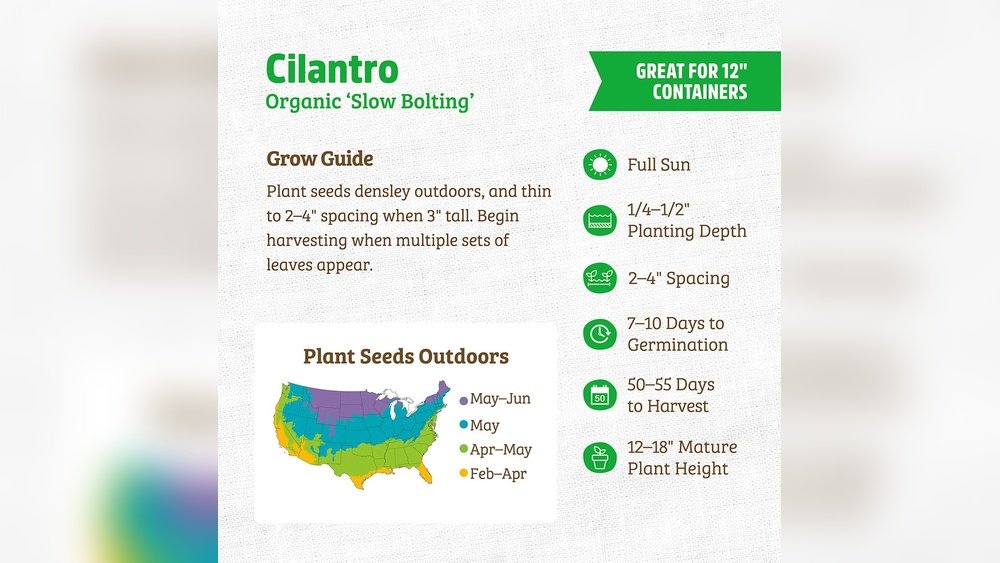
Cilantro loves cool weather. For best results, sow seeds in early spring or late summer. The ideal soil temperature is 50°F to 68°F (10°C to 20°C). In warmer regions, plant as soon as the last frost passes and again in late summer for a fall crop.
In hot climates, cilantro bolts quickly if temperatures rise above 75°F (24°C). For a steady supply, sow seeds every 2-3 weeks during the cool season.
Preparing The Soil
Healthy cilantro starts with healthy soil. This herb prefers well-drained, loamy soil with plenty of organic matter. Aim for a soil pH between 6.2 and 6.8.
Here’s how to get your soil cilantro-ready:
- Remove weeds and debris. Cilantro seedlings are delicate and can be crowded out easily.
- Loosen the soil to a depth of 8-10 inches.
- Mix in compost or well-rotted manure to improve fertility and drainage.
- Level and rake the surface so seeds make good contact with the soil.
If your soil is heavy clay or very sandy, amend it with compost or peat moss. Avoid soils that stay soggy after rain—cilantro hates wet feet.
How To Sow Cilantro Seeds
The seeds of cilantro are actually two seeds in one husk. You can plant them whole or gently crush them for better germination.
Step-by-step guide:
- Soak seeds overnight for faster sprouting. This softens the husk.
- Make shallow furrows (rows) about 1/4 inch deep and 6 inches apart.
- Space seeds 1 to 2 inches apart in the row. Don’t sow too thickly; thin seedlings later if needed.
- Cover lightly with soil and press gently.
- Water well using a gentle spray to avoid washing seeds away.
Germination usually takes 7 to 10 days. Keep the soil moist but not soggy during this period.

Credit: survivalgardenseeds.com
Caring For Seedlings And Young Plants
Once your seeds sprout, cilantro grows fast. But the first few weeks are critical.
Watering
Cilantro needs consistent moisture. Water when the top inch of soil feels dry, but avoid waterlogging. Drip irrigation or a soaker hose is ideal, as overhead watering can encourage disease.
Thinning
When seedlings are 2 inches tall, thin them to 4-6 inches apart. This gives each plant space to grow. Don’t pull out unwanted seedlings—snip them at soil level to avoid disturbing roots.
Feeding
Cilantro is not a heavy feeder, but a light dose of balanced fertilizer (like 10-10-10 NPK) helps. Apply once when seedlings have a few true leaves, then every 4-6 weeks if needed.
Mulching
A thin layer of organic mulch (like straw or shredded leaves) keeps soil cool and moist. This helps prevent bolting in hot spells.
Light And Temperature Requirements
Cilantro prefers full sun to partial shade. In hot climates, afternoon shade is helpful to keep the soil cool. Too much shade leads to leggy, weak plants.
For indoor growing, place pots near a south-facing window or use a grow light for 12-14 hours daily.
Here’s a quick comparison of light conditions and their effects:
| Light Condition | Growth | Leaf Quality |
|---|---|---|
| Full Sun (6+ hrs) | Fast, lush | Best flavor, more leaves |
| Partial Shade (3-5 hrs) | Slower, less dense | Larger but fewer leaves |
| Too much shade | Leggy, weak stems | Less flavor, prone to disease |
Cilantro tolerates temperatures down to 32°F (0°C) but stops growing above 85°F (29°C). If it gets too hot, the plant will bolt and become bitter.
Common Problems And How To Avoid Them
Cilantro is usually robust, but a few issues can ruin your harvest:
- Bolting: This is when cilantro sends up a flower stalk and leaves turn bitter. It’s triggered by heat or drought.
- Solution: Sow bolt-resistant varieties, keep soil moist, and provide shade in hot weather.
- Damping off: Fungal disease in seedlings.
- Solution: Use clean soil, avoid overcrowding, and water in the morning.
- Pests: Aphids and leafhoppers sometimes attack cilantro.
- Solution: Wash off with a strong spray of water, or use insecticidal soap.
- Powdery mildew: White spots on leaves.
- Solution: Space plants well and avoid wetting leaves late in the day.
Non-obvious tip: Over-fertilizing can make cilantro grow fast but weak, making it more likely to bolt.
When And How To Harvest Cilantro
Cilantro is ready to harvest 3 to 4 weeks after sowing. Start picking when plants are 4-6 inches tall. Always cut outer leaves first, letting the center grow for future harvests.
To harvest:
- Use clean scissors or pinch stems just above a leaf node.
- Don’t take more than one-third of the plant at a time.
- For a big harvest, cut plants at the base—new shoots may regrow if the weather is cool.
If you want coriander seeds, let some plants flower and brown. Collect seeds when dry and store in an airtight jar.

Credit: www.youtube.com
Extending The Harvest: Succession Planting
To keep fresh cilantro coming, sow new seeds every 2 to 3 weeks. This is especially important because each plant only lasts a few weeks before bolting.
How to do it:
- Plant in small patches or rows rather than all at once.
- Rotate locations to reduce disease and pest buildup.
- In containers, remove old plants and refill with new soil for each sowing.
Growing Cilantro In Containers
If you lack garden space, cilantro grows well in pots. Here are some container tips:
- Use a pot at least 8 inches deep for healthy root growth.
- Fill with a well-draining, organic potting mix.
- Water more often—containers dry out faster.
- Fertilize lightly every 4 weeks with a balanced liquid feed.
Non-obvious insight: Terracotta pots help keep roots cool and prevent overheating, which delays bolting.
Indoor Cilantro: Can You Grow It Year-round?
Yes, but it’s challenging. Cilantro needs lots of light and cool temperatures. Here’s how to succeed indoors:
- Place near the brightest window (south or east-facing).
- Use grow lights if natural light is weak (12-14 hours daily).
- Keep room temperature below 75°F (24°C) for best flavor.
- Turn pots occasionally so plants grow evenly.
Harvest leaves regularly to encourage bushy growth. Airflow is important indoors; avoid placing pots in stuffy corners.
Saving Cilantro Seeds For Next Season
If you allow some plants to flower, you can collect your own coriander seeds.
Steps:
- Wait for flower heads to brown and dry.
- Cut stems and hang upside down in a paper bag.
- When fully dry, rub heads to release seeds.
- Store seeds in a cool, dry place.
Home-saved seeds are usually viable for 2 to 3 years.
Maximizing Flavor And Yield
For the best-tasting cilantro:
- Harvest in the morning when oils are most concentrated.
- Use fresh leaves—cilantro loses flavor fast after cutting.
- Water regularly to avoid bitterness.
To boost yield:
- Trim often to delay flowering.
- Mulch to keep roots cool.
- Avoid high-nitrogen fertilizers, which make leaves less flavorful.
Troubleshooting Cilantro: Quick Reference
Here’s a quick look at common cilantro problems and solutions:
| Problem | Cause | Solution |
|---|---|---|
| Bitter leaves | Bolting (hot weather) | Sow in cool weather, use bolt-resistant types |
| Pale, spindly plants | Not enough light | Move to sunnier spot or add grow lights |
| Wilting seedlings | Overwatering, fungal disease | Improve drainage, water less often |
| Slow growth | Poor soil, lack of nutrients | Add compost or balanced fertilizer |
| Chewed leaves | Pests (caterpillars, aphids) | Handpick pests, use safe sprays |
Cilantro In The Kitchen: Tips For Use And Storage
Freshly picked cilantro is best. Wash leaves gently and pat dry. Use in:
- Salsas and salads
- Soups and curries
- Garnishes for tacos and rice dishes
For storage:
- Place stems in a glass of water, cover loosely, and keep in the fridge.
- Alternatively, wrap in a damp paper towel and store in a plastic bag.
Cilantro can be frozen, but the texture changes—use frozen leaves in cooked dishes.
Expert tip: Avoid chopping cilantro too far ahead; the flavor fades quickly when exposed to air.
Environment-friendly Cilantro: Organic And Companion Planting
Growing cilantro organically is easy. Avoid chemical pesticides and fertilizers. Instead:
- Use compost for nutrients.
- Control pests with insecticidal soap or hand-picking.
- Encourage beneficial insects (like ladybugs) by planting flowers nearby.
Cilantro is a good companion for tomatoes, spinach, and peas. It can repel harmful insects and attract pollinators.
Comparing Cilantro With Other Herbs
Cilantro’s needs are slightly different from other popular herbs. Here’s how it stacks up:
| Herb | Best Season | Harvest Time | Transplant Friendly? |
|---|---|---|---|
| Cilantro | Spring/Fall | 3-4 weeks | No (direct sow preferred) |
| Basil | Summer | 5-6 weeks | Yes |
| Parsley | Spring/Fall | 6-8 weeks | Yes |
| Dill | Spring | 4-6 weeks | No (direct sow) |
Mistakes To Avoid When Growing Cilantro From Seed
Many beginners make the same errors. Here’s what to watch out for:
- Sowing too early or late. Cilantro hates heat and frost—aim for cool but not freezing weather.
- Planting too deep. Seeds need to be just under the surface for best results.
- Overcrowding. Thin seedlings early to avoid competition.
- Letting soil dry out. Irregular watering leads to bolting.
- Using poor soil. Cilantro needs fertile, loose soil for quick growth.
Insider tip: Don’t try to transplant cilantro seedlings from store-bought pots. They often bolt or die due to root shock.
Useful Resources For Cilantro Growers
For more detailed scientific information, visit the Wikipedia page on Coriander, which covers the plant’s history, varieties, and uses.
Frequently Asked Questions
How Long Does It Take For Cilantro Seeds To Germinate?
Cilantro seeds usually sprout in 7 to 10 days if the soil stays moist and temperatures are between 50°F and 70°F. Warmer or drier conditions may delay sprouting.
Can You Grow Cilantro From Store-bought Coriander Seeds?
Yes, but results vary. Some store-bought coriander is treated to prevent sprouting or is old and loses viability. For best results, buy fresh seeds labeled for planting.
Why Does My Cilantro Always Bolt And Go To Seed?
Bolting is triggered by heat, drought, or stress. Grow bolt-resistant varieties, sow in cool weather, and keep soil moist. Afternoon shade also helps in warm climates.
How Can I Make My Cilantro Bushier?
Pinch or cut the main stems just above a leaf node when plants are about 4 inches tall. Regular harvesting and good light also encourage bushy growth.
Is Cilantro A Good Companion Plant?
Yes. Cilantro attracts beneficial insects like hoverflies and ladybugs, which eat garden pests. It also grows well with tomatoes, spinach, and peas.
Growing cilantro from seed is a satisfying project that rewards you with fresh leaves and seeds for months. With the right timing, soil, and care, even beginners can enjoy success. Remember to start small, keep learning from each harvest, and enjoy the unmistakable flavor of homegrown cilantro in your kitchen.

Credit: www.youtube.com