
Privacy is becoming a rare luxury in modern living. Whether you live in a busy suburb or a quiet rural area, creating a natural green screen with plants can make your outdoor space feel more private and peaceful. One of the best choices for this is arborvitae. These evergreen trees are popular for their fast growth, lush foliage, and year-round color. If you’re looking to create a living privacy fence, knowing how to plant arborvitae the right way is key to success. This guide gives you step-by-step instructions, expert tips, and answers to common questions, helping you plant, grow, and maintain a beautiful arborvitae privacy screen.
Why Choose Arborvitae For Privacy?
Arborvitae (Thuja) is loved by homeowners and landscapers for many reasons. These trees are hardy, adaptable, and keep their color throughout the year. Here’s why arborvitae is a top pick for privacy:
- Fast-growing: Some varieties can grow up to 3 feet per year.
- Evergreen foliage: They stay green all year, so your privacy doesn’t disappear in winter.
- Low maintenance: Once established, arborvitae needs little care.
- Dense growth: The overlapping branches form a thick wall that blocks sight and sound.
- Flexible size: Different varieties fit small yards or large properties.
Arborvitae is also non-invasive, easy to shape, and safe for pets and children. With so many benefits, it’s easy to see why these trees are often called the “privacy tree.”
Types Of Arborvitae For Privacy Screens
Not every arborvitae is the same. Choosing the right variety for your climate, soil, and space is essential. Here’s a look at some of the most popular options:
| Variety | Height at Maturity | Growth Rate | Best Use |
|---|---|---|---|
| Emerald Green | 12-15 ft | Slow (6-9″ per year) | Small yards, narrow hedges |
| Green Giant | 30-40 ft | Fast (2-3 ft per year) | Large screens, windbreaks |
| Techny | 12-15 ft | Medium (1 ft per year) | Cold climates, dense hedges |
| Pyramidal | 15-20 ft | Medium (1 ft per year) | Accent planting, privacy fences |
| American | 40-60 ft | Slow (less than 1 ft per year) | Naturalized areas, tall screens |
Key insight: For most homeowners, Emerald Green is ideal for small spaces, while Green Giant is best for a tall, fast-growing privacy screen.
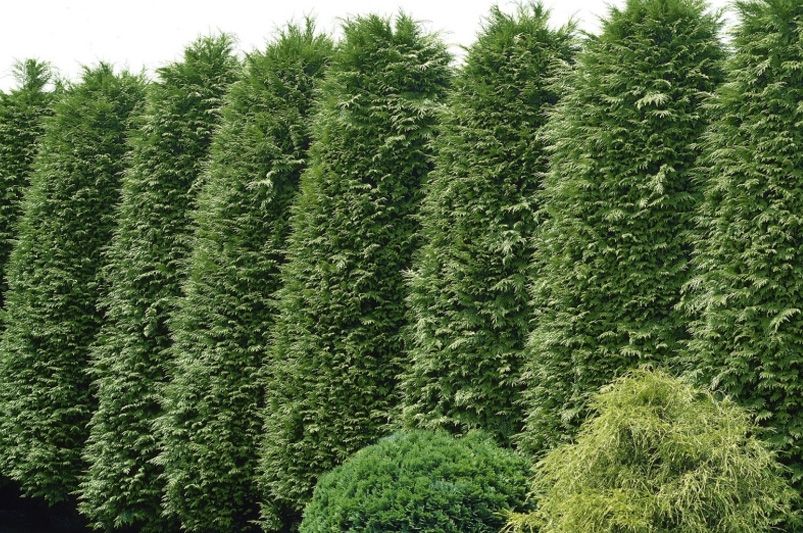
Credit: www.shrubhub.com
Where And When To Plant Arborvitae
Planting arborvitae in the right spot and season sets your trees up for long-term health and quick growth.
Best Location For Arborvitae
- Sunlight: Arborvitae grows best in full sun (6+ hours of direct light). They can tolerate partial shade, but growth may slow and foliage may thin out.
- Soil: These trees like well-drained, fertile soil. Heavy clay or waterlogged spots can lead to root rot.
- Space: Leave enough room for the mature width of the trees. Overcrowding causes poor growth and disease.
- Wind: While arborvitae can act as windbreaks, young plants may need shelter from strong winds.
Best Time To Plant
- Spring and early fall are the best seasons to plant arborvitae. These times provide cooler temperatures and natural rainfall, reducing stress on new roots.
- Avoid planting in extreme summer heat or when the ground is frozen.
How To Prepare For Planting
Proper preparation makes the difference between weak, slow-growing trees and a thick, lush privacy wall.
Checking Your Soil
Test your soil’s pH and drainage. Arborvitae prefers a pH of 6.0–8.0. To check drainage, dig a hole 12 inches deep and fill it with water. If water remains after 24 hours, improve drainage before planting.
Improving Soil Quality
- Add compost or well-rotted manure to enrich poor soil.
- For clay soil, mix in sand or organic matter to improve drainage.
- For sandy soil, add peat moss or compost to help retain moisture.
Measuring And Marking
- Use stakes and string to mark a straight line for your privacy row.
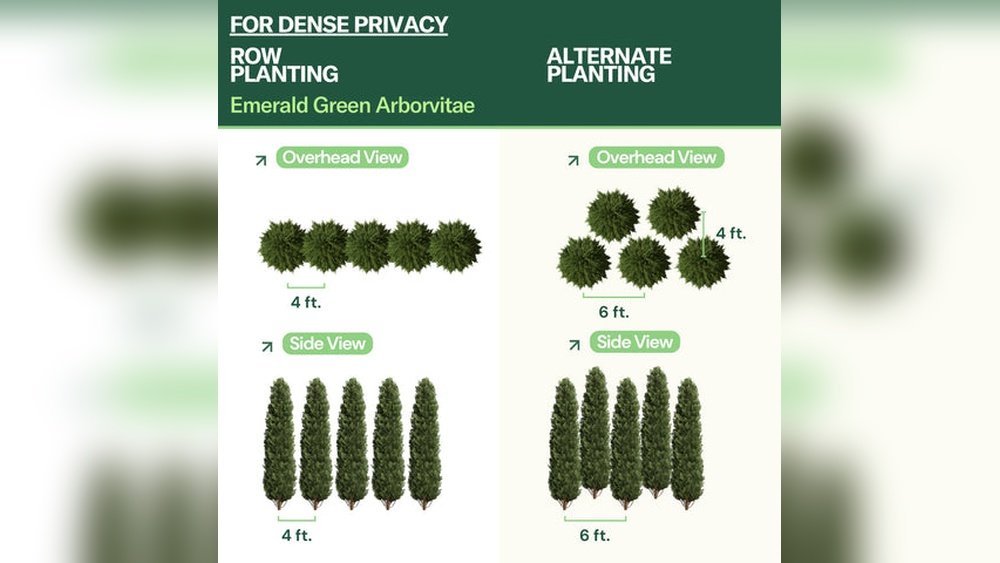
- Mark where each tree will go, spacing according to the mature width. For Emerald Green, space 3–4 feet apart; for Green Giant, 5–7 feet is best.
Tip: Don’t plant too close to buildings or fences. Leave at least 2 feet from structures to allow airflow and prevent damage.
Step-by-step: How To Plant Arborvitae
1. Dig The Hole
- Make the hole twice as wide as the root ball and just as deep.
- Loosen the sides and bottom to help roots spread.
2. Prepare The Tree
- Remove the arborvitae from the container or burlap.
- Gently loosen any circling roots by hand or with a knife.
- If roots are dry, soak in water for 1–2 hours before planting.
3. Set The Tree In Place
- Place the tree in the hole so the top of the root ball is level with the ground.
- Face the best-looking side toward your main view.
4. Backfill And Water
- Fill the hole halfway with soil, then water to settle air pockets.
- Add the rest of the soil and gently press down.
- Water deeply again.
5. Mulch
- Spread 2–3 inches of mulch (wood chips or bark) around the base, but keep it away from the trunk.
- Mulch keeps roots moist and prevents weeds.
6. Staking (if Needed)
Young arborvitae may need staking in windy areas. Use soft ties and remove after one growing season.
Non-obvious tip: Avoid adding fertilizer at planting time. Too much nitrogen can burn new roots. Wait until the following spring.
How To Space Arborvitae For Maximum Privacy
Spacing affects how quickly your privacy screen fills in and how healthy your trees stay.
Standard Spacing
- Emerald Green: 3–4 feet apart
- Green Giant: 5–7 feet apart
For Faster Coverage
- Some people plant in a staggered double row for a fuller look. Space rows 3–4 feet apart and alternate trees between rows.
- For instant privacy, plant closer (but no less than 2 feet apart). Be aware this can lead to crowding and disease later.
Table: Arborvitae Spacing For Different Goals
| Goal | Spacing (feet apart) | Result |
|---|---|---|
| Fastest Privacy | 2–3 | Quick fill-in, higher risk of disease |
| Long-Term Health | 3–7 | Balanced growth, best air flow |
| Double Row Hedge | Rows 3–4 apart, plants staggered | Extra thick privacy, more trees needed |
Expert insight: It’s better to wait a little longer for coverage than to risk root competition and disease from overcrowding.
Caring For Newly Planted Arborvitae
Arborvitae are easy to care for, but new plantings need extra attention to get established.
Watering
- Water deeply right after planting.
- For the first year, keep the soil moist but not soggy. Water 1–2 times per week, more during dry spells.
- Reduce watering in the second year as roots develop.
Warning: Overwatering can cause root rot. If in doubt, check soil moisture 2–3 inches below the surface before watering.
Mulching
- Renew mulch each spring.
- Keep mulch away from the trunk to prevent rot and pests.
Fertilizing
- Wait until the second spring after planting.
- Use a slow-release balanced fertilizer (such as 10-10-10).
- Avoid high-nitrogen lawn fertilizers near arborvitae.
Pruning
- Little pruning is needed in the first year.
- Remove dead or damaged branches as needed.
- After the second year, lightly trim tips in early spring to encourage dense growth.
Protecting From Animals
Deer love arborvitae, especially in winter. Use deer repellents or fencing if deer are common in your area.
Common Planting Mistakes And How To Avoid Them
Even experienced gardeners make mistakes with arborvitae. Here are some pitfalls to avoid:
- Planting too deep: Arborvitae planted too low can develop root rot. Keep the root ball level with the ground.
- Poor drainage: If water pools around the roots, trees may die. Improve soil before planting.
- Overcrowding: Tight spacing leads to disease and thin growth.
- Neglecting water: New trees need consistent moisture, especially in the first year.
- Ignoring deer: In areas with deer, unprotected arborvitae may be eaten to the ground.
- Using too much fertilizer: Young roots are sensitive; wait to fertilize.
Practical advice: Step back and look at your planting from all sides before finishing. Early adjustments are much easier than fixing problems later.
Arborvitae Vs. Other Privacy Trees
Arborvitae is not the only option for privacy, but it’s often the best for many situations. Here’s how it compares to other popular privacy plants:
| Tree | Growth Rate | Max Height | Evergreen | Special Needs |
|---|---|---|---|---|
| Arborvitae | Fast (varies by type) | 15–40+ ft | Yes | Needs sun, dislikes wet feet |
| Leyland Cypress | Very Fast | 40–60 ft | Yes | Shorter lifespan, disease-prone |
| Holly | Medium | 15–30 ft | Yes | Prickly leaves, attracts birds |
| Boxwood | Slow | 5–10 ft | Yes | Slow to fill in, needs pruning |
| Bamboo | Very Fast | 20–30 ft | Evergreen (some types) | Can be invasive, needs control |
Key takeaway: Arborvitae offers the best mix of fast growth, dense foliage, easy care, and non-invasiveness for most privacy screens.
How To Keep Arborvitae Healthy And Green
Once your trees are established, a few simple steps keep them looking their best.
Annual Care Tips
- Water during droughts: Even mature arborvitae need water during long dry spells.
- Fertilize lightly: Feed in early spring if growth slows or needles pale.
- Inspect for pests: Watch for bagworms, spider mites, or browning branches.
- Prune wisely: Never cut into bare wood—arborvitae may not regrow from old branches.
Solving Common Problems
- Brown spots: Usually caused by overwatering, drought, or winter burn. Prune out dead areas and adjust care.
- Yellowing needles: Often from poor drainage or compacted soil. Aerate soil and improve drainage.
- Sparse growth: May be due to too much shade. Consider thinning overhead trees or moving small arborvitae to a sunnier spot.
Expert insight: Arborvitae is more likely to have problems from too much care than too little. Keep things simple and consistent.
Landscaping Ideas With Arborvitae
Privacy is just one use for arborvitae. Here are creative ways to use these trees in your landscape:
- Living fences: Plant in straight or curved rows for a classic green wall.
- Corner screens: Hide utility boxes, AC units, or compost bins.
- Garden rooms: Use arborvitae to divide your yard into outdoor “rooms.”
- Windbreaks: Plant on the windward side of your home to reduce winter heating costs.
- Mixed hedges: Combine arborvitae with flowering shrubs for color and interest.
Non-obvious tip: Try planting a few arborvitae in clusters instead of a straight line for a more natural look.
How To Prune And Shape Arborvitae
Pruning is optional but can help keep your arborvitae dense and tidy.
When To Prune
- Best time: Early spring, just before new growth begins.
- Light trims can be done in late summer if needed.
How To Prune
- Use sharp, clean shears.
- Remove only the tips—never cut into old wood without green growth.
- For a formal hedge, trim the sides slightly narrower at the top to let sunlight reach the lower branches.
Shaping Arborvitae
- For a pyramidal look, prune the top to keep the natural shape.
- For a hedge, trim evenly across the top and sides.
Mistake to avoid: Cutting too much at once can shock the tree. Prune lightly and regularly for the best results.

Credit: www.thisoldhouse.com
How To Protect Arborvitae In Winter
Winter can be tough on arborvitae, especially in cold or windy areas.
Common Winter Problems
- Snow and ice breakage: Heavy snow can bend or split branches.
- Winter burn: Dry winds and sun can cause browning, especially on the south and west sides.
- Deer browsing: Food is scarce for deer, and arborvitae is a favorite snack.
Protection Tips
- Wrap with burlap: In exposed areas, wrap trees with burlap in late fall.
- Water well before freezing: Moist soil helps protect roots.
- Gently brush off snow: Don’t shake the branches, as ice can cause them to snap.
- Use deer repellents or fencing: Tall wire cages are the most reliable solution.
Pro insight: Avoid using salt near arborvitae for ice control. Salt damages roots and turns foliage brown.
Arborvitae Planting And Care: Quick Reference
- Plant in spring or early fall for best results.
- Choose a sunny spot with well-drained soil.
- Space trees 3–7 feet apart, depending on variety.
- Water deeply and mulch well during the first year.
- Protect from deer and winter damage as needed.
- Trim lightly for dense, healthy growth.
.png?v=1600701770791)
Credit: gardengoodsdirect.com
Regional Tips: Arborvitae Across The Us
Arborvitae grows in most parts of the United States, but local climate and soil make a difference.
Northeast And Midwest
- Choose cold-hardy varieties like Techny or Emerald Green.
- Protect from heavy snow by tying branches loosely together in winter.
Southeast
- Watch for fungal diseases in humid climates. Space trees for good airflow.
- Water during long dry spells in summer.
West Coast
- Arborvitae does well in coastal and mountain areas with mild summers.
- In dry inland regions, drip irrigation helps trees thrive.
Mountain West And Plains
- Choose wind-resistant varieties and stake young trees.
- Mulch heavily to protect roots from temperature swings.
Local tip: Always check with a local nursery for the best arborvitae variety for your area.
Eco-friendly Benefits Of Arborvitae
Arborvitae offers more than privacy—they provide real environmental value:
- Air purification: Arborvitae absorbs CO2 and releases oxygen.
- Wildlife shelter: Birds nest in their dense branches.
- Erosion control: Deep roots hold soil on slopes.
- Noise reduction: Thick foliage can reduce road noise by up to 25%.
To learn more about the environmental benefits of privacy trees, see this Arbor Day Foundation resource.
Frequently Asked Questions
How Fast Does Arborvitae Grow?
Growth rate depends on the variety. Green Giant can grow 2–3 feet per year in good conditions, while Emerald Green grows about 6–9 inches. Regular watering and full sun help speed growth.
How Far From A Fence Should I Plant Arborvitae?
Plant at least 2 feet away from fences or walls. This allows space for the roots and air to circulate, keeping trees healthy and preventing damage to structures.
Can I Plant Arborvitae In Clay Soil?
Arborvitae does not like heavy, wet clay. Improve drainage by mixing in compost or sand, or plant on a raised mound. Make sure water does not pool around the roots.
What Is The Best Fertilizer For Arborvitae?
Use a slow-release balanced fertilizer (such as 10-10-10) in early spring. Do not over-fertilize, especially when young. Too much fertilizer can cause brown tips.
How Do I Keep Deer From Eating My Arborvitae?
Use tall wire fencing or commercial deer repellents, especially in winter. Consider planting deer-resistant shrubs in front of your arborvitae as a barrier.
The Last Word On Arborvitae Privacy Screens
A living privacy screen adds beauty, value, and tranquility to your home. With the right arborvitae variety, proper planting, and a little care, you can enjoy a lush green wall for years. Remember to plant for healthy spacing, water regularly, and protect young trees from deer and winter stress. In time, your arborvitae screen will reward you with a private, peaceful retreat that’s good for you and the environment.
If you follow these steps and tips, your backyard privacy solution will look great every season—naturally.