
Last updated: October 2026 · Written by the LawnVibe editorial team.
A watering can does not have to be plastic. Copper and metal cans have been used in gardens for centuries, and a good one is both a practical tool and something you are happy to leave out on a windowsill or patio table. The best copper watering can pours precisely, balances well when full and keeps its looks with simple care. Our top pick is the Gardener's Supply copper plated 3 quart can, ideal for houseplants. We also compare a small long-spout can, a copper-style vintage can, a galvanized outdoor can and a large 2 gallon metal can.
Listings change often, so check current details on Amazon before you buy. As an Amazon Associate we earn from qualifying purchases.
Our top picks at a glance
| # | Product | Best for | Link |
|---|---|---|---|
| 1 | Gardener’s Supply Company Copper Plated Watering Can (3 qt) | Indoor plants and display | Check price |
| 2 | Copper Watering Can for Indoor Plants (48 oz) | Houseplants, succulents and orchids | Check price |
| 3 | Megawodar 1 Gallon Metal Watering Can (Embossed Copper Style) | Indoor and patio use with a decorative look | Check price |
| 4 | BLstyle 1.75 Gallon Galvanized Metal Watering Can | Outdoor beds with a classic metal can | Check price |
| 5 | Plexon 2 Gallon Large Metal Watering Can | Big outdoor watering jobs | Check price |
Best copper watering can reviews

Gardener’s Supply Company Copper Plated Watering Can (3 qt)
Best for: Indoor plants and display
A 3 quart copper plated can with an elegant curved spout, designed for indoor watering and looking good on a shelf.
- Copper plated finish
- Elegant curved spout
- Good indoor capacity
- Established garden retailer
- Plating can wear with heavy use
- Too small for outdoor beds

Copper Watering Can for Indoor Plants (48 oz)
Best for: Houseplants, succulents and orchids
A small 1.5 quart can with a long spout that delivers water straight to the roots with little splashing.
- Long precise spout
- Small and easy to handle
- Minimal splashing
- Small capacity
- Refill often for large collections

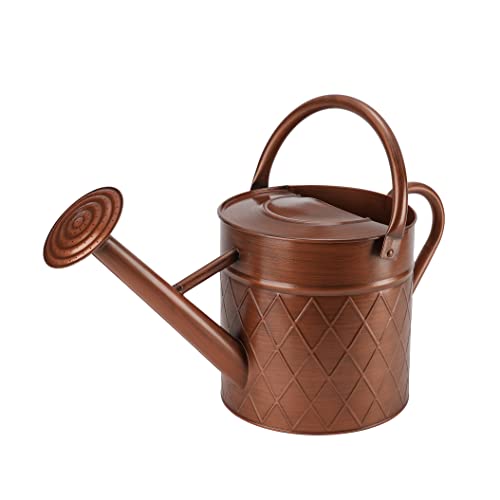
Megawodar 1 Gallon Metal Watering Can (Embossed Copper Style)
Best for: Indoor and patio use with a decorative look
A 1 gallon metal can with an antique embossed copper design for indoor or outdoor watering.
- 1 gallon capacity
- Antique copper style
- Works indoors and out
- Copper-style finish, check material details
- Metal can dent
BLstyle 1.75 Gallon Galvanized Metal Watering Can
Best for: Outdoor beds with a classic metal can
A galvanized metal can made to resist rust, with a leak-proof construction and 1.75 gallon capacity.
- Galvanized, rust resistant
- Leak-proof construction
- Good outdoor capacity
- Not copper
- Heavier when full

Plexon 2 Gallon Large Metal Watering Can
Best for: Big outdoor watering jobs
A 2 gallon metal can with a removable spray spout for high capacity outdoor watering.
- 2 gallon capacity
- Removable spray spout
- Durable metal
- Heavy when full
- Not copper finish
How we chose these cans
We compared material and finish, capacity, spout design, balance and how suitable each can is for indoor plants, patios or outdoor beds. Not every "copper" can is solid copper; many are copper plated or have a copper-style finish over another metal, so we describe each one as listed. We included galvanized and large metal cans for gardeners who want metal durability outdoors. We do not list prices because they change often.
Copper, copper plated and copper style
Solid copper cans are the most traditional and develop a natural patina over time. They are usually more expensive. Copper plated cans have a thin layer of copper over another metal, giving the look at a lower price, though plating can wear with heavy use. Copper-style finishes are painted or coated to look like copper; check the listing to know what you are buying. Galvanized steel cans are coated with zinc to resist rust and are the classic practical outdoor metal can.
Copper watering can buying guide
Capacity
Indoor copper cans are usually small, from about 1 to 3 quarts, which is plenty for houseplants and easy to handle. Outdoor metal cans range up to 2 gallons or more. Remember that metal adds weight, so a full metal can is heavier than a plastic one of the same size.
Spout
For houseplants, a long, slender spout lets you reach the soil under leaves without splashing. For outdoor beds, a removable rose gives a gentle shower for seedlings.
Lacquer or patina
Some copper cans are lacquered to keep their shine; others are left bare to develop a patina. Decide which look you prefer before buying, and follow the care instructions for each.
Leak-proof seams
Check that the seams and spout joint are well sealed. A slow leak ruins furniture and floors indoors. Before using a new can on a wooden shelf or table, fill it and leave it on a towel for an hour to check for drips.
Which can is right for you?
- Indoor plants and display: Gardener's Supply copper plated can.
- Small houseplant collections: 48 oz long-spout copper can.
- Vintage look indoors or on a patio: Megawodar copper-style can.
- Classic outdoor metal can: BLstyle galvanized can.
- Big outdoor jobs: Plexon 2 gallon metal can.
For larger plastic cans built for outdoor beds, see our roundup of the best 2 gallon watering can options.
Watering houseplants with a copper can
Fill the can with room-temperature water, and let tap water stand for a few hours if your plants are sensitive to chlorine. Pour slowly around the base of the plant until water drains from the pot, then empty any saucer after half an hour. Most houseplants prefer to dry slightly between waterings, so check the top inch of soil before watering again. Collected rainwater is excellent for houseplants because it is free of chlorine and low in minerals; our guide on watering garden with rainwater explains how to use it.
Caring for a copper watering can
- Empty the can after each use and let it dry upside down.
- Wipe it dry to prevent water spots and fingerprints on polished finishes.
- For lacquered copper, clean with mild soap and water only; abrasive cleaners damage the lacquer.
- For bare copper, polish tarnish with a copper cleaner or a lemon juice and salt paste, then rinse and dry.
- Embrace the patina if you prefer an aged look; it is a natural protective layer.
- Store indoors in winter so water cannot freeze in the seams.
How often to water houseplants
There is no single schedule for houseplants, because light, temperature, pot size and plant type all change how fast soil dries. Most leafy tropical houseplants like the top inch of soil to dry before watering again, which might mean once a week in summer and every two weeks in winter. Succulents and cacti prefer the soil to dry almost completely, often every two to four weeks. Ferns, calatheas and peace lilies like more consistent moisture. The simplest test is to push a finger into the soil: if it feels dry an inch down, water; if it feels damp, wait. Lifting the pot also helps, because a dry pot feels noticeably lighter. A small can makes it easy to water each plant individually rather than giving every plant the same amount.
Pairing a watering can with a mister
Many houseplants, such as ferns, orchids and calatheas, enjoy higher humidity than most homes provide. A small mister used alongside your watering can raises humidity around leaves, while the can delivers water to the roots. Copper misters are often sold to match copper cans, which makes a tidy pair on a shelf. Grouping plants together and using pebble trays filled with water also raises humidity without daily misting. In dry winter months, a room humidifier near your plant collection does the most good for tropical species that struggle with dry indoor air.
Is copper safe for plants?
Copper is a plant micronutrient in tiny amounts, and water spends only a short time in a watering can, so normal use is not a problem for plants. Many decorative copper cans are plated or lacquered anyway. The main rule is not to store water in the can for long periods, which also prevents algae and mosquito larvae. Do not use copper cans to mix acidic solutions or fertilizers that may react with the metal; a plastic can is better for feeding.
Metal cans outdoors
Galvanized cans are durable outdoors and resist rust, but they can still rust at scratches over many years. Keep them out of standing water and store them upside down, ideally in a shed or garage where rain cannot collect inside. A quick wipe with a cloth after use helps prevent rust spots at scratches and seams. Large metal cans are heavy when full, so consider filling them partway if you carry them far. For daily outdoor watering of many pots, a hose with a watering wand or a drip system may save effort; our roundup of the best drip irrigation for pots covers automatic options.
Choosing a can for your plant collection
A few windowsill plants. A small 1 to 1.5 quart can with a long, narrow spout is all you need. It fits on the sill, refills quickly and reaches under leaves without disturbing them.
A large indoor jungle. If you have dozens of houseplants, a larger 3 quart to 1 gallon can saves trips to the sink. A comfortable handle matters, because you will carry it around the house.
Orchids, succulents and cacti. These plants need careful, measured watering. A slim spout lets you water the potting mix without wetting crowns or leaves, which can rot.
Hanging plants indoors. A long spout helps reach hanging pots, but for high baskets a step stool or a pump-style indoor waterer may be easier.
Patio pots. A 1 to 2 gallon metal can works well for a handful of outdoor containers and looks good left on the patio. For many pots, a hose with a wand is faster.
Copper vs plastic: which is better?
Plastic cans are lighter, cheaper and will never tarnish or rust, which makes them the most practical choice for heavy outdoor use. Copper and metal cans last longer if cared for, feel more substantial in the hand and look far better on display. Many gardeners use both: a large plastic can outdoors for beds and a smaller copper can indoors for houseplants. If you prefer to avoid plastic, a galvanized can is a durable, practical outdoor alternative.
Gift ideas
A copper watering can is a popular gift for houseplant lovers, new homeowners and anyone setting up a first apartment with plants. It is practical, long-lasting and attractive enough to leave on display, which makes it more personal than a plastic can. Pair a small long-spout can with a plant mister, a few plant markers or a houseplant, and it becomes a thoughtful present that is also genuinely useful.
Signs of overwatering and underwatering
Overwatered houseplants often show yellowing lower leaves, soft or blackened stems, soil that stays wet for days and a musty smell. Underwatered plants droop, develop crispy brown leaf edges and have soil pulling away from the sides of the pot. Because both can cause drooping, always check the soil before reaching for the can. Pots without drainage holes are the most common cause of overwatering; use a nursery pot with holes inside a decorative cover pot instead, and tip out any water that collects in the cover pot after watering.
Common mistakes
- Leaving water in the can for days.
- Using abrasive cleaners on lacquered copper.
- Mixing fertilizer in a copper can.
- Choosing a large metal can that is too heavy when full.
- Storing outdoors in winter.
- Buying a copper-style finish expecting solid copper.
Hand watering only the plants that need it is an efficient habit encouraged by the EPA WaterSense program.
The bottom line
The best copper watering can for most people is the Gardener's Supply copper plated 3 quart can, attractive and practical for houseplants. Choose a 48 oz long-spout can for small collections, a copper-style can for a vintage look, a galvanized can for outdoor beds and the Plexon 2 gallon for big jobs. Empty and dry the can after use, clean it to suit its finish and store it indoors over winter.
Frequently Asked Questions
What is the best copper watering can?
For indoor plants and display, the Gardener's Supply copper plated 3 quart can is our top pick for its balance of looks and practicality.
Is copper safe for watering plants?
Water stays in the can only briefly, and most copper cans are plated or lacquered. Empty the can after use rather than storing water in it.
How do I clean a copper watering can?
Wipe it dry after use. For tarnish, use a copper cleaner or a paste of lemon juice and salt on unlacquered copper, then rinse and dry.
Are copper watering cans good outdoors?
They can be used outdoors, but they tarnish faster and are usually smaller. Galvanized cans are more practical for big outdoor jobs.
What size watering can for houseplants?
Half a gallon to 1 gallon suits most indoor collections, with a long, narrow spout for precise pouring.