

Last updated: October 2026 · Written by the LawnVibe editorial team.
Containers dry out fast, and forgetting to water for a single hot day can undo weeks of growth. Self-watering planters solve this with a reservoir under the soil that feeds water to the roots as they need it, so plants stay evenly moist with far less effort. The best self-watering planter has a reservoir big enough for your plant, a reliable wicking system and an overflow so roots never sit in water. For tomatoes and climbing vegetables our top pick is the MQFORU raised planter with trellis, and for herbs on a windowsill a planter with a water level window makes refilling easy. Below we compare six options for patios, balconies and indoors.
Listings change often, so check current details on Amazon before you buy. As an Amazon Associate we earn from qualifying purchases.
Our top picks at a glance
| # | Product | Best for | Link |
|---|---|---|---|
| 1 | MQFORU Self-Watering Raised Planter with Trellis (2 Pack) | Tomatoes, cucumbers and climbing vegetables | Check price |
| 2 | CoolGrows Self-Watering Raised Garden Bed Planter Box | Patio vegetable gardens | Check price |
| 3 | 3 Pack 5 Gallon Self-Watering Grow Bags | Peppers, herbs and potatoes on a budget | Check price |
| 4 | Oliz Self-Watering Window Box Planters (Set of 8) | Windowsills, railings and herbs | Check price |
| 5 | OurWarm Windowsill Self-Watering Herb Planter Set (3 x 10.5″) | Kitchen herbs and small houseplants | Check price |
| 6 | yarlung 6 Pack 5″ Self-Watering Planters with Water Level Indicator | Small houseplants and seedlings | Check price |
Best self-watering planter reviews

MQFORU Self-Watering Raised Planter with Trellis (2 Pack)
Best for: Tomatoes, cucumbers and climbing vegetables
A raised self-watering planter with a built-in reservoir and trellis, designed to keep moisture consistent for thirsty, climbing crops.
- Built-in water reservoir
- Trellis for climbing crops
- Two planters in the pack
- Consistent moisture for tomatoes
- Plastic construction
- Reservoir needs refilling in heat waves

CoolGrows Self-Watering Raised Garden Bed Planter Box
Best for: Patio vegetable gardens
A plastic raised planter box with self-watering design for vegetables, fruits, potatoes and flowers indoors or outdoors.
- Raised bed size for patios
- Self-watering reservoir
- Indoor or outdoor use
- Plastic look
- Check reservoir capacity on listing

3 Pack 5 Gallon Self-Watering Grow Bags
Best for: Peppers, herbs and potatoes on a budget
Fabric grow bags with a bottom water reservoir that releases water gradually to roots, reducing how often you need to water.
- Breathable fabric pots
- Bottom reservoir
- Three bags, budget friendly
- Fabric dries faster than plastic above the reservoir
- Less rigid than pots

Oliz Self-Watering Window Box Planters (Set of 8)
Best for: Windowsills, railings and herbs
A set of eight self-watering rectangular planters about 17 x 7 x 6 inches, sized for windowsills and balcony railings.
- Eight planters in one set
- Window box size
- Self-watering design
- Shallow for deep-rooted crops
- Plastic construction
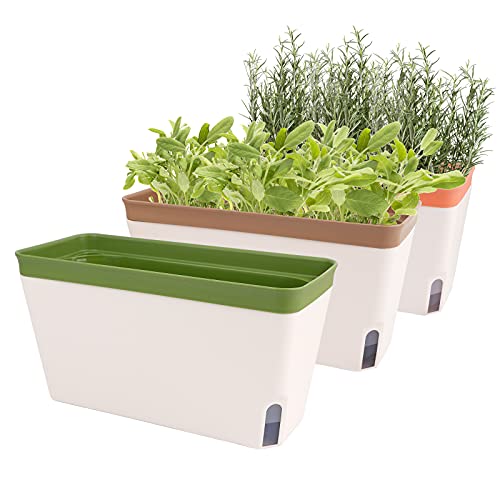
OurWarm Windowsill Self-Watering Herb Planter Set (3 x 10.5")
Best for: Kitchen herbs and small houseplants
Three 10.5 inch self-watering planters with a visual water level window so you can see when to refill.
- Water level window
- Compact windowsill size
- Good for herbs
- Small capacity
- Indoor focus

yarlung 6 Pack 5" Self-Watering Planters with Water Level Indicator
Best for: Small houseplants and seedlings
A six-pack of 5 inch nested self-watering pots with a water level indicator for indoor plants.
- Six pots
- Water level indicator
- Good for small plants
- Small size only
- Not for outdoor vegetables
How we chose these planters
We compared reservoir design, planter size, suitability for different plants, visibility of water levels and practicality indoors and outdoors. We included large planters for vegetables, grow bags, window boxes and small indoor pots. We do not list prices because they change often.
How self-watering planters work
A self-watering planter has two parts: a soil chamber on top and a water reservoir below, separated by a platform. A wick or a column of soil reaches down into the reservoir and draws water up by capillary action as the soil above dries. An overflow hole at the top of the reservoir lets excess water drain away, so the soil never becomes waterlogged. You fill the reservoir through a tube or opening, and the plant takes what it needs.
Self-watering planter buying guide
Reservoir size
A larger reservoir means less frequent refilling. Thirsty plants such as tomatoes, cucumbers and squash need big reservoirs, while herbs and houseplants manage with smaller ones.
Planter depth
Vegetables like tomatoes and potatoes need deep soil; leafy greens and herbs are fine in shallower planters. Window boxes suit herbs, strawberries and flowers.
Water level indicator
A float or window that shows the water level takes the guesswork out of refilling, especially indoors where planters sit on furniture.
Overflow hole
An overflow prevents the reservoir from flooding the soil after rain or overfilling. Outdoor planters should always have one.
Material
Plastic planters are light and inexpensive. Fabric grow bags breathe and prevent root circling but dry faster above the reservoir. Ceramic and composite planters look smarter indoors but are heavier.
Which planter is right for you?
- Tomatoes and climbing vegetables: MQFORU with trellis.
- Patio vegetable garden: CoolGrows raised planter.
- Budget vegetables and herbs: 5 gallon self-watering grow bags.
- Windowsills and railings: Oliz window boxes.
- Kitchen herbs: OurWarm herb planter set.
- Small houseplants: yarlung 6-pack.
How to set up a self-watering planter
- Use potting mix, not garden soil, which compacts and wicks poorly.
- Pack mix into the wicking area so it touches the reservoir water.
- Fill the planter and plant as usual.
- Water from the top at planting to settle the soil and start wicking.
- Fill the reservoir through the fill tube.
- Check the level every few days until you learn how fast it empties.
Best plants for self-watering planters
Self-watering planters suit plants that like steady moisture: tomatoes, peppers, cucumbers, squash, lettuce, herbs such as basil and parsley, strawberries, many annual flowers and common houseplants such as pothos and peace lilies. Avoid them for plants that need to dry out between waterings, such as most cacti, succulents and lavender, unless you leave the reservoir empty much of the time.
Growing vegetables in self-watering planters
Self-watering planters are especially good for vegetables because consistent moisture prevents many common problems. Tomatoes in containers often suffer from blossom end rot and cracked fruit when soil swings between wet and dry; a reservoir keeps moisture steady. Cucumbers turn bitter when stressed by dry soil, and lettuce bolts faster in heat if it dries out. Choose a planter deep enough for the crop: tomatoes, peppers and potatoes need at least 12 inches of soil, while lettuce and herbs manage with 6 to 8 inches. Place planters where they get at least six hours of sun, and expect to refill reservoirs more often once plants are large and fruiting. A trellis or cage fitted at planting time supports tomatoes and cucumbers without disturbing roots later.
Self-watering planters for herbs indoors
Herbs such as basil, parsley, mint and chives grow well in self-watering windowsill planters, which keep their soil evenly moist without the soggy pots that cause root rot. Place them in the brightest window you have, ideally south facing, and rotate them every few days so they grow evenly. Mediterranean herbs like rosemary, thyme and oregano prefer drier soil, so let their reservoirs run dry between refills or grow them in standard pots instead. A water level window helps you see when to refill without lifting the planter.
Using self-watering planters on vacation
One of the biggest advantages of self-watering planters is peace of mind when you travel. A full reservoir can keep many plants watered for several days to a week or more, depending on size, plant and weather. Before leaving, water from the top, fill every reservoir, move outdoor planters out of the hottest afternoon sun and group them together. For long trips in summer heat, a larger planter or a simple drip kit on a timer may be needed for the thirstiest plants.
Self-watering planters vs drip irrigation
Self-watering planters work without any plumbing and are ideal for a few containers or for indoor plants. Drip irrigation suits larger container collections and can water many pots from one faucet on a timer. If you have more than a dozen pots, compare our roundup of the best drip irrigation for pots.
DIY self-watering containers
You can convert ordinary containers into self-watering planters with a little effort. Two nested buckets, one with holes in the bottom and a wicking cup filled with potting mix, sitting inside another that holds water, make an inexpensive vegetable planter. Add a fill tube, such as a length of PVC pipe, and drill an overflow hole in the outer bucket just below the bottom of the inner one. Commercial planters are more convenient and better looking, but a DIY version is a good way to try the method before buying several.
Self-watering planter sizes explained
Small pots of 4 to 6 inches suit seedlings, herbs and small houseplants and usually need refilling every few days. Medium planters of 8 to 12 inches hold enough for larger houseplants and herbs and may go a week between refills. Large planters and raised boxes of 5 gallons or more suit vegetables and have reservoirs big enough to cover several days of hot weather. Window boxes hold a row of herbs or flowers in a shallow space. Choosing a planter slightly larger than you think you need gives roots more room and stretches the time between refills.
Common problems and fixes
- Soil stays dry on top: the wick may not be in contact with water, or the mix is too coarse; water from the top and check the wicking area is packed with potting mix.
- Algae in the reservoir: keep the reservoir covered and out of strong light, and clean it between plantings.
- White crust on the soil: mineral salts building up; flush from the top with plenty of plain water.
- Root rot: the overflow may be blocked, or the plant prefers drier soil; clear the overflow or let the reservoir run dry between fills.
- Mosquitoes: cover fill tubes and overflow holes with fine mesh outdoors.
Fertilizing in self-watering planters
Because water moves up from below, nutrients can build up at the soil surface. Mix slow-release fertilizer into the potting mix at planting, and occasionally water from the top to flush salts down. Liquid feed can be added to the reservoir at a diluted rate, following the product label. Hungry crops such as tomatoes and peppers benefit from a light feed every couple of weeks once they start flowering, while herbs and leafy greens need less.
Self-watering planters for balconies and small spaces
On balconies, where every square foot counts and carrying water is a chore, self-watering planters are a big help. Rectangular planters fit along railings and walls, and window boxes clip to balcony edges where allowed. Use lightweight potting mix and plastic or fabric planters to keep weight down, and check any weight limits for your balcony. Place saucers or trays under planters if overflow water could drip onto neighbors below. Grouping planters together creates a more humid microclimate and makes refilling quicker, especially with a single watering can or a short hose.
Choosing potting mix for wicking
Not all potting mixes wick water equally well. A light, peat- or coir-based mix with some perlite wicks well and stays airy. Very coarse mixes, such as those made mostly of bark for orchids, wick poorly and are better in standard pots. Never use garden soil, which compacts in containers and stops water moving up from the reservoir. When refreshing planters each season, replace at least part of the mix so it keeps its structure and nutrients.
Maintenance
- Refill the reservoir before it runs dry.
- Flush with fresh water from the top every few weeks.
- Empty and clean the reservoir between plantings.
- Replace potting mix each season for vegetables, or refresh the top layer for perennials.
- Drain outdoor planters before freezing weather.
Common mistakes
- Using garden soil instead of potting mix.
- Forgetting to wet the soil from the top at planting.
- Using them for cacti and other plants that like to dry out.
- No overflow hole outdoors, which floods roots after rain.
- Letting the reservoir go stagnant for weeks.
- Choosing a planter too small for large vegetables.
Self-watering containers reduce runoff and waste, in line with efficient watering advice from the EPA WaterSense program.
The bottom line
The best self-watering planter for vegetables is a large reservoir planter like the MQFORU with trellis, while grow bags offer a budget option and window boxes and herb planters suit small spaces. Use potting mix, wet the soil from the top at planting, then keep the reservoir filled and flush occasionally. For larger container collections, consider drip irrigation instead.
Frequently Asked Questions
What is the best self-watering planter?
For vegetables, the MQFORU raised planter with trellis is our top pick. For herbs indoors, a windowsill set with a water level window is easier.
How do self-watering planters work?
A reservoir below the soil holds water, and a wick or soil column draws it up to the roots as the soil dries.
How often do you fill a self-watering planter?
It depends on reservoir size, plant and weather; small pots may need refilling every few days in summer, large planters about once a week.
Can self-watering planters overwater plants?
Usually not, if they have an overflow hole. Avoid them for plants that like to dry out completely, such as many cacti.
Should I water from the top too?
Water from the top when planting to settle the soil, then mainly fill the reservoir.