
Adjusting the cutting height on your riding mower is more than just a routine task—it’s the key to a healthier, greener lawn. Many owners mow without thinking much about the height, but this simple setting affects grass health, mower performance, and even fuel use.
If you want a great-looking yard with less effort, learning how to adjust cutting height on a riding mower is essential.
Proper adjustment is not as obvious as it seems. Different grass types, seasons, and even soil conditions call for different heights. In this guide, you’ll discover not just the basic how-to steps, but also smart tips, common mistakes, and expert insights that most beginners miss.
Whether you have a new mower or you’re looking to get more from your current machine, these strategies will help you protect your lawn and extend your mower’s life.
Why Cutting Height Matters
Setting the correct cutting height is about more than looks. Each grass species has a recommended height range. Cutting too low can stress the grass, increase weeds, and cause brown patches. Leaving grass too tall can make mowing hard and encourage pests. The goal is to keep grass at the healthiest height for its type and the season.
For example, cool-season grasses like Kentucky bluegrass do best at 2. 5–3. 5 inches, while warm-season types like Bermuda prefer 1–2 inches. Adjusting your riding mower allows you to match these needs, improving your lawn’s resilience and reducing the need for fertilizers or weed killers.
Getting Ready: Tools And Safety
Before you start, gather a few basic tools:
- Work gloves to protect your hands
- Measuring tape or ruler for accuracy
- Flat, level surface for parking the mower
- Owner’s manual for your mower model
Always turn off the mower, remove the key, and wait for all moving parts to stop before making adjustments. If your mower has a battery or spark plug, disconnect it for extra safety.
Understanding Your Mower’s Height Adjustment System
Riding mowers have different ways to adjust cutting height. Most use one of these systems:
- Lever system: A single lever (or sometimes one on each side) raises or lowers the cutting deck.
- Dial or knob system: Found on some newer models, these allow finer adjustments.
- Manual adjustment: Some older or basic mowers require you to reposition pins or bolts.
Check your owner’s manual to identify your mower’s system and the locations of levers or adjustment points.
Here’s a quick comparison of common systems:
| Adjustment Type | Ease of Use | Precision | Common Models |
|---|---|---|---|
| Lever | Easy | Medium | John Deere, Husqvarna |
| Dial/Knob | Very Easy | High | Craftsman, Cub Cadet |
| Manual Pins/Bolts | Harder | High | Older MTD, Troy-Bilt |
Step-by-step: How To Adjust Cutting Height
1. Park And Prepare
- Move your mower to a flat, level surface like a driveway or garage.
- Turn off the engine, remove the key, and let all parts stop.
- Put on gloves and disconnect the battery or spark plug if possible.
2. Identify Adjustment Points
- Locate the height adjustment lever, dial, or pins.
- Most levers are beside the seat or on the fender. Dials are usually near the driver’s seat.
3. Choose The Right Height Setting
- Check your grass type and season. For example:
- Cool-season grass: 2.5–3.5 inches (spring/fall), up to 4 inches (summer)
- Warm-season grass: 1–2 inches
- Use your measuring tape to check the current blade height from the ground.
4. Adjust The Deck
- For levers: Pull or push the lever to the desired notch or number.
- For dials: Turn the dial to the correct setting.
- For manual pins: Remove the pin, move the deck to the new hole, then replace the pin.
5. Check For Levelness
- Measure the distance from the ground to the blade tip at both sides of the deck.
- Both sides should be within 1/8 inch of each other.
- If not, use the deck leveling adjustment (usually found on the front or sides of the deck).
6. Test On A Small Patch
- Reconnect the battery/spark plug, start the mower, and cut a small area.
- Stop and measure the cut height.
- Adjust again if needed.
7. Repeat As Needed
- Once you’re happy with the height, mow the rest of your lawn.
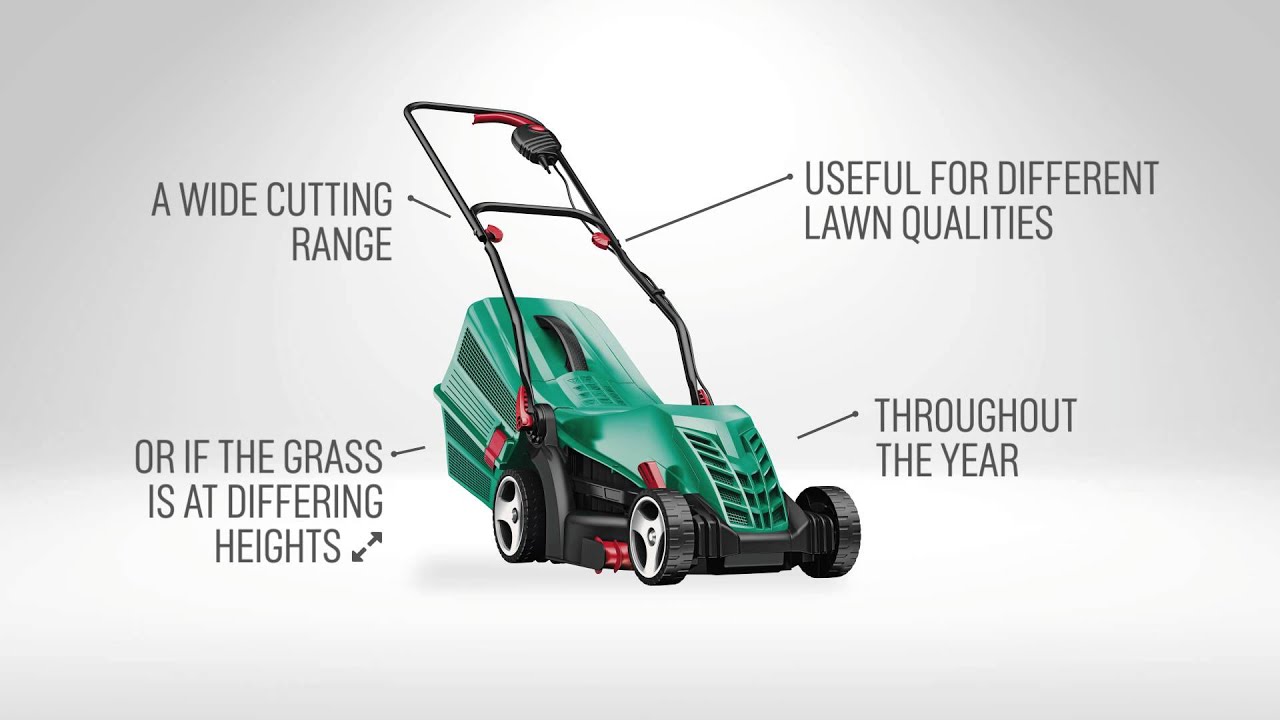
Credit: www.youtube.com
Deck Leveling: Why It Matters
A common mistake is to only adjust height and not check if the deck is level. An uneven deck leads to scalping (cutting too low) on one side and missed patches on the other. Most riding mowers have a way to adjust both the front-to-back and side-to-side level.
Here’s how to check:
- Park on a flat surface.
- Lower the deck to the preferred height.
- Measure from the ground to the blade tip at the left and right edges.
- Adjust side-leveling bolts if needed.
Front-to-back adjustment is also important. Most decks should be slightly lower in the front (by about 1/8 to 1/4 inch). This helps grass stand up for a cleaner cut.
Adjusting For Different Lawn Conditions
Lawn conditions change through the year. Here’s how to adjust:
- Spring: Set the height at the lower end of the range to remove dead grass and encourage new growth.
- Summer: Raise the deck to protect roots from heat and drought.
- Autumn: Lower the deck again for a final cut before winter.
If your yard is bumpy or has exposed tree roots, raising the deck helps avoid hitting obstacles.
Fine-tuning For Different Grass Types
Many homeowners overlook this: each grass species has an ideal cutting height. Here’s a handy guide:
| Grass Type | Recommended Height (inches) | Seasonal Adjustment |
|---|---|---|
| Kentucky Bluegrass | 2.5–3.5 | Raise in summer |
| Bermuda | 1–2 | Keep short year-round |
| St. Augustine | 2.5–4 | Raise in hot months |
| Fescue | 2.5–4 | Higher for shade |
| Zoysia | 1–2.5 | Short in spring |
Common Mistakes And How To Avoid Them
1. Skipping the manual: Even experienced owners forget to check the manual for their specific model. Each mower is a little different.
2. Ignoring deck level: This leads to a patchy lawn and can damage the deck. Always check both sides.
3. Mowing too short: Known as “scalping,” this stresses grass and lets weeds take over.
4. Forgetting to measure: Guessing the height by eye often leads to mistakes. Use a ruler for accuracy.
5. Not adjusting for seasons: The same setting all year is rarely the best choice. Change with the weather.
6. Adjusting with the mower running: This is dangerous. Always stop the engine first.
7. Not checking after adjustment: Test on a small patch before mowing the whole yard.

Credit: greenmachineusa.com
Tips For A Healthier Lawn
- Sharpen mower blades at least once per season. Dull blades tear grass instead of cutting.
- Change cutting patterns each time you mow to prevent ruts.
- Mow when grass is dry for a cleaner cut.
- Don’t remove more than one-third of the grass blade in a single mowing.
- Clean the deck regularly to prevent rust and buildup.
Advanced Insights For Better Results
Most guides stop at the basics, but experienced owners know a few extra tricks:
- Check tire pressure before setting height. Low tires change the deck height and make adjustments less accurate.
- Use “double-cutting” for thick or tall grass: Mow once at a higher setting, then again at your desired height.
- Record your preferred settings for each season and grass type. Some mowers have numbers on the lever or dial—write these down for easy reference next year.
- Inspect height markers: Not all mowers’ numbers match actual inches. Measure from the blade to the ground for true accuracy.
- Upgrade with anti-scalp wheels if your deck doesn’t have them. These small wheels help the deck float over uneven ground and prevent damage.
Troubleshooting: When Things Don’t Look Right
Even after adjusting, you might see poor results. Here’s how to diagnose:
- Uneven cut: Check deck level and tire pressure.
- Scalped spots: Raise the deck and mow in a different direction.
- Strips of uncut grass: Sharpen or replace the blades.
- Brown tips: Cut less off at a time or raise the deck during hot weather.
If problems continue, consult your dealer or check with your mower’s manufacturer. For more on mower maintenance, the Wikipedia page on lawn mowers has additional technical details.
Maintaining Your Mower After Adjustments
- Lubricate moving parts on the adjustment system to keep it working smoothly.
- Inspect the deck for wear or cracks.
- Replace worn pins or bolts to maintain safety.
- Store mower on a flat surface to keep the deck from warping over time.
This regular care prevents costly repairs and helps your mower last longer.
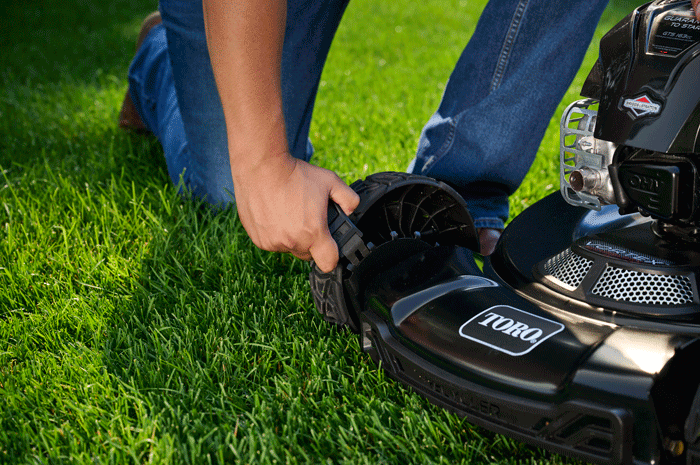
Credit: www.yardcare.com
Frequently Asked Questions
How Often Should I Adjust The Cutting Height?
Adjust the cutting height at least twice a year—once in spring and once in summer. If you notice changes in grass growth or color, adjust more often.
Can I Use The Same Height For All Grass Types?
No. Each grass type has a recommended height range. Using the wrong setting can lead to unhealthy grass or more weeds.
Is It Safe To Adjust Cutting Height While The Mower Is Running?
Never adjust the height with the mower running. Always turn off the engine, remove the key, and wait for all parts to stop moving.
Why Does My Mower Leave Uneven Patches?
This is usually due to an uneven deck, dull blades, or inconsistent tire pressure. Check and fix these before mowing again.
What Happens If I Cut My Grass Too Short?
Cutting too short can stress the grass, cause brown spots, and let weeds take over. Try not to remove more than one-third of the blade at a time.
Getting the right cutting height on your riding mower isn’t just about following steps. It’s about understanding your lawn’s needs, adjusting with the seasons, and caring for your equipment. With the tips and advice here, you’ll enjoy a healthier lawn and a mower that works better, longer.