

Last updated: October 2026 · Written by the LawnVibe editorial team.
A pellet grill is only as good as the fuel you feed it. Wood pellets made for cooking are compressed hardwood sawdust that burns cleanly and feeds steadily through the grill's auger, producing both heat and smoke. The wood species shapes the flavor of everything you cook, and pellet quality affects temperature stability, ash and how often you have to clean the fire pot. Choosing the best wood pellets for pellet grill cooking means picking a flavor profile that suits your food and a brand that burns consistently.
Our picks are based on published product information and established barbecue practice, not on hands-on testing. Flavor preferences are personal, so treat our pairing suggestions as starting points. For grill care tips, see our guide on how to maintain a pellet grill.
Our Top Picks

Traeger Signature Blend Wood Pellets, 18 lb
Best for: Everyday grilling and smoking
A hickory, maple and cherry blend that Traeger positions as its all-purpose pellet for beef, poultry, pork and vegetables.
- Balanced smoke for most foods
- Widely available
- Made for pellet grills
- Blend, not single-wood
- Smaller 18 lb bag

Traeger Hickory Hardwood Pellets, 18 lb
Best for: Brisket, ribs and pork shoulder
Hickory pellets for a stronger, classic barbecue smoke flavor on long cooks.
- Strong traditional BBQ flavor
- Good for low-and-slow cooks
- Can overpower fish and vegetables

Bear Mountain Gourmet Blend Pellets, 2 x 20 lb
Best for: Frequent cooks who want bulk
A two-bag pack of Bear Mountain’s Gourmet Blend, listed as working in all pellet grills.
- Two bags for regular cooking
- Sweet, mild blend
- Needs dry storage space
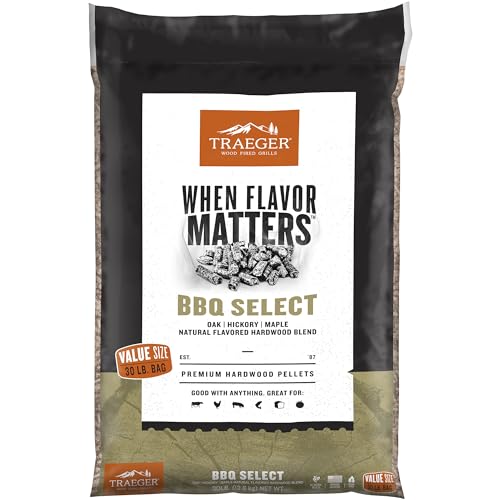
Traeger BBQ Select Wood Pellets
Best for: Traeger owners on a budget
Traeger’s BBQ Select blend aimed at everyday barbecue at a lower cost per pound than premium single woods.
- Traeger quality at a lower cost tier
- Versatile blend
- Milder flavor than single hardwoods

Kona Smoker Pellets Variety Pack, 8 x 1 lb
Best for: Experimenting with flavors
Eight one-pound bags of different woods so you can try flavors before buying full bags.
- Try several woods
- Small resealable bags
- Too small for long cooks
- Check grill compatibility
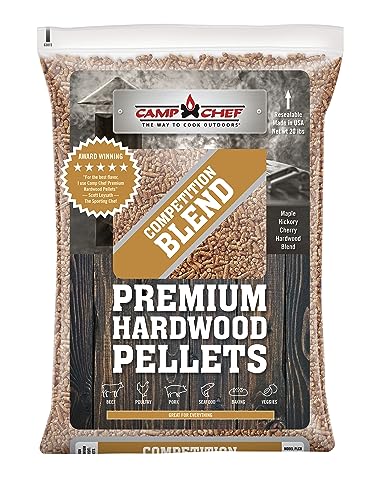
Camp Chef Competition Blend BBQ Pellets
Best for: Pitmasters wanting a sweet-smoky blend
A maple, hickory and cherry style competition blend from Camp Chef for smoking, roasting and baking.
- Balanced competition-style blend
- Works across many foods
- Flavor milder than straight hickory
Comparison Table
| # | Product | Best for | Link |
|---|---|---|---|
| 1 | Traeger Signature Blend Wood Pellets, 18 lb | Everyday grilling and smoking | Check price |
| 2 | Traeger Hickory Hardwood Pellets, 18 lb | Brisket, ribs and pork shoulder | Check price |
| 3 | Bear Mountain Gourmet Blend Pellets, 2 x 20 lb | Frequent cooks who want bulk | Check price |
| 4 | Traeger BBQ Select Wood Pellets | Traeger owners on a budget | Check price |
| 5 | Kona Smoker Pellets Variety Pack, 8 x 1 lb | Experimenting with flavors | Check price |
| 6 | Camp Chef Competition Blend BBQ Pellets | Pitmasters wanting a sweet-smoky blend | Check price |
A Closer Look at Each Pick
Traeger Signature Blend, best all-purpose. If you only buy one bag, a balanced blend of hickory, maple and cherry handles weeknight chicken, weekend ribs and grilled vegetables alike.
Traeger Hickory, best for bold smoke. The classic barbecue wood for pork and beef when you want a noticeable smoke flavor.
Bear Mountain Gourmet Blend 2-pack, best value blend. Frequent cooks go through pellets quickly; a two-pack keeps you stocked.
Traeger BBQ Select 30 lb, best budget Traeger. A large bag for everyday cooking, baking and roasting.
Kona variety pack, best variety pack. Small resealable bags let you try different woods, and suit Ninja Woodfire-style grills that use pellets mainly for flavor.
Camp Chef Competition Blend, best competition blend. Camp Chef markets this blend for smoking, baking and roasting, and its mix of hardwoods gives a balanced sweet-smoky profile that suits ribs, chicken and pork. It is a good alternative if you want something between a mild fruitwood and straight hickory.
How Wood Pellets Work in a Pellet Grill
Pellets sit in a hopper and an electric auger feeds them into a small fire pot, where a hot rod ignites them. A fan supplies air and the controller adjusts the feed rate to hold your set temperature. At low temperatures, pellets smolder and produce more smoke; at high temperatures, they burn hotter and cleaner with less smoke. That is why low-and-slow cooks taste smokier than high-heat grilling on the same pellets.
Wood Flavor Pairing Guide
Hickory. Strong, savory, bacon-like. Best for pork, ribs, beef and bacon.
Oak. Medium and versatile. Excellent for beef brisket and a good base for blends.
Mesquite. Very bold and earthy. Great for beef and Tex-Mex dishes; use carefully on long cooks.
Apple. Mild and sweet. Excellent for pork, poultry and fish.
Cherry. Mild, fruity and gives a rich mahogany color. Great on poultry, pork and beef.
Maple. Mild and slightly sweet. Good for poultry, vegetables and baking.
Pecan. Nutty and a little stronger than fruitwoods. Excellent for poultry and pork.
Alder. Delicate. Traditional for salmon and other fish.
Blends. Combine woods for balanced, versatile flavor.
What to Look for in Quality Pellets
100% Hardwood
Look for pellets labeled as 100% hardwood for cooking. Some pellets use a base wood such as oak or alder flavored with a smaller proportion of the named wood; this is common and fine, but pure single-species pellets give a more distinct flavor.
Low Moisture and Low Dust
Good pellets are shiny, hard and snap cleanly. A lot of dust at the bottom of the bag suggests poor quality or damage, and dust can clog the auger.
Consistent Size
Uniform pellets feed smoothly and burn evenly, helping your grill hold temperature.
Low Ash
Low-ash pellets mean less frequent cleaning of the fire pot and fewer temperature swings.
Food Grade
Only use pellets made for cooking. Heating pellets are not suitable.
Pellets for Specific Foods
Brisket. Oak or a hickory and oak blend for steady smoke over a long cook.
Pork shoulder and ribs. Hickory, apple, cherry or a blend.
Chicken and turkey. Apple, cherry, maple or pecan for mild, sweet smoke and good skin color. See our guide on smoking turkey on a pellet grill.
Fish. Alder or apple.
Vegetables. Maple, apple or a mild blend.
Pizza and baking. Mild woods like maple or a fruitwood blend.
How to Get More Smoke Flavor
Cook at lower temperatures for at least part of the cook, where pellets smolder and produce more smoke. Many grills have a smoke setting for this. A smoke tube filled with pellets adds extra smoke without changing grill temperature. Start meat cold from the refrigerator, as smoke adheres better to cool, moist surfaces. Avoid opening the lid frequently.
How to Store Wood Pellets
Moisture is the enemy of pellets. Damp pellets swell, crumble into sawdust and can jam the auger or cause ignition problems. Store pellets in a sealed, airtight container such as a lidded bucket or dedicated pellet bin, off the floor in a dry garage or shed. Do not leave pellets in the hopper for weeks between cooks, especially in humid weather; empty the hopper back into the storage container.
Pellet Consumption
Pellet consumption varies with grill size, outdoor temperature, wind and cooking temperature. Low-temperature smoking uses fewer pellets per hour than high-heat searing. Cold, windy weather increases consumption. An insulated blanket for your grill can help in winter.
Switching Flavors Between Cooks
To change flavors, run the hopper low or use the hopper clean-out door if your grill has one, then add the new pellets. Mixing a small amount of a stronger wood into a mild blend lets you fine-tune flavor without buying many bags.
Safety Tips
Keep pellets away from heat sources and open flames when storing. Follow your grill manufacturer's start-up and shutdown procedures to prevent burn-back into the auger. Clean ash from the fire pot regularly, as excess ash can cause ignition problems or flare-ups.
Blended vs Single-Wood Pellets
Blended pellets combine two or more woods to create a balanced flavor that works with many foods. They are forgiving, which makes them ideal for beginners and for cooks who grill a variety of meats and vegetables in one session. Single-wood pellets deliver a more distinct, recognizable character, such as the strong savoriness of hickory or the gentle sweetness of apple. Many experienced pitmasters keep a blend for everyday cooking and a few single woods for specific dishes. Be aware that some pellets labeled with a single flavor are made with a base wood such as oak or alder plus a percentage of the flavor wood. Brands that state their pellets are made entirely from the named species give the purest flavor.
Do Pellet Brands Really Matter?
Pellet quality varies between brands and even between batches. Differences show up in how cleanly pellets burn, how much ash they leave, how consistent the size is and how much dust is in the bag. Lower-quality pellets can cause temperature swings, more frequent fire pot cleaning and, in some cases, auger jams. Grill manufacturers often recommend their own pellets, and some warranties mention approved fuel, so check your manual. Beyond that, the best approach is to try a few reputable brands and stick with those that burn cleanly in your grill.
Pellets for Cold-Weather Cooking
In winter, pellet grills burn more fuel to maintain temperature, especially in wind. Keep extra pellets on hand, store them indoors where they stay dry and avoid leaving them in the hopper overnight where condensation can form. An insulated grill blanket and a windbreak can reduce pellet use noticeably. Preheat a little longer in cold weather so the cooking chamber is fully up to temperature before adding food.
Using Pellets in Smoke Tubes and Gas Grills
Pellets are not only for pellet grills. A perforated smoke tube or smoker box filled with pellets and lit with a torch will smolder for hours, adding smoke flavor to gas grills, charcoal grills and even pellet grills at higher temperatures. Hickory, apple and cherry pellets work well this way. Place the tube away from direct high heat so it smolders rather than burns quickly.
Reading a Pellet Bag Label
Check the label for the wood species and whether the pellets are 100% that species or a blend with a base wood. Look for statements that the pellets are food grade and free from fillers, binders, oils or chemicals. Many reputable brands also list their manufacturing location. A bag with a clear description of its contents is a good sign.
Troubleshooting Pellet Problems
Grill will not ignite. Check for a full fire pot of ash or unburned pellets, damp pellets or an empty auger. Clean the fire pot and prime the auger according to your manual.
Temperature swings. Inconsistent pellets, dust, a dirty fire pot, wind or opening the lid frequently can cause swings. Try a different brand and clean the grill.
Auger jam. Usually caused by swollen, damp pellets or excessive dust. Empty the hopper, clear the auger following the manufacturer's instructions and store pellets dry.
Bitter or acrid taste. Often caused by dirty smoke from smoldering ash, old grease or poor-quality pellets. Clean the grill and make sure the fire is burning cleanly.
Too little smoke flavor. Cook at a lower temperature for longer, use stronger woods or add a smoke tube.
Cleaning the Fire Pot
Ash builds up in the fire pot with every cook. Many manufacturers recommend vacuuming ash from the fire pot and cooking chamber every few cooks or after long smokes, using a shop vacuum once the grill is completely cool. Clean ash keeps ignition reliable and temperatures steady. Regular grease management also reduces the risk of grease fires.
Choosing a Pellet Storage Container
A dedicated pellet storage bin, a lidded five-gallon bucket with a gasket or a large sealed plastic tote all work. Choose a container that holds at least one full bag, with a tight lid to keep out moisture and pests. A screen insert or sifter at the top can catch dust when you pour pellets into the hopper, reducing the dust that reaches the auger.
Common Pellet Mistakes
Common mistakes include storing pellets in the open bag in a damp garage, leaving pellets in the hopper for weeks, using heating pellets, buying the cheapest pellets with lots of dust, expecting heavy smoke at high temperatures and ignoring ash buildup in the fire pot.
How Many Pellets Do You Need?
Pellet use depends on the grill, the weather and the cooking temperature, so manufacturers give only rough ranges. As a practical rule, keep at least one spare bag on hand beyond what you expect to use, especially before a long brisket or pork shoulder cook. Running out of pellets mid-cook causes the fire to go out, and relighting can produce dirty smoke. Many cooks check the hopper level every few hours on long smokes and top up before it drops below a quarter full.
The Bottom Line on the Best Wood Pellets for Pellet Grill Cooking
For most pellet grill owners, a balanced blend like Traeger Signature Blend is the most versatile choice. Pick Traeger Hickory for bold pork and beef, Bear Mountain's two-pack for value, Traeger BBQ Select for big-bag everyday cooking and the Kona variety pack to experiment or for Ninja Woodfire grills. Store pellets dry, match wood to food and cook low and slow when you want more smoke.
Frequently Asked Questions
What wood pellets are best for beginners?
A balanced blend such as hickory, maple and cherry is the easiest starting point because it works well with almost any food. Try single woods later once you know what flavors you like.
Can I use any brand of pellets in my grill?
Most pellet grills accept any food-grade hardwood pellets of standard size. Check your grill manual; some manufacturers recommend their own pellets for warranty reasons.
Do wood pellets go bad?
Pellets absorb moisture and swell into sawdust if stored damp, which can jam the auger. Kept dry in a sealed container, they last a long time.
What pellets are best for brisket?
Oak, hickory and mesquite are traditional for beef. Oak gives steady, medium smoke; hickory is stronger; mesquite is very bold and best used in moderation or blends.
Are heating pellets the same as grilling pellets?
No. Heating pellets may contain softwoods, binders or additives not intended for food. Only use pellets labeled for cooking.