
Last updated: October 2026 · Written by the LawnVibe editorial team.
For big lawns, thick grass and long mowing sessions, a gas mower still has a lot going for it. The best gas lawn mower gives you strong cutting power, unlimited runtime with a quick refill, and the durability to handle overgrown patches that would drain a battery. It also needs more care than an electric mower, so choosing a well-designed model matters.
This guide compares eight gas lawn mowers, from compact 17 inch push mowers for small yards to high-wheel, rear-wheel-drive self-propelled mowers for large or hilly properties. You will also learn how to choose the right engine size, deck width and drive system, and how to keep a gas mower running for years.
| # | Product | Best for | Link |
|---|---|---|---|
| 1 | Honda 660250 21 inch 187cc 4-in-1 Versamow Mower | Owners who want a premium cut | Check price |
| 2 | YARDMAX 22 inch 201cc High-Wheel RWD Self-Propelled Mower | Large lawns and hills | Check price |
| 3 | Yard Force 22 inch Self-Propelled Mower with Briggs & Stratton 150cc | Durable everyday mowing | Check price |
| 4 | CRAFTSMAN M215 21 inch Self-Propelled Gas Mower | Medium suburban lawns | Check price |
| 5 | YARDMAX 21 inch 170cc 3-in-1 Push Mower | Flat lawns on a budget | Check price |
| 6 | BILT HARD 21 inch 201cc 3-in-1 Push Mower | Thick grass on a push mower | Check price |
| 7 | PowerSmart 21 inch 144cc 2-in-1 Push Mower | Small to medium lawns | Check price |
| 8 | PowerSmart 17 inch 144cc OHV Mower | Small yards and tight storage | Check price |
How We Chose the Best Gas Lawn Mower
We did not run hands-on lab tests. We compared these mowers on published specifications and features that matter in real use: engine size and brand, push or self-propelled drive, front-wheel versus rear-wheel drive, deck width and material, cutting height positions, mulching, bagging and side discharge options, wheel size and ease of starting. We also weighed recurring owner feedback themes, such as starting reliability and handle comfort.
Specifications change between model years, so confirm current details on the listing before you buy.
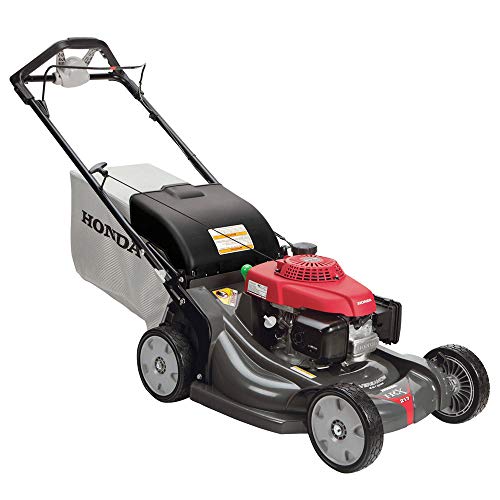
Honda 660250 21 inch 187cc 4-in-1 Versamow Mower
Best for: Owners who want a premium cut
A 21 inch gas mower with a 187cc Honda engine, the Versamow system with Clip Director for mulch, bag, discharge or blended clipping control, and twin MicroCut blades.
- Flexible clipping control
- Twin MicroCut blades for fine clippings
- Respected Honda engine
- Premium price
- Heavier than basic push mowers
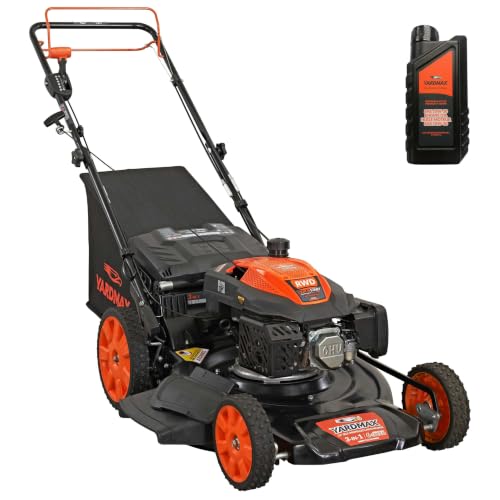
YARDMAX 22 inch 201cc High-Wheel RWD Self-Propelled Mower
Best for: Large lawns and hills
A 22 inch 3-in-1 self-propelled mower with a 201cc engine, rear-wheel drive, high rear wheels and Select PACE six-speed CVT drive control.
- Big 201cc engine
- RWD traction on slopes
- Wide 22 inch deck
- Heavy to manoeuvre in tight spots
- More fuel use than smaller engines

Yard Force 22 inch Self-Propelled Mower with Briggs & Stratton 150cc
Best for: Durable everyday mowing
A self-propelled mower with a Briggs & Stratton 150cc engine, a 22 inch steel deck described as made in America, 3-in-1 cutting and high rear-wheel drive.
- Well-known Briggs & Stratton engine
- 22 inch steel deck
- High rear-wheel drive
- 150cc is modest for very thick grass
- Steel deck needs cleaning to limit rust
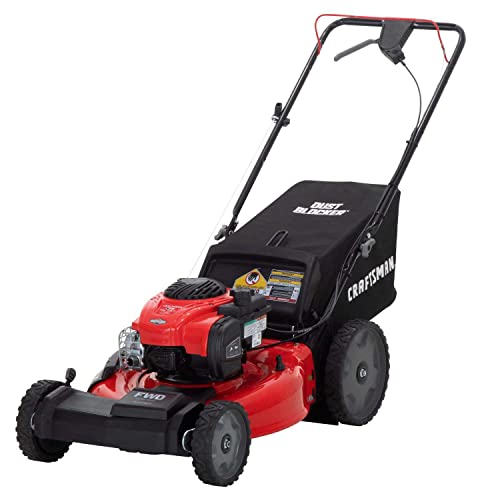
CRAFTSMAN M215 21 inch Self-Propelled Gas Mower
Best for: Medium suburban lawns
A 21 inch 3-in-1 self-propelled mower with a 140cc OHV engine, rear bag and six cutting heights, from a familiar homeowner brand.
- Self-propelled at a mid-range price
- 3-in-1 with bag
- Six height positions
- 140cc is best for regular mowing
- Not for very large properties
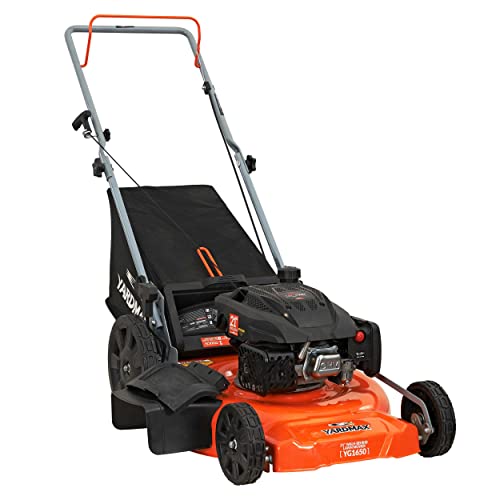
YARDMAX 21 inch 170cc 3-in-1 Push Mower
Best for: Flat lawns on a budget
A 21 inch 3-in-1 push mower with a 170cc engine and high rear wheels, offering more engine than many push mowers in its class.
- Strong 170cc engine
- High rear wheels roll easily
- Mulch, bag or side discharge
- No self-propel
- Heavier to push uphill

BILT HARD 21 inch 201cc 3-in-1 Push Mower
Best for: Thick grass on a push mower
A 21 inch push mower with a 201cc four-cycle engine, bagging, mulching and side discharge, and ten cutting height positions.
- Large 201cc engine for a push mower
- Ten height positions
- 3-in-1 versatility
- Push only
- Less established brand

PowerSmart 21 inch 144cc 2-in-1 Push Mower
Best for: Small to medium lawns
A 21 inch 2-in-1 mulching push mower with a 144cc engine, six height positions and high rear wheels at an entry-level price.
- Affordable
- High rear wheels
- Simple to maintain
- 2-in-1 rather than 3-in-1
- Basic features

PowerSmart 17 inch 144cc OHV Mower
Best for: Small yards and tight storage
A compact 17 inch gas mower with a 144cc OHV engine, sized for small lawns and narrow spaces where a 21 inch mower is overkill.
- Compact and light
- Easy to store
- Low cost
- Narrow 17 inch deck
- Slow on larger lawns
Gas Lawn Mower Buying Guide
Engine size (cc)
Gas mower engines are measured in cubic centimetres (cc). As a general guide:
- 125cc to 150cc: good for small to medium lawns with regular mowing.
- 150cc to 175cc: a strong all-round range for most suburban lawns.
- 175cc to 200cc and above: extra torque for thick, tall or damp grass, and for wider decks or self-propelled drive.
Engine brand and design matter as well as size. Overhead valve (OHV) engines are common in modern mowers and are generally efficient and reliable.
Push vs self-propelled
Push mowers are lighter, cheaper and have fewer parts to maintain. They are ideal for small, flat lawns. Self-propelled mowers drive the wheels for you, reducing effort on large lawns, slopes and rough ground. If you mostly want a push model, see our guide to the best push gas lawn mower. For a broader look at powered drive across all fuel types, read our guide to the best self-propelled lawn mower.
Front-wheel vs rear-wheel drive
- Front-wheel drive (FWD): easy to turn by tipping the front wheels up. Works well on flat lawns with lots of obstacles.
- Rear-wheel drive (RWD): better traction on hills and when the grass bag is full, because weight sits over the rear wheels.
Some mowers also offer variable speed control, which lets you match walking pace instead of being pulled along.
Deck width and material
A 21 inch deck is the standard for most residential gas mowers. Wider 22 inch and larger decks cut more grass per pass, which helps on big lawns. Steel decks are rigid and durable; keep them clean and dry to reduce rust.
High rear wheels
Large rear wheels roll more easily over bumps, roots and soft ground, and they make turning and pushing less tiring. They are a smart choice for uneven lawns. Our guide to the best gas mower for uneven terrain covers this in more detail.
Mulching, bagging and side discharge
A 3-in-1 mower can mulch, bag or side discharge. Mulching returns fine clippings to the lawn as a natural fertilizer. Bagging gives the cleanest finish and helps in leaf season. Side discharge is best for long grass. Some premium mowers let you blend mulching and bagging.
Starting system
Most gas mowers use a recoil pull start. Look for features such as an automatic choke or primer bulb, which make starting easier. Some models offer electric start for push-button convenience. If your mower is hard to start, our guide on how to start a gas lawn mower walks through the correct sequence.
Cutting height adjustment
Single-lever height adjustment is fastest. Wheel-by-wheel adjustment is common on budget models and works fine if you seldom change heights. A wide range of positions lets you raise the cut in summer and for overgrown grass.
Best Gas Lawn Mower by Yard Type
Small lawns
A compact 17 to 21 inch push mower with a 140cc to 150cc engine is plenty. Lighter mowers are easier to push and store.
Medium suburban lawns
A 21 inch 3-in-1 mower with a 150cc to 170cc engine. Self-propelled drive is a welcome upgrade if the lawn has any slope.
Large lawns
A 22 inch or wider self-propelled mower with a 170cc to 200cc engine and rear-wheel drive. For acreage, consider a riding mower instead. Our guide to the best gas mower for large lawns covers more powerful options.
Hills and slopes
Rear-wheel drive and high rear wheels give the best traction. Always mow across slopes rather than up and down with a walk-behind mower, and avoid slopes that are too steep to stand on securely.
Gas vs Electric Lawn Mowers
| Factor | Gas mower | Electric mower |
|---|---|---|
| Power | Very strong | Good to very strong |
| Runtime | Unlimited with refuelling | Limited by battery or cord |
| Noise | Loud | Much quieter |
| Maintenance | Oil, fuel, plug, filter | Blade and battery care |
| Exhaust | Yes | None at point of use |
| Best for | Large, rough, overgrown lawns | Small to medium lawns |
Small engines in lawn equipment are regulated by the U.S. Environmental Protection Agency; see its emission standards for small nonroad spark-ignition engines for background. If quiet operation and low maintenance matter more to you than unlimited runtime, compare our picks for the best electric lawn mower, or read the full gas vs electric lawn mower comparison.
Gas Lawn Mower Maintenance Checklist
A gas mower lasts much longer with simple, regular care:
- Check the oil before every use and change it as the engine manual recommends, usually at least once a season.
- Clean or replace the air filter. A clogged filter makes the engine run poorly and use more fuel.
- Replace the spark plug periodically for easy starting.
- Sharpen the blade at least once a season. A dull blade tears grass, leaving brown tips.
- Clean under the deck to stop clippings building up and causing rust.
- Use fresh fuel. Gasoline degrades over time. Use a fuel stabilizer or empty the tank before winter storage.
Our full guide on how to maintain a gas lawn mower explains each step, and how to drain gas from a lawn mower covers end-of-season storage.
Common Gas Mower Problems
- Hard starting: often caused by old fuel, a dirty air filter or a worn spark plug.
- Engine surging: usually a fuel delivery issue such as a partially clogged carburetor or old fuel.
- Smoke: can indicate too much oil or a mower tipped the wrong way during maintenance.
- Fuel leaks: check the fuel cap, lines and carburetor bowl gasket. See how to fix a lawn mower leaking gas.
- Uneven cut: a dull or bent blade or uneven tire pressure on models with pneumatic wheels.
Gas Mower Features Worth Paying For
- Variable-speed self-propel. A speed dial or a CVT-style drive lets you set a comfortable walking pace instead of fighting the mower.
- Blade clipping control. Some premium mowers, such as Honda's Clip Director, let you blend mulching and bagging without swapping parts.
- Washout port. A hose connector on the deck makes it much easier to flush away caked clippings.
- Folding handle. Saves a surprising amount of garage space, especially with a 22 inch deck.
- Ball-bearing wheels. They roll more smoothly and tend to last longer than plain bushings.
How Long Does a Gas Lawn Mower Last?
With regular oil changes, a clean air filter, a sharp blade and fresh fuel, a well-built residential gas mower can last many seasons. The most common causes of early failure are stale fuel gumming up the carburetor, running the engine low on oil and letting clippings rust the deck. Simple habits prevent all three.
Winter Storage for Gas Mowers
- Deal with the fuel. Either add a fuel stabilizer and run the engine for a few minutes so treated fuel reaches the carburetor, or run the tank dry.
- Change the oil so used oil does not sit in the engine over winter.
- Clean the deck thoroughly and let it dry.
- Remove and sharpen the blade, or note it for spring service.
- Store indoors in a dry shed or garage, away from water heaters, furnaces and other ignition sources.
In spring, check the oil level, fit a fresh spark plug if needed, and start with fresh fuel.
Gas Mower Safety Tips
- Refuel only when the engine is off and cool, and do it outdoors.
- Store fuel in an approved container, away from living spaces and heat sources.
- Disconnect the spark plug wire before clearing the deck or working on the blade.
- Clear the lawn of sticks, stones and toys before mowing.
- Wear closed shoes, long pants, eye protection and hearing protection. Gas mowers are loud enough that hearing protection is a sensible habit.
- Keep children and pets indoors while you mow.
Mowing Tips for a Better Cut
- Follow the one-third rule. Remove no more than about a third of the blade height at once to reduce stress on the grass.
- Mow dry grass. Wet grass clumps, clogs the deck and leaves an uneven finish.
- Overlap passes slightly so you do not leave thin uncut strips.
- Change direction each time you mow to prevent ruts and help grass grow upright.
Final Verdict: Which Gas Lawn Mower Should You Buy?
The best gas lawn mower for you depends on lawn size, terrain and how much effort you want to put in.
- Best overall: the Honda 21 inch Versamow with Clip Director, for a premium cut and flexible clipping control.
- Most powerful self-propelled: the YARDMAX 22 inch 201cc high-wheel RWD mower.
- Best for American-made steel deck fans: the Yard Force 22 inch self-propelled mower with a Briggs & Stratton engine.
- Best mid-range self-propelled: the CRAFTSMAN M215 21 inch.
- Best value push mowers: the YARDMAX 21 inch 170cc and BILT HARD 21 inch 201cc.
- Best budget and compact options: the PowerSmart 21 inch and 17 inch push mowers.
Pick the right drive system for your terrain and keep up with basic maintenance, and a gas mower will handle years of demanding mowing.
Frequently Asked Questions
What is the best gas lawn mower for most homeowners?
For a typical suburban lawn, a 21 inch 3-in-1 gas mower with a 140cc to 170cc engine covers most needs. Choose self-propelled drive if your yard is large or sloped, and a push model if it is small and flat.
What engine size do I need in a gas mower?
Around 140cc to 170cc is enough for most residential lawns. Larger engines near 200cc help in thick, tall or wet grass and with wider decks, but they add weight and fuel use.
Is a self-propelled gas mower worth it?
Yes, if you mow a large lawn, slopes or bumpy ground. Powered drive reduces effort significantly. For small, flat yards, a push mower is lighter, simpler and cheaper.
How often should I service a gas lawn mower?
Follow the engine manual. Most owners change the oil at least once a season, check the air filter regularly, replace the spark plug periodically and sharpen the blade at least once a year.
What fuel should I use in a gas mower?
Use the fuel type the engine manufacturer recommends, usually fresh unleaded gasoline. Avoid old fuel, and use a fuel stabilizer or drain the tank before long storage.
Gas or electric: which mower is better?
Gas mowers are best for larger, rougher or overgrown properties and unlimited runtime. Electric mowers are quieter and need less maintenance, which suits small to medium lawns.