

Last updated: October 2026 · Written by the LawnVibe editorial team.
Even a well-watered, well-fed lawn can struggle if the soil underneath is packed hard. Foot traffic, mowing and heavy rain compact soil over time, squeezing out the air and water grass roots need. Aeration fixes that by opening the soil so water, oxygen and nutrients can reach the roots again. The best lawn aerator for you depends on your lawn size, your soil and whether you want to push, pull or tow.
This guide compares ten aerators across every common type: manual core tools, rolling core and spike aerators, push spike aerators and tow-behind plug and spike aerators for riding mowers and tractors. We also include an electric dethatcher for lawns where thatch, rather than compaction, is the main problem. Below the picks, you will learn which type to choose, when to aerate and how to get the best results.
| # | Product | Best for | Link |
|---|---|---|---|
| 1 | Agri-Fab 48 inch Tow-Behind Plug Aerator | Large lawns with a riding mower | Check price |
| 2 | Brinly 40 inch Tow-Behind Plug Aerator | Medium to large lawns | Check price |
| 3 | VEVOR 40 inch Tow-Behind Plug Aerator | Budget-minded large-lawn owners | Check price |
| 4 | Brinly SAT2-40BH-P 40 inch Tow-Behind Spike Aerator | Light aeration before overseeding | Check price |
| 5 | 60 inch 3-Point Plug Aerator | Fields and very large lawns | Check price |
| 6 | Agri-Fab 45-0365 16 inch Push Spike Aerator | Small to medium lawns | Check price |
| 7 | VEVOR 16.6 inch Rolling Lawn Core Aerator | Core aeration without a tow vehicle | Check price |
| 8 | Yard Butler Manual Lawn Coring Aerator (ID-6C) | Small lawns and problem spots | Check price |
| 9 | Step N Tilt Core Lawn Aerator V4 Kit | Easier hand aeration | Check price |
| 10 | BILT HARD 13 inch Electric Dethatcher and Scarifier | Lawns with thick thatch | Check price |
How We Chose the Best Lawn Aerator
We did not run hands-on tests. We compared published specifications and features: aeration type (core, plug or spike), working width, tine depth, construction materials, weight tray capacity for tow-behind models, ease of use for manual tools and suitability for different lawn sizes. We also considered guidance from university extension services on the benefits of core aeration.
Specifications change, so confirm details on the listing before you buy.
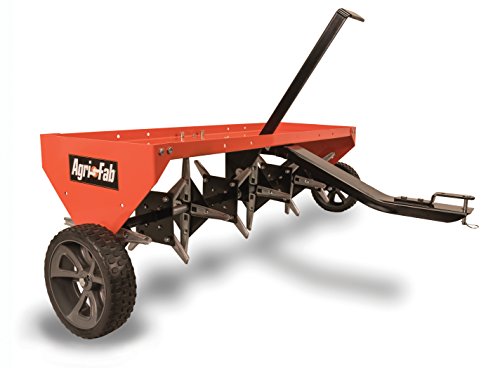
Agri-Fab 48 inch Tow-Behind Plug Aerator
Best for: Large lawns with a riding mower
A 48 inch tow-behind aerator with 32 galvanized knives that pulls plugs up to 3 inches deep, with a universal hitch for lawn tractors and riding mowers.
- Wide 48 inch coverage
- Plugs up to 3 inches
- Universal hitch
- Needs a tow vehicle
- Requires added weight in hard soil

Brinly 40 inch Tow-Behind Plug Aerator
Best for: Medium to large lawns
24 heat-treated, 16-gauge steel plugging spoons remove plugs up to 3 inches, with a narrower plug design and universal hitch.
- Heat-treated steel spoons
- Up to 3 inch plugs
- Narrower 40 inch width
- Needs a tow vehicle
- Weight tray needs loading
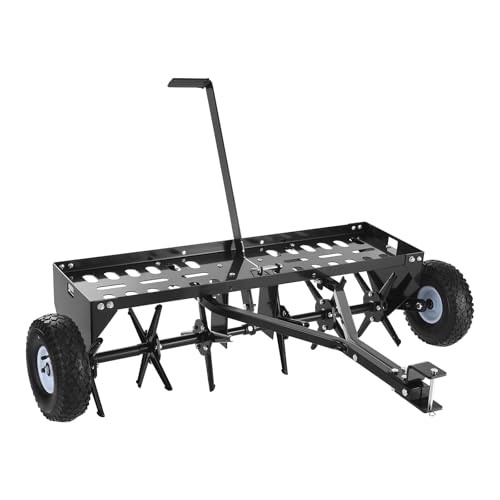
VEVOR 40 inch Tow-Behind Plug Aerator
Best for: Budget-minded large-lawn owners
A 40 inch core aerator with a universal hitch and a weight capacity of around 120 lb, built with rust-resistant steel.
- 40 inch width
- Large weight capacity
- Rust resistant
- Newer brand
- Assembly required
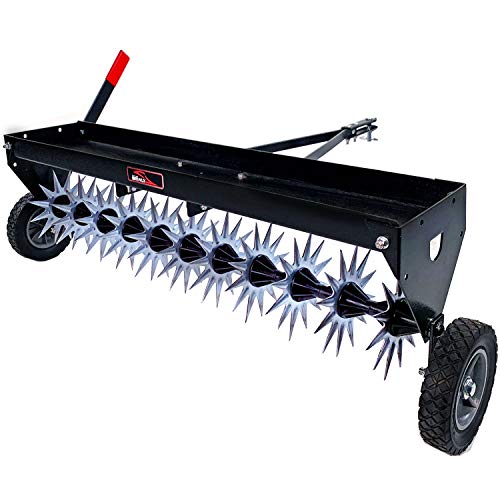
Brinly SAT2-40BH-P 40 inch Tow-Behind Spike Aerator
Best for: Light aeration before overseeding
11 tine stars with 12 spike tips each penetrate up to 2 inches, with transport wheels for easy movement between areas.
- Transport wheels
- Strong 3-D tines
- Easy to tow
- Spike rather than core
- Less effective on heavy compaction

60 inch 3-Point Plug Aerator
Best for: Fields and very large lawns
A 60 inch 3-point hitch aerator with 66 replaceable coring plugs that penetrate up to 3 inches, for Category 0 and 1 tractors.
- Very wide 60 inch coverage
- 66 coring plugs
- Weight tray
- Requires a compatible tractor
- Large and heavy

Agri-Fab 45-0365 16 inch Push Spike Aerator
Best for: Small to medium lawns
A walk-behind spike aerator with five wheels of 7 inch spikes and a steel weight tray, giving up to 2-1/2 inches of penetration.
- Walk-behind design
- Weight tray
- Up to 2.5 inch depth
- Spike aeration only
- Pushing effort

VEVOR 16.6 inch Rolling Lawn Core Aerator
Best for: Core aeration without a tow vehicle
Angled coring tines pull 2 inch soil plugs, with wide side slots to reduce clogging, in a push-along roller design.
- True coring action
- Anti-clog tines
- No tow vehicle needed
- Physical effort
- Smaller working width

Yard Butler Manual Lawn Coring Aerator (ID-6C)
Best for: Small lawns and problem spots
A powder-coated steel coring tool with dual plugs and a foot bar for leverage, ideal for spot aeration and small lawns.
- Durable steel
- Dual plugs
- Low cost
- Slow for whole lawns
- Physical effort

Step N Tilt Core Lawn Aerator V4 Kit
Best for: Easier hand aeration
A patented step-and-tilt motion and larger stepping surface make core aeration easier on shoulders and back, with 3.4 inch tines.
- Ergonomic tilting motion
- Large step surface
- Deep 3.4 inch tines
- Assembly tools required
- Still manual work

BILT HARD 13 inch Electric Dethatcher and Scarifier
Best for: Lawns with thick thatch
A 12 amp corded dethatcher and scarifier with a 13 inch raking width and 8 gallon thatch bag for removing thatch layers.
- Removes thatch effectively
- Thatch bag included
- 2-in-1 design
- Does not relieve deep compaction
- Corded range
Core vs Spike Aeration
Core aerators, also called plug aerators, use hollow tines or spoons to pull small plugs of soil out of the lawn. This physically removes soil, creating space for air, water and roots, and is the method most widely recommended by turf experts. Kansas State University Research and Extension explains the benefits in its guide to aerating your lawn.
Spike aerators push solid spikes into the soil, creating holes without removing soil. They are simpler and cheaper and can help with light aeration and seed-to-soil contact, but because they push soil sideways they can add some compaction around each hole. They are best for lightly compacted lawns and for use before overseeding.
For a deeper look, see our guides to the best core aerator and the best spike aerator.
Types of Lawn Aerators
Manual core tools
Step-on tools with two to four hollow tines. They are inexpensive and effective for small lawns, problem spots and areas around trees, but slow for whole lawns. See our guide to the best manual lawn aerator.
Rolling aerators
Push-along rollers with spikes or coring tines. They cover ground faster than step-on tools and suit small to medium lawns.
Push spike aerators
Walk-behind units with spiked wheels and a weight tray. Adding weight helps the spikes penetrate.
Tow-behind aerators
Pulled behind a riding mower, lawn tractor or ATV. Plug and spike versions are available, with weight trays for deeper penetration. They are the most practical choice for large lawns if you own a tow vehicle. See our guide to the best lawn aerator for large lawns.
Gas core aerators
Walk-behind gas machines used by professionals. They are heavy and expensive and are mostly rented rather than bought by homeowners. If you are considering one, see our guide to the best gas-powered aerator.
Electric dethatchers and scarifiers
These are often marketed alongside aerators, but they mainly remove thatch, the layer of dead grass between blades and soil. They do not relieve deep compaction. If thatch is your problem, a dethatcher can help; for compacted soil, choose a core aerator. Our guide to the best electric aerator explains the difference.
Signs Your Lawn Needs Aeration
Not every lawn needs aerating every year, so it helps to know the signs. Water that puddles or runs off instead of soaking in is a common clue. So is soil that feels hard when you push a screwdriver into it, or thin grass in high-traffic areas such as paths and play spaces. Lawns on heavy clay soil, lawns that were laid on compacted construction fill and lawns with a thick spongy layer of thatch also tend to benefit.
A simple test is to dig out a small square of turf a few inches deep. If grass roots stop after only an inch or two, compaction may be limiting them. Healthy lawns usually have roots reaching several inches into the soil.
Rent or Buy?
For many homeowners, renting a gas core aerator once a year is the most cost-effective way to aerate a whole lawn. Rental machines are powerful and pull deep plugs, but they are heavy, need a vehicle to transport and must be returned on time. Buying makes more sense in a few situations: if you own a riding mower or tractor, a tow-behind aerator is affordable and always ready; if your lawn is small, a manual or rolling aerator costs little and stores easily; and if you aerate problem areas several times a year, owning a tool saves repeated rental trips. Some neighbours also share a tow-behind aerator or split a rental to cut costs.
Aeration Mistakes to Avoid
The most common mistake is aerating dry, hard soil, which keeps tines from penetrating and can damage tools. Water first. Another is aerating at the wrong time of year, such as during summer heat for cool-season grass, when the lawn cannot recover quickly. Many people also forget to mark sprinkler heads and shallow irrigation lines, which tines can break. Finally, raking up the soil plugs is unnecessary; they break down within a couple of weeks and return soil and microbes to the surface.
How to Choose a Lawn Aerator
Lawn size
- Small lawns and spot treatment: manual core tools or aerator shoes.
- Small to medium lawns: rolling core or spike aerators, or push spike aerators.
- Large lawns: tow-behind plug aerators, or rent a gas core aerator.
Soil type
Clay soils compact easily and benefit most from core aeration. Sandy soils compact less and may need aeration less often. Our guide to the best lawn aerator for clay soil covers heavy soils in more detail.
Tine depth
Deeper penetration, often up to around 3 inches for plug aerators, relieves more compaction. Weight trays and moist soil help tines go deeper.
Effort
Manual tools take the most effort per square foot. Tow-behind aerators take the least, but require a tow vehicle.
When and How to Aerate
Aerate when grass is actively growing so it recovers quickly. Cool-season lawns such as fescue, bluegrass and ryegrass are usually aerated in early fall or spring. Warm-season lawns such as Bermuda, zoysia and St. Augustine are best aerated from late spring to early summer. Your local cooperative extension office can give timing advice for your region and grass type.
Water the lawn a day or two before aerating so the soil is moist but not soggy; tines penetrate moist soil much more easily. Mark sprinkler heads, shallow cables and other obstacles. Make passes in one direction, then consider a second pass at an angle on heavily compacted lawns. Leave the soil plugs on the lawn to break down naturally. Our guides on how to aerate a lawn and how to core aerate a lawn yourself walk through each step.
What to Do After Aerating
Aeration is the perfect time to overseed and fertilize, because seed and nutrients can drop into the holes and reach the soil. Water lightly and regularly if you overseed. Avoid heavy traffic on the lawn for a little while so it can recover. Our guides on how to overseed a lawn after aerating and how to fertilize a lawn after aeration explain the next steps.
Aeration and Overall Lawn Health
Aeration works best as part of a complete lawn care routine. Mowing at the right height, watering deeply but less often, and fertilizing according to your grass type all encourage deeper roots that make the most of the space aeration creates. Reducing compaction in the first place helps too: create paths where people walk often, avoid parking on the lawn and keep heavy equipment off wet turf. Over time, a well-aerated, well-managed lawn becomes thicker, greener and more resistant to drought, weeds and disease. Our article on the benefits of aerating your lawn annually explains the long-term gains.
Aerator Maintenance
Clean soil from tines and spoons after each use, because dried soil can clog hollow tines. Check for bent or worn tines and replace them as needed. On tow-behind aerators, check hitch pins, wheels and bearings. Store aerators dry to prevent rust. Our guide on how to clean a lawn aerator after use covers the basics.
Aerating Around Obstacles
Use a manual core tool around trees, fences and garden beds where larger aerators cannot reach. Skip areas directly over shallow tree roots and irrigation lines.
What About Liquid Aerators?
Liquid aerators are soil conditioners sprayed onto the lawn. They are marketed as an easy alternative to mechanical aeration, but they do not physically remove soil or create holes the way a core aerator does. If compaction is your main problem, mechanical core aeration remains the method most turf experts recommend. Liquid products can be used alongside mechanical aeration, but they are not a substitute.
Final Verdict: Which Lawn Aerator Should You Buy?
The best lawn aerator matches your lawn size, soil and how you want to work.
- Best tow-behind plug aerator: the Agri-Fab 48 inch with 32 galvanized knives.
- Best compact tow-behind plug aerator: the Brinly 40 inch plug aerator.
- Best value tow-behind plug aerator: the VEVOR 40 inch plug aerator.
- Best tow-behind spike aerator: the Brinly SAT2-40 spike aerator.
- Best for tractors: the 60 inch 3-point plug aerator.
- Best push spike aerator: the Agri-Fab 45-0365 16 inch.
- Best rolling core aerator: the VEVOR 16.6 inch rolling core aerator.
- Best manual core tool: the Yard Butler coring aerator.
- Best ergonomic manual core tool: the Step N Tilt core aerator kit.
- Best for thatch rather than compaction: the BILT HARD 13 inch electric dethatcher and scarifier.
Aerate at the right time, follow up with seed and fertilizer, and your lawn will grow thicker and healthier from the roots up.
Frequently Asked Questions
Is core aeration better than spike aeration?
University extension services generally recommend core aeration, which removes plugs of soil and relieves compaction. Spike aerators push holes into the soil, which can be useful for light aeration but may add some compaction around each hole.
When is the best time to aerate a lawn?
Aerate when your grass is actively growing. For cool-season grasses, early fall or spring is ideal; for warm-season grasses, late spring to early summer works best.
How often should I aerate my lawn?
Many lawns benefit from aeration once a year. Heavily used or clay lawns may need it more often, while sandy, lightly used lawns may need it less.
Should I rent or buy an aerator?
Renting a gas core aerator is common for once-a-year aeration of medium and large lawns. Buying makes sense for tow-behind aerators if you own a riding mower, or for manual tools on small lawns.
What should I do after aerating?
Leave the soil plugs on the lawn to break down, water as needed, and consider overseeding and fertilizing, since aeration gives seed and nutrients good access to the soil.