
Last updated: October 2026 · Written by the LawnVibe editorial team.
A manual lawn mower is the simplest machine in the garage: no gas, no battery, no cord and no noise beyond a soft whirring of blades. Push it and the reel spins, snipping grass like scissors for a clean, healthy cut. The best manual lawn mower is light enough to push easily, cuts at the right height for your grass and stays adjusted for a clean result. Our top pick is the Great States 18 inch push reel mower, which balances width and ease of use. Below we compare nine reel mowers, from light 14 inch models to a 20 inch reel and a battery-assisted option, and explain how to get the best results from one.
Listings change often, so check current details on Amazon before you buy. As an Amazon Associate we earn from qualifying purchases.
Our top picks at a glance
| # | Product | Best for | Link |
|---|---|---|---|
| 1 | Great States 18 inch Push Reel Lawn Mower | Small to medium lawns of fine grass | Check price |
| 2 | Greenworks 16 inch Reel Lawn Mower with Grass Catcher (25052) | Owners who want clippings collected | Check price |
| 3 | American Lawn Mower Company 1304-14GC 14 inch Reel Mower | Tiny lawns and older users | Check price |
| 4 | American Lawn Mower 20 inch Walk-Behind Reel Mower | Larger lawns of fine grass | Check price |
| 5 | GARDENA Classic 16 inch Reel Mower | Manicured lawns | Check price |
| 6 | WORKPROX 16 inch Push Reel Mower | Value-focused buyers | Check price |
| 7 | VEVOR 14 inch Push Reel Mower | Short, fine lawns | Check price |
| 8 | Greenworks 14 inch Reel Lawn Mower (RM1400) | Small yards and side lawns | Check price |
| 9 | Yard Force 15 inch 20V Cordless Reel Mower (2 Batteries) | People who want reel cut with less pushing | Check price |
Best manual lawn mower reviews

Great States 18 inch Push Reel Lawn Mower
Best for: Small to medium lawns of fine grass
An 18 inch manual reel mower that gives a clean scissor cut with no fuel, battery or cord, and covers more ground than 14 inch reels.
- 18 inch width covers more ground
- Clean reel cut
- Quiet and emission-free
- Needs regular mowing
- Heavier than 14 inch reels

Greenworks 16 inch Reel Lawn Mower with Grass Catcher (25052)
Best for: Owners who want clippings collected
A 16 inch manual reel mower supplied with a grass catcher for a tidier finish on small lawns.
- Catcher included
- Light
- Simple design
- Catcher fills quickly
- Small lawns only

American Lawn Mower Company 1304-14GC 14 inch Reel Mower
Best for: Tiny lawns and older users
A 14 inch five-blade reel mower with 10 inch polymer wheels, a 1 to 2.25 inch height range and a grass catcher.
- Very light and maneuverable
- Height range 1 to 2.25 inches
- From a long-established reel maker
- Narrow 14 inch cut
- Low maximum height for tall grasses
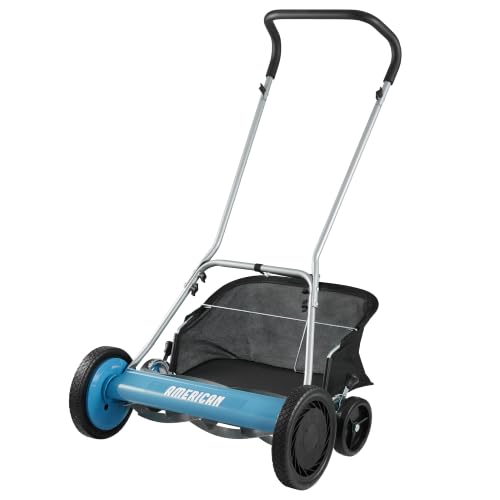
American Lawn Mower 20 inch Walk-Behind Reel Mower
Best for: Larger lawns of fine grass
A 20 inch reel mower from American Lawn Mower for covering more lawn per pass.
- Widest cut here
- Precise reel action
- Durable brand
- Heavier to push
- Check height range for your grass

GARDENA Classic 16 inch Reel Mower
Best for: Manicured lawns
A 16 inch manual reel mower built for quiet, emission-free mowing with a precise cut.
- Precise cut
- Quiet
- Light
- Not for tall grass
- Requires frequent mowing

WORKPROX 16 inch Push Reel Mower
Best for: Value-focused buyers
A 16 inch five-blade push reel mower with a scissor-like action designed not to tear grass.
- Affordable
- Five-blade reel
- Light
- Lesser-known brand
- Check adjustment quality

VEVOR 14 inch Push Reel Mower
Best for: Short, fine lawns
A 14 inch five-blade reel mower with a listed cutting height of 0.6 to 1.75 inches for very short lawns.
- Very low cut option
- Light
- Low cost
- Low maximum height
- Not for cool-season lawns kept tall
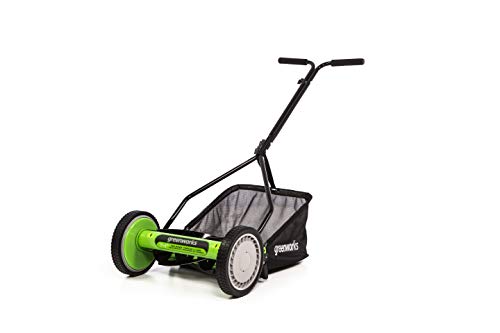
Greenworks 14 inch Reel Lawn Mower (RM1400)
Best for: Small yards and side lawns
A light 14 inch manual reel mower from Greenworks designed for small to medium lawns.
- Lightweight
- Easy to maneuver
- Eco-friendly
- Narrow width
- No catcher on this model

Yard Force 15 inch 20V Cordless Reel Mower (2 Batteries)
Best for: People who want reel cut with less pushing
A 15 inch reel mower powered by 20V batteries, giving a reel cut with motor assistance.
- Less pushing effort
- Two batteries
- Grass bag included
- Not fully manual
- Still best on short grass
How we chose these mowers
We compared push reel mowers by cutting width, height range, number of blades, wheel design, weight and whether a grass catcher is included. We included models from long-established reel makers alongside budget options, and one battery-assisted reel for people who want less pushing. We do not list prices because they change often.
How reel mowers work
As you push, the wheels drive a cylinder of curved blades. Each blade sweeps grass against a fixed bedknife at the bottom, cutting it with a scissor action. Because the cut is clean rather than torn, grass tips heal quickly and stay green, and the lawn looks neat. The reel only spins when you move, so there is no engine to start, no fuel to store and almost nothing to break.
Pros and cons of manual mowers
Pros:
- Silent operation you can use any time of day.
- No fuel, oil, batteries or emissions.
- Clean cut that is healthy for grass.
- Light and compact to store.
- Low running and maintenance costs.
Cons:
- Effort increases with lawn size and grass thickness.
- Struggles with tall grass, twigs and weeds with tough stems.
- Needs frequent mowing during peak growth.
- Limited maximum height on many models.
- Works best on smooth lawns.
Who should choose a manual mower?
Manual reel mowers suit small, fairly flat lawns of fine grasses, homeowners who mow often, people who value quiet and low maintenance and anyone who enjoys light exercise. They are less suitable for large lawns, very bumpy ground, coarse grass that is kept tall, or owners who mow only every two weeks. If you are unsure, our comparison of reel vs rotary mowers can help.
Which grasses suit a reel mower?
Reel mowers shine on fine-bladed grasses kept relatively short. Bermuda and zoysia in warm climates are classic reel-mowed lawns, and Kentucky bluegrass and fine fescues can do well with reel mowing in cooler regions if you mow frequently. Tall fescue, often kept at 3 inches or more, can exceed the maximum height of many reels, and St. Augustine, with coarse blades and thick runners, is usually better with a rotary mower. Check the recommended mowing height for your grass and compare it with the reel's height range before buying. For grass-specific picks, see our guides to the best mower for zoysia grass and the best mower for Bermuda grass.
Manual vs battery-assisted reel mowers
A pure manual reel is the simplest, lightest and quietest option and never needs charging. A battery-assisted reel uses a motor to spin the reel, which reduces pushing effort and handles slightly longer grass, at the cost of weight, price and a battery to maintain. If your lawn is small and you mow often, a manual reel is ideal. If you want a reel cut but find pushing tiring, a battery-assisted model is a good compromise.
Reel mowers and lawn health
The way a reel cuts is good for grass, not just for appearance.
Because reel blades cut cleanly, grass loses less moisture through the cut tips and is less likely to brown or develop disease at the leaf edge. Frequent mowing also encourages grass to grow denser. Leaving fine clippings on the lawn returns nutrients to the soil, a practice known as grasscycling. Many reel-mowed lawns look noticeably finer and more even than rotary-mowed lawns of the same grass.
Dealing with uneven ground
Reel mowers are more sensitive to bumps and dips than rotary mowers, so lawn surface matters.
Reel mowers follow the surface closely, so bumps can lead to scalping on high spots and missed grass in dips. Topdressing low areas with a sand and soil mix over time evens the surface. Raise the height slightly on bumpy lawns, and mow in different directions to even out the cut.
How to choose a manual reel mower
- Cutting width: 14 inches is lightest and easiest; 16 to 18 inches balances effort and coverage; 20 inches covers larger lawns but takes more push.
- Height range: check the maximum height, especially if you grow fescue or other grasses kept taller.
- Number of blades: more blades give a finer cut on short grass; fewer blades handle slightly longer grass.
- Wheels: larger wheels roll more easily and help on slightly uneven ground.
- Grass catcher: helpful for a tidy finish; skip it if you prefer to leave clippings.
- Adjustment system: easy, tool-free reel adjustment keeps the cut sharp.
- Handle: cushioned grips and a comfortable height reduce effort.
How to mow with a reel mower
Mowing with a reel feels different from a rotary mower. These steps give the cleanest results.
- Clear the lawn of twigs, pine cones and stones, which can jam or nick the reel.
- Set the height to suit your grass type.
- Mow in straight lines, overlapping slightly.
- Keep a steady pace; stopping and starting leaves uneven patches.
- Make a second pass in a different direction for stray tall blades.
- Mow every few days in peak season so grass never gets too tall.
- Mow when the grass is dry for the cleanest cut.
Mowing frequency and the one-third rule
Mowing often is the single most important habit for reel mower owners.
Reel mowers depend on mowing often. The general rule is to remove no more than a third of the blade length at a time. During spring and early summer, when grass grows fastest, that may mean mowing every three to five days. If grass gets ahead of you after a holiday or wet spell, cut it down gradually over several mowings, or use a rotary or string trimmer for the first pass. Our guide on how to mow overgrown grass explains how.
Maintenance and sharpening
A reel mower is only as good as its adjustment and edge, so a few minutes of care pays off.
- Clean the reel after each mow to remove grass and moisture.
- Check reel-to-bedknife contact: it should lightly cut a sheet of paper across the full width.
- Adjust the reel when it starts pushing grass over rather than cutting.
- Back-lap or sharpen the reel every season or two, or have it professionally sharpened.
- Lubricate moving parts lightly and keep the mower dry to prevent rust.
- Store indoors or under cover.
Manual mowers and the environment
For many owners, the environmental benefits are a big part of the appeal.
Reel mowers produce no exhaust emissions and use no fuel or electricity, which makes them one of the most environmentally friendly ways to mow. They are also silent, so they create no noise pollution. If you want the low-impact benefits with less effort, a battery-assisted reel or a small cordless mower are good alternatives; see our notes on eco-friendly electric lawn mowers.
Safety
A quiet, slow-turning reel can lull you into forgetting how sharp it is.
Reel blades are sharp even though they turn slowly. Keep hands and feet away from the reel, never pull the mower backward toward your feet and wear sturdy shoes. Clear debris before mowing to avoid jams. Keep children from playing with the mower. The U.S. Consumer Product Safety Commission shares general mower safety advice.
Common mistakes
- Letting grass grow too tall before mowing.
- Mowing over twigs and pine cones, which nick blades.
- Ignoring reel adjustment, which leads to torn grass.
- Buying a narrow mower for a large lawn.
- Choosing a low maximum height for a grass that prefers taller mowing.
- Mowing wet grass, which clogs the reel and leaves ragged strips.
- Leaving the mower outside, where moisture rusts the reel and bedknife.
- Pulling the mower backward, which does not cut and can jam the reel.
- Skipping a second pass to catch stray seed heads and tough stems.
Troubleshooting reel mowers
- Grass pushed over, not cut: the grass is too tall or the reel needs adjusting; mow more often and adjust contact with the bedknife.
- Reel will not turn: a twig or stone may be jammed; clear it carefully with gloves.
- Clicking or grinding: the reel is touching the bedknife too hard; back it off slightly.
- Uneven strips: overlap more and check that both wheels are set to the same height.
- Hard to push: grass may be too tall or wet, or the reel too tight against the bedknife.
Costs of owning a manual mower
Ownership costs are where reel mowers really stand out.
A reel mower is one of the cheapest mowers to own. After the purchase price, the only regular costs are occasional sharpening or a back-lapping kit and a little oil. There is no fuel, battery replacement or engine service. Many reel mowers last for years with simple care, making them excellent long-term value for small lawns.
Is a manual lawn mower worth it?
For small, fine-grass lawns and owners who mow regularly, yes. You get a quiet, clean, low-cost way to keep the lawn neat, with the bonus of light exercise.
The bottom line
For most small lawns, the Great States 18 inch reel mower is the best manual lawn mower. Choose the Greenworks 16 inch with catcher for a tidy finish, the American Lawn Mower 14 inch for the lightest push, the American Lawn Mower 20 inch for larger fine-grass lawns, the GARDENA for precision, the WORKPROX or VEVOR for budget mowing and the Yard Force battery-assisted reel if you want reel quality with less effort. Mow often, keep the reel adjusted and clear the lawn of debris first, and a manual mower will give you one of the cleanest cuts possible.
Frequently Asked Questions
Are manual reel mowers any good?
Yes, for small, flat lawns mowed often. They give a clean scissor cut, are silent and need almost no maintenance.
What lawn size suits a manual mower?
Small lawns, often up to a few thousand square feet. Larger lawns take a long time to push by hand.
Can a reel mower cut tall grass?
Not well. Reel mowers push tall grass over instead of cutting it, so mow every few days during growth.
How often should a reel mower be sharpened?
Many need sharpening or back-lapping every season or two, plus regular reel adjustment.
What height can a reel mower cut?
Most cut between about 1 and 2.5 inches. Check the maximum if your grass type prefers taller mowing.