
Last updated: October 2026 · Written by the LawnVibe editorial team.
Flower beds are where watering mistakes show most. Overhead sprinklers knock over tall blooms, splash soil onto petals and leave leaves wet overnight, which invites mildew and black spot. A soaker hose avoids all of that by seeping water at soil level, right where roots need it. The best soaker hose for flower beds reaches every plant crown, bends easily around clumps and hides under mulch. Our top pick is a customizable 50 ft rubber soaker system with a 25 ft leader hose, which lets you bring water from the faucet to the bed and shape the soaker section to fit. Below we compare five options and show how to lay them out in beds, borders and around roses.
Listings change often, so check current details on Amazon before you buy. As an Amazon Associate we earn from qualifying purchases.
Our top picks at a glance
| # | Product | Best for | Link |
|---|---|---|---|
| 1 | Customizable 1/2″ x 50 ft Rubber Soaker Hose System with 25 ft Leader | Flower beds that need a custom layout | Check price |
| 2 | 1/2″ x 50 ft Soaker Hose Kit with 25 ft Leader Hose | Beds set back from the faucet | Check price |
| 3 | 75 ft Soaker Hose for Garden Beds (3/4″ Connectors) | Long mixed borders | Check price |
| 4 | MHMHM 1/2″ Soaker Hose | Budget flower bed watering | Check price |
| 5 | HZGREEN 15 ft Flat Linkable Soaker Hose | Small beds, roses and individual shrubs | Check price |
Best soaker hose for flower beds reviews
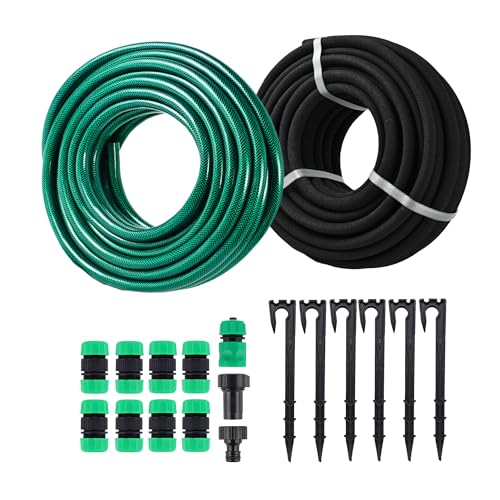
Customizable 1/2" x 50 ft Rubber Soaker Hose System with 25 ft Leader
Best for: Flower beds that need a custom layout
A 50 ft rubber soaker hose with a 25 ft PVC leader hose and reinforced fittings, so you can bring water from the faucet to the bed and cut the soaker section to fit.
- Rubber soaker section
- Leader hose included
- Reinforced fittings
- Cut to fit curved beds
- Some setup required
- Unbranded kit

1/2" x 50 ft Soaker Hose Kit with 25 ft Leader Hose
Best for: Beds set back from the faucet
A similar kit pairing a 50 ft soaker hose with a 25 ft PVC supply hose and reinforced fittings for garden and yard beds.
- Leader hose keeps paths dry
- 50 ft soaker section
- Fittings included
- Similar to other unbranded kits
- Check fitting quality on the listing

75 ft Soaker Hose for Garden Beds (3/4" Connectors)
Best for: Long mixed borders
A 75 ft soaker hose designed for garden beds, with 3/4 inch hose connectors for a standard faucet or leader hose.
- 75 ft length for long borders
- Standard 3/4 inch connectors
- Suits beds and borders
- Long runs may water unevenly
- Bulkier than flat hoses

MHMHM 1/2" Soaker Hose
Best for: Budget flower bed watering
A 1/2 inch soaker hose described as low-maintenance for lawns, flower beds and vegetable gardens.
- Affordable
- 1/2 inch standard size
- Easy to curve
- Check length options
- Lesser-known brand

HZGREEN 15 ft Flat Linkable Soaker Hose
Best for: Small beds, roses and individual shrubs
A short, lightweight flat soaker hose that can be linked to others, useful for small beds or circling a single shrub.
- Short length for small spaces
- Linkable
- Lightweight flat design
- Only 15 ft per hose
- Flat hoses need staking
How we chose these hoses
Flower beds have specific needs: curved edges, mixed plant sizes, crowns that rot if kept soggy and blooms that are damaged by overhead spray. We favored hoses that bend easily, kits that include a leader hose so paths stay dry, lengths that suit typical beds and borders, and short linkable hoses for small spaces. We do not list prices because they change often. For a broader comparison across garden types, see our roundup of the best soaker hose for gardens.
Why soaker hoses suit flower beds
- Dry foliage reduces mildew, black spot and botrytis.
- No splashing, so petals and leaves stay clean.
- Water reaches roots without flattening tall stems.
- Less waste on paths, lawns and walls.
- Invisible under mulch, so beds look tidy.
How to lay out soaker hose in a flower bed
- Plan the route so the hose passes within a few inches of every plant crown.
- Weave between clumps in perennial borders rather than running straight lines.
- Loop around large plants such as roses, hydrangeas and peonies at the drip line.
- Keep lines 12 to 18 inches apart in densely planted annual beds.
- Pin the hose with landscape staples and cover it with mulch.
Our guide to soaker hose layout shows patterns for different bed shapes.
Flower bed soaker hose buying guide
Kit or hose only
If your bed is close to the faucet, a hose alone is enough. If it is across a lawn or path, a kit with a solid leader hose keeps the soaker section inside the bed so you do not water the grass or patio.
Length
Measure the route through the bed. Small beds and single shrubs may need only 15 to 25 feet; long borders often need 50 to 75 feet. Keep each run under about 100 feet for even output.
Flexibility
Flower beds are rarely straight. Rubber soaker hoses curve easily around plants. Flat hoses lie neatly but can twist on tight curves, so stake them well.
Connectors and pressure
Use the flow disc or a pressure regulator, because flower bed hoses run at low pressure for long periods. Solid connectors reduce leaks at the faucet and leader hose.
Which hose is right for you?
- Custom layout, bed away from the faucet: customizable rubber soaker system with leader.
- Second kit option: 50 ft soaker kit with 25 ft leader.
- Long mixed borders: 75 ft garden bed soaker hose.
- Budget beds: MHMHM 1/2 inch soaker hose.
- Roses and small beds: HZGREEN 15 ft linkable flat hose.
Watering roses, perennials and annuals
Roses like deep, infrequent watering and dry leaves. Loop the hose around each bush at the drip line and water early in the morning. Perennials such as hostas, daylilies and coneflowers need steady moisture in their first year, then less once established. Annuals in full sun, such as petunias and zinnias, dry quickly and appreciate more frequent watering. Grouping plants by water needs makes scheduling easier; put thirsty plants on one line and drought-tolerant plants such as lavender and sedum on another, or on none at all.
How long to run a soaker hose in a flower bed
Many flower beds do well with 30 to 45 minutes, two or three times a week in summer. Sandy soil needs shorter, more frequent runs; clay needs longer, slower runs. Check by digging a few inches down an hour after watering. The soil should be moist around the roots but not soggy, since constantly wet crowns can rot.
Flower beds by season
Spring. Lay or relay soaker hoses before plants fill out, when you can see the soil and reach every crown. New transplants need more frequent watering for the first few weeks until roots spread. Refresh mulch once the hose is in place.
Summer. Heat and long days increase water use, especially for annuals in containers and full-sun beds. Water early in the morning, two or three times a week, and check soil moisture during heat waves. Deadheading and staking are easier when the hose is tucked under mulch and out of the way.
Fall. Cut back watering as temperatures drop, but keep perennials, shrubs and newly planted bulbs moist until the ground cools, which helps them establish roots before winter.
Winter. In cold climates, disconnect and drain the hose. In mild climates, leave it in place under mulch and water only during dry spells.
Shady beds and sunny beds
Beds in shade lose far less water than beds in full sun, so they need shorter or less frequent watering. Shade gardens with hostas, ferns and astilbes like steady moisture but can rot if kept wet, while sun-baked borders with salvias, coneflowers and roses dry out quickly in summer. If one faucet serves both, put each bed on its own hose and control them separately with a splitter or a two-outlet timer. This simple change prevents the common problem of a soggy shade bed and a dry sunny border on the same schedule.
Combining soaker hoses with a timer
A hose timer turns a soaker hose into an automatic system. Because soaker hoses run slowly, choose a timer that allows run times of an hour or more, and set it to water early in the morning. Add the pressure regulator or flow disc after the timer. For several beds, a two-outlet timer lets each bed run its own schedule.
Soaker hose vs drip for flower beds
Soaker hoses are cheaper and quicker to install, and they suit beds where plants are close together. Drip irrigation with individual emitters gives more control in mixed beds where plants need very different amounts of water. Our guide to drip irrigation for flower beds explains when drip is the better choice.
Watering new flower beds
A newly planted bed needs more attention than an established one. Transplants have small root balls that dry out quickly, even when the surrounding soil is moist. For the first two or three weeks, run the soaker hose more often for shorter periods so the root balls stay moist, and check each plant by pressing a finger into the soil beside it. As plants settle in and new growth appears, switch gradually to longer, less frequent watering, which encourages roots to grow deeper and makes the bed more drought tolerant. If you sow seeds directly in the bed, keep the surface moist with a gentle hand spray until seedlings appear, because soaker hoses water mainly below the surface.
Edging, paths and lawn borders
Where a flower bed meets a lawn or path, keep the soaker hose a few inches inside the bed edge. This stops water from seeping into the grass or onto the path, and keeps the hose out of reach of edgers and string trimmers. If you use a leader hose to cross a lawn, run it in the same place every time and lay it flat, or bury a short length shallowly, so it is not damaged by the mower.
Mulching over soaker hoses
Two to three inches of shredded bark, wood chips or leaf mulch over the hose hides it, holds it in place and cuts evaporation. Keep mulch a little away from stems to avoid rot. Mulch also protects the hose from sunlight, which helps it last more seasons.
Maintenance and fixing dry spots
Flush hoses monthly by opening the end cap, and use a filter if you have well or rain barrel water. If one area of the bed stays dry, check for a kink, a buried stone pressing on the hose or a clogged section. Our guide on how to unclog a soaker hose walks through cleaning and repair.
Storing hoses at season end
In cold climates, lift soaker hoses after the last watering in fall, flush them, let them dry and coil them loosely for storage indoors. In mild climates, they can stay in place under mulch through winter, but disconnect them from the faucet before any cold snap. Before replanting in spring, check each hose by running it on the lawn for a few minutes and looking for dry sections or sprays. Replacing a worn hose before the growing season is much easier than discovering a problem when the bed is full of plants. Keep a note of which hose belongs to which bed, so you can lay each one back in the same pattern next season.
Common mistakes
- Running hoses too far from plant crowns.
- Watering every bed the same, regardless of plant needs.
- Leaving hoses uncovered in full sun.
- Using full water pressure.
- Soaking soil against house foundations.
- Skipping a leader hose, so the lawn or path gets watered too.
The EPA WaterSense program recommends watering plants at the root zone and grouping plants by water needs, both easy with soaker hoses.
The bottom line
The best soaker hose for flower beds reaches every crown, bends around plants and hides under mulch. A customizable kit with a leader hose is our top pick for beds away from the faucet, a 75 ft hose suits long borders, and a short linkable flat hose is ideal for roses and small beds. Weave hoses close to plants, run them at low pressure, mulch over them and adjust run times for each group of plants.
Frequently Asked Questions
What is the best soaker hose for flower beds?
A kit with a soaker section and a solid leader hose, like our top pick, makes it easy to water beds away from the faucet without wetting paths.
How should I lay a soaker hose in a flower bed?
Weave it between plant clumps so each crown is within a few inches of the hose, and loop it around larger shrubs and roses.
Is a soaker hose good for roses?
Yes. Roses benefit from dry leaves, which reduces black spot and mildew, and steady moisture at the roots.
How often should I run a soaker hose in a flower bed?
Often two or three times a week in summer for 30 to 45 minutes, adjusted for soil and weather.
Should the soaker hose be covered?
Yes. Mulch over the hose hides it, protects it from sun and cuts evaporation.