
Last updated: October 2026 · Written by the LawnVibe editorial team.
The best crabgrass killer for most lawns is a selective post-emergent herbicide containing quinclorac or mesotrione. Our top pick is BASF Drive XLR8, a quinclorac product that targets crabgrass in many common turf types. For quick spot treatments, Ortho Weed B Gon Plus Crabgrass Control comes ready to use, while Tenacity (mesotrione) is a favorite for cool-season lawns and around new seeding. Whatever you choose, the label decides: confirm your grass type is listed, apply when crabgrass is young and follow the rate exactly.
Our picks are based on product labels, manufacturer information and university extension guidance, not on hands-on testing. We do not list prices. Pesticide labels are legal documents, so always read and follow the label for your product. If you want to stop crabgrass before it appears, see our guide to the best pre-emergent for lawns.
Quick Answer
The best crabgrass killer for most lawns is a selective post-emergent herbicide containing quinclorac or mesotrione. Our top pick is BASF Drive XLR8, a quinclorac product that targets crabgrass in many common turf types. For quick spot treatments, Ortho Weed B Gon Plus Crabgrass Control comes ready to use, while Tenacity (mesotrione) is a favorite for cool-season lawns and around new seeding.
Key takeaways:
- For most lawns where it is labeled, BASF Drive XLR8 is the best crabgrass killer for established crabgrass.
- Choose Ortho Weed B Gon Plus Crabgrass Control for easy spot treatment, Spectracide or Bonide for mixed weeds over larger areas, and Tenacity or Torocity for cool-season lawns and seeding projects.
- Always confirm your grass type on the label and pair post-emergent control with a spring pre-emergent.
Our Top Picks

BASF Drive XLR8 Crabgrass Killer (Quinclorac)
Best for: Established crabgrass in tolerant lawns
A professional quinclorac herbicide in a water-based formulation that BASF says is rainfast in under an hour with up to 30 days of residual control.
- Targets crabgrass directly
- Pro-grade quinclorac
- Rainfast quickly per label
- Requires mixing and a sprayer
- Not labeled for every turf type; check label

Ortho Weed B Gon Plus Crabgrass Control, Ready-to-Use Wand
Best for: Spot-treating small lawns
A ready-to-use spray with comfort wand that Ortho says kills crabgrass, dandelions and 200+ common lawn weeds when used as directed.
- No mixing
- Kills grassy and broadleaf weeds
- Expensive per square foot for large lawns
- Check turf compatibility

Spectracide Weed Stop for Lawns Plus Crabgrass Killer Concentrate
Best for: Larger lawns with mixed weeds
A concentrate the label says controls 470+ weed types including crabgrass and yellow nutsedge, rainproof after a few hours.
- Covers more area per bottle
- Broad weed spectrum
- Mixing required
- Not for all grass types

Bonide Weed Beater Plus Crabgrass and Broadleaf Weed Killer
Best for: Crabgrass plus broadleaf weeds
A ready-to-spray product for crabgrass and many broadleaf weeds; Bonide says it is not recommended for St. Augustine or centipede grass.
- Hose-end convenience
- Broad control
- Not for St. Augustine or centipede

Syngenta Tenacity Turf Herbicide (Mesotrione)
Best for: Cool-season lawns and seeding projects
A systemic mesotrione herbicide with pre- and post-emergent activity on crabgrass and other listed weeds.
- Pre and post-emergent activity
- Labeled for use around seeding in cool-season lawns
- Can temporarily whiten turf and weeds
- Requires surfactant and sprayer
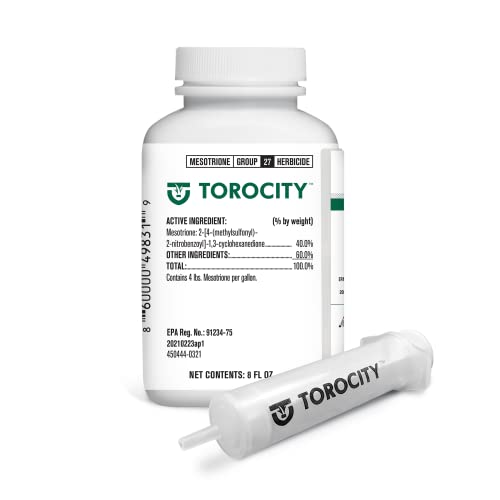
Atticus Torocity Mesotrione Herbicide, 8 oz
Best for: Budget mesotrione users
A 40 percent mesotrione concentrate with the same active ingredient as Tenacity.
- Same active ingredient as Tenacity
- Pre and post-emergent
- Same bleaching and label limits as mesotrione

Prime Source Quintessential Quinclorac, 7.5 oz
Best for: DIY users comfortable mixing
A quinclorac concentrate the seller says has H-Value technology for increased absorption.
- Concentrated quinclorac
- Small bottle for home lawns
- Lesser-known brand
- Read label rates carefully
Comparison Table
| # | Product | Best for | Link |
|---|---|---|---|
| 1 | BASF Drive XLR8 Crabgrass Killer (Quinclorac) | Established crabgrass in tolerant lawns | Check price |
| 2 | Ortho Weed B Gon Plus Crabgrass Control, Ready-to-Use Wand | Spot-treating small lawns | Check price |
| 3 | Spectracide Weed Stop for Lawns Plus Crabgrass Killer Concentrate | Larger lawns with mixed weeds | Check price |
| 4 | Bonide Weed Beater Plus Crabgrass and Broadleaf Weed Killer | Crabgrass plus broadleaf weeds | Check price |
| 5 | Syngenta Tenacity Turf Herbicide (Mesotrione) | Cool-season lawns and seeding projects | Check price |
| 6 | Atticus Torocity Mesotrione Herbicide, 8 oz | Budget mesotrione users | Check price |
| 7 | Prime Source Quintessential Quinclorac, 7.5 oz | DIY users comfortable mixing | Check price |
A Closer Look at Each Pick
BASF Drive XLR8, best overall. Quinclorac is one of the most widely used active ingredients for killing emerged crabgrass, and Drive XLR8 is a professional, water-based formulation. BASF states it is rainfast in under an hour and provides residual control. It must be mixed and sprayed, and it is not labeled for every turf type, so check the label before use. Check current price on Amazon
Ortho Weed B Gon Plus Crabgrass Control, best ready-to-use. For small lawns and scattered patches, a ready-to-use wand is the simplest option. Ortho states it kills crabgrass and more than 200 common lawn weeds when used as directed. The convenience costs more per square foot than a concentrate. Check current price on Amazon
Spectracide Weed Stop Plus Crabgrass Killer concentrate, best value concentrate. A concentrate covers more ground per bottle. The label says it controls more than 470 listed weed types, including crabgrass and yellow nutsedge, and is rainproof after a few hours. Check current price on Amazon
Bonide Weed Beater Plus Crabgrass, best for mixed weeds. This product targets crabgrass along with many broadleaf weeds. Bonide notes it is not recommended for St. Augustine or centipede grass, which is a good example of why the label matters. Check current price on Amazon
Tenacity, best for new seeding. Mesotrione works differently from quinclorac and has both pre- and post-emergent activity. It is popular in cool-season lawns, including use around seeding as allowed by the label. It can temporarily turn weeds and sometimes turf white, which is normal. Check current price on Amazon
Atticus Torocity, best Tenacity alternative. Torocity contains the same active ingredient as Tenacity, mesotrione, often at a lower cost. The same label limits and application tips apply. Check current price on Amazon
Prime Source Quintessential, best budget quinclorac. A concentrated quinclorac option for DIY users comfortable mixing small batches. As a lesser-known brand, read the label carefully for rates and turf compatibility. Check current price on Amazon
Pre-Emergent vs Post-Emergent Crabgrass Control
Pre-emergent herbicides stop crabgrass seeds from establishing and must be applied before germination in spring. Post-emergent herbicides kill crabgrass that has already sprouted. This guide covers post-emergent killers. The most effective long-term strategy combines a spring pre-emergent with spot treatment of escapes and a thick, healthy lawn. Learn more in our guide on how to prevent crabgrass in your lawn and our comparison of prodiamine vs dithiopyr.
Active Ingredients Compared
| Active Ingredient | How It Works | Strengths | Watch Out For |
|---|---|---|---|
| Quinclorac | Selective grass and broadleaf herbicide | Strong on emerged crabgrass | Not labeled for some warm-season grasses |
| Mesotrione | Pigment inhibitor, pre and post | Use around seeding in cool-season turf | Temporary whitening; needs repeat apps |
| Fenoxaprop | Grass-specific herbicide | Kills grassy weeds in tolerant turf | Narrower weed spectrum |
| Topramezone | Pigment inhibitor | Used on tough grassy weeds | Professional products, bleaching |
Always check the specific product label, since formulations and labeled turf types vary.
How to Choose the Best Crabgrass Killer
Check Your Grass Type
This is the most important step. Many crabgrass killers are safe on Kentucky bluegrass, tall fescue, perennial ryegrass, Bermuda and zoysia, but some are not labeled for St. Augustine, centipede or bahia. The label lists tolerant species.
Consider Crabgrass Size
Young crabgrass with a few leaves is much easier to kill. Mature, tillered plants may need higher labeled rates or repeat applications, and late-season crabgrass is often better left to die at frost while you plan next year's pre-emergent.
Ready-to-Use vs Concentrate
Ready-to-use sprays are convenient for spot treatment. Concentrates cost less per area but need a sprayer, accurate measuring and often a surfactant.
Rainfast Time and Weather
Check how quickly the product becomes rainfast and the temperature range on the label. Many herbicides work poorly or stress turf when applied in extreme heat or drought.
Seeding Plans
If you plan to overseed, choose a product that allows seeding, or wait the interval the label requires before seeding.
How to Apply Crabgrass Killer
Identify the weed first; crabgrass is often confused with quackgrass or tall fescue clumps. Mow two or three days before spraying and wait a couple of days after. Apply to actively growing crabgrass when the lawn is not drought stressed, following the label rate. Use a dedicated sprayer and add surfactant if the label calls for it. Avoid drift onto garden plants. Repeat only as the label allows. Our guide on how to remove crabgrass from your lawn covers manual and chemical removal.
Safety and Environmental Considerations
Wear the protective equipment listed on the label, keep children and pets off treated areas until the spray has dried, store products in original containers and never apply before heavy rain or near water bodies. The U.S. Environmental Protection Agency provides guidance on reading pesticide labels and safe use.
How to Identify Crabgrass
Crabgrass is a summer annual grass with wide, flat, light green blades that grow low and spread outward from a central point, like the legs of a crab. Stems often root where they touch the soil, and seedheads look like thin fingers radiating from the stem tip. It appears in late spring and summer, especially in thin, sunny areas along driveways and sidewalks, and dies with the first hard frost. Identification matters because perennial grassy weeds such as quackgrass, nimblewill and tall fescue clumps need different control.
The Crabgrass Life Cycle
Crabgrass seeds germinate in spring once soil temperatures warm, commonly cited as around the mid-50s Fahrenheit for several days. Seedlings grow quickly through early summer, then tiller and spread in midsummer. By late summer, each plant produces thousands of seeds that remain in the soil for years. The plants die at frost, leaving bare patches. Breaking this cycle requires preventing germination and stopping plants before they set seed.
Crabgrass Killers by Grass Type
| Lawn Grass | Quinclorac | Mesotrione |
|---|---|---|
| Kentucky bluegrass | Commonly labeled | Commonly labeled |
| Tall fescue | Commonly labeled | Commonly labeled |
| Perennial ryegrass | Commonly labeled | Commonly labeled |
| Bermuda | Commonly labeled | Not usually labeled |
| Zoysia | Commonly labeled | Check label |
| St. Augustine | Often not labeled | Check label |
| Centipede | Often not labeled | Check label |
This table is a general guide only. Product labels differ, so confirm your grass type on the specific label before spraying.
How Long Does It Take to Kill Crabgrass?
Most post-emergent crabgrass killers show symptoms within several days to a week, with plants yellowing, browning or whitening. Complete control can take two to three weeks, and some labels allow a second application for mature or heavy infestations. Avoid pulling or mowing treated plants too soon, since the herbicide needs time to move through the plant.
Natural and Non-Chemical Options
Hand pulling works for small infestations, especially when the soil is moist and plants are young; remove them before they set seed. Horticultural vinegar can burn top growth but often does not kill roots and can damage lawn grass; see does vinegar kill crabgrass permanently. Corn gluten meal is sometimes used as a natural pre-emergent, with mixed research results. The most reliable natural approach is a dense, healthy lawn that shades out crabgrass seedlings.
Repairing Bare Spots After Crabgrass Dies
Killing crabgrass leaves gaps that new crabgrass or other weeds will fill if left bare. Rake out dead plants, loosen the soil and overseed with a grass suited to your lawn, following any waiting period on the herbicide label. Early autumn is the best time to seed cool-season lawns. Our guide on pre-emergent and grass seed explains timing conflicts.
Building a Lawn That Resists Crabgrass
Crabgrass thrives in thin, stressed, closely mowed lawns. Mow at the higher end of the recommended range for your grass type, water deeply but infrequently, fertilize according to a soil test and overseed thin areas in the right season. A thick canopy shades the soil and prevents crabgrass seeds from germinating.
Choosing a Sprayer
For concentrates, a dedicated pump or battery sprayer gives better control than a hose-end sprayer. Mark it for herbicides only so it is never used on vegetables or ornamentals. Our comparison of battery vs pump sprayers can help you choose.
Late-Season Crabgrass: Treat or Wait?
By late summer, mature crabgrass is harder to kill and has often already dropped seed. Spraying at this stage may yellow the plants without stopping seed production, and the lawn may be stressed by heat. In many cases, the better plan is to bag clippings to remove seedheads, let frost kill the plants, overseed bare spots in autumn and apply a pre-emergent the following spring. Treat late crabgrass only if the label supports it and the lawn is not drought stressed.
Crabgrass Killer Calendar
In early spring, apply a pre-emergent before soil warms. In late spring and early summer, scout for escaped seedlings and spot-treat young crabgrass with a post-emergent. In midsummer, treat remaining plants only when temperatures and moisture meet label requirements. In late summer, remove seedheads, plan repairs and avoid heavy herbicide use on stressed turf. In early autumn, overseed bare areas once label intervals have passed.
Are Crabgrass Killers Safe for Pets?
Many labels advise keeping pets and people off treated areas until the spray has dried. Store products out of reach, follow label precautions and rinse spray equipment away from water sources. If a pet ingests a product, contact your veterinarian or an animal poison control service.
Common Mistakes When Using Crabgrass Killer
Common mistakes include spraying a turf type not listed on the label, waiting until crabgrass is huge and seeding, spraying in high heat or drought, skipping surfactant when required, mowing too soon after application, overapplying and relying only on post-emergents instead of building a dense lawn and using a pre-emergent.
The Bottom Line on the Best Crabgrass Killer
For most lawns where it is labeled, BASF Drive XLR8 is the best crabgrass killer for established crabgrass. Choose Ortho Weed B Gon Plus Crabgrass Control for easy spot treatment, Spectracide or Bonide for mixed weeds over larger areas, and Tenacity or Torocity for cool-season lawns and seeding projects. Always confirm your grass type on the label and pair post-emergent control with a spring pre-emergent.
More Questions People Ask
Does crabgrass killer kill grass?
Selective crabgrass killers are designed to spare listed lawn grasses when used as directed. Using a product on an unlisted grass type or at the wrong rate can damage turf.
How soon can I mow after spraying crabgrass killer?
Many labels suggest waiting a few days before and after mowing so the herbicide has leaf surface to absorb and time to move through the plant. Follow your product label.
Can I spray crabgrass killer in the heat?
Many labels warn against application above certain temperatures because turf injury risk increases. Spray in cooler parts of the day when temperatures meet label limits.
Does Tenacity kill crabgrass?
Mesotrione, the active ingredient in Tenacity, controls crabgrass, often requiring repeat applications for emerged plants as directed on the label.
Frequently Asked Questions
What is the best crabgrass killer?
For most lawns where it is labeled, a quinclorac product such as BASF Drive XLR8 is a strong choice for killing existing crabgrass. For cool-season lawns and seeding projects, mesotrione products like Tenacity are popular.
What kills crabgrass but not grass?
Selective herbicides containing quinclorac, mesotrione or fenoxaprop target crabgrass while sparing many lawn grasses when used as directed. Always check that your grass type is listed on the label.
When should I apply crabgrass killer?
Apply when crabgrass is young and actively growing, ideally before it has many tillers, and when temperatures and moisture match the label directions. Young crabgrass is much easier to kill than mature plants.
Will crabgrass come back next year?
Crabgrass is an annual that dies with frost, but it drops many seeds. Use a pre-emergent in spring to stop next year's seeds from germinating.
Is quinclorac safe on St. Augustine grass?
Many quinclorac labels warn against use on St. Augustine, centipede and some other warm-season grasses. Always check the product label for your turf type.