

Last updated: October 2026 · Written by the LawnVibe editorial team.
The propane vs natural gas grill decision comes down to where you will grill and whether you already have a gas line. Natural gas grills connect to your home supply, so you never run out mid-cook and running costs are often lower, but installation is required and the grill stays in one place. Propane grills run from portable tanks, so they work anywhere and need no installation, but you must refill or exchange tanks. Cooking performance is similar when each grill is built for its fuel.
This comparison draws on published fuel information and grill manufacturer guidance. Local fuel prices and codes vary, so check with your supplier and building department. For specific grill recommendations, see our guide to the best gas grill under $1,000.
Propane vs Natural Gas at a Glance
| Factor | Propane (LP) | Natural Gas (NG) |
|---|---|---|
| Fuel supply | Refillable or exchangeable tanks | Home gas line |
| Installation | None beyond connecting a tank | Gas line and shutoff needed |
| Portability | Can be moved anywhere | Fixed near the gas connection |
| Running out mid-cook | Possible | Not an issue |
| Running cost | Often higher per unit of energy | Often lower where available |
| Energy content | Higher per cubic foot | Lower per cubic foot |
| Grill price | Base models | Sometimes slightly higher or need a kit |
| Best for | Renters, flexible layouts, no gas line | Homeowners with existing gas service |
How the Fuels Differ
Propane, also called liquefied petroleum gas or LP, is stored as a liquid under pressure in tanks and vaporizes as it is released. Natural gas is mostly methane and is delivered through utility pipelines at low pressure. Propane contains more energy per cubic foot, roughly two and a half times as much as natural gas by commonly cited figures. That is why grills are built specifically for one fuel, with orifice sizes matched to deliver the right amount of heat. You can read more background on liquefied petroleum gas.
Heat and Cooking Performance
A common myth is that propane grills cook hotter. Because the grill's orifices are sized for the fuel, a properly designed natural gas grill and its propane twin deliver similar BTU ratings and cooking performance. Searing, two-zone cooking and temperature control depend far more on burner design, grates and lid insulation than on the fuel itself.
Cost Comparison
Running Costs
In many regions, piped natural gas costs less per unit of energy than bottled propane, especially compared with tank exchange programs, which typically charge more than refilling. Actual prices vary widely by location, season and supplier, so compare your utility rate with local propane refill prices.
Upfront Costs
Propane grills are ready to use once a tank is connected. Natural gas grills may cost a little more or require a conversion kit, and you may need a licensed professional to run a gas line and install a shutoff valve. That installation cost can outweigh years of fuel savings if the line must travel far.
Convenience
Natural gas wins on convenience once installed: no tanks to carry, no refills and no running out halfway through a brisket. Propane wins on flexibility: you can move the grill around the patio, take a smaller grill camping or tailgating, and avoid any installation. Keeping a spare tank solves most running-out problems; our guide on how to tell when a propane tank is empty helps you plan.
Installation and Placement
A natural gas grill needs a gas line, usually with a quick-disconnect fitting and a shutoff valve near the grill. Many jurisdictions require permits and licensed installers for gas line work. The grill's location is then fixed by the hose length. See how to connect a grill to a natural gas line for an overview, but leave gas line work to qualified professionals. Propane grills can sit anywhere that meets the manufacturer's clearance requirements.
Safety Considerations
Both fuels are safe when equipment is installed and maintained properly. Propane is heavier than air and can pool near the ground if it leaks, so tanks must be stored upright and outdoors. Natural gas is lighter than air and disperses upward. Both are odorized so you can smell leaks. Leak-test connections every season, and see our guide on how to check a gas grill for leaks.
Environmental Impact
Both fuels are fossil fuels that produce carbon dioxide when burned. Natural gas produces somewhat less carbon dioxide per unit of energy than propane, while propane delivery avoids pipeline infrastructure. For a backyard grill, the difference is small compared with overall household energy use.
Converting a Propane Grill to Natural Gas
Some grills can be converted using a manufacturer-approved kit, which typically includes new orifices or valves and a natural gas hose. Not all models are convertible, and using an unapproved kit can void warranties and create hazards. Follow the instructions exactly or have a qualified technician perform the conversion. Never connect a propane grill directly to a natural gas line, or vice versa, without conversion.
Which Should You Choose?
Choose natural gas if you own your home, already have a gas line near the patio, grill often and want a permanent setup. Choose propane if you rent, may move the grill, do not have a gas line, want to avoid installation costs or grill only occasionally. Many popular models, including Weber Spirit and Genesis grills, come in both versions, so you can pick the fuel first and the grill second.
How Long Does a Propane Tank Last?
A standard 20 lb grill tank lasts a varying amount of time depending on the grill's burner output, how many burners you run and at what setting, and the weather. Commonly cited estimates for a mid-size grill on medium heat fall roughly in the range of 18 to 20 hours, but large grills on high heat burn through tanks much faster. Tracking your cooks or using a tank gauge helps you avoid surprises.
Refill vs Exchange
Refilling a tank at a propane supplier typically means you pay only for the propane you need, and the tank is filled to capacity. Exchange programs are convenient because you swap an empty tank for a filled one at many stores, but exchange tanks are sometimes filled to less than the full 20 lb, and the cost per gallon is often higher. If you grill often, refilling usually saves money; exchanges are handy when convenience matters more.
Grilling in Cold Weather
Propane pressure drops in cold weather, because liquid propane vaporizes more slowly at low temperatures. In freezing conditions, a nearly empty tank may struggle to supply enough gas. Keeping the tank fuller and protecting it from wind helps. Natural gas supply is not affected by outdoor temperature in the same way, which makes it appealing for people who grill year-round in cold climates. Both grills will need longer preheating in winter.
Outdoor Kitchens and Built-In Grills
For built-in grills and outdoor kitchens, natural gas is often preferred because the setup is permanent and tanks can be awkward to hide and swap in a cabinet. If you choose propane for a built-in, plan a ventilated tank compartment as specified by the manufacturer and local codes. Built-ins usually need professional installation either way.
Dual-Fuel and Multi-Fuel Options
Some grills come with both propane and natural gas configurations or offer factory conversion kits, giving you flexibility if you move house or later add a gas line. Other products combine gas with charcoal or griddle cooking. If you are unsure about future plans, look for a model with an approved conversion kit available.
Questions to Ask Before Installing a Gas Line
Before committing to natural gas, ask a licensed installer about the distance from your meter or existing line, whether a permit is required, the pipe size needed for the grill's BTU rating, where the shutoff valve and quick-disconnect will go and the total cost. Compare that figure with years of propane refills to see when, or whether, you break even.
Moving House or Renting
Propane grills move with you easily. A natural gas grill may not suit your next home if it has no gas line, unless your model can be converted back to propane with an approved kit. Renters should check their lease, as some prohibit grills on balconies or limit fuel types.
Reading Grill Model Names: LP vs NG
Grill listings often use abbreviations. LP means liquid propane and NG means natural gas. The same model may have separate product codes for each version, and the fuel type is usually shown on a label on the grill and on the box. Double-check the fuel type before buying, especially online, since the two versions can look identical in photos.
Hose Length and Placement for Natural Gas Grills
Natural gas grills connect with a flexible hose, often around 10 feet long, to a quick-disconnect fitting. That length sets how far the grill can sit from the wall connection, so plan your patio layout around it. The grill still needs the clearances from walls, railings and overhangs specified in its manual, so make sure the connection point allows both.
Maintenance Differences
Day-to-day maintenance is the same for both: clean grates, empty grease trays and inspect burners. Propane owners also need to check the tank, hose and regulator each season and after tank changes. Natural gas owners should inspect the quick-disconnect fitting and hose, and have the household line checked if they ever smell gas near the connection.
Cost Example: How to Estimate Your Own Savings
To estimate whether natural gas pays off, find your utility's natural gas rate and your local propane refill price, estimate how many hours you grill each year and use your grill's BTU rating to approximate fuel use. Then compare annual fuel costs and divide the installation cost by the yearly savings to estimate the payback period. Because rates and grilling habits vary, your result may differ greatly from your neighbor's.
Propane and Natural Gas Grilling Essentials
Whichever fuel you choose, these items help. Details come from Amazon listings; confirm compatibility with your grill. We have not hands-on tested them.

Weber Spirit E-325 Gas Grill (Propane Version)
Best for: Choosing a grill offered in both fuels
A 3-burner Spirit sold in propane and natural gas versions, with a sear zone and 10-year limited warranty.
- Offered in both fuels
- Strong searing
- Choose the correct fuel version

Weber Spirit E-325 Gas Grill (Natural Gas Version)
Best for: Homes with a gas line
The natural gas version of the Spirit E-325 for connection to a home gas line.
- No tanks to refill
- Same cooking platform
- Requires a gas line installed

DOZYANT Propane Tank Gauge, 2 Pack
Best for: Monitoring fuel level
An inline propane gauge for 5 to 40 lb tanks that the maker says also helps indicate leaks.
- Shows tank level
- Inline install
- Not a replacement for the soap test

Flame King 20 lb Steel Propane Tank with OPD
Best for: Keeping a backup tank
A 20 lb steel propane cylinder with overfill protection device; ships empty.
- OPD valve
- Spare for long cooks
- Ships empty; fill at a supplier
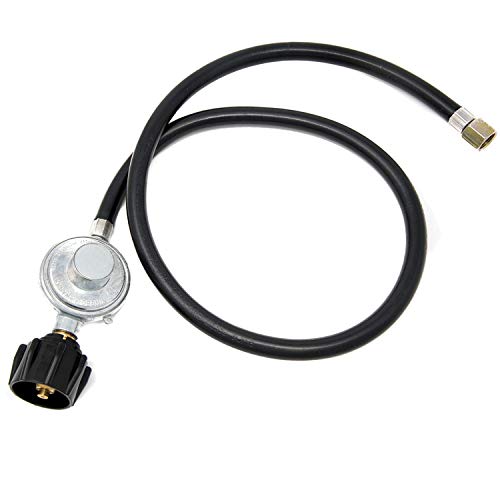
GasOne 3-Foot Universal QCC1 Propane Regulator and Hose
Best for: Replacing a cracked hose or faulty regulator
A universal QCC1 propane regulator and hose for many grills; confirm compatibility with your model.
- Universal QCC1 fitting
- 3-foot hose
- Check fit and pressure rating for your grill
Compare more grills in our best gas grill under $1,000 guide.
Common Mistakes When Choosing Propane vs Natural Gas
Common mistakes include buying a natural gas grill without checking gas line costs, assuming propane always cooks hotter, attempting DIY conversions without an approved kit, placing a natural gas grill too far from the supply, storing propane tanks indoors and forgetting a spare tank before a big cookout.
Final Thoughts on Propane vs Natural Gas Grills
Propane offers flexibility and zero installation, while natural gas offers endless fuel and often lower running costs once a line is in place. Cooking performance is similar when each grill is built for its fuel. Decide based on your home, budget and grilling habits, then compare models in our best gas grill under $1,000 guide.
More Questions People Ask
Do natural gas grills cost more?
Some natural gas versions cost slightly more than propane versions, and installation of a gas line adds cost. Running costs are often lower over time.
Can you hook a propane grill to a house gas line?
Not without converting it using a manufacturer-approved kit. The orifices and pressure requirements are different.
Does food taste different on propane vs natural gas?
No meaningful difference has been established for properly running grills. Flavor comes mainly from the food, the fat drippings and grilling technique.
Which is safer, propane or natural gas?
Both are safe with proper installation and maintenance. Propane tanks require careful storage outdoors, while natural gas lines need professional installation.
Frequently Asked Questions
Is a natural gas or propane grill better?
Neither is better for everyone. Natural gas is convenient and often cheaper to run if you already have a gas line, while propane is portable, needs no installation and works anywhere.
Does propane burn hotter than natural gas?
Propane contains more energy per cubic foot than natural gas, but grills are designed with different orifices for each fuel, so a properly configured grill cooks similarly on either.
Can I convert my propane grill to natural gas?
Only if the manufacturer offers an approved conversion kit for your model. Conversion changes orifices and the gas connection, and should be done exactly per the instructions or by a qualified technician.
Is natural gas cheaper than propane for grilling?
In many areas natural gas costs less per unit of energy than bottled propane, but prices vary by region and supplier, and installation costs for a gas line should be factored in.
Can I use a natural gas grill with a propane tank?
No. Natural gas and propane grills use different orifices and pressures. Using the wrong fuel is dangerous unless the grill has been converted with an approved kit.