

Last updated: October 2026 · Written by the LawnVibe editorial team.
Few things ruin a cookout faster than a grill that sputters out halfway through cooking. Standard propane tanks are opaque steel, so you cannot see how much fuel is left inside. Fortunately, there are several simple and reliable ways to check. This guide explains how to tell when propane tank is empty or close to it, using six methods ranging from weighing the tank to the hot water trick and built-in gauges, plus warning signs to watch for and safety tips for handling tanks.
If you are thinking about upgrading your grill, our guide to the best propane grills compares models with built-in fuel gauges and other useful features.
Understanding Your Propane Tank
Most gas grills use a standard tank often called a 20-pound tank, because it holds about 20 pounds of propane when full. Propane is stored as a liquid under pressure, with vapor in the space above it. When you open the valve, vapor flows to the grill and more liquid boils off to replace it.
Tanks are never filled completely; they are filled to around 80 percent of capacity to leave room for the liquid to expand. That is normal and is a safety feature.
Every tank has a few numbers stamped on the collar, the metal ring around the valve. The most important for checking fuel is the tare weight, marked TW, which is the weight of the empty tank. You will need this number for the most accurate method below.
Top picks from our guide: Best Propane Grills for Outdoor Use: Top Picks for Your Backyard BBQ


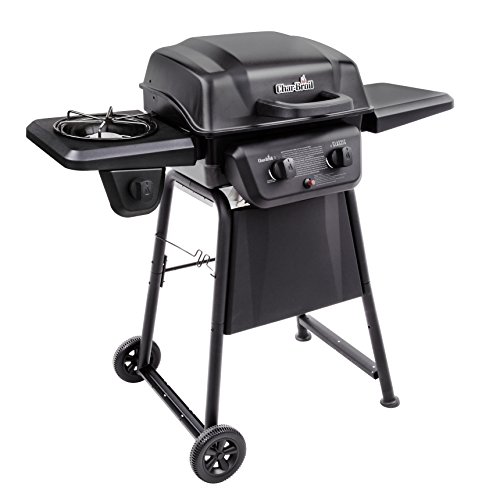
As an Amazon Associate we earn from qualifying purchases. Prices and availability can change; check the current price on Amazon.
Method 1: Weigh the Tank (Most Accurate)
Weighing tells you exactly how much propane is left.
Find the tare weight (TW) on the collar, often around 17 pounds for a standard grill tank, although it varies. Disconnect the tank from the grill and weigh it on a bathroom scale or a hanging luggage scale. Subtract the tare weight from the total. The result is the pounds of propane remaining.
| Total tank weight (TW 17 lb) | Propane remaining | Approx. level |
|---|---|---|
| About 37 lb | About 20 lb | Full |
| About 32 lb | About 15 lb | Three-quarters |
| About 27 lb | About 10 lb | Half |
| About 22 lb | About 5 lb | Quarter, refill soon |
| About 17–18 lb | Little or none | Empty |
Your numbers will differ slightly depending on your tank's actual tare weight, so always use the TW stamped on yours.
Method 2: The Hot Water Trick
This quick method needs only a cup of warm water. Pour warm, not boiling, water down one side of the tank. Wait a few seconds, then run your hand down the wet side from top to bottom. The tank will feel noticeably cooler where liquid propane is inside, because the liquid absorbs heat from the metal. The point where the tank changes from warm to cool marks the fuel level.
It is less precise than weighing, but it is fast and works anywhere.
Method 3: Use an Inline Pressure Gauge
Inline gauges fit between the tank valve and the regulator and show a reading, often color-coded green, yellow and red. They are inexpensive and easy to install. Keep in mind that propane pressure depends heavily on temperature, not just how much fuel is left, so a pressure gauge can read full on a hot day even when the tank is getting low. Treat it as a rough guide and read it with the grill running for a better indication.
Method 4: Use a Scale-Type or Hanging Gauge
Some gauges are built into a platform or hook that weighs the tank as it sits in place, showing remaining fuel continuously. Since they measure weight, they are more accurate than pressure gauges. Some grills include built-in tank scales or fuel level indicators, which is a handy feature to look for in a new grill.
Method 5: Use a Smart Propane Sensor
Bluetooth and Wi-Fi propane sensors attach magnetically to the bottom of the tank or sit under it, measuring fuel level and sending readings to an app on your phone. Some send an alert when fuel runs low. They are a convenient option if you grill often or use propane for patio heaters or fire pits.
Method 6: Magnetic Temperature Strips
Adhesive or magnetic strips change color based on temperature. After pouring warm water over the tank, or after using the grill, the strip shows where the liquid level sits. They work on the same principle as the hot water trick and can stay on the tank permanently.
Warning Signs Your Tank Is Running Low
Even without a gauge, your grill gives clues that propane is running out. The flame becomes weak, uneven or yellow instead of blue. The grill takes much longer to heat up or will not reach its usual temperature. Burners struggle to stay lit. You hear a faint hissing but see little flame. Frost forms on the outside of the tank during heavy use; this can also simply mean propane is being drawn quickly on a humid day.
If the flame is low but the tank weighs plenty, the cause may be the regulator rather than an empty tank (see below).
Low Flame but Not Empty? Reset the Regulator
Most grill regulators have a safety device that limits gas flow if it detects a sudden surge, which can happen if the tank valve is opened quickly or a burner knob is left open. To reset it, turn off all burners and close the tank valve. Disconnect the regulator from the tank and wait about a minute. Reconnect it, open the tank valve slowly, wait a few seconds, then turn on a burner and light the grill as normal.
How Long Does a Propane Tank Last?
Runtime depends on the grill's burner output, how many burners you use, the heat setting and the weather. As a rough guide, a 20-pound tank holds a little over 400,000 BTUs of energy. A grill using 40,000 BTUs per hour at full blast would empty it in roughly 10 hours, while moderate cooking on a smaller grill can stretch it much further. Patio heaters use propane quickly too, so check the BTU rating; our guide to patio propane heaters covers typical fuel use.
Tips to Avoid Running Out
Keep a spare full tank on hand, especially before parties and holidays. Weigh the tank before each cookout. Install a gauge or smart sensor. Write the tare weight on the tank in marker so it is easy to read. Refill or exchange the tank when it is around a quarter full. Refill rather than exchange when possible, as refill stations typically fill tanks more fully and you pay only for the propane added.
Propane Tank Safety Tips
Always store and use propane tanks outdoors, upright, and away from heat sources, never in a house, garage or enclosed space. Close the tank valve when not in use. Transport tanks upright and secured, with the valve closed, and do not leave them in a hot car. Check connections for leaks with soapy water; bubbles mean a leak. If you smell gas, turn off the valve and move away from the grill. Tanks have a requalification date, often 12 years from manufacture, after which refill stations will not fill them; exchange programs handle this for you. The National Fire Protection Association publishes grilling safety tips worth reviewing before the season.
Can You Use a Propane Tank Until It Is Completely Empty?
You can, but it is not ideal. As a tank nears empty, pressure becomes inconsistent and the grill may not hold temperature, which affects cooking. Running a tank completely dry can also let moisture and air into the cylinder, and some refill stations will need to purge it first. For consistent results, swap or refill the tank when it gets down to roughly a quarter full.
Refill vs Exchange
Refilling at a station lets you pay only for the propane you need and usually gives a full fill. Exchange services are more convenient, with locations at many stores, and they handle tank inspection and requalification, but exchanged tanks are often filled with somewhat less than 20 pounds. Choose based on convenience and price in your area.
Choosing a Grill With Fuel Monitoring
If running out of gas is a recurring problem, consider a grill with a built-in fuel gauge or tank scale. Our guides to the best gas grills and the best portable gas grills for camping cover models with this feature, and a good grill cover helps protect gauges and connections from weather.
Checking Larger Propane Tanks
Larger cylinders, such as 30- and 40-pound tanks used for RVs, patio heaters and outdoor kitchens, work the same way: weigh them and subtract the tare weight. They are heavy, so a hanging scale or a platform gauge is easier than lifting them onto a bathroom scale. Large stationary tanks for homes are different. They usually have a built-in float gauge that shows the fill level as a percentage, and your propane supplier can monitor them remotely or schedule deliveries.
Cold Weather and Propane
Cold weather affects how propane behaves. In freezing temperatures, propane vaporizes more slowly, so tank pressure drops and grills may struggle to reach high heat, especially when the tank is getting low. This can make a tank seem emptier than it is. Keeping a fuller tank in winter, shielding the grill from wind, and allowing extra preheating time all help. Never warm a propane tank with an open flame or heater.
Quick Summary: How to Tell When a Propane Tank Is Empty
Weigh the tank and subtract the tare weight for the most accurate reading. Use warm water and touch for a quick estimate. Install a scale-type gauge or smart sensor for continuous monitoring. Watch the flame: weak, yellow or uneven flames mean it is time to check. Reset the regulator if the tank is heavy but the flame stays low.
The Bottom Line
The most reliable way to tell when a propane tank is empty is to weigh it and subtract the tare weight stamped on the collar. The hot water trick is a fast estimate, and gauges or smart sensors make monitoring effortless. Watch for weak or yellow flames as a warning sign, reset the regulator if the tank is full but flames are low, and keep a spare tank ready so your next cookout never ends early.
Frequently Asked Questions
How much does a full 20 lb propane tank weigh?
A standard grill tank holds about 20 pounds of propane. Add that to the empty tank weight, called the tare weight (TW) stamped on the collar, which is often around 17 pounds. That makes a full tank roughly 37 pounds, depending on the tank.
What is the easiest way to check propane level?
Weighing the tank is the most accurate method. Subtract the tare weight stamped on the collar from the total weight to see how many pounds of propane remain.
Does the hot water trick work for propane tanks?
Yes, as a quick estimate. Pour warm water down one side of the tank and run your hand down it. The tank feels cool at and below the liquid propane level, because the liquid absorbs heat.
How long does a 20 lb propane tank last on a grill?
It varies with grill size, burner output and cooking style. Many people get somewhere around 18 to 20 hours on a medium gas grill at moderate heat, but large grills on high heat use propane much faster.
Why is my grill flame low when the tank is not empty?
The regulator may have tripped its safety flow-limiting device. Turn off the burners and tank valve, disconnect the regulator, wait a minute, reconnect, open the tank valve slowly, then light the grill.