
Last updated: October 2026 · Written by the LawnVibe editorial team.
Shopping for a gas leaf blower quickly brings up a technical choice: a 2-cycle (2-stroke) engine or a 4-cycle (4-stroke) engine. The short answer to the 2 cycle vs 4 cycle leaf blower question is that 2-cycle blowers are lighter and more powerful for their size but need pre-mixed fuel, while 4-cycle blowers run on regular gasoline, run cleaner and often sound less harsh, at the cost of extra weight and more maintenance steps. Which is better depends on how often you blow, how much weight you are comfortable carrying and how much you mind mixing fuel. The way each two-stroke engine and four-stroke engine works explains the trade-offs.
This guide explains the differences in plain terms. It is based on established small-engine principles and manufacturer guidance, not on hands-on testing. For model recommendations, see our guide to the best gas leaf blower.
How a 2-Cycle Engine Works
A 2-cycle engine completes a power cycle in just two strokes of the piston, one up and one down. Intake, compression, combustion and exhaust happen in overlapping phases, so the engine fires once every revolution. There is no separate oil sump; instead, lubricating oil is mixed directly into the fuel, coating internal parts as the fuel-air mixture passes through the crankcase. The result is a simple, light engine with few moving parts and a high power-to-weight ratio, which is why most handheld outdoor power tools use it.
Top picks from our guide: Best Gas Leaf Blower : Handheld and Backpack Models Compared


As an Amazon Associate we earn from qualifying purchases. Prices and availability can change; check the current price on Amazon.
How a 4-Cycle Engine Works
A 4-cycle engine takes four strokes, two revolutions, to complete a power cycle: intake, compression, power and exhaust happen as distinct steps. Valves open and close to control intake and exhaust, and oil sits in a separate crankcase like a car engine. The engine fires every other revolution, delivering smoother torque and more complete combustion. The extra parts, including valves, camshaft and an oil reservoir, add weight and complexity.
Key Differences at a Glance
Fuel. 2-cycle needs gasoline mixed with 2-stroke oil, commonly at 50:1. 4-cycle uses straight gasoline, with oil added separately to the crankcase.
Weight. 2-cycle blowers are lighter for a given power level. 4-cycle blowers are heavier because of valves and the oil system.
Power-to-weight. 2-cycle engines produce more power per pound, which helps in handheld tools.
Torque. 4-cycle engines deliver more low-end torque and smoother power delivery.
Emissions. 4-cycle engines burn more completely and typically produce lower hydrocarbon emissions, though modern 2-cycle engines have improved considerably.
Sound. 4-cycle engines often have a deeper, less piercing sound, though actual decibel levels vary by model.
Maintenance. 2-cycle engines need no oil changes but depend on correct fuel mixing. 4-cycle engines need periodic oil changes and occasional valve adjustments.
Cost. 4-cycle blowers often cost more than comparable 2-cycle models.
Pros and Cons of 2-Cycle Leaf Blowers
The main advantages of 2-cycle blowers are lightness, high power for their size, simple construction and a wide selection across price ranges. They also run in any orientation without oil sloshing problems, which suits handheld tools. The drawbacks are the need to mix fuel accurately, more smoke and exhaust odor, a sharper, higher-pitched sound and the risk of engine damage if someone fills the tank with straight gas.
Pros and Cons of 4-Cycle Leaf Blowers
4-cycle blowers run on regular gasoline, eliminating fuel mixing and the risk of using the wrong ratio. They usually emit less smoke and fewer pollutants and offer smooth, steady power. Many users find their sound less irritating. On the downside, they are heavier, more expensive, less common on store shelves and require oil checks and changes. Some 4-cycle engines are also more sensitive to being tipped at steep angles.
What About Hybrid 4-Stroke Designs?
Some manufacturers sell blowers with 4-stroke-style valve engines that still run on mixed fuel, often marketed as 4-MIX or similar. These designs aim to combine 4-stroke torque and lower emissions with 2-stroke lightness and tilt tolerance, while lubricating through the fuel mix. If a blower uses such an engine, follow the manufacturer's fuel instructions exactly; do not assume a 4-stroke label means straight gas.
Fuel Mixing Explained
For 2-cycle blowers, the fuel-to-oil ratio printed on the engine or in the manual is critical. A 50:1 ratio means 50 parts gasoline to one part oil, roughly 2.6 fluid ounces of 2-stroke oil per gallon of gasoline. Use high-quality 2-stroke oil rated for air-cooled engines, mix in a clean, labeled can and shake before each refueling. Mixed fuel degrades over time, so mix only what you will use within about a month, or use a stabilizer. Pre-mixed, ethanol-free canned fuel is a convenient alternative that stores well.
Maintenance Compared
A 2-cycle blower's maintenance centers on the air filter, spark plug, fuel filter and keeping fuel fresh. With no crankcase oil, there are no oil changes. A 4-cycle blower needs the same basics plus regular oil level checks, oil changes at the intervals in the manual and occasional valve clearance adjustments. Neither type tolerates stale fuel well; ethanol-blended gas left in the tank for months is the most common cause of hard starting in both.
Which Engine Type Is Right for You?
Choose a 2-cycle blower if you want the lightest tool for its power, prefer a wide choice of models, especially handhelds, and are comfortable mixing fuel or buying pre-mixed fuel. Choose a 4-cycle blower if you dislike mixing fuel, want lower emissions and a less harsh sound, and do not mind extra weight and oil changes. If you already own other 2-cycle tools, such as a chainsaw or string trimmer, sticking with 2-cycle means one fuel mix for all of them.
Environmental and Regulatory Considerations
Small gas engines produce a surprising share of local air pollution relative to their size, which is why regulators have tightened standards over the years. Some jurisdictions now restrict new small gas-powered landscape equipment. 4-cycle and modern low-emission 2-cycle engines help, but battery blowers produce no direct emissions. If you live in an area with restrictions, check what can still be sold and used before buying.
Power Output and Real-World Performance
Engine type is only one factor in how well a blower clears leaves. Airflow, measured in CFM, and air speed, measured in MPH, depend on the fan design, housing and tube as much as the engine. A well-designed 2-cycle handheld can outperform a poorly designed 4-cycle model of the same size, and vice versa. When comparing blowers, look first at CFM and weight, then at engine type. For most homeowners, the difference between a 2-cycle and a 4-cycle engine matters less than choosing the right format, handheld or backpack, for the size of the yard.
Starting and Idling Differences
2-cycle engines are generally quick to start once primed and choked correctly, and they rev freely. Because they lack valves, they can idle a little roughly and produce visible exhaust smoke, especially when cold or if the oil ratio is rich. 4-cycle engines usually idle more smoothly and quietly and produce less visible smoke. Both types become hard to start when fuel goes stale, so fresh fuel and a stabilizer for storage matter more than engine type when it comes to easy starting.
Weight and Ergonomics in Practice
For handheld blowers, weight is the main concern. A few extra pounds held at arm's length makes a noticeable difference over a 30-minute session, which is why lightweight 2-cycle engines dominate handheld designs. With backpack blowers, the harness carries the engine, so the extra weight of a 4-cycle engine is easier to tolerate. If you choose a 4-cycle model, a backpack format is often the more comfortable match.
Cost of Ownership
Beyond the purchase price, consider ongoing costs. 2-cycle owners buy 2-stroke oil or pre-mixed canned fuel, which costs more per gallon than plain gasoline but stores better. 4-cycle owners buy engine oil for periodic changes. Air filters, spark plugs and fuel filters are needed for both. Over several seasons, the difference in running costs is usually small; convenience and comfort tend to matter more than cost.
Using One Fuel for Several Tools
If you already own a 2-cycle string trimmer, chainsaw or hedge trimmer, a 2-cycle blower lets you keep one can of mixed fuel for all your handheld tools, as long as the ratios match. Many manufacturers standardize on 50:1 for this reason. Label the can clearly so mixed fuel never goes into a lawn mower or other 4-cycle equipment, and straight gas never goes into a 2-cycle tool. Our guide to mixing 2-stroke oil and gas correctly applies to blowers as well.
Storage Differences Between Engine Types
Off-season storage is similar for both, with one important difference. 2-cycle blowers can be stored in almost any position because there is no oil sump. 4-cycle blowers should be stored upright, or as the manual directs, so oil does not leak into the cylinder or air filter. For both, either run the tank dry or fill it with stabilized fuel, clean the air filter, and keep the blower in a dry place away from heat sources.
Troubleshooting by Engine Type
If a 2-cycle blower smokes heavily, the fuel mix may be too oil-rich or the air filter clogged. If it bogs down or overheats, the mix may be too lean or the fuel stale. If a 4-cycle blower smokes blue, check the oil level and whether it was stored on its side. Hard starting on either type is most often caused by old fuel, a dirty air filter or a fouled spark plug. Our guide on fixing a leaf blower that won't start covers step-by-step checks.
Which Type Do Professionals Use?
Most professional landscape crews still run 2-cycle backpack and handheld blowers because of their power-to-weight ratio and the convenience of sharing one fuel mix with trimmers and edgers. Some crews choose 4-stroke or hybrid designs for lower emissions and quieter operation in noise-sensitive neighborhoods.
2-Cycle and 4-Cycle Leaf Blowers to Consider
If you are ready to buy, these blowers show the difference between the two engine types. Specifications come from the Amazon listings and have not been hands-on tested by us.
Husqvarna 150BT Gas Backpack Leaf Blower
Best for: Most suburban yards
A 51cc 2-cycle backpack that shows the classic 2-stroke strength: lots of airflow for its weight.
- Strong power-to-weight
- Dealer support
- Needs mixed fuel
Husqvarna 125B Gas Handheld Leaf Blower
Best for: Small yards and hard surfaces
A light 28cc 2-cycle handheld for quick cleanups.
- Light
- Affordable
- Needs mixed fuel
- Limited airflow
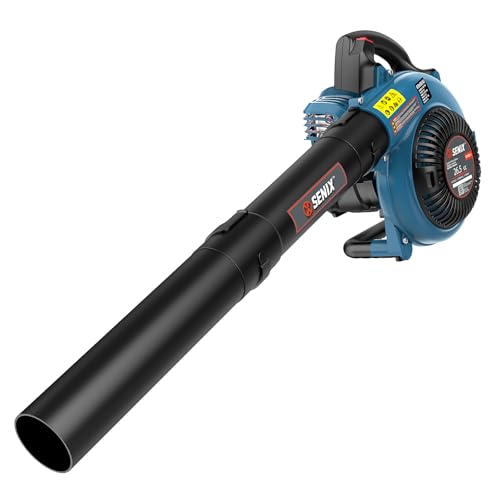
SENIX 4-Cycle 26.5cc Gas Leaf Blower
Best for: People who do not want to mix fuel
A 4-cycle handheld listed at 410 CFM and 125 MPH that runs on straight gasoline.
- No fuel mixing
- Smoother running
- Needs oil changes
- Heavier than similar 2-cycle

JellyMoving 75.6cc 4-Stroke Backpack Leaf Blower
Best for: Large yards without fuel mixing
A 4-stroke backpack with seller-stated 900 CFM and 237 MPH figures.
- Straight gas
- High stated airflow
- Lesser-known brand
- Airflow claims not independently verified
For our full ranked list, see the best gas leaf blower guide.
Common Mistakes
Common mistakes include putting straight gas in a 2-cycle blower, using the wrong oil ratio, using automotive motor oil instead of 2-stroke oil, letting mixed fuel sit for months, forgetting oil changes on a 4-cycle engine and assuming every 4-stroke label means straight gas.
Final Thoughts on 2-Cycle vs 4-Cycle Leaf Blowers
There is no single winner in the 2-cycle vs 4-cycle debate. 2-cycle blowers are lighter, more powerful for their size and widely available, which is why they dominate handheld and backpack models. 4-cycle blowers trade some weight and cost for straight-gas convenience, smoother power and cleaner running. Decide based on how you work and how you feel about fuel mixing, then choose a quality model from our guide to the best gas leaf blower.
More Questions People Ask
Do 4-cycle leaf blowers need oil changes?
Yes. A 4-cycle engine has a separate oil reservoir, so you add straight gasoline to the fuel tank and change the engine oil at the intervals in the owner manual.
Can I put mixed gas in a 4-cycle blower?
Only if the manual says so. True 4-cycle engines use straight gasoline. Some hybrid 4-stroke designs, such as certain small-engine designs from major brands, are built to run on a gas-oil mix, so always follow the label on the fuel cap and the manual.
Is a 4-stroke leaf blower quieter?
Many 4-stroke blowers sound lower-pitched and less raspy, but actual decibel ratings vary by model. Compare the published dB(A) figures rather than assuming engine type alone decides noise.
Which lasts longer, a 2-cycle or 4-cycle blower?
Both can last many seasons. Clean fuel, a clean air filter and correct storage matter more than engine type. Running the wrong fuel mix is the quickest way to damage either.
Frequently Asked Questions
Is a 4-cycle leaf blower better than a 2-cycle?
Not universally. A 4-cycle blower runs on straight gas, tends to be quieter and cleaner, and has smoother torque, but it is heavier and less common. A 2-cycle blower is lighter and offers more power for its size but needs mixed fuel.
Can I put regular gas in a 2-cycle leaf blower?
No. A 2-cycle engine needs gasoline mixed with 2-stroke oil. Running it on straight gas removes lubrication and can quickly seize the engine.
Can I use mixed fuel in a 4-cycle blower?
Most true 4-cycle engines use straight gasoline with oil in a separate crankcase. Some hybrid designs marketed as 4-stroke still use mixed fuel. Always follow the manual.
Which lasts longer, 2-stroke or 4-stroke?
Both can last many years with proper care. 4-stroke engines often have longer service intervals but more parts to maintain, such as oil changes and valve adjustments.
Are 4-cycle leaf blowers quieter?
They often have a lower-pitched, less harsh exhaust note, but overall loudness depends on the model and engine size. Check the published decibel rating.