
Growing cucumbers in a raised bed can be a rewarding experience. The plants thrive when given the right support, and a trellis can transform your small garden space into a productive area. Trellising cucumbers is not just about saving room; it also helps plants stay healthy and makes picking fruit easier.
Whether you are new to gardening or looking for ways to improve your cucumber harvest, learning to trellis in a raised bed is a practical skill. This guide will walk you through everything you need to know, from selecting the right trellis to common mistakes to avoid.
You’ll find step-by-step advice, real-world tips, and answers to questions that beginners often miss.
Why Trellis Cucumbers In Raised Beds?
Cucumbers are natural climbers. In the wild, they scramble over anything nearby. When grown in raised beds, trellising offers several advantages over letting vines sprawl on the ground.
Maximizing Space: Raised beds are often small. Trellising lets you grow cucumbers vertically, freeing up soil for other crops.
Reducing Disease: When cucumber leaves and fruit stay off the soil, there’s less contact with wet earth. This cuts down on diseases like powdery mildew and bacterial wilt.
Better Airflow: Vertical growth increases air movement around plants. Good airflow helps keep leaves dry and reduces fungal problems.
Easier Harvest: Fruit is easier to see and pick on a trellis. You’ll also get straighter cucumbers, as they don’t curl around obstacles.
Higher Yields: Trellised cucumbers often produce more fruit, as the plant gets more sunlight and fewer leaves are shaded.
Cleaner Produce: Cucumbers grown on a trellis stay cleaner, needing less washing before eating.
Many gardeners overlook these benefits, focusing only on saving space. But healthier plants and easier harvesting are just as important.
Types Of Trellises For Cucumbers
Choosing the right trellis depends on your raised bed’s size, your budget, and the type of cucumber you grow. Here’s a look at the most popular options, along with their strengths and weaknesses.
| Trellis Type | Space Needed | Cost | Difficulty | Best For |
|---|---|---|---|---|
| A-Frame | Medium | Low–Medium | Easy | Most raised beds |
| Vertical Panel | Low | Medium | Medium | Compact beds |
| String Trellis | Low | Low | Easy | Small gardens |
| Arch Trellis | High | High | Hard | Decorative use |
| Stake & Twine | Low | Low | Easy | Quick setups |
A-frame Trellis
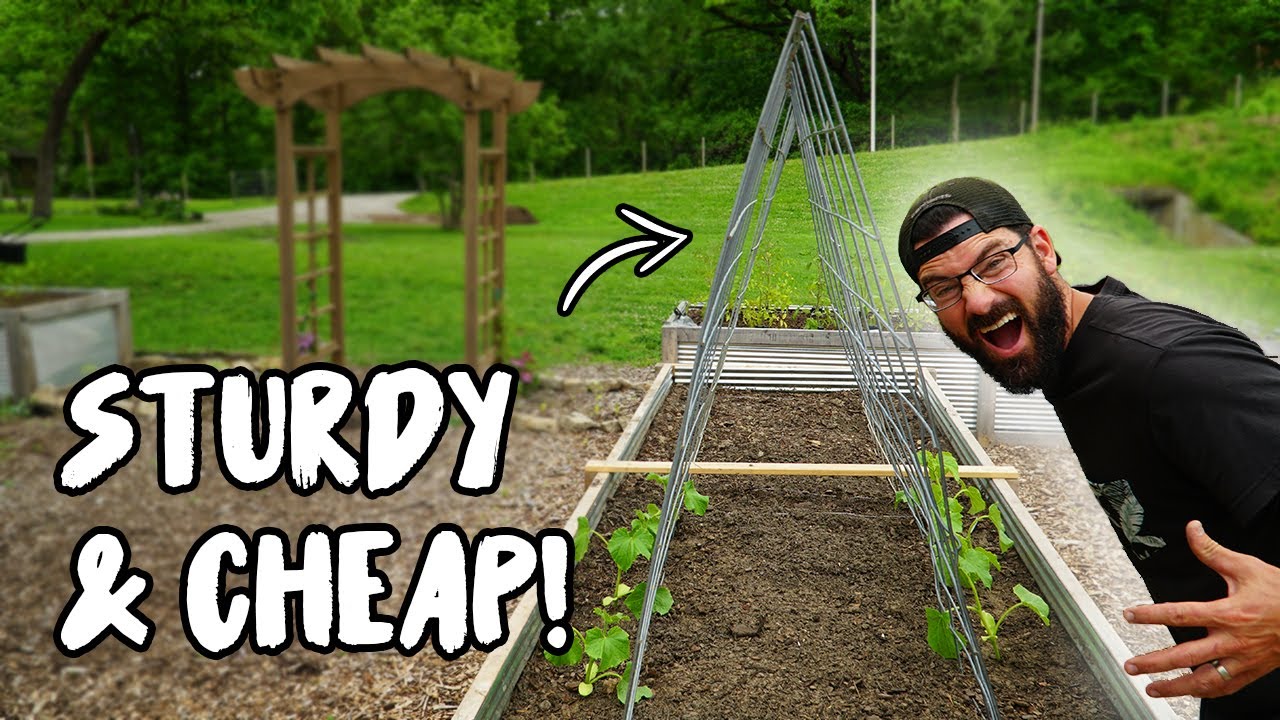
A classic choice. Two panels form a triangle over the bed. Cucumbers climb both sides. It’s sturdy, easy to build, and works well for most beds.
Vertical Panel Trellis
This uses a single panel—wire mesh, cattle panel, or wood lattice—set upright at the bed’s edge. Great for saving space but needs strong anchoring.
String Trellis
Strings or twine hang from an overhead bar or frame. Lightweight and cheap, but not as durable. Best for small beds or short-term use.
Arch Trellis
A curved panel forms an arch between two beds or over a walkway. It looks beautiful and supports heavy vines. Needs more room and stronger materials.
Stake And Twine
Drive stakes at intervals along the bed, then run twine horizontally. Not as strong as panels, but good for a quick, simple setup.
Non-obvious insight: Many gardeners use tomato cages for cucumbers, but these are often too short or narrow. Cucumbers need at least 5–6 feet of vertical space.

Credit: www.vegega.com
Choosing The Right Cucumber Variety
Not all cucumbers are equal when it comes to trellising. There are two main types:
- Vining cucumbers: These are ideal for trellises. They send out long vines that climb readily.
- Bush cucumbers: These are compact, don’t climb much, and are better for containers.
Vining types are sometimes called “climbing cucumbers” in catalogs. Most slicing and pickling varieties are vining. Popular choices include:
- Marketmore 76: Reliable, disease-resistant, and climbs well.
- Straight Eight: Classic, smooth fruit, easy to train.
- Lemon cucumber: Unique round fruit, climbs well.
- National Pickling: Great for small, crisp cucumbers.
Bush varieties like ‘Bush Champion’ or ‘Spacemaster’ stay short and don’t need a trellis, but can still benefit from support to keep fruit off the soil.
Pro tip: Always check the seed packet for the plant’s final size and growth habit. Some modern hybrids have semi-vining habits—these can be trellised, but may need extra tying.
Planning Your Raised Bed For Trellised Cucumbers
Your raised bed’s design affects how well your cucumbers grow. Here are some planning tips:
Bed Size: A 4×4 ft or 4×8 ft bed works well. Make sure the bed is at least 12 inches deep for healthy roots.
Soil: Use rich, well-draining soil with plenty of compost. Cucumbers are heavy feeders.
Sunlight: Position the bed where it gets at least 6–8 hours of sunlight daily.
Trellis Placement: Place the trellis on the north or east side of the bed. This keeps it from shading other plants.
Companion Plants: Good neighbors for cucumbers include lettuce, beans, and radishes. Avoid planting with potatoes or aromatic herbs like sage.
Water Access: Make sure you can reach all plants for watering. Drip irrigation or soaker hoses work well.
Wind: If your area is windy, anchor the trellis firmly to prevent tipping.
Some gardeners overlook bed orientation. Placing a trellis on the south side can shade your cucumbers—put it where sun reaches the leaves all day.
Building A Cucumber Trellis: Step-by-step Guide
Let’s build a simple A-frame trellis—the most popular choice for raised beds. You can adapt these steps for vertical or arch styles.
Materials Needed
- Two 6-foot-long wooden or metal panels (wire mesh, cattle panel, or wood lattice)
- Four 6-foot stakes or sturdy poles
- Zip ties, wire, or garden twine
- Hammer or mallet
- Measuring tape
Step 1: Measure And Mark
Decide where the trellis will stand. Mark the spots for stakes on each side of the bed, about 3–4 feet apart.
Step 2: Install Stakes
Drive two stakes into each side of the bed. The tops should reach at least 5–6 feet above the soil.
Step 3: Attach Panels
Lean the panels together to form an “A” shape. Secure the tops with wire or zip ties. Attach the sides to the stakes for stability.
Step 4: Check Stability
Gently shake the trellis. It should not wobble. Tighten ties or add extra stakes if needed.
Step 5: Prepare The Soil
Loosen the soil at the base of the trellis. Mix in compost and slow-release fertilizer.
Step 6: Plant Cucumbers
Sow seeds or transplant seedlings 6–12 inches apart along the trellis base.
Step 7: Water And Mulch
Water deeply. Add mulch to keep the soil moist and prevent weeds.
Non-obvious insight: For a stronger trellis, bury the bottom of each panel 4–6 inches into the soil. This stops shifting as vines get heavy.
Training Cucumbers To Climb
Cucumbers can climb, but they need a little help at first.
- Guide young vines: When vines reach 6–8 inches, gently wrap the tips around the trellis.
- Secure with ties: Use soft plant ties or strips of old fabric. Don’t tie too tightly—leave room for growth.
- Prune side shoots: If vines get bushy, pinch off some side shoots to keep growth upward.
- Check weekly: As plants grow, keep guiding new tendrils to the support.
It’s important to start training early. Older vines are brittle and can snap if forced onto a trellis.
Watering, Feeding, And Care
Trellised cucumbers have slightly different needs than those grown on the ground.
Watering: Raised beds dry out faster, especially with vertical plants. Water deeply 1–2 times a week—more during heat waves. Drip irrigation is ideal.
Feeding: Cucumbers are heavy feeders. Use a balanced fertilizer when planting, then side-dress with compost every 3–4 weeks.
Mulching: Use straw or leaf mulch to keep roots cool and moist.
Pest Control: Trellising reduces some pests, but watch for cucumber beetles and aphids. Inspect leaves weekly and remove pests by hand.
Fungal Diseases: Good airflow from trellising helps. If leaves get powdery mildew, remove affected leaves and spray with neem oil or baking soda solution.
Fruit Support: Large cucumbers may need extra support. Use slings made from old stockings to cradle heavy fruit.
Common Mistakes To Avoid
Even experienced gardeners make missteps. Here are some pitfalls to watch out for:
- Using weak materials: A flimsy trellis can collapse mid-season. Use sturdy wood, metal, or thick wire mesh.
- Planting too close: Crowded plants compete for light and water. Space 6–12 inches apart.
- Not training early: Waiting too long makes vines hard to direct.
- Forgetting to prune: Excess side shoots lead to tangled growth.
- Overwatering: Raised beds drain quickly, but too much water can rot roots.
- Ignoring wind: Tall trellises can blow over if not anchored.
- Using the wrong variety: Bush cucumbers won’t climb well.
- Letting fruit overripe: Pick often—overripe cucumbers slow plant growth.
Practical tip: Keep a small pair of scissors or pruners near your garden. Regular pruning and harvesting make a big difference in yield.

Credit: www.youtube.com
Trellising Cucumbers: Step-by-step Example
Let’s walk through a real-world example, using a 4×8 ft raised bed and a vertical panel trellis.
Setup
- Raised bed: 4×8 ft, 12 inches deep
- Trellis: 6-foot cattle panel, anchored on the north long side
- Cucumbers: ‘Marketmore 76’, 8 plants
Timeline
- Week 1: Build bed and install trellis
- Week 2: Plant seeds along trellis base, 12 inches apart
- Week 3: Seeds sprout; thin to strongest seedlings
- Week 4: Guide vines to trellis as they reach 8 inches
- Week 6: Begin weekly feeding and mulching
- Week 8–12: Train new vines; pick first cucumbers
- Week 14+: Maintain by pruning, tying, and picking regularly
By the end of summer, you’ll have a wall of healthy vines and dozens of straight, clean cucumbers.
Comparing Trellis Materials
Choosing the right material makes a big difference in durability and appearance.
| Material | Lifespan | Cost | Maintenance | Notes |
|---|---|---|---|---|
| Wood | 3–5 years | Low | Paint or treat yearly | Easy to build, can rot |
| Metal (Wire mesh) | 5–10 years | Medium | Rust if untreated | Very strong |
| Plastic/Fiberglass | 5+ years | Medium–High | Minimal | Lightweight, doesn’t rot |
| Twine/String | 1 season | Very low | Replace yearly | Cheap, not for heavy vines |
Non-obvious insight: Galvanized cattle panels are a favorite among market gardeners. They last many years, resist rust, and are strong enough for heavy yields.
Harvesting Cucumbers From A Trellis
Harvesting is simpler with a trellis, but timing matters.
- Pick early and often: Cucumbers are best when young—5–8 inches for slicers, 2–4 inches for picklers.
- Use two hands: Hold the vine with one hand, pull the fruit with the other. This avoids tearing the plant.
- Check daily: Fruits can grow quickly, especially in hot weather.
- Harvest in the morning: Cucumbers are crispest early in the day.
Leaving overripe fruit on the vine signals the plant to slow production. Regular picking keeps new cucumbers coming.
Seasonal Care And Crop Rotation
Cucumbers are warm-season plants. Here’s how to manage your bed across the year:
- Spring: Install the trellis and plant as soon as the soil is 65°F or warmer.
- Summer: Water, feed, and train vines. Pick regularly.
- Fall: Remove all plant debris and old vines. Compost healthy material; discard diseased vines.
- Winter: Store your trellis indoors if it’s not weatherproof, or check for rust and repair as needed.
Crop rotation: Don’t plant cucumbers (or other cucurbits like squash or melons) in the same bed two years in a row. This reduces disease buildup and improves soil health.
Troubleshooting Common Problems
Even with the best setup, issues can arise. Here’s how to handle them.
Vines Won’t Climb
- Possible causes: Wrong variety, poor training, or trellis too far from plants.
- Solution: Guide vines to the trellis early. Use soft ties to help.
Yellowing Leaves
- Possible causes: Overwatering, nutrient deficiency, or disease.
- Solution: Check soil moisture, feed with compost or balanced fertilizer, remove affected leaves.
Misshapen Or Bitter Cucumbers
- Possible causes: Uneven watering, heat stress, or pollination problems.
- Solution: Water regularly, mulch well, and pick often.
Wilting Vines
- Possible causes: Bacterial wilt or root rot.
- Solution: Remove infected plants. Rotate crops next season.
Poor Fruit Set
- Possible causes: Lack of pollinators or too much nitrogen.
- Solution: Plant flowers nearby to attract bees. Avoid high-nitrogen fertilizer after flowering starts.
Diy Trellis Ideas For Raised Beds
If you like to build your own supports, here are some creative ideas:
- Cattle Panel Arch: Bend a 16-foot cattle panel into an arch between two beds. Strong and lasts many years.
- Bamboo Teepee: Tie 6-foot bamboo poles at the top for a cone-shaped trellis.
- Old Bed Frame: Upcycle a metal bed headboard or footboard—paint for rust protection.
- String Grid: Run vertical strings from an overhead bar to the soil, spaced 6 inches apart.
- Fence Panel: Attach a wire fence panel to the bed’s long side for an instant vertical trellis.
Tip: Always check for sharp edges on metal trellises. File or tape them to avoid injury.
Comparing Raised Bed Trellising With In-ground Growing
Is trellising in raised beds better than traditional in-ground gardening? Here’s a quick comparison.
| Factor | Raised Bed Trellis | In-Ground Growing |
|---|---|---|
| Space Use | Efficient, vertical | Needs more room |
| Disease Risk | Lower (off the ground) | Higher (soil contact) |
| Soil Quality | Easy to control | Varies with yard soil |
| Weed Control | Fewer weeds | More weeds |
| Yield | Often higher | Varies |
| Setup Cost | Higher initially | Lower |
While raised beds and trellises cost more up front, the benefits in yield and health often make it worthwhile for home gardeners.
Tips For Maximizing Cucumber Yield
Here are some ways to get the most from your trellised cucumbers:
- Start seeds indoors: Get a head start by starting seeds 3–4 weeks before your last frost date.
- Use row covers: Protect young plants from pests until they start climbing.
- Fertilize regularly: Use organic or slow-release fertilizers for steady growth.
- Prune for airflow: Thin leaves and side shoots to improve sunlight and reduce disease.
- Rotate crops: Don’t plant cucumbers or related crops in the same spot every year.
- Attract pollinators: Plant flowers like marigolds or nasturtiums nearby.
- Pick daily: Regular harvest keeps plants producing.
Many gardeners skip pruning, thinking more leaves mean more fruit. In reality, better airflow and light reach boost yields.
Credit: www.youtube.com
When And How To Remove The Trellis
At the end of the season, proper removal and storage will extend your trellis’s life.
- Remove all plant matter: Cut vines at the base. Compost healthy vines, destroy diseased material.
- Clean trellis: Scrub off soil and plant debris. For metal, check for rust spots.
- Store indoors: If possible, store wood or metal trellises in a shed or garage to prevent weather damage.
- Inspect for repairs: Tighten loose joints, replace broken parts before next season.
Leaving a trellis in place year-round is fine if it’s weatherproof. Otherwise, winter storage reduces wear.
Sustainable Trellising: Eco-friendly Choices
If you want to garden green, there are several ways to make your trellising more eco-friendly.
- Use reclaimed materials: Old wood, metal, or even bicycle wheels can become trellises.
- Choose untreated wood: Avoid chemicals that can leach into soil.
- Compostable ties: Use twine or fabric strips instead of plastic ties.
- Perennial trellises: Build once with durable materials to avoid yearly waste.
Sustainable gardening is about more than just the plants—it includes every part of your setup.
Frequently Asked Questions
How Tall Should A Cucumber Trellis Be In A Raised Bed?
Most vining cucumbers need a trellis at least 5 to 6 feet tall. Some vigorous varieties can reach 7 feet or more, but 6 feet suits most home gardens. Shorter trellises will work but may limit yield or cause vines to drape over the sides.
Can I Use Tomato Cages For Cucumbers?
You can, but tomato cages are often too small and unstable for vining cucumbers. They work better for bush types or very small plants. For best results, use a taller, stronger trellis that supports long vines.
What Is The Best Material For A Cucumber Trellis?
Metal wire panels (like cattle panels) are the strongest and most durable. Treated wood or plastic can also work. Avoid thin string or weak plastic netting for heavy vines. Always pick materials that last several seasons and can hold the plant’s weight.
How Do I Keep Cucumbers From Getting Bitter?
Bitterness is often caused by uneven watering, heat stress, or genetics. Water consistently, mulch well, and pick fruit while still young. Some varieties are more resistant to bitterness—check seed labels for “bitter-free” types.
Where Can I Learn More About Trellising And Raised Bed Gardening?
For more in-depth guides and inspiration, the University of Minnesota Extension offers excellent resources on vegetable trellising and raised bed care.
Growing cucumbers on a trellis in a raised bed is one of the most efficient ways to enjoy a plentiful harvest, even in a small space. With the right setup, care, and variety, you’ll enjoy straight, clean, and healthy cucumbers all summer long.
Start small, experiment with different trellis styles, and enjoy the satisfaction of picking your own fresh produce just steps from your kitchen.