
Is your lawn uneven, patchy, or struggling to grow lush and green? You’re not alone.
Uneven ground can make lawn care tricky, especially when it comes to aerating and overseeding. But here’s the good news: with the right approach, you can breathe new life into your lawn, even on bumpy terrain. In this guide, you’ll discover simple, effective steps to use an aerator and overseeder on uneven ground—helping your grass grow thicker, healthier, and more vibrant.
Keep reading, and you’ll learn how to turn your challenging lawn into a smooth, green masterpiece you’ll be proud of.

Credit: landzie.com
Preparing Uneven Ground
Preparing uneven ground is essential before using an aerator and overseeder. Uneven lawns need extra care to ensure seeds take root and grow evenly. Proper preparation helps improve soil contact and water absorption. This leads to a healthier, more uniform lawn.
Start with a thorough evaluation of your lawn. Identify problem areas and plan how to fix them. Use the right tools to smooth out bumps and fill low spots. This creates a better surface for aeration and overseeding.
Assessing Lawn Conditions
Walk across your lawn and look for dips and high spots. Note areas with compacted soil or poor grass growth. Check for drainage problems that cause water to pool. Understanding these issues guides your preparation steps.
Mark uneven spots with flags or stakes. This makes it easier to focus on fixing problem zones. Also, observe soil type and moisture levels. These affect how you will handle leveling and aeration.
Tools For Leveling
Gather tools like a lawn leveling rake or a regular garden rake. A shovel helps move soil into low areas. For bigger jobs, use a wheelbarrow to transport soil or compost.
A lawn leveling rake is ideal for spreading soil evenly. If unavailable, a standard rake works well for small areas. A tamper or roller can compact soil after filling low spots. This prevents future sinking.
Filling Low Spots
Mix topsoil with compost for better nutrients and drainage. Avoid using pure clay or sand, as they affect soil balance. Spread the mixture into low spots and level it with your rake.
Fill low spots in layers, compacting each layer lightly. This prevents settling over time. Water the filled areas to help soil settle firmly. Allow the soil to dry before aerating or overseeding.

Credit: www.amazon.com
Choosing The Right Aerator
After aerating and overseeding uneven ground, proper lawn care is essential. Post-treatment steps help seeds grow strong and roots establish well. The soil needs moisture, nutrients, and attention to thrive. This care supports a healthy, even lawn over time.
Follow clear guidelines for watering, fertilizing, and watching seed growth. These actions improve seed germination and lawn recovery on uneven surfaces.
Watering Guidelines
Water the lawn lightly but often to keep soil moist. Avoid soaking or letting water pool in low spots. Early morning watering reduces evaporation and helps seeds absorb moisture. Continue this routine until grass sprouts and grows a few inches tall. Gradually reduce watering frequency as the lawn strengthens.
Fertilization Tips
Apply a starter fertilizer rich in phosphorus to support root growth. Follow package directions for correct amounts to avoid burning new grass. Use slow-release fertilizers after the grass establishes. Avoid heavy feeding in very hot or dry weather. Proper nutrition boosts seedling health and lawn density on uneven ground.
Monitoring Seed Germination
Check the lawn daily for signs of seed sprouting. Look for patches where seeds may not be growing well. Lightly rake those areas to improve soil contact and re-seed if needed. Protect the lawn from foot traffic until grass is strong. Early attention ensures even coverage and a lush lawn.
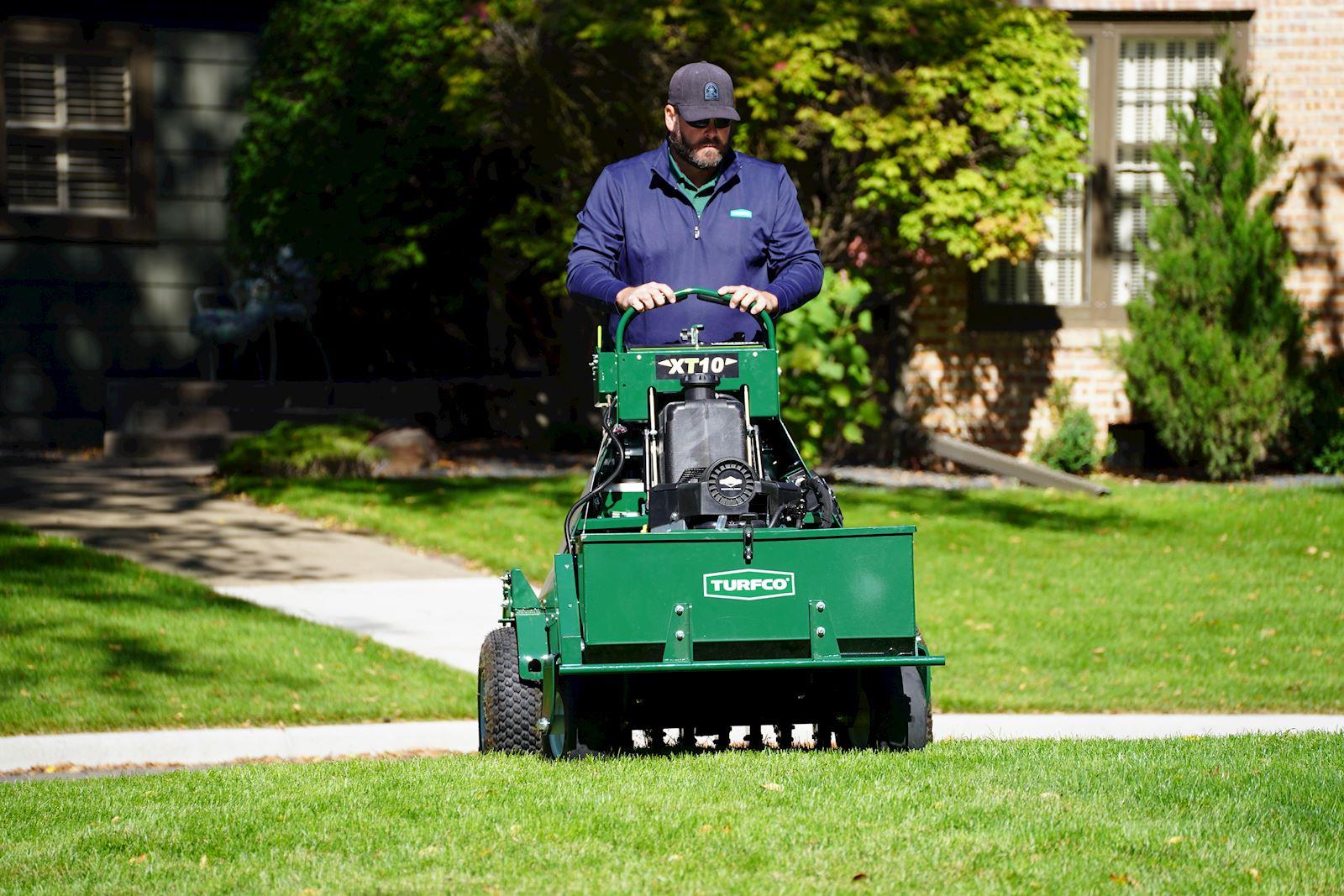
Credit: www.turfco.com
Frequently Asked Questions
Does Aeration Help With An Uneven Lawn?
Aeration creates small soil pockets that improve air and water flow. It helps redistribute soil and fill low spots but may not fully level an extremely uneven lawn. Additional steps like adding topsoil or regrading might be necessary for a smooth surface.
What Is The Easiest Way To Level Uneven Ground?
The easiest way to level uneven ground is by using a lawn leveling rake. Spread leveling mix and smooth it out evenly. A shovel and standard rake can also work if you lack a leveling rake. This method quickly creates a flat, even surface.
Should You Aerate Before Or After Leveling?
Aerate before leveling to avoid disturbing the surface material. Aeration loosens soil, making leveling more effective and neat.
Do I Need To Aerate If I Use An Overseeder?
Aerating before overseeding improves seed contact by loosening compacted soil. Skip aeration only if soil is loose and healthy.
Conclusion
Using an aerator and overseeder on uneven ground improves lawn health and appearance. Aeration helps soil breathe and creates space for seeds to grow. Overseeding fills bare spots and thickens grass coverage. For best results, aerate first, then level low areas gently.
Spread seed evenly and water regularly. Patience is key; grass takes time to fill in. With care, your uneven lawn can become greener and more even. Simple steps lead to a healthier, more beautiful yard. Keep up the routine to maintain strong, lush grass year-round.