
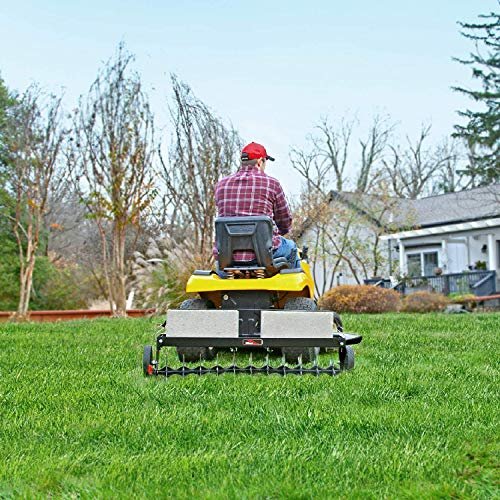
Brinly delivers deeper, heavier aeration; Ryobi shines for small cordless jobs.
You want thicker grass, fewer bald spots, and better water flow in your lawn. That means you need real aeration, not just scratching the surface. The Brinly vs Ryobi lawn aerator choice comes down to power and depth vs light, cordless ease. If your soil is compact or clay, you’ll want deeper cores or heavy spike penetration. If you have a small yard, light thatch, and no tractor, a Ryobi battery tool may feel simpler. I’ve tested both paths. Below, I break down the best Brinly options, when a Ryobi-style tool makes sense, and how to pick with confidence.

Brinly SAT2-40BH-P Tow Behind Spike…
Aerate and relieve compacted soil: 11 tine stars with 8″ Diameters each feature 12 spike tips to penetrate soil up to 2″ In depth, allowing water, seed, and nutrients to…
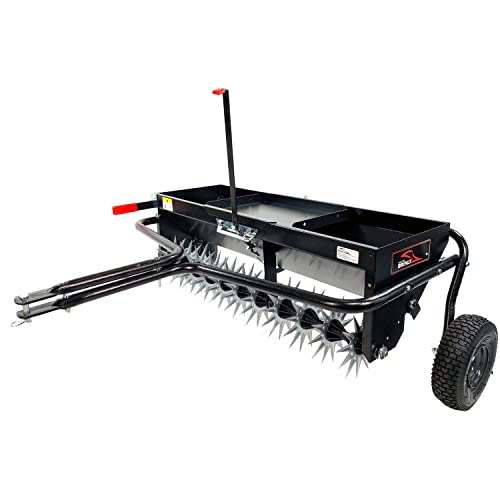
Brinly Tow Behind Combination Aerator…
2-in-1 design: The combo aerator spreader drops seed, fertilizer or lime while you aerate to expedite your time in the lawn and ensures material enters the soil. Includes Weight Tray:…

Brinly PA-482BH-A2 Tow Behind Plug…
Aerate & Relieve Compacted Soil: 32 heat-treated, 16-gauge Steel plugging spoons penetrate compacted soil and remove up to 3-inch plugs of soil, allowing water, seed, and fertilizer to reach the…
Brinly 40″ Tow-Behind Spike Aerator (SAT2-40BH-P)
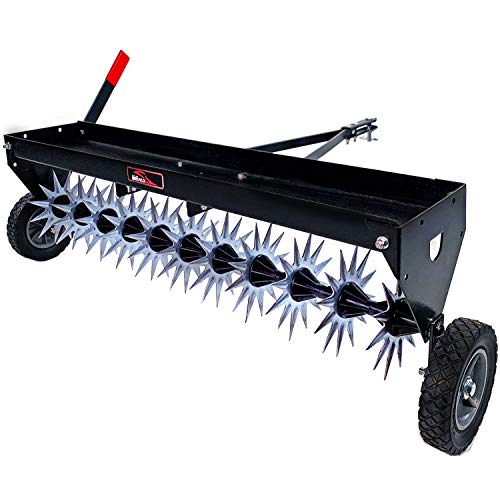
This 40-inch tow-behind spike aerator is a reliable way to open your soil. It uses star-shaped tines that pierce the turf as you pull it with a lawn tractor. Add weight to the tray and you get deeper penetration in compact soil. The frame is steel, the tines are durable, and the transport wheels help you cross drives without damage.
For many yards, spike aeration is enough when you do it on moist soil. It boosts air flow and helps water move to the roots. If you core-aerate once a year, use this spiker for touch-ups each season. It covers ground fast and stores well in a garage or shed.
Pros:
- Easy to tow and simple to use with most lawn tractors.
- Weight tray lets you add blocks or bags for deeper spikes.
- Transport wheels save your driveway and make moving safe.
- Wide 40-inch swath cuts time on medium or large lawns.
- Great for in-between core aeration to keep soil open.
Cons:
- Not a core aerator; it does not pull soil plugs.
- Needs a tractor or rider; not ideal for small homes.
- Performance drops on very dry, hard clay unless well-weighted.
My Recommendation
If you own a lawn tractor and want fast, repeatable soil relief, this is a smart pick. It is best for regular maintenance, especially between annual core aerations. In the Brinly vs Ryobi lawn aerator debate, this model beats Ryobi-style cordless tools for coverage and depth when weighted. Ryobi excels for small, tight spaces and quick touch-ups. This Brinly wins when you must open thousands of square feet in one pass.
Use it on moist soil for best results. Aim for slow, steady passes and overlap a little. The build is solid, and parts are easy to service over time. Value is strong if you’ll use it two or more times a year.
| Best for | Why |
|---|---|
| Mid to large lawns with tractors | Wide path and tow-behind ease save time |
| Seasonal spike maintenance | Weight tray pushes spikes deeper in soft soil |
| Owners who core-aerate yearly | Keeps pores open between core jobs |
Brinly 40″ Aerator Spreader Combo Tow-Behind
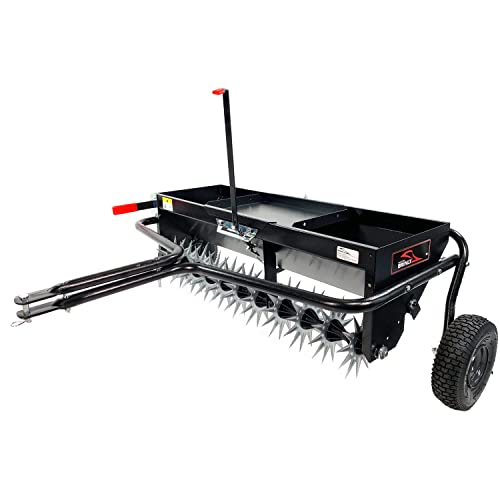
This tow-behind combo does two jobs at once. It spikes the turf while it spreads seed or fertilizer. That means better seed-to-soil contact and faster nutrient flow. It can save a full pass and cut your total time in half.
Setup is simple, and the weight tray helps your spikes work better. The spreader gate is easy to adjust while seated. I like it for overseeding cool-season grass in fall, then feeding in spring. It shines on lawns that need both air and seed in one weekend.
Pros:
- Combines aeration and spreading in a single pass to save time.
- Better germination since spikes open the soil for seed drop.
- On-the-fly spreader control helps you fine-tune the rate.
- Solid frame with a practical weight tray for deeper spikes.
- Great productivity boost for busy DIY lawn owners.
Cons:
- Spike aeration only; it will not pull plugs.
- Requires a tractor; not for small yards without towing gear.
- Must calibrate spreader to avoid over-application on corners.
My Recommendation
Choose this if you plan to overseed or feed as you aerate. It is perfect for cool-season lawns that need a fall refresh. In the Brinly vs Ryobi lawn aerator match-up, this combo gives you two key steps in one. A Ryobi-style handheld or walk-behind can rough up the thatch. But it cannot match the ground covered or the precision of a combined pass.
This offers strong value if you already own a tractor and want to improve seed take. Fill the hopper with top-rated seed and go slow. Keep the soil moist after overseeding, and you will notice thicker turf in weeks.
| Best for | Why |
|---|---|
| Overseeding projects | Seeds fall into spike openings for better contact |
| Fertilizing during aeration | One-pass efficiency saves time and fuel |
| Busy DIYers with riders | High productivity on medium and large lawns |
Brinly 48″ Tow-Behind Plug Aerator (PA-482BH-A2)

If you want real, deep relief for compact soil, core aeration is the gold standard. This 48-inch plug aerator pulls actual plugs from the lawn. That lets the roots breathe and gives water a direct path. Turf pros and extension guides agree: core aeration reduces compaction better than spikes.
The Brinly build is tough and field-proven. The wide path speeds up big yards. Add weight to the tray when soil is moist for best core depth. This tool is my favorite for clay-heavy soil and high-traffic lawns.
Pros:
- True core aeration with pulled plugs for deep soil relief.
- Wide 48-inch coverage reduces total passes and time.
- Heavy-duty frame and spoons built to last many seasons.
- Weight tray helps reach target depth on moist ground.
- Top choice for compacted, drought-stressed, or high-traffic turf.
Cons:
- Needs a capable tractor; it is heavier than a spike unit.
- Best results require moist soil and slower towing speed.
- Plugs need to dry and break down; the lawn looks messy at first.
My Recommendation
Pick this if you want the most effective home aeration. It helps with drainage, reduces pooling, and supports thicker roots. In the Brinly vs Ryobi lawn aerator decision, this is where Brinly leaves Ryobi in the dust. Battery dethatchers or light aerator tools do not pull cores. This does, and the lawn benefits for months.
It works well before overseeding and after a light rain. Leave the plugs to dry, then mulch them with a mower. For value and results, this is hard to beat if you have the tow power and a yard that needs serious help.
| Best for | Why |
|---|---|
| Compacted or clay soil | Core removal opens the profile to air and water |
| Large yards | 48-inch width reduces passes and fatigue |
| Overseeding prep | Plugs and holes improve seed establishment |
Brinly 40″ Spike Aerator, Carbon (SAT2-40BH-P)
This is the Carbon finish version of Brinly’s 40-inch spiker. It runs the same durable tines and tow-behind layout. You get the same weight tray for deeper penetration. The fresh finish looks sharp and holds up in the weather.
It is ideal for maintenance aeration when soil is not too hard. Run it after light rain or irrigation for best effect. If you pair it with a spreader pass, you get faster green-up. This is a steady workhorse at a fair cost.
Pros:
- Same proven spike system with an updated Carbon finish.
- Good balance of price, width, and ease for most riders.
- Weight tray supports deeper spikes on moist soil.
- Transport wheels keep spikes off hard surfaces.
- Solid choice for seasonal tune-ups between core jobs.
Cons:
- Spike method cannot replace true core aeration on clay.
- Requires tow power; not for small urban lawns.
- Depth depends on added weight and soil moisture.
My Recommendation
If you like a clean, modern look and need a reliable spiker, choose this finish. It suits regular lawn care where you want a quick lift in airflow. In a Brinly vs Ryobi lawn aerator choice for mid-size lawns, this Brinly wins on speed and depth per pass. A Ryobi-type cordless aerator helps in tight beds, but this is the field runner.
Use it monthly during peak growth if you water often and mow high. It will help roots chase deeper moisture. For the price, you get years of service with simple care.
| Best for | Why |
|---|---|
| Regular seasonal aeration | Fast coverage and easy storage |
| Mid-size tractor lawns | 40-inch width fits many gates and paths |
| Owners who value finish | Carbon look resists wear and blends with gear |
Brinly 20″ Premium Push Spike Aerator

This premium push spike aerator gives you control without a tractor. It has 3D galvanized steel tines and a weight tray. The tines are designed to stay sharp and resist rust. With a 20-inch path, it fits tight gates and small yards with ease.
Push aeration will give you a workout, but it works well on small lots. Add weight and water the lawn first for the best result. It is great around beds and curves where tow-behind tools struggle. I like it for city lawns and patch work near patios or mailboxes.
Pros:
- Push design fits homes without tractors or riders.
- 3D galvanized tines resist rust and stay sharper longer.
- Weight tray boosts spike depth when the soil is moist.
- Compact width moves through side yards and tight gates.
- Ideal for spot aeration, beds, and small turf areas.
Cons:
- Manual push effort can be tiring on larger lawns.
- Spike method; it does not pull cores like a plug unit.
- Best results require pre-watering and added weight.
My Recommendation
If you have a small yard and no towing gear, this is a smart pick. It is the closest Brinly alternative to the cordless ease of a Ryobi. In a Brinly vs Ryobi lawn aerator choice for tiny lots, I lean Brinly here due to rugged tines and a weight tray. Ryobi cordless units are light and fast, but they can struggle to penetrate compact soil.
Choose this model if you want sturdy build, no battery limits, and a simple path to better airflow. Run it every few weeks in growing season. Keep the tines clean, and it will serve you for years.
| Best for | Why |
|---|---|
| Small urban lawns | Compact size and simple storage |
| Spot treatments | Easy to maneuver near beds and edges |
| Owners who prefer manual tools | No batteries, no cords, more control |
FAQs Of Brinly vs Ryobi lawn aerator
Which is better for compact clay: Brinly or Ryobi?
Brinly, especially a plug aerator, is better for clay. It pulls cores and relieves compaction more than light cordless tools.
Do Ryobi cordless aerators replace a tow-behind unit?
No. They work for small lawns, touch-ups, and dethatching. Tow-behind units cover more area and can reach deeper with weight.
How often should I aerate my lawn?
Once a year for most lawns. Twice a year if you have heavy traffic or clay. Spike more often as light maintenance if needed.
Is spike or plug aeration better?
Plug (core) aeration is best for compaction. Spike aeration is fine for seasonal airflow and between core jobs.
Can I overseed right after aeration?
Yes. Seeding after aeration boosts seed-to-soil contact. It is a common and effective pairing.
Final Verdict: Which Should You Buy?
For most yards that need real soil relief, choose Brinly—ideally the 48-inch plug aerator. It beats a Ryobi-style tool for depth, coverage, and long-term results.
If your space is tiny, Ryobi can help. Yet for Brinly vs Ryobi lawn aerator value, Brinly wins on performance and durability.