
Last updated: October 2026 · Written by the LawnVibe editorial team.
Buying a lawn mower used to mean choosing between a handful of gas models. Today, you can choose from powerful battery mowers, efficient gas machines, lightweight corded models, silent reel mowers and robots that mow on their own. That choice is great, but it also makes it harder to know which mower fits your yard. This guide to the best lawn mower 2026 has to offer compares the main types and our top picks for different lawn sizes, budgets and priorities, followed by a full buying guide.
Our picks are based on published specifications, manufacturer information and the features that matter most for real lawns, not on hands-on testing. If you are not sure what size you need, start with our guide on what size mower you need for your yard.
Our Top Picks

EGO LM2132SP-2 21-Inch 56V Select Cut Self-Propelled
Best for: Most suburban lawns up to about half an acre
A 21-inch battery self-propelled mower with EGO’s Select Cut blade system and Touch Drive speed control, sold with two 4.0Ah batteries and a rapid charger. It combines gas-like convenience with push-button starting and low maintenance.
- Self-propelled with Touch Drive
- Two batteries and rapid charger
- 21-inch deck
- Premium price
- Battery runtime limits very large lawns
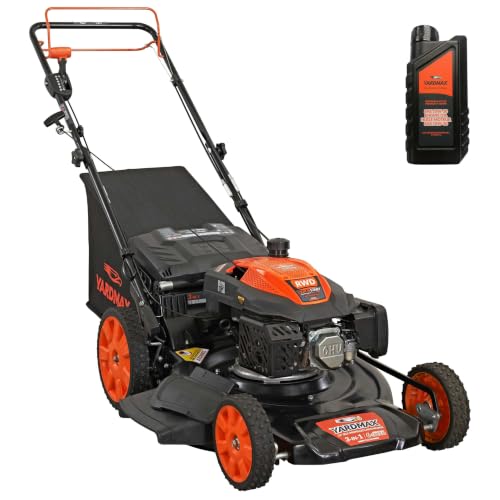
YARDMAX 22-Inch 201cc Select PACE Self-Propelled
Best for: Larger lawns and thick grass
A 22-inch gas mower with a 201cc engine, rear-wheel drive, high rear wheels and a 6-speed CVT drive. Rear-wheel drive and a wide deck suit bigger and sloped lawns.
- 201cc engine
- Rear-wheel drive, 6-speed CVT
- 3-in-1 mulch, bag, discharge
- Heavy
- Fuel and oil maintenance

Greenworks 60V 21-Inch Cordless Push Mower
Best for: Flat lawns up to about a third of an acre
A 21-inch 60V push mower with a 5.0Ah battery, rapid charger, LED lights and aluminum handles, offering full-size deck width without gas.
- Full 21-inch deck
- 5.0Ah battery and rapid charger
- LED lights
- No self-propel
- Battery adds weight
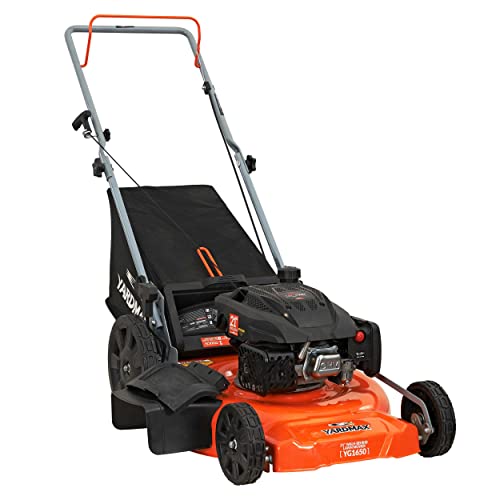
YARDMAX 21-Inch 170cc Gas Push Mower
Best for: Value-focused buyers with flat lawns
A 21-inch, 170cc gas push mower with 3-in-1 clipping options and high rear wheels for rolling over uneven ground.
- 170cc engine
- 3-in-1 functionality
- High rear wheels
- Push only
- Louder than battery mowers
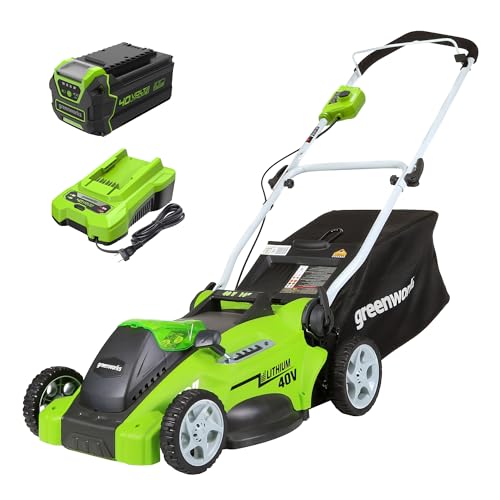
Greenworks 40V 16-Inch Cordless Mower
Best for: Small lawns and tight storage
A compact 16-inch cordless mower with a 4.0Ah battery. Greenworks lists around 35 minutes of runtime per charge, which suits small lawns.
- Light and compact
- Battery and charger included
- Works with Greenworks 40V tools
- 16-inch cut
- Not for large lawns

BLACK+DECKER MM2000 20-Inch 13-Amp Corded Mower
Best for: Small lawns near an outlet
A 20-inch corded mower with a 13-amp motor and adjustable height. Corded power means no battery to charge and unlimited runtime within cord reach.
- Unlimited runtime
- Wide 20-inch deck
- Low cost of ownership
- Cord management
- Never use on wet grass

Scotts 2000-20S 20-Inch Reel Mower
Best for: Small, flat lawns mowed often
A classic 20-inch, 5-blade manual reel mower for quiet, emission-free mowing with a clean scissor cut.
- No fuel or battery
- Clean scissor cut
- Quiet
- Struggles with tall grass
- Manual effort
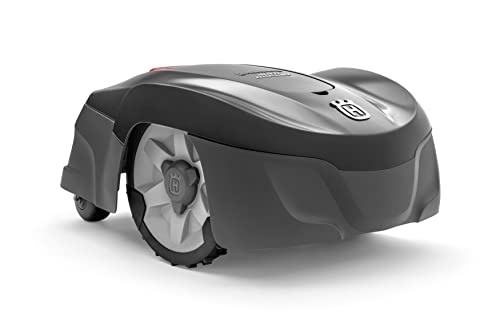
Husqvarna Automower 115H
Best for: Hands-off mowing up to about 0.4 acre
A robot mower for lawns up to about 0.4 acre that mows quietly on a schedule, using a guide wire system. A good choice if you want to stop mowing altogether.
- Quiet, automatic mowing
- Up to about 0.4 acre
- Established brand support
- Boundary wire installation
- Higher upfront cost
Comparison Table
| # | Product | Best for | Link |
|---|---|---|---|
| 1 | EGO LM2132SP-2 21-Inch 56V Select Cut Self-Propelled | Most suburban lawns up to about half an acre | Check price |
| 2 | YARDMAX 22-Inch 201cc Select PACE Self-Propelled | Larger lawns and thick grass | Check price |
| 3 | Greenworks 60V 21-Inch Cordless Push Mower | Flat lawns up to about a third of an acre | Check price |
| 4 | YARDMAX 21-Inch 170cc Gas Push Mower | Value-focused buyers with flat lawns | Check price |
| 5 | Greenworks 40V 16-Inch Cordless Mower | Small lawns and tight storage | Check price |
| 6 | BLACK+DECKER MM2000 20-Inch 13-Amp Corded Mower | Small lawns near an outlet | Check price |
| 7 | Scotts 2000-20S 20-Inch Reel Mower | Small, flat lawns mowed often | Check price |
| 8 | Husqvarna Automower 115H | Hands-off mowing up to about 0.4 acre | Check price |
A Closer Look at Each Pick
EGO LM2132SP-2, best overall. A 21-inch self-propelled battery mower suits the widest range of homeowners. Self-propel takes the effort out of larger lawns and slopes, push-button starting replaces pull cords, and there is no fuel, oil or spark plug to maintain. With two batteries included, it covers many suburban lawns in one session.
YARDMAX 22-inch 201cc, best gas self-propelled. If your lawn is large, often thick and lush, or you simply prefer gas, this rear-wheel-drive model pairs a 201cc engine with a wide 22-inch deck and a variable-speed CVT drive. Rear-wheel drive keeps traction when climbing or when the bag fills.
Greenworks 60V 21-inch, best battery push. A full 21-inch deck without self-propel keeps weight and cost down. It is a good fit for flat lawns where pushing is not a burden, and the LED lights help on early-evening mows.
YARDMAX 21-inch 170cc, best budget gas. A straightforward push mower with a 170cc engine, 3-in-1 clipping options and high rear wheels for rolling over uneven ground. A sensible choice if you want gas power on a budget and have a flat lawn.
Greenworks 40V 16-inch, best for small yards. Compact, light and easy to store, with enough runtime for small lawns. It is one of the easiest mowers to handle in tight spaces.
BLACK+DECKER MM2000, best corded. If your lawn is small and close to an outlet, corded power gives unlimited runtime with no battery to replace, at a low cost of ownership.
Scotts 2000-20S, best reel mower. For small, flat lawns mowed often, a manual reel mower is silent, emission-free and leaves a clean scissor cut.
Husqvarna Automower 115H, best robot. For people who would rather not mow at all, a robot keeps grass trimmed on a schedule. It uses a guide wire, so plan for installation time.
Types of Lawn Mowers Explained
Battery-powered mowers
Battery mowers have become the default choice for many homeowners. They start instantly, run quietly, produce no exhaust, and need very little maintenance. Brushless motors and higher-voltage platforms now deliver enough power for thick grass. The trade-offs are runtime, which depends on battery size, and the cost of replacement batteries over time. Our guide to the best cordless lawn mower compares more battery models.
Gas mowers
Gas mowers offer strong, consistent power and long runtime, which makes them good for large lawns and heavy grass. They are louder and heavier, and they need oil changes, spark plugs, air filters and fresh fuel.
Corded electric mowers
Corded mowers are light, inexpensive and never run out of power, but the cord limits range and must be managed around obstacles. They are best for small lawns close to an outlet.
Reel mowers
Manual reel mowers cut with a scissor action, need no fuel or power, and are nearly silent. They are best for small, flat lawns of fine grass that are mowed often.
Robot mowers
Robot mowers cut a little every few days on a schedule, keeping the lawn consistently trimmed. Wired models follow a boundary wire, while wire-free models use satellite positioning or cameras.
Riding mowers and zero-turns
For lawns over about half an acre, a riding mower, lawn tractor or zero-turn saves a lot of time. Zero-turns are fast around obstacles but are not suited to steep slopes.
How to Choose the Best Lawn Mower
Match the mower to your lawn size
Measure the grass you actually mow. Small lawns under a quarter acre suit push, corded, compact battery or reel mowers. A quarter to half an acre suits a 21- or 22-inch self-propelled mower. Larger properties benefit from riding mowers.
Self-propelled or push
Self-propelled drive makes a big difference on larger lawns and hills. Rear-wheel drive gives the best traction for climbing and bagging; front-wheel drive is easier to turn on flat ground. Our guide to the best self-propelled lawn mower explains drive types in more detail.
Deck size
A 21-inch deck is the most common walk-behind size and balances coverage with maneuverability. Narrower decks are lighter and easier to store; wider decks cut faster on open lawns.
Clipping options
Most mowers offer mulching, bagging and side discharge. Mulching returns nutrients to the lawn, bagging gives the tidiest finish, and side discharge handles long grass.
Cutting height range
A wide height range lets you mow higher in summer and match recommendations for your grass type. Single-lever height adjustment is more convenient than adjusting each wheel.
Battery platform and runtime
For battery mowers, look at voltage and amp-hours, and consider whether you already own tools on the same platform. Larger lawns may need two batteries.
Storage and weight
Folding handles and vertical storage help in small garages and sheds. Lighter mowers are easier to lift and maneuver.
Budget and ownership costs
Consider the long-term costs: fuel and maintenance for gas, replacement batteries for cordless, and blades for all mowers.
Best Lawn Mower by Yard Type
Small, flat urban yard. A compact 16-inch battery mower, a corded mower or a reel mower. Light weight and easy storage matter more than power.
Typical suburban lawn. A 21-inch battery self-propelled mower is the best all-rounder, with enough runtime for most lots and drive assistance for slopes.
Large or thick lawn. A gas self-propelled mower with a 21- or 22-inch deck, or a high-capacity battery model with spare batteries.
Hilly yard. A rear-wheel or all-wheel-drive self-propelled mower; avoid zero-turns on steep ground.
Busy homeowner. A robot mower that cuts on a schedule.
Safety Features to Look For
Every walk-behind mower has a blade control bar that stops the blade when released. Battery mowers often add a removable safety key, which keeps children from starting the mower. Look for a sturdy rear guard and discharge chute, and on robot mowers, lift and tilt sensors that stop the blades instantly. Whatever you buy, keep children and pets away while mowing, wear closed-toe shoes, and never reach under the deck while the mower can run.
Common Mower Buying Mistakes
Buying a mower sized for the whole lot rather than the actual lawn. Choosing a push mower for a large or hilly lawn and finding mowing exhausting. Picking a very wide deck that will not fit through the garden gate. Ignoring battery platform compatibility with tools you already own. Choosing a corded mower for a lawn far from an outlet. Expecting a reel mower to handle overgrown or coarse grass. Forgetting to budget for a spare battery on a cordless mower for larger lawns.
When Is the Best Time to Buy?
Mowers are often discounted at the end of the mowing season and during spring sales events, when retailers compete for buyers. Buying early in spring also gives you time to assemble the mower, charge batteries and learn the controls before grass growth takes off.
Mowing Tips for a Healthier Lawn
The right mower is only half of a good lawn. Mow at the right height for your grass, never removing more than about a third of the blade at once, as the University of Minnesota Extension recommends. Keep the blade sharp, mow when grass is dry, change direction each time, and leave short clippings on the lawn. Our guide on how to mow a lawn covers technique step by step.
Gas vs Battery: Cost Over Time
A gas mower usually costs less upfront for the same deck size, but it needs fuel, oil, spark plugs, air filters and occasional carburetor service. A battery mower costs more upfront, especially with a large battery, but has almost no routine running costs apart from electricity and blades. Over several years, the main extra cost for battery mowers is eventually replacing the battery, which is cheaper if you buy within a platform you use for other tools. For many homeowners with small and medium lawns, battery mowers end up competitive or cheaper overall, and far more convenient.
Noise Considerations
Battery mowers are much quieter than gas mowers, which matters if you mow early, have close neighbors or live in an area with noise rules. Reel mowers and robots are quieter still.
Lawn Mower Maintenance Basics
For gas mowers, check oil before each use, change it at least once a season, replace the spark plug and air filter yearly, use fresh fuel with stabilizer, and clean the deck after mowing. For battery mowers, store batteries indoors at partial charge, keep the blade sharp and the deck clean. For all mowers, sharpen the blade once or twice a season.
The Bottom Line
The best lawn mower for most people in 2026 is a 21-inch battery self-propelled mower, which combines easy starting, low maintenance and enough power for most suburban lawns. Choose a gas self-propelled model for large or thick lawns, a compact battery or corded mower for small yards, a reel mower for small lawns you mow often, or a robot if you would rather not mow at all. Match the mower to your lawn size, terrain and storage space, and keep the blade sharp, and you will have a better-looking lawn with less effort.
Frequently Asked Questions
What is the best lawn mower for most people in 2026?
For most suburban lawns up to about half an acre, a 21-inch battery self-propelled mower is the best all-round choice. It starts at the push of a button, needs little maintenance, and the drive makes slopes and larger lawns much easier.
Is a gas or battery lawn mower better?
Battery mowers are quieter, lighter and lower maintenance, and modern models have plenty of power for most home lawns. Gas mowers still make sense for large lawns, very thick grass and long mowing sessions without battery swaps.
Do I need a self-propelled mower?
If your lawn is larger than about a quarter acre, has slopes, or you find pushing tiring, a self-propelled mower is worth it. On small, flat lawns, a push mower is fine.
What size lawn mower do I need?
Under a quarter acre, a 16- to 21-inch walk-behind works well. A quarter to half an acre suits a 21- or 22-inch self-propelled mower. Above about half an acre, consider a riding mower or zero-turn.
How long does a lawn mower last?
A well-maintained walk-behind mower can last many years. Gas engines need regular oil, filter and spark plug care, while battery mowers mostly need blade care and, eventually, a replacement battery.