

Last updated: October 2026 · Written by the LawnVibe editorial team.
A bird feeding station turns a corner of your yard into a busy, colorful wildlife hub. Instead of a single feeder, a pole system holds several feeders, a suet cage and often a water dish, attracting a much wider variety of birds. The challenge is doing it well: a wobbly pole leans over, squirrels raid the feeders and seed spills attract rodents. The best bird feeding station stands firmly, keeps squirrels off with a good baffle and makes refilling and cleaning easy. Backyard bird feeding is one of the most popular ways people connect with birds at home.
Our picks are based on published product information and guidance from bird conservation organizations, not on hands-on testing. For single feeders on a simple hook, see our guide to the best shepherd hook for bird feeders.
Our Top Picks
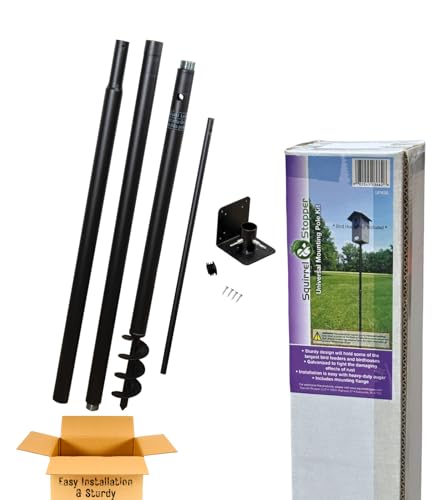
Squirrel Stopper Universal Mounting Pole Kit
Best for: Yards with persistent squirrels
A sturdy pole kit from Squirrel Stopper, a brand built around squirrel-resistant feeding systems; pair it with a properly placed baffle.
- Heavy-duty pole system
- Brand focused on squirrel control
- Baffle placement still matters
- Higher cost than basic kits

Erva Bird Feeder Pole System, Twist-In
Best for: Long-term permanent setups
A heavy-duty, made-in-USA twist-in pole system that Erva designs to stay upright without leaning.
- Made in USA
- Twist-in auger base
- Arms and baffles sold separately

YINGYM 6-Hook Feeding Station with 19-Inch Baffle, 94 Inch
Best for: Buyers wanting an all-included kit
A 94-inch, six-hook feeding station that includes a 19-inch metal squirrel baffle.
- Baffle included
- Six hooks for multiple feeders
- Kit poles can flex in wind

SHIJING Heavy Duty Bird Feeder Pole, 92 Inch
Best for: Soft or uneven soil
An adjustable 92-inch pole marketed as upgraded heavy duty with a stabilizing base.
- Adjustable height
- Stability-focused design
- Assembly required

MIXXIDEA Deluxe Bird Feeding Station Kit
Best for: Seed, suet and water in one station
A deluxe kit that combines a pole, squirrel baffle and multiple feeders and accessories in one box.
- Complete starter setup
- Multiple feeder types
- Included feeders are basic

Gbekery 89-Inch Bird Feeder Pole with Baffle
Best for: Smaller yards and patios
An 89-inch heavy-duty pole with a squirrel baffle and double hooks.
- Includes baffle
- Double hook design
- Fewer hanging points
Comparison Table
| # | Product | Best for | Link |
|---|---|---|---|
| 1 | Squirrel Stopper Universal Mounting Pole Kit | Yards with persistent squirrels | Check price |
| 2 | Erva Bird Feeder Pole System, Twist-In | Long-term permanent setups | Check price |
| 3 | YINGYM 6-Hook Feeding Station with 19-Inch Baffle, 94 Inch | Buyers wanting an all-included kit | Check price |
| 4 | SHIJING Heavy Duty Bird Feeder Pole, 92 Inch | Soft or uneven soil | Check price |
| 5 | MIXXIDEA Deluxe Bird Feeding Station Kit | Seed, suet and water in one station | Check price |
| 6 | Gbekery 89-Inch Bird Feeder Pole with Baffle | Smaller yards and patios | Check price |
A Closer Look at Each Pick
Squirrel Stopper pole kit, best squirrel-resistant system. If squirrels are your main problem, a system built around baffling and a sturdy auger base is the best investment.
Erva pole system, best made in USA. A heavy-duty twist-in pole that will not lean, made in the USA.
94-inch kit with spring baffle, best kit with baffle. A large baffle with extra wobble is included, so you do not have to buy one separately.
Heavy-duty station with reinforced base, most stable base. The wide steel base resists leaning in soft soil.
Deluxe station with multi-feeder, best all-in-one. Seed, suet and water in one kit is the simplest way to start.
Gbekery 89-inch double-hook pole, best compact pole. A tidy option for small yards with one or two feeders.
What Makes a Good Bird Feeding Station?
Sturdy Base
Push-in spike bases are easy to install but can lean. Auger and twist-in bases screw into the ground and hold far better. Wide spiked bases spread the load in soft soil.
Pole Material and Thickness
Thicker steel tubes with a powder coating resist bending and rust. Multi-section poles should lock together tightly.
Squirrel Baffle
A wide baffle mounted on the pole below the feeders is the single most effective squirrel deterrent. Cone and cylinder baffles both work if they are wide enough and placed at the right height.
Number of Hooks
More hooks let you offer different foods, but crowding feeders makes it easier for squirrels to leap between them and creates more spillage. Spread feeders out.
Accessories
Seed trays catch spilled seed, suet cages offer high-energy food and water dishes attract birds that do not eat seed.
Where to Place a Bird Feeding Station
Choose a spot you can see from a favorite window. Place the station about 8 to 10 feet from trees, fences and roofs so squirrels cannot jump to it. Provide nearby shrubs or trees within about 10 to 15 feet for birds to retreat to, but not so close that cats can ambush them. Avoid placing it near windows between about 3 and 30 feet, where collisions are more likely. Level, firm ground makes installation easier.
How to Install a Feeder Pole
- Choose your location and check for underground utilities before digging or screwing anything into the ground. Call 811 in the US if needed.
- Moisten hard ground to make installation easier.
- Push, twist or screw the base in according to the instructions until it is firm and vertical.
- Assemble the pole sections and check that it is plumb.
- Install the baffle at least 4 to 5 feet above ground and below the feeders.
- Hang feeders, balancing weight on both sides.
Squirrel-Proofing Your Station
Squirrels are determined, so combine several tactics. Use a baffle wide enough that squirrels cannot reach around it. Keep the station far from launch points. Keep the ground under the feeders clean, since spilled seed attracts squirrels to the area. Consider safflower or nyjer seed, which squirrels like less. Our guide to the best squirrel-proof bird feeder covers feeders designed to defeat squirrels.
What to Feed
Black-oil sunflower seed. The best all-round seed, eaten by cardinals, chickadees, titmice, finches, nuthatches and many others.
Nyjer (thistle). For goldfinches and other small finches in a mesh or tube feeder with small ports.
Suet. High-energy fat for woodpeckers, nuthatches and wrens, especially in cold months.
Safflower. Liked by cardinals; less popular with squirrels and grackles.
Mealworms. Attract bluebirds and wrens.
Hummingbird nectar. One part white sugar to four parts water, no dye, in a dedicated feeder.
Avoid cheap mixes heavy in fillers like red milo, which many birds kick out.
Adding Water
Water attracts birds that never visit seed feeders. A shallow dish on the pole or a bird bath nearby offers drinking and bathing water. Change water every few days and scrub the dish to prevent algae and disease. In winter, a heated bath keeps water open; see our guide to the best bird bath heater.
Keeping Feeders Clean
Dirty feeders can spread disease among birds. Many conservation groups recommend cleaning feeders every couple of weeks, more often in wet weather or if sick birds appear. Empty feeders, scrub with hot soapy water or a dilute bleach solution, rinse well and dry before refilling. Rake up spilled seed and hulls. If you see sick birds, take feeders down for a couple of weeks and clean thoroughly. The Cornell Lab of Ornithology offers detailed feeder hygiene guidance.
Feeding Birds Through the Seasons
Bird activity at feeders changes through the year. In winter, natural food is scarce and birds need high-energy food to survive cold nights, so feeders are busiest. Keep sunflower seed and suet stocked, and provide open water if you can. In spring, migrants pass through and resident birds start nesting; offering mealworms and fresh water helps parents feeding young. In summer, many birds switch to insects, and feeder traffic may drop, but hummingbird feeders become popular. In autumn, migrating species stop to refuel, and resident birds begin storing food. Adjust what you offer and clean feeders more often in warm, humid weather when seed spoils faster.
Designing a Bird-Friendly Yard Around Your Station
A feeding station works best as part of a bird-friendly yard. Native trees and shrubs provide shelter, nesting sites and natural food such as berries, seeds and insects. Layered planting with groundcovers, shrubs and trees mimics natural habitat and gives birds safe places to retreat. Leaving seed heads on perennials like coneflowers and sunflowers in autumn offers natural food. Reducing pesticide use protects the insects that many birds feed their young. A nearby bird bath and a few nest boxes complete the habitat.
Protecting Birds From Cats and Predators
Domestic cats kill large numbers of birds every year. If cats roam your area, place the station in an open spot where birds can see approaching predators, with shrubs nearby for cover but not directly underneath feeders where cats can hide. Keeping your own cats indoors is one of the most effective things you can do for backyard birds. Hawks occasionally hunt at feeders; if one becomes a regular visitor, taking feeders down for a week or two encourages it to move on.
Reducing Mess Under Feeders
Spilled seed and hulls can kill grass, sprout weeds and attract rodents. Seed catcher trays mounted under feeders collect much of the spill. Hulled sunflower hearts and no-mess blends leave fewer shells behind, though they cost more. Placing the station over a mulched or gravel area rather than lawn makes cleanup easier, and raking up debris every week or two keeps the area tidy.
Choosing Feeders for Your Station
Mix feeder types to attract more species. Tube feeders suit small birds such as finches and chickadees. Hopper feeders hold a lot of seed and suit cardinals and jays. Platform trays attract ground-feeding birds and larger species. Suet cages draw woodpeckers. Nyjer socks or finch feeders bring goldfinches. Our guide to the best hanging bird feeder compares popular designs.
Bird Feeding Station Maintenance
Beyond cleaning feeders, check the pole a few times a year. Tighten any loose joints and arms, check that the base is still vertical after storms or freeze-thaw cycles and look for rust on scratched areas, touching up with outdoor metal paint if needed. Make sure the baffle still moves freely if it is designed to wobble. In late winter, before nesting season, give everything a thorough clean so the station is ready for spring visitors.
Watching and Identifying Visitors
Part of the joy of a feeding station is learning who visits. A pair of binoculars and a field guide or a free bird identification app make it easy to put names to the birds you see. Keeping a simple notebook of species and dates reveals seasonal patterns over time. Many backyard birders contribute their sightings to citizen science projects such as Project FeederWatch or eBird, which help researchers track bird populations across the continent.
Bird Feeding and Bears
In areas with black bears, bird feeders can attract bears looking for an easy meal. Wildlife agencies in bear country often recommend taking feeders down from spring through late autumn when bears are active, bringing them indoors at night, or feeding only in winter. Check local guidance; in some places, feeding birds during bear season is discouraged or restricted.
Feeding Stations in Small Yards and Patios
You do not need a big lawn to enjoy a feeding station. A compact double-hook pole in a large planter or a deck-mounted pole bracket can hold a couple of feeders on a patio. Choose no-mess seed to keep paving clean, place the feeders where you can see them from inside and keep them clear of railings and walls that squirrels can jump from. Even a single feeder and a small water dish can attract chickadees, finches and sparrows to an apartment balcony where building rules allow.
Common Bird Feeding Station Mistakes
Common mistakes include placing the station too close to trees or fences, skipping the baffle, mounting the baffle too low, overcrowding feeders, using cheap seed mixes, never cleaning feeders and installing a light pole in soft soil without a stable base.
How High Should Bird Feeders Hang?
Most feeders work well hanging around 5 to 6 feet off the ground, which keeps them above jumping squirrels and easy for you to refill. The baffle should sit below the feeders at least 4 to 5 feet above the ground. Ground-feeding birds such as juncos, doves and sparrows prefer a low platform tray, while woodpeckers and nuthatches readily use suet hung higher on the pole.
The Bottom Line on the Best Bird Feeding Station
For yards with squirrels, the Squirrel Stopper Sequoia system with its auger base is the most robust choice. The Erva pole is a strong US-made alternative, the 94-inch kit includes a large spring baffle, the reinforced-base station suits soft soil, the deluxe kit offers seed, suet and water in one package, and the Gbekery double-hook pole suits smaller yards. Place your station away from launch points, fit a good baffle, offer quality food and fresh water, and keep everything clean.
Frequently Asked Questions
How far should a bird feeding station be from trees?
To stop squirrels jumping onto it, place the pole about 8 to 10 feet away from trees, fences, roofs and other launch points, and fit a baffle at least 4 to 5 feet above the ground.
How far from windows should bird feeders be?
Either very close, within about 3 feet, so birds cannot build up speed, or more than about 30 feet away. Window decals help reduce collisions.
How do I keep squirrels off a bird feeder pole?
Use a wide cone or cylinder baffle on the pole below the feeders, place the pole away from launch points and keep the ground below clean of spilled seed.
What should I feed on a bird feeding station?
Black-oil sunflower seed attracts the widest range of birds. Add suet in cooler months, nyjer for finches and fresh water year-round.
How do I stop a feeder pole from leaning?
Choose a pole with an auger, twist-in or wide spiked base, install it deeply in firm soil and balance feeders on both sides.