
Milorganite wins for steady summer color; Espoma shines for fall and seeding.
You want a thicker, greener lawn without burning it or babysitting it. You also want something safe for kids and pets. That is where Milorganite vs Espoma lawn fertilizer comes in. Both build soil and feed slow. Yet they serve different goals. Milorganite gives deep green and steady growth. Espoma Turf-Tone lines match key lawn jobs like winter prep or new seed. In this review, I break down what to use, when to use it, and why. I also share real-world pros and cons, and which bag gives the best value right now.
See the differences between my top picks at a glance.
| Factor | Milorganite (6-4-0) | Espoma Turf-Tone (Organic Line) |
|---|---|---|
| Source Material | Heat-dried biosolids | Natural organics (feather meal, poultry manure, etc.) |
| Feeding Profile | 6-4-0 with iron for deep green | Varies by formula (e.g., 8-0-5 Winterizer) |
| Release Speed | Slow-release nitrogen; steady color | Slow-release organics with Bio-Tone microbes |
| Seasonal Fit | Great for spring and summer maintenance | Targeted options: Fall Winterizer, Lawn Starter |
| Odor Level | Noticeable earthy smell after application | Milder organic scent |
| Phosphorus Content | Contains phosphorus (check local rules) | Varies: Winterizer is 0P; Starter includes P |
| Kid & Pet Safety | Non-burning; water in and let dry | Non-burning; water in and let dry |
| Value | Strong color per dollar in season | Great for specific goals (fall or seeding) |
Milorganite 6-4-0 Lawn Fertilizer

Milorganite is a classic for a reason. It feeds slow. It builds soil. It delivers rich green color with less surge growth. The 6-4-0 analysis fits most lawns through the growing season. It also includes iron, which deepens color without extra mowing.
I like it for warm months and steady growth. It helps lawns hold color in summer heat. The pellets spread well. The smell is earthy for a day or two, then it fades. Water after you spread it, and let it dry before play.
Pros:
- Deep, even green thanks to added iron
- Low burn risk due to slow release
- Improves soil organic matter over time
- Good choice in heat and mild drought
- Easy to spread with most rotary spreaders
Cons:
- Noticeable odor right after application
- Contains phosphorus; check local rules
- Results are steady, not instant
What Amazon Buyers Are Saying
Many buyers note a deeper green within a couple of weeks. They like the slow, even feeding and lack of burn. Some mention the smell on day one. A few say pets show interest, so they water it in and let it dry first. Availability and price can swing by season.
My Recommendation
Milorganite is my go-to for easy, steady color. It shines in late spring through summer. If you want a thick lawn that stays green without surge growth, it is hard to beat. Overall, it is excellent value for season-long maintenance.
| Category | Rating |
|---|---|
| Greening Power | 4.7/5 |
| Soil Health Boost | 4.6/5 |
| Ease of Use | 4.8/5 |
| Summer Safety | 4.7/5 |
| Value per 1,000 sq ft | 4.5/5 |
| Overall Rating | 4.7/5 |
Espoma Turf-Tone Fall Winterizer 8-0-5
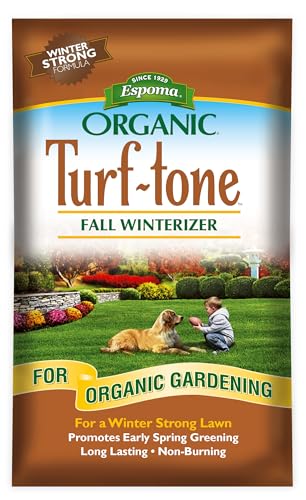
Espoma Turf-Tone Fall Winterizer focuses on root strength and winter endurance. The 8-0-5 analysis fits late summer and fall feeding. It avoids phosphorus, which many states restrict for lawns. The nitrogen is organic and slow, so it conditions soil as it feeds.
This bag sets your lawn up for spring success. It builds carbohydrates in roots. It also boosts potassium for stress tolerance. I like to lay this down 4–6 weeks before the first frost. It pairs well with earlier summer feedings of Milorganite.
Pros:
- 0 phosphorus; fits restricted areas
- Great for fall root growth and storage
- Organic slow release; low burn risk
- Bio-Tone microbes support soil life
- Coverage up to 5,000 sq ft per 30 lb bag
Cons:
- Not a spring starter formula
- Results are subtle until spring
- May cost more per 1,000 sq ft
What Amazon Buyers Are Saying
Buyers like the fall performance and spring green-up. Many praise the organic formula and lack of burn. The mild smell draws positive notes. Some mention they needed patience since big gains show in spring. Coverage claims are often confirmed.
My Recommendation
If you want a strong spring lawn, use this in fall. It gives a safer, targeted fall feeding. It is a smart choice where phosphorus is banned. It is a must for cool-season lawns before winter.
| Category | Rating |
|---|---|
| Fall Performance | 4.8/5 |
| Winter Hardiness Boost | 4.7/5 |
| Soil & Microbe Support | 4.6/5 |
| Ease of Spreading | 4.5/5 |
| Value per 1,000 sq ft | 4.3/5 |
| Overall Rating | 4.6/5 |
Milorganite 6-4-0 All-Purpose, 5 lb

This 5 lb Milorganite bag is great for spot work. Use it on thin patches or tight areas. It shares the same 6-4-0 analysis and iron. You get slow release and deep color, but in a small format.
I grab this size for garden edges and test plots. It is handy for light feeding in beds, too. The pellets spread by hand in a pinch. You still should water and let it dry before pets return.
Pros:
- Perfect size for spot treatments
- Same proven 6-4-0 with iron
- Low burn, slow and steady feed
- Great for lawns, flowers, and beds
- Easy to store in small sheds
Cons:
- Not cost-efficient for large lawns
- Odor is the same as big bags
- Coverage is limited
What Amazon Buyers Are Saying
Shoppers like the handy size and flexible use. Many use it for small patches or flower beds. Feedback notes the same color boost as bigger bags. Some wish it came in a resealable pouch. A few mention that the price per pound is higher.
My Recommendation
Use this bag for touch-ups or trials. It is great when you need control. It helps you dial in rates before you commit to big bags. For whole lawns, choose larger sizes for better value.
| Category | Rating |
|---|---|
| Spot Repair Utility | 4.9/5 |
| Greening Power | 4.6/5 |
| Ease of Handling | 4.8/5 |
| Versatility (Lawn & Beds) | 4.7/5 |
| Bulk Value | 3.8/5 |
| Overall Rating | 4.6/5 |
Espoma Turf-Tone Lawn Starter, 30 lb

New seed and sod love phosphorus and steady nitrogen. Turf-Tone Lawn Starter answers that with a tailored organic blend. It includes Bio-Tone microbes for root establishment. The bag covers up to 3,000 sq ft, which suits new seed areas.
I use starter feeds only at seeding or sodding. That is the best time for added phosphorus. It speeds root set and early spread. For most mature lawns, I skip starter and use zero-phos choices.
Pros:
- Designed for seed and sod establishment
- Includes microbes to aid rooting
- Gentle, slow-release feeding
- Helps early color without burn
- Good coverage for new lawn projects
Cons:
- Not for routine feeding on mature lawns
- Contains phosphorus; follow your local laws
- Results depend on watering and seed quality
What Amazon Buyers Are Saying
Buyers report even germination and quick rooting when watered right. Many like the organic profile for kids and pets. Some note that patience is key, since organics feed slow. A few mention that coverage is fair for heavy seeding rates.
My Recommendation
Use this only when starting lawns. It helps roots, which is what new grass needs most. Pair it with proper watering and soil contact. For upkeep later, move to zero-phos or balanced organics.
| Category | Rating |
|---|---|
| Seeding Support | 4.8/5 |
| Root Development | 4.7/5 |
| Safety for New Seed | 4.8/5 |
| Ease of Application | 4.5/5 |
| Value for New Lawns | 4.4/5 |
| Overall Rating | 4.6/5 |
Milorganite 6-4-0 All-Purpose, 5 lb (2-Pack)

The 2-pack combines the convenience of small bags with a bit more reach. It uses the same 6-4-0 formula with iron. It is ideal for townhomes, tight city lawns, or raised beds. It stores well and is easy to carry.
I like these for a no-mess approach. You can use one bag, then keep the other sealed. It is less waste than cutting open a big bag. It is also handy for quick front-lawn touch-ups.
Pros:
- Handy size in a better value 2-pack
- Same slow-release, iron-rich formula
- Great for small lawns and beds
- Easier to lift and store
- Good for precise applications
Cons:
- Not as economical as 32 lb bags
- Smell still present on application day
- Limited coverage per pack
What Amazon Buyers Are Saying
Shoppers like the tidy handling and storage. Many say it is perfect for small areas. Color and soil benefits match the full-size bags. Some note the price per pound is higher. A few wish for a reseal strip.
My Recommendation
If you manage a small space, this 2-pack is perfect. You get proven results without bulk storage. For large lawns, buy larger bags to save per 1,000 sq ft.
| Category | Rating |
|---|---|
| Convenience | 4.9/5 |
| Greening Power | 4.6/5 |
| Precision Application | 4.8/5 |
| Storage & Handling | 4.9/5 |
| Bulk Value | 3.9/5 |
| Overall Rating | 4.6/5 |
How to Choose Milorganite vs Espoma lawn fertilizer
Picking the right bag is simple when you link it to your goal and season. Think about why you are feeding, and what your soil needs. Then match a formula to the task. Here is how I choose between Milorganite vs Espoma lawn fertilizer with confidence.
1. Match the product to the season and goal
Choose Milorganite for steady spring and summer feeding. It gives rich color and slow growth. It is safe in heat when you water right. Choose Espoma Turf-Tone Winterizer for late summer or fall. It builds roots and winter stores. Choose Espoma Turf-Tone Lawn Starter for new seed or sod only. It helps roots grab and spread fast.
2. Check phosphorus rules and your soil test
Many regions limit phosphorus on lawns. Milorganite and Lawn Starter contain P. The Fall Winterizer has zero P. If you seed, P helps roots. If you feed a mature lawn, use zero P if your soil test shows enough. I always test soil every two to three years. It saves money and prevents waste.
3. Balance cost, odor, and ease of use
Milorganite gives great color per dollar. It has a stronger smell on day one. Espoma formulas cost a bit more, but smell milder. Both spread well in a rotary spreader. For small lawns, the 5 lb Milorganite bags are easy to store. For big projects, 30 lb Espoma bags cover more at once. Choose what fits your yard and your nose.
Final Verdict: Which Should You Buy?
For a simple, steady green in-season, pick Milorganite. For fall strength or new seed, pick Espoma Turf-Tone Winterizer or Lawn Starter. That mix wins the Milorganite vs Espoma lawn fertilizer debate.
Use the right bag at the right time, and your lawn will thank you. You will get color, roots, and a yard that stands up to stress.
FAQs Of Milorganite vs Espoma lawn fertilizer
Is Milorganite or Espoma better for summer heat?
Milorganite is my pick for summer. It feeds slow and safe in heat. Water it in and let it dry.
Which works faster: Milorganite or Espoma?
Both are slow-release. You see color in 1–3 weeks. Espoma Starter can show early gains on new seed.
Can I use Milorganite and Espoma together?
Yes, but space applications. Use Milorganite in spring and summer. Use Espoma Winterizer in late summer or fall.
Will these fertilizers burn my lawn?
They have a low burn risk when used as directed. Do not overapply. Water in after spreading.
Do I need phosphorus for an established lawn?
Often no. Use a soil test to be sure. Many lawns have enough P already.
Does Milorganite stain concrete or stone?
It can leave rust-like marks if pellets sit on wet hardscapes. Blow or sweep before watering.
Are these safe for kids and pets?
Yes when used correctly. Apply, water in, and let the lawn dry. Then allow activity.
How often should I apply?
Milorganite: every 6–8 weeks in season. Espoma Winterizer: once in late summer or fall. Starter: use only at seeding or sodding.